
Avoid Revocation Today: U.S. Probation Drug Test Steps
Most probation drug tests start with a urine 5-panel or 10-panel screen, with EtG alcohol testing or hair testing added when the court has specific concerns. A positive result, a refused test, or a tampered sample can all count as violations, so the single most important move you can make is proactive: report exactly as instructed, and if you take prescription medication, disclose it and have documentation ready before you’re ever asked to provide a sample.
TL;DR:
- Urine testing is the primary method for probation drug screens, with 5- and 10-panel tests covering common substances like marijuana, cocaine, and opiates.
- A positive, refused, or adulterated sample counts as a violation, so transparency about prescriptions and avoiding sample dilution are crucial.
- Confirmation testing with more precise methods follows an initial positive, and disclosure before testing helps prevent penalties or revocation.
- Detection windows vary by substance, with THC lasting up to 30 days for heavy users, alcohol detectable up to 80 hours, and other drugs typically for a few days.
- Probation violations can lead to warnings, curfews, or court revocation, with repeated positives often resulting in probation revocation and jail time.
Table of Contents
- Which Probation Drug Tests Are Most Common
- How Collection Works: Chain of Custody and Specimen Checks
- How Long Substances Stay Detectable
- What Happens After a Non-Negative Result
- Random Testing, Call-In Lines, and Color-Code Systems
- Consequences: From Warnings to Revocation
- Your Pre-Test, Test-Day, and Post-Test Checklist
- How Passmydrugtest Fits into Staying Compliant
- Check Your Status Before Probation Does It for You
- Where This Information Comes From
- Sources
Which Probation Drug Tests Are Most Common
Urine testing dominates probation drug screening because it’s cheap, fast, and covers a wide substance range. A standard 5-panel checks for marijuana, cocaine, opiates, amphetamines, and PCP. Many probation departments run an expanded 10-panel that adds benzodiazepines, barbiturates, methadone, propoxyphene, and MDMA.
- Urine (5 or 10-panel): the default baseline test for routine and random screening.
- EtG (ethyl glucuronide): added when alcohol is a condition of probation, since it catches drinking that a breathalyzer would miss days later.
- Hair follicle: used for longer-term history checks, sometimes ordered when a court wants a 90-day pattern rather than a snapshot.
- Oral fluid/saliva: quicker to collect and harder to fake, increasingly used for spot checks.
- Sweat patches: less common on probation but occasionally used for continuous monitoring over days or weeks.
Hair testing tends to show up when a judge or officer suspects a longer pattern of use rather than an isolated incident. You can read more about how that window works in Passmydrugtest’s hair testing guide.
How Collection Works: Chain of Custody and Specimen Checks
Every legitimate probation test follows a documented process designed to make the result stand up in court.
- Check-in and ID verification. You’ll present photo ID and sign paperwork confirming your identity matches the specimen.
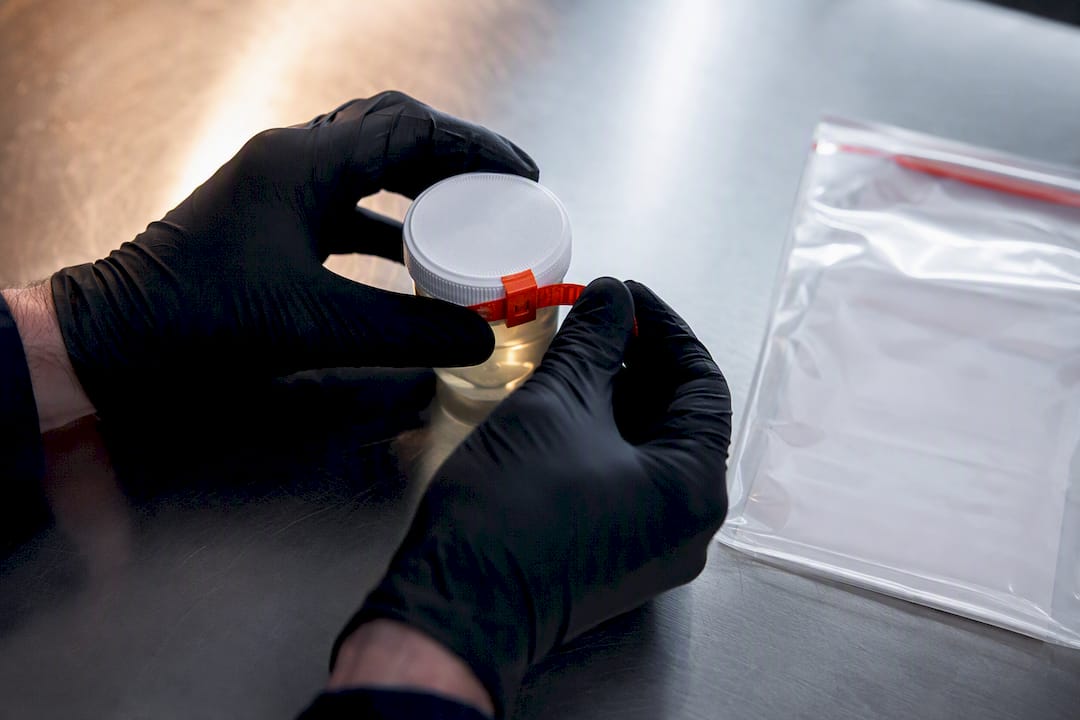
- Chain of custody begins. The collector labels the sample, seals it, and logs every hand-off from collection to lab to result, so no one can later claim the sample was swapped or mishandled.
- Specimen validity testing (SVT) at the lab. Technicians check creatinine and specific gravity to catch dilution, plus pH and adulterant markers to catch tampering.
- Observed collection, if triggered. Abnormal temperature, a diluted result, or suspicious behavior during collection can prompt a directly observed retest.
An SVT flag, whether it’s a dilute, substituted, or adulterated result, is frequently treated the same as a refusal in many probation systems. That means the paperwork consequences can hit just as hard as an actual positive, even if you never used anything.
Pro Tip: Don’t chug water before a test hoping to dilute your sample. Labs are built to catch it, and a dilute flag can trigger an observed retest you didn’t need to invite.
How Long Substances Stay Detectable
Detection windows vary by substance, frequency of use, and metabolism, so treat these as general ranges rather than guarantees.
- THC: roughly 3 days for occasional use, up to 30 days or longer for chronic, heavy use.
- Cocaine: typically 2 to 4 days.
- Opioids: usually 1 to 3 days, though some synthetic opioids linger longer.
- Amphetamines: generally 2 to 4 days.
- Benzodiazepines: anywhere from a few days to several weeks depending on the specific drug.
- Alcohol (EtG): up to about 80 hours after drinking, far longer than a breathalyzer would catch.
Screening cutoffs matter as much as detection windows. The standard initial screening cutoff for THC in many urine immunoassays is 50 ng/mL, though some jurisdictions set the bar lower. Anything below the cutoff reads negative even if trace amounts are technically present, which is why cutoff levels, not just detection windows, decide the outcome.
What Happens After a Non-Negative Result
A non-negative screen isn’t a final verdict. It triggers a second, more precise lab process before anyone reports a violation.
- Confirmation testing. The lab reruns the specimen using GC-MS or LC-MS/MS, methods far more specific than the initial screen and much harder to trigger with a false positive.
- MRO review. A Medical Review Officer contacts you directly to ask about prescriptions or other legitimate explanations before finalizing the result, and can overturn a positive with proper documentation.
- Split-specimen window. If you disagree with a confirmed positive, you typically have a short window, often around 72 hours, to request testing of the backup sample.
Waiting until after a positive to mention your prescription rarely helps. Courts and probation officers expect disclosure before testing, not damage control after.
Random Testing, Call-In Lines, and Color-Code Systems
Most probation departments use a randomization system rather than a fixed schedule, precisely so people can’t plan around it.
-
Color-code and call-in systems: you’re assigned a color or number, and you call a hotline daily to see if your code was selected that day.
-
Response window: once selected, you usually have to report within hours, not days, so ignoring the line isn’t an option.
-
Frequency: baseline testing often runs 1 to 4 times a month, with higher-risk cases tested more often based on your risk assessment.
-
Federal timing: federal probation typically requires an initial test within 15 days of starting supervision, with periodic testing after that.
Missing your call-in or failing to show up when selected is commonly treated exactly like a failed test.
Consequences: From Warnings to Revocation
Not every positive test ends the same way, but the range of outcomes is wide and the trend line matters.
- First-tier sanctions: a warning, added testing frequency, or a referral to treatment.
- Escalating sanctions: curfews, community service, or short jail stints for repeated violations.
- Revocation: full return to court for a hearing, which can end supervision and mean serving the original sentence.
A statewide survey of probation offices found that drug testing is widespread and that continuous positives often trigger petitions to revoke probation, even as responses vary sharply from one jurisdiction to the next. Some officers lean toward treatment referrals for a first slip; others move straight to filing violation paperwork. Courts generally weigh your compliance history, whether the substance violates a specific condition, and whether you disclosed prescriptions proactively before deciding how hard to come down.
Your Pre-Test, Test-Day, and Post-Test Checklist
Being organized beats being lucky. Here’s the sequence that actually protects you.
- Before: gather prescription bottles and pharmacy printouts, memorize your call-in schedule, and keep photo ID and any required forms in one place.
- Test day: drink normally rather than overhydrating, since an unusually diluted sample can trigger a retest under observation. Follow the collector’s instructions exactly, including temperature checks.
- After a non-negative: request contact with the MRO immediately, keep copies of everything you submit, and talk to an attorney if a hearing or revocation is on the table.
Pro Tip: Keep a folder, physical or digital, with every prescription record and call-in log. If a dispute ever comes down to your word against a lab’s, paperwork wins arguments that memory can’t.
How Passmydrugtest Fits into Staying Compliant
Passmydrugtest publishes detailed guides on detection timing, screening thresholds, and collection procedures because probation compliance depends on knowing exactly what you’re facing before test day arrives. Our product categories, including at-home test kits, are tools designed to help you check your own status ahead of a scheduled screen. They are not a substitute for legal compliance, honest disclosure of prescriptions, or abstaining from substances your probation terms restrict. For deeper guidance or product questions, our customer support team is available during published business hours.
— MIchael
Check Your Status Before Probation Does It for You
This site gives you a way to know where you stand before a scheduled call-in catches you off guard. Instead of guessing whether last weekend cleared your system, an at-home test lets you check yourself under the same general principles labs use, so you walk into your appointment with information instead of anxiety.
Our drug testing products page covers home kits built for exactly this kind of self-check, and the marijuana test kit is a common starting point for THC-specific concerns. None of this replaces the only method that reliably guarantees a clean result: not using in the first place. What these products do is give you a realistic read on your own situation and time to plan your next move, whether that means adjusting your schedule, talking to your probation officer, or gathering documentation before a scheduled test. Browse the current lineup and pick the option that matches your test type.
Where This Information Comes From
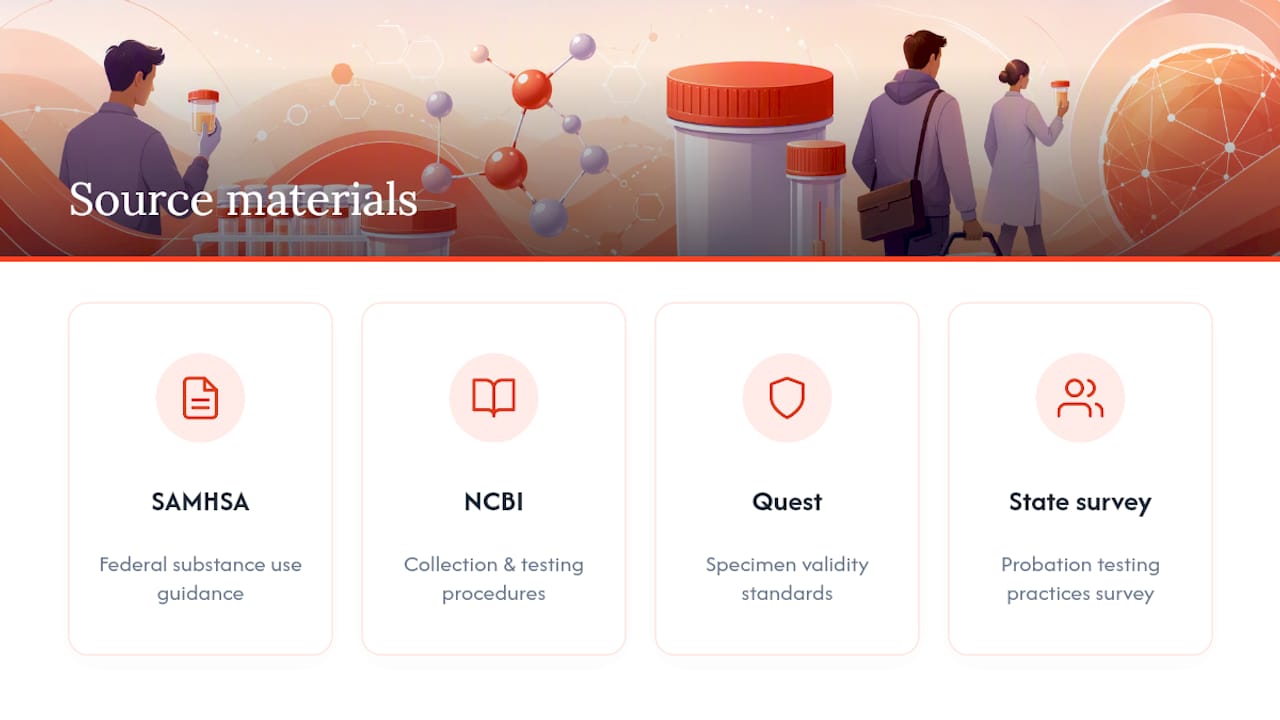
This guide draws on SAMHSA’s federal substance use guidance, NCBI’s collection and testing procedures on screening cutoffs, Quest Diagnostics’ specimen validity standards, and a statewide probation testing practices survey.
Sources
- Appendix B – Urine Collection and Testing Procedures (NCBI)
- Specimen validity (Quest Diagnostics)
- Substance Abuse and Mental Health Services Administration (SAMHSA)
- A study of drug testing practices in probation (ICJIA survey)