
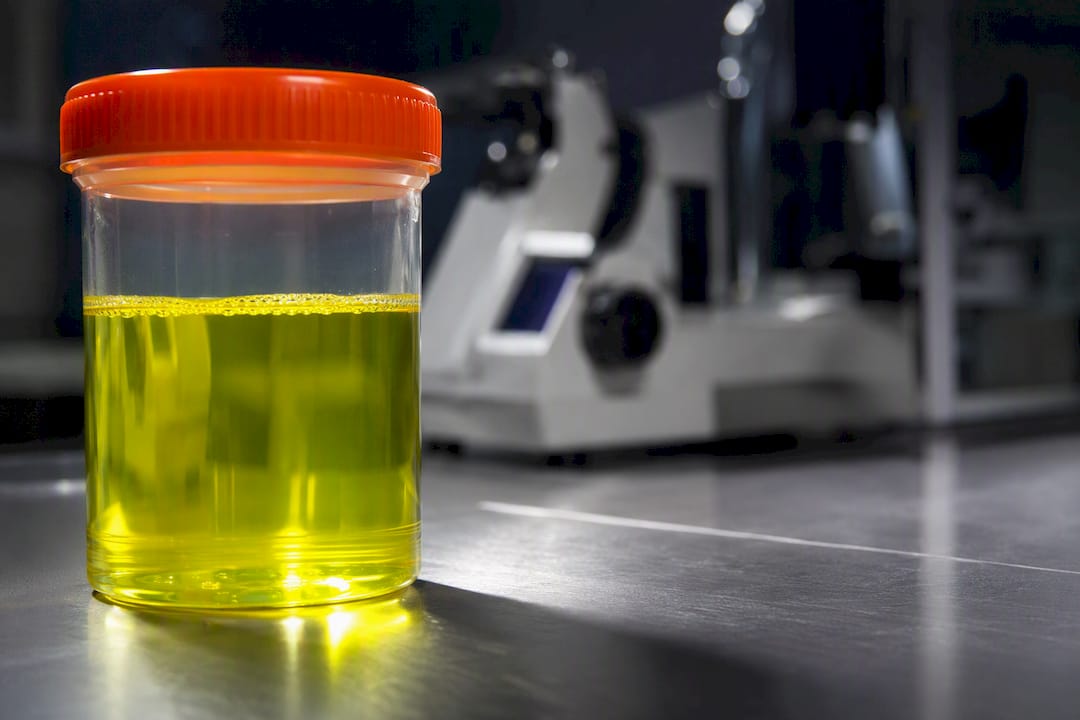
B12 Urine Color Won’t Beat a Pre-Employment Drug Test
Taking B12 or a B-complex supplement before a urine drug screen will turn your urine bright yellow or green, but that color change does nothing to affect the test result. Labs don’t grade specimens by color. They run creatinine, specific gravity, pH, and oxidant checks that have nothing to do with hue. If you’re prepping for a workplace, legal, or pre-employment screen, the move is simple: disclose any supplements you’re taking and follow the specimen validity guidance below instead of relying on color as cover.
TL;DR:
- Bright urine caused by B vitamins does not affect drug test results, as labs measure creatinine, specific gravity, pH, and oxidants, not color.
- Labs flag samples as dilute, invalid, adulterated, or substituted based on specific markers, with no reliance on urine hue.
- Manipulation tactics like dilution, substitution, or adulteration are likely to be detected by standard lab assays, making color tricks ineffective.
- Proper test preparation involves disclosure of supplements, avoiding excessive hydration, and carrying documentation if needed.
- Facing flagged results typically requires consultation with a Medical Review Officer and providing medical or supplement documentation for clarification.
Table of Contents
- How B vitamins change urine color and what it means for your test
- What do labs actually check for specimen validity?
- Why dilution and adulteration tricks usually backfire
- How to prepare for a urine drug screen the right way
- What happens if your specimen gets flagged
- Passmydrugtest’s take on color tricks and real preparation
- How Passmydrugtest can help you prepare the right way
- Sources
How B vitamins change urine color and what it means for your test
Riboflavin, also known as vitamin B2, is the pigment behind that neon yellow you see after a multivitamin or B-complex dose. It’s water-soluble, so your kidneys filter out whatever your body doesn’t use and send it straight into your urine. Some B12 and B-complex products also add other water-soluble compounds or dyes that intensify the effect, which is why two different supplement brands can produce noticeably different shades.
None of that changes anything a lab actually checks. Color is a visual artifact of vitamin excretion, not a marker of hydration, dilution, or specimen authenticity. A urine test for vitamin levels shift like this is cosmetic only.
A few things worth knowing before your test:
- Bright yellow or greenish urine after B12 or B-complex is normal and expected, not a red flag on its own.
- The color can appear within hours of taking the supplement and fade as the vitamin clears your system.
- Color intensity does not add creatinine or correct a dilute sample.
- Check supplement labels for added dyes, since some multivitamin blends include coloring agents beyond the B vitamins themselves.
If you’re hoping bright urine will disguise a diluted sample, it won’t. Labs simply don’t use appearance as part of their specimen validity testing protocol.
What do labs actually check for specimen validity?
Every certified lab runs a specimen validity panel alongside the drug screen itself, and this is where the real gatekeeping happens. Creatinine and specific gravity are the two workhorses.
Creatinine measures a waste product your muscles produce at a fairly steady rate. A normal creatinine level sits above 20 mg/dL; anything lower gets flagged as dilute, and levels below 2 mg/dL combined with very low specific gravity typically get called “substituted,” meaning the lab believes the liquid submitted wasn’t human urine at all.
Specific gravity measures how concentrated the urine is compared to plain water. Labs generally expect a reading between 1.003 and 1.020, checked with a refractometer or a colorimetric strip method built into automated analyzers, according to Mayo Clinic Laboratories’ adulteration testing catalog.
pH and oxidant/nitrite checks round out the panel. Labs test pH because household chemicals used to sabotage a sample tend to push it far outside the normal 4.5 to 8.0 range. Oxidant and nitrite assays catch bleach, peroxide-based products, and nitrite adulterants that some people add hoping to break down THC metabolites before testing.
Statistic to know: Labs treat a creatinine reading under 20 mg/dL paired with specific gravity outside 1.003 to 1.020 as the primary trigger for a dilute or substituted classification, according to validation guidance published by forensicrti.
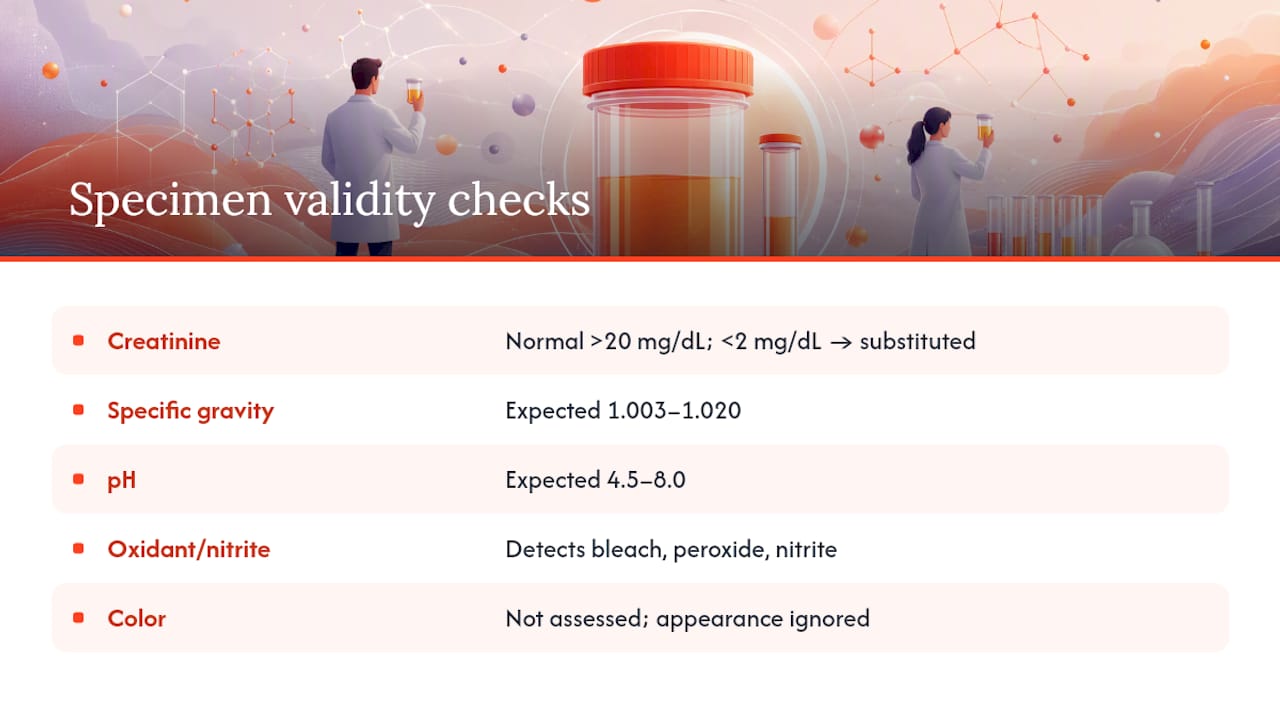
None of these assays look at color. And confirmatory testing methods like GC/MS or LC/MS analyze molecular structure, not appearance, so a bright yellow sample gets exactly the same chemical scrutiny as a pale one.
Why dilution and adulteration tricks usually backfire
Specimen manipulation generally falls into three categories, and understanding them explains why a B12 urine color test is not a workaround for any of them.
- Dilution means drinking excessive water or other fluids to push creatinine and specific gravity below normal thresholds. Labs catch this through the same creatinine and specific gravity checks described above.
- Substitution means submitting a specimen that isn’t the donor’s urine at all, including synthetic urine. A review published in Drug Testing and Analysis found that detecting synthetic urine remains genuinely difficult for labs even as SVT methods improve, though manufacturers keep adjusting formulas to dodge whatever markers labs add next.
- Adulteration means adding an outside substance, such as bleach, vinegar, or a commercial “detox” additive, directly into the sample after collection. Oxidant and nitrite assays exist specifically to catch this category.
Here’s the part people miss: oxidant-based adulterants marketed to “clean” a sample often degrade or become chemically unstable within hours, so a specimen that might have passed at the moment of tampering can still test as adulterated later depending on when the lab runs it, per a 2022 review of urine adulterants and synthetic urine. Adding a B vitamin doesn’t touch oxidant chemistry at all. It only changes what the sample looks like.
Pro Tip: If a specimen comes back “invalid” or “substituted,” that classification alone can carry the same consequences as a positive result under most workplace policies. Color never factors into how that classification gets made.
How to prepare for a urine drug screen the right way
Preparation that actually helps has nothing to do with pigment. It’s about documentation and timing.
- Write down every supplement and medication you’re currently taking, including B12 or B-complex, and tell the collector or list it on your intake form before the test begins.
- Avoid drinking large amounts of fluid in the two to four hours before your collection window. Overhydrating is the single fastest way to trigger a dilute classification, since it drops both creatinine and specific gravity at once.
- If your urine turns bright yellow or green after a B vitamin, mention it if asked. It’s a normal, explainable finding, not evidence of tampering, and collectors see it regularly.
- If your result gets flagged, bring or request documentation: prescription records, supplement packaging, and contact information for your prescribing provider if relevant.
Pro Tip: Keep a simple note on your phone listing what you took and when, dated. If an MRO calls to ask about your specimen, having exact timing on hand speeds up the conversation considerably.
What happens if your specimen gets flagged
Labs report non-standard results under specific categories: negative-dilute, invalid, adulterated, or substituted. Each one triggers a different response, but all of them route through a Medical Review Officer before any final decision reaches your employer.
- Negative-dilute often allows the result to stand, though some employers require a re-collection depending on their policy.
- Invalid usually means the lab couldn’t confirm validity markers reliably, which typically triggers a mandatory re-collection.
- Adulterated or substituted results are the most serious. These get reported to the MRO as a refusal to test in many programs.
The MRO’s job is to interview you, review any medications or supplements you disclosed, and decide whether a legitimate medical explanation accounts for the result. Being upfront and providing documentation early is the fastest path through this process.
Passmydrugtest’s take on color tricks and real preparation
It is plain that hoping a supplement’s color effect will mask a diluted or manipulated sample is a bet that doesn’t pay off. Disclosure and legitimate preparation are what actually protect you. Educational resources and product categories built around lawful preparation, not gimmicks, are available. No product on the market guarantees a passing result, and MRO review remains the correct channel for any legitimate medical or supplement explanation.
— MIchael
How Passmydrugtest can help you prepare the right way
There are resources available for people facing workplace or pre-employment screens who need straightforward information instead of internet myths about vitamin colors.
Instead of gambling on a B12 urine color trick, look at what actually moves the needle. Passmydrugtest’s drug testing products page covers home test kits so you can check where you stand before the real screen, alongside detox products for people who need lawful time to clear their system. If your test is tied to a job offer specifically, the pre-employment drug testing guide walks through what employers typically require and how SVT factors into their process. Orders typically ship within the United States, and phone support is often available during business hours for last-minute questions. None of this replaces disclosure. Transparency with your collector or MRO is still the single most important step you can take, and it costs you nothing.
Sources
Technical claims above draw from lab validation guidance at forensicrti, the Mayo Clinic Laboratories test catalog, a Drug Testing and Analysis review on synthetic urine, a 2022 adulterants review, and Lynk Diagnostics on B12 and false positives.
- Can synthetic urine replace authentic urine to “beat” workplace drug testing? — Drug Testing and Analysis
- Validating Specimen Validity Testing — forensicrti (2023)
- Assessment of possible adulteration of a urine specimen submitted for drug of abuse testing — Mayo Clinic Laboratories
- Update on urine adulterants and synthetic urine samples to subvert urine drug testing — Journal article (2022)