
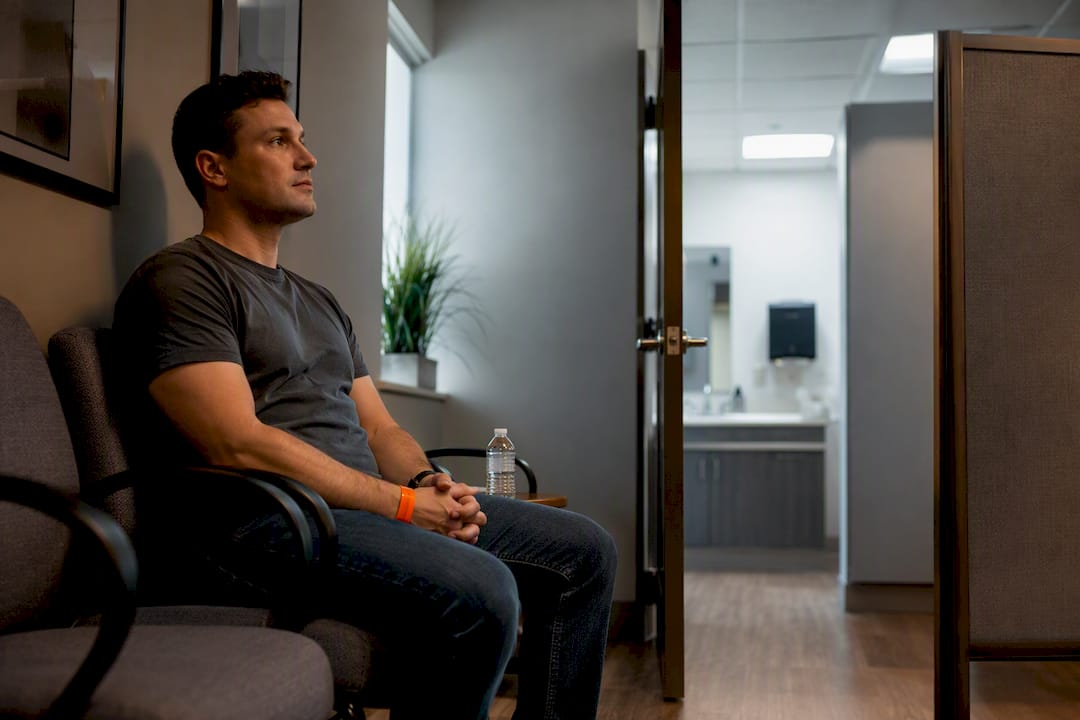
Avoid a DOT Refusal: Shy Bladder Drug Test Donor Checklist
If you can’t produce urine because of paruresis, federal DOT rules give you a specific three-hour protocol and a Medical Review Officer follow-up before anyone can call it a refusal. The single most important thing to do is stay at the collection site, comply with every step, and get medical documentation afterward. Walking out, arguing, or refusing to attempt the collection is what actually turns a physical problem into a career problem.
TL;DR:
- Staying at the collection site and complying with every step is crucial, as leaving or refusing to try turns a medical issue into a career refusal.
- The three-hour window allows for multiple attempts, with up to 40 ounces of fluids recommended to help produce a valid sample without past-dilution.
- Private employers are not bound by DOT procedures and may treat shy bladder requests differently, often requiring documented accommodation requests under the ADA.
- Alternatives like oral fluid, hair, or blood testing may be requested, but their acceptance varies depending on the employer, legal context, and testing policies.
- Proper documentation and early diagnosis before testing are key to securing legal accommodations and avoiding refusal consequences.
Table of Contents
- What Paruresis (Shy Bladder) Really Is
- The DOT Shy Bladder Procedure, Step by Step
- Private Employers and ADA Accommodations Work Differently
- Alternative Testing Methods Worth Requesting
- What To Do at the Collection Site If You Can’t Provide a Sample
- How the Medical Evaluation and MRO Decision Actually Work
- How Common Is Shy Bladder in Drug Testing Populations?
- Beyond ADA: Other Legal Protections Worth Knowing
- Techniques That Help You Manage the Anxiety in the Moment
- Preparing Before Test Day Makes the Biggest Difference
- Why Documentation Is the Real Story Here
- Practical Next Steps After You’ve Followed the Formal Process
- Official Resources Worth Printing or Sharing
- Sources
What Paruresis (Shy Bladder) Really Is
Paruresis is the clinical term for what most people call shy bladder syndrome: a recognized social anxiety disorder where the muscles controlling urination won’t relax under perceived scrutiny, even when the bladder is full. The International Paruresis Association treats it as a legitimate psychological condition, not stubbornness or an excuse, and clinicians place it alongside other performance anxiety disorders.
That distinction matters because paruresis is not the same thing as low urine output from dehydration or a medical issue like an enlarged prostate. Someone with paruresis can drink plenty of fluids and still freeze the moment a monitor stands outside the stall door.
Common signs during observed collections include:
- A racing heart or sweating the moment the donor enters the restroom
- Physically being unable to start urinating despite a full bladder
- Panic or dissociation triggered specifically by the sound of someone waiting nearby
- A history of the same problem in prior tests, physicals, or public restrooms
The DOT Shy Bladder Procedure, Step by Step
Federal transportation employees fall under 49 CFR Part 40, which spells out exactly what happens when a donor can’t produce enough urine. Collection sites need a sufficient specimen volume for a valid DOT test, according to collection-site operator guidance, and anything short of that triggers a specific chain of events rather than an automatic failure.
Here’s the sequence a DOT-regulated donor should expect:
- First attempt comes up short. The collector discards the insufficient specimen and documents the amount.
- The three-hour clock starts. You’re given up to three hours to try again, with guidance to drink up to 40 ounces of fluid spread across that window.
- Multiple attempts are allowed. You can try to void as many times as reasonably possible within the three hours.
- Still nothing after three hours. The collector notifies your employer’s Designated Employer Representative and the Medical Review Officer, who typically orders a medical evaluation.
The 40-ounce fluid figure isn’t arbitrary. It’s the amount DOT collection guidance considers reasonable to help a hydrated donor produce a sample without over-hydrating and diluting it past testing limits.
Some DOT-regulated employers offer oral fluid testing as an alternative, but it’s optional rather than mandatory under Part 40’s oral fluid provisions, so availability depends on whether that specific employer’s collection site is equipped and certified for it.
Private Employers and ADA Accommodations Work Differently
Private-sector employers aren’t bound by Part 40 at all. A retail chain, a hospital, or a tech company sets its own drug testing policy, which means shy bladder handling varies wildly from one workplace to the next, and some HR departments have never heard of paruresis.
This is where the Americans with Disabilities Act becomes relevant, since paruresis can qualify as a disability warranting reasonable accommodation. Legal guides on shy bladder testing rights recommend building your case before you’re standing in a bathroom under pressure.
Practical steps that strengthen an accommodation request:
- Get a diagnosis or supporting letter from a physician or therapist ahead of time, not after a failed attempt
- Submit a written ADA accommodation request to HR, not just a verbal heads-up
- Ask specifically for an alternative test method or extended time in writing
- Keep copies of every email, form, and response for your own file
Employers aren’t required to grant every request, but a documented ask puts you in a far stronger position than an undocumented excuse offered mid-test.
Alternative Testing Methods Worth Requesting
Urine isn’t the only specimen a lab can analyze, and knowing the trade-offs helps you make a specific, informed request instead of a vague one.
- Oral fluid detects recent use and skips the privacy problem entirely, though DOT made it optional rather than universal, so not every certified collector or lab offers it.
- Hair testing covers a detection window of roughly 90 days, which makes it useful for proving longer-term abstinence rather than catching same-week use.
- Sweat patches stay on the skin for days at a time but see limited use outside probation and court-ordered monitoring.
- Blood draws and catheterization are far more invasive, cost more, and are typically reserved for medical or legal situations where urine truly cannot be obtained.
Courts and employers accept these alternatives at different rates. A hair test can support a personal claim of abstinence, but a formal workplace or DOT test usually still defaults to urine unless a documented condition or an employer’s own policy opens the door to something else.
What To Do at the Collection Site If You Can’t Provide a Sample
The moment matters as much as the paperwork. What you do in the bathroom and the hallway outside it often decides whether this becomes a medical note or a refusal on your record.
- Stay put. Leaving the site before the process concludes is one of the fastest ways a genuine medical issue turns into a refusal.
- Drink what’s offered. Accept the fluids within the allowed 40-ounce guidance, and don’t skip attempts out of frustration.
- Track the details. Note the time of each attempt, the collector’s name, and anything said to you, either mentally or on paper if you’re allowed.
- Ask for the paperwork. Confirm the Custody and Control Form reflects what actually happened, and photograph it if the site permits.
- Follow up fast. Schedule the required medical evaluation as soon as possible and get a written statement if paruresis is confirmed.
Pro Tip: Bring a printed note from your doctor or therapist to the appointment itself, not just to the eventual MRO evaluation. A donor who arrives with documentation already in hand moves through the medical evaluation faster than one who has to schedule a separate appointment afterward.
If your employer is unhelpful or the collector seems unfamiliar with shy bladder protocol, a union representative, an employment attorney, or the International Paruresis Association can walk you through next steps.
How the Medical Evaluation and MRO Decision Actually Work
Once the collector notifies the Medical Review Officer, a licensed physician evaluates whether a legitimate medical or psychological condition explains the failed collection. That evaluator documents their findings and sends a recommendation to the MRO, who makes the final call on the test result.
If the evaluation supports paruresis or another genuine condition, the MRO can cancel the test rather than record it as a refusal, according to legal analysis of shy bladder testing rights. If no medical explanation turns up, the outcome escalates quickly:
- The result is recorded as a refusal to test, which DOT treats as equivalent to a positive result
- Safety-sensitive employees are pulled from those duties immediately
- The refusal gets logged in the FMCSA Drug and Alcohol Clearinghouse for CDL holders
- Returning to duty requires completing the Substance Abuse Professional evaluation and return-to-duty process
FMCSA’s own shy bladder guidance confirms this consequence applies specifically to DOT-regulated positions, which is exactly why documentation before and during the collection carries so much weight.
How Common Is Shy Bladder in Drug Testing Populations?
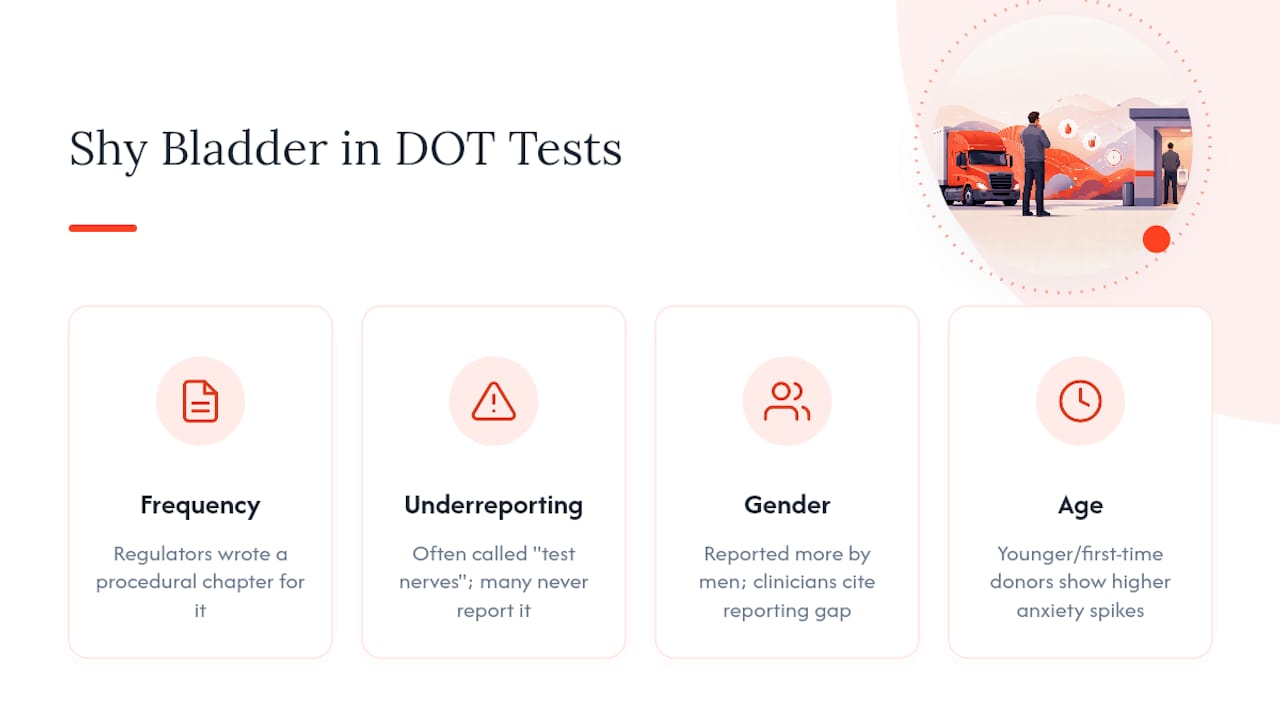
Shy bladder isn’t a rare quirk. Anxiety around performing bodily functions under observation shows up often enough that federal regulators built an entire procedural chapter around it rather than treating it as a fringe case. The International Paruresis Association has spent decades collecting reports from people who describe the exact same freeze response: a full bladder, a monitor standing nearby, and a total inability to void despite genuinely trying.
What makes this hard to quantify precisely is that most people who struggle with it never report it as paruresis. They call it “test nerves” or just assume they’re dehydrated, and they never seek a diagnosis until a failed collection forces the issue. That underreporting means the people showing up in DOT insufficient-specimen statistics represent only the fraction who eventually get evaluated, not the full population affected.
It also skews heavily toward certain groups. Anecdotal patterns collected by paruresis advocates point to men reporting the condition more often than women, though clinicians suspect that’s partly a reporting gap rather than a true prevalence gap, since public restroom anxiety affects people across genders differently depending on facility design and social norms. Age plays a role too. Younger, first-time DOT donors facing an observed collection for the first time in a CDL physical or pre-employment screening report higher anxiety spikes than veteran drivers who’ve been through the three-hour process before and know what to expect.
The bigger point for anyone reading this before a test: you are not an outlier, and the procedure exists precisely because regulators know this happens often enough to require a formal response.
Beyond ADA: Other Legal Protections Worth Knowing
The ADA gets most of the attention, but it isn’t the only lever available if you’re facing a shy bladder situation at work or in a legal context. Several other protections and practical rights come into play depending on your situation.
State disability laws often extend further than the federal ADA baseline, and some states require accommodation discussions even for employers below the ADA’s 15-employee threshold. If you work for a smaller company that technically falls outside ADA coverage, check your state’s own disability and employment statutes before assuming you have no recourse.
Union contracts frequently include their own drug testing grievance procedures separate from ADA accommodation requests. If you’re in a unionized workplace, your collective bargaining agreement may spell out a faster or more specific process for disputing a refusal determination than filing a standalone ADA claim would.
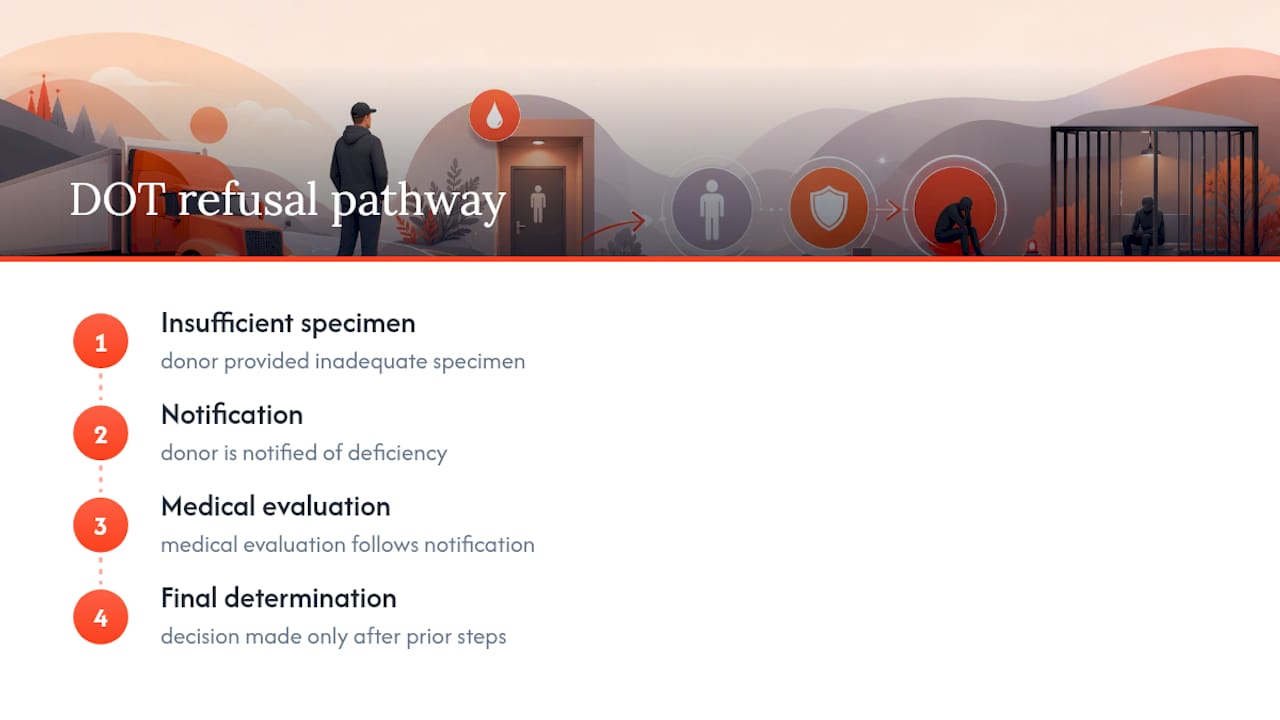
Due process protections also matter in DOT-regulated refusal determinations. Legal guides on shy bladder testing procedure note that a refusal isn’t supposed to be automatic. It follows a documented chain: insufficient specimen, notification, medical evaluation, and only then a final determination. If any step in that chain gets skipped or rushed, that’s a procedural defect worth raising with an employment attorney before accepting the outcome.
Court-ordered and probation testing situations carry their own separate rules, often set by the presiding judge or supervising officer rather than DOT or ADA frameworks, so a documented paruresis diagnosis submitted to the court directly can sometimes secure an alternative method faster than an employment-based accommodation request would.
Techniques That Help You Manage the Anxiety in the Moment
Managing paruresis during an actual test comes down to reducing the physiological panic response enough to let the body do what it’s biologically ready to do. None of these techniques guarantee success, but they address the actual mechanism, muscle tension triggered by perceived threat, rather than just willpower.
Slow, deliberate breathing before and during the attempt helps interrupt the fight-or-flight response that tightens the pelvic floor. Four counts in, four counts held, four counts out, repeated for a minute before you approach the collection area, can lower the baseline anxiety enough to make a difference.
Some people with diagnosed paruresis work with a therapist on graduated exposure therapy well before a test is even scheduled. This involves practicing urination in progressively more observed or public settings, starting with a closed stall and no one nearby, and building tolerance over weeks or months rather than trying to fix the problem in the three-hour window at a collection site.
Cognitive reframing matters too. Anxiety around the collector “judging” you or timing you often amplifies the freeze response. Reminding yourself that collectors handle this exact situation regularly, and that the three-hour protocol exists specifically for people like you, can lower the perceived stakes enough to help.
Distraction techniques, running water, humming, or focusing attention away from the act itself, work for some people because paruresis often involves an unconscious hyperawareness of trying to perform. The goal is shifting attention just enough to let the body relax without actively “trying” too hard, which paradoxically tends to make the muscle tension worse.
Preparing Before Test Day Makes the Biggest Difference
The best time to deal with shy bladder is weeks before you’re ever scheduled for a test, not in the parking lot beforehand. IPA’s own guidance on paruresis and drug testing recommends getting a clinical diagnosis in advance whenever possible, since a documented history carries far more weight with an MRO than a first-time claim made mid-collection.
Hydration timing matters more than most people realize. Overdrinking right before arrival can backfire, since a bladder that’s uncomfortably overfull sometimes intensifies the anxiety response rather than easing it. A steady, moderate intake over the hours leading up to the appointment tends to work better than a last-minute chug.
If you know a test is coming, whether it’s a scheduled pre-employment screening or an annual DOT physical, contact HR or the medical examiner’s office ahead of time to ask what accommodation options exist. Some employers will proactively offer a private stall, extra time, or an alternative specimen method once they know in advance, rather than scrambling to figure it out after a failed attempt.
Practicing relaxation techniques, the same breathing and reframing methods used during the actual test, in the days beforehand builds familiarity so they’re not something you’re trying for the first time under pressure. Treat it the same way you’d rehearse for any high-stakes moment: the calmer you are walking in, the better your odds of a straightforward collection.
Why Documentation Is the Real Story Here
Most people assume the hard part of a shy bladder situation is the biology. It isn’t. The legal analysis on shy bladder testing rights makes clear that procedural missteps, not the underlying condition, are what most often turn a genuine medical issue into a refusal on someone’s record. Leaving the site early, skipping the medical evaluation, or failing to get anything in writing costs people more than paruresis itself ever does.
What frustrates me about how this topic usually gets covered is the framing that shy bladder is some rare, embarrassing exception. It’s a recognized condition with a federal procedure built specifically around it. Treating it like a personal failing instead of a documented medical reality is exactly what pushes people into panic decisions at the worst possible moment. Get the paperwork. Get the diagnosis. Don’t wing it.
— MIchael
Practical Next Steps After You’ve Followed the Formal Process
Once you’ve been through the official DOT or employer procedure, some readers look for additional ways to understand their own results or prepare for a future screening. Passmydrugtest carries independent testing options built for exactly that kind of follow-up research.
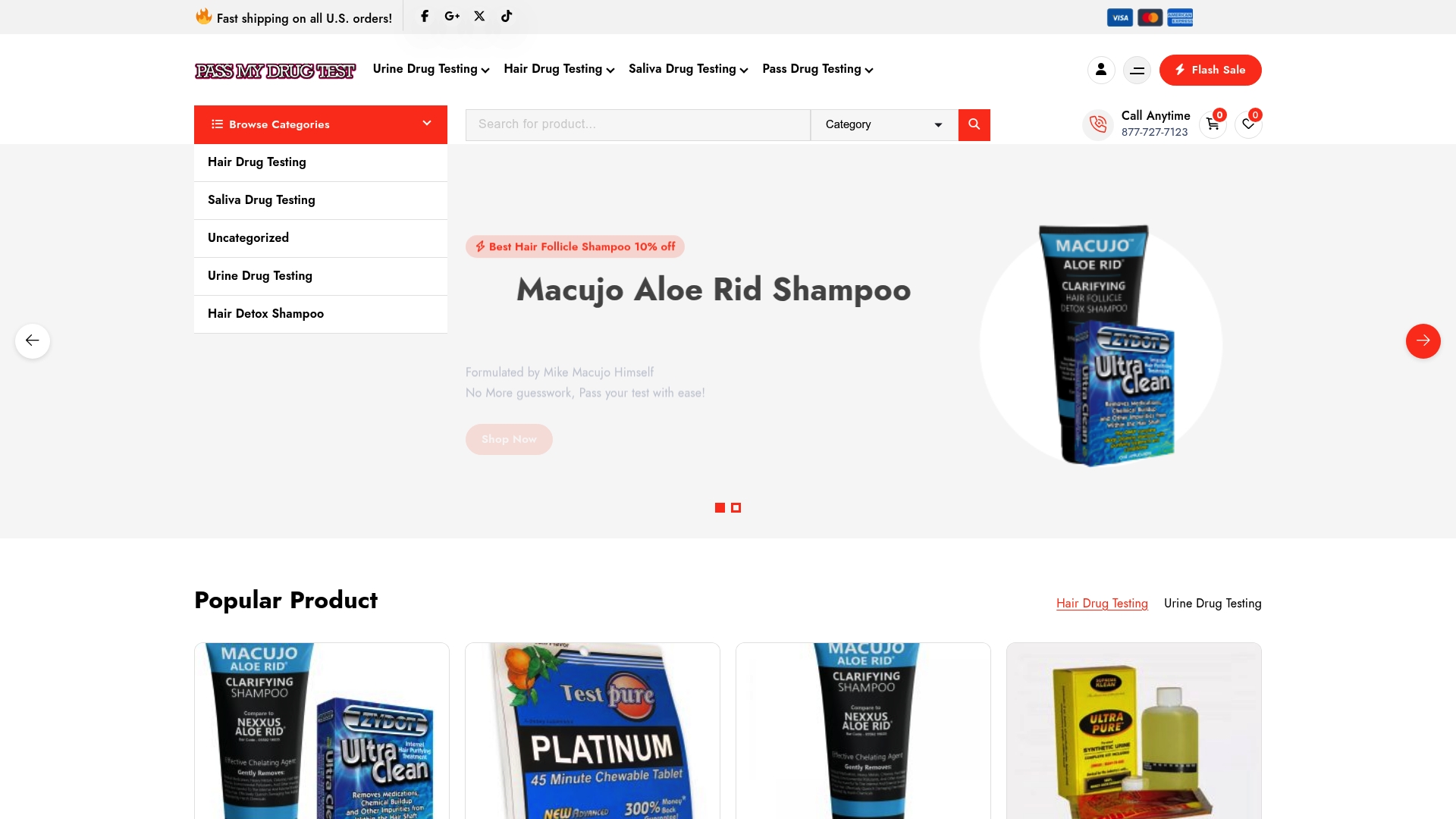
If a hearing or personal situation calls for outside verification, a home hair test kit offers an independent look at a longer detection window than urine alone can provide. For readers who want to understand testing methods more broadly before their next screening, the drug testing method overview breaks down how different specimen types work and what each one actually measures. None of these replace a medical evaluation or legal counsel when a refusal determination is on the line, but they’re practical tools for readers doing their own homework. Passmydrugtest ships fast on domestic orders and offers phone support during business hours if you have questions about which product fits your situation. Browse the full drug testing products selection to find the right option for what you’re facing next.
Official Resources Worth Printing or Sharing
Bring these directly to your MRO, HR representative, or attorney:
- FMCSA’s shy bladder guidance: CDL-specific rules and consequences
- International Paruresis Association: diagnosis support and advocacy
- SAMHSA: federal substance use and testing policy resources
This article is general information, not a substitute for advice from a qualified lawyer. Consult a qualified legal professional about your own circumstances before acting on anything here.
Sources
- FMCSA — Shy bladder
- International Paruresis Association — Shy bladder and drug testing rules
- LegalClarity — Shy bladder drug test procedure, rules, and rights