

Hair drug test detection window: Pass with confidence
A hair follicle drug test can expose marijuana use that happened months ago, long after a urine or saliva test would come back clean. Many users assume they’re safe after a few weeks, but THC metabolites stay detectable in scalp hair for up to 90 days using a standard 1.5-inch sample. That gap between what people expect and what labs actually find is exactly where most people get caught off guard. This guide breaks down how the detection window really works, what factors shape your personal risk, and what proven steps you can take to protect yourself before your next test.
Table of Contents
- How hair drug tests work: Inside the science
- What affects your hair test detection window?
- The real-world timeline: When can you actually test positive?
- How labs detect, cutoffs, and beating false positives
- Why most advice about hair drug tests misses the mark
- Take control: Your path to passing with confidence
- Frequently asked questions
Key Takeaways
| Point | Details |
|---|---|
| 90-day detection window | Hair follicle drug tests can reveal marijuana use up to 90 days after your last use. |
| Usage pattern matters | Chronic users stay positive longer, while single use is harder to detect. |
| Lab processes reduce mistakes | Labs use washing and confirmatory analysis to ensure results reflect internal drug exposure, not just external contamination. |
| Body hair risks extend | Body hair samples can show drug use for up to 12 months due to slower growth rates. |
| Science over myths | Understanding lab methods and realistic timelines is your best tool to prepare and pass. |
How hair drug tests work: Inside the science
Understanding why hair tests catch drug use so far back starts with knowing how THC actually gets into your hair in the first place. When you consume marijuana, THC enters your bloodstream. As blood flows through your scalp, it feeds growing hair follicles, and trace amounts of THC metabolites get deposited inside the hair shaft itself. That’s the key word: inside. The metabolites aren’t sitting on the surface where a shampoo can wash them away. They’re locked into the structure of the hair as it grows.
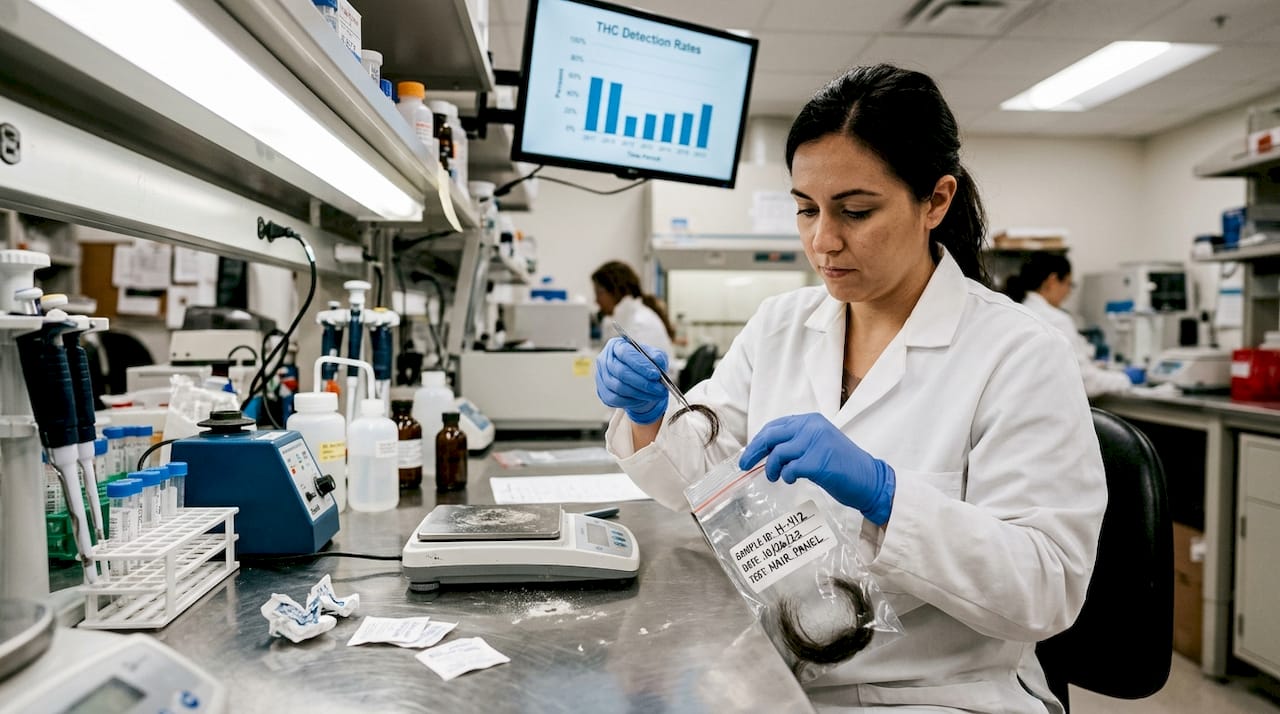
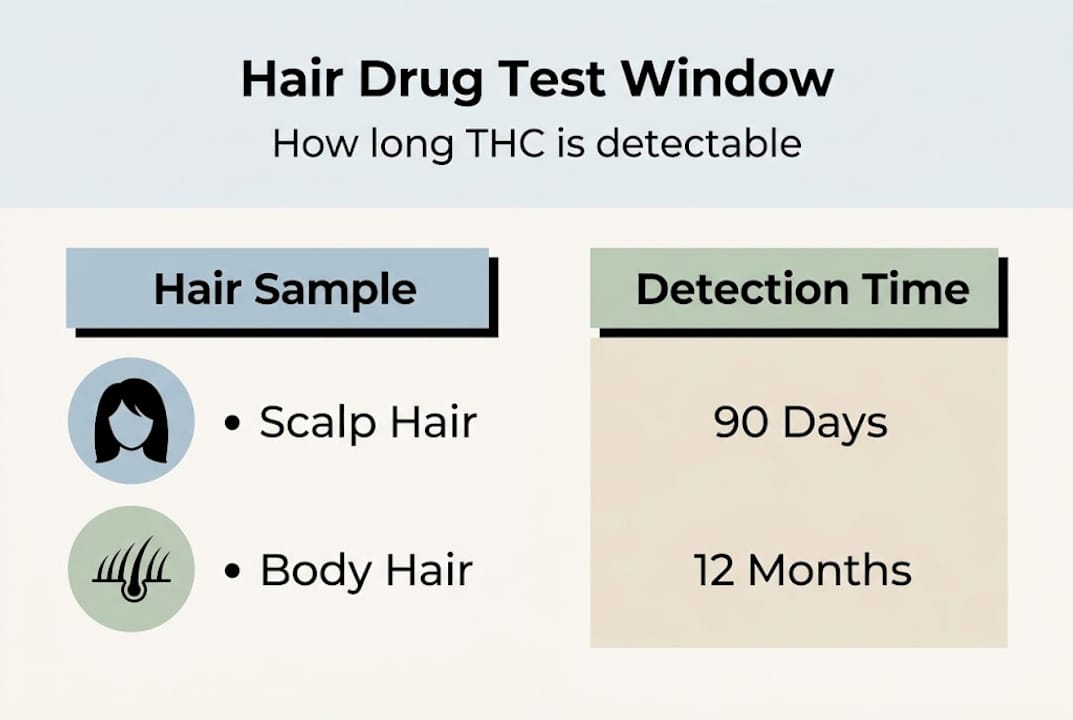
One important detail that surprises most people: hair must emerge from the scalp before it can be tested, so use within the last 7 to 10 days typically won’t show up. Hair grows roughly half an inch per month, so a standard 1.5-inch sample collected close to the scalp covers approximately 90 days of history. That’s the standard detection window labs work with.
Here’s how hair testing compares to other common drug test methods:
| Test type | Detection window for THC | Sample used |
|---|---|---|
| Hair follicle | Up to 90 days (scalp) | Hair strand |
| Urine | 3 to 30 days | Urine sample |
| Saliva | 1 to 3 days | Oral fluid |
| Blood | 1 to 7 days | Blood draw |
Labs don’t just look at the hair and guess. They use a two-step process. First, they screen the sample with an immunoassay test. If that comes back positive, they confirm it with GC-MS (gas chromatography-mass spectrometry), which is highly accurate and specifically targets internal metabolites, not surface residue. This matters because it rules out passive exposure as an excuse.
Key facts about how labs process your sample:
- They wash the hair before testing to remove external contamination
- They target THC-COOH, the internal metabolite, not surface THC
- Confirmatory GC-MS testing is required before any result is reported as positive
- The standard cutoff is around 1 pg/mg for THC-COOH
“Hair follicle testing is one of the most difficult drug tests to beat precisely because it measures what’s inside the hair, not what’s on it. Surface cleaning has minimal impact on confirmed results.”
If you want a deeper look at detection in hair tests, understanding the biology is the first step toward making smarter decisions before your test date.
What affects your hair test detection window?
Now that you know how the process really works, let’s look at what shapes your own detection window and why not everyone is at equal risk.
The single biggest factor is how often you use marijuana. Frequency and duration of use directly influence how much THC-COOH gets deposited in your hair over time. Here’s what the detection window looks like by usage pattern:
- One-time use: detectable for roughly 30 to 45 days
- Occasional use (a few times per week): detectable for 60 to 90 days
- Chronic daily use: detectable for 90 days or more
- Body hair samples: can reveal use going back up to 12 months
Hair color also plays a real role. Melanin, the pigment that gives hair its color, has a chemical affinity for THC. This means dark hair binds more THC than lighter hair, which could theoretically make it easier to detect use in people with darker hair. Labs are aware of this and use standardized cutoffs to reduce bias, but it’s a factor worth knowing.
Hair length matters too. If your hair is longer than 1.5 inches, labs typically only use the 1.5 inches closest to the scalp, which represents the most recent 90 days. Older sections of hair are usually not tested in a standard panel. However, if a collector takes a longer sample or uses body hair, the window extends significantly.
Pro Tip: If you shave your head thinking it will help, labs are authorized to collect body hair instead. Leg, arm, or chest hair grows much slower than scalp hair, which means it can hold a record of drug use going back nearly a year.
Home remedies like vinegar rinses, baking soda scrubs, or clarifying shampoos target the surface of the hair. But since the metabolites are embedded inside the shaft, these approaches offer very limited real-world protection. For a realistic look at your detection time for marijuana and the most effective ways to pass a hair test, evidence-based methods are what actually move the needle.
The real-world timeline: When can you actually test positive?
With all the variables in mind, here’s what real timelines look like for various situations.
The standard 1.5-inch sample collected from your scalp covers approximately 90 days. That’s the baseline. But your personal risk depends heavily on how recently and how often you used marijuana. Here’s a practical breakdown:
- Used once, more than 45 days ago: Your risk is relatively low on a scalp hair test. One-time use produces lower metabolite concentrations, and after 45 days, the affected hair may have grown past the 1.5-inch collection zone.
- Used occasionally, within the last 90 days: You are within the standard detection window. Even occasional use can produce detectable levels depending on potency and your individual metabolism.
- Used regularly or daily, within the last 90 days: This is the highest-risk scenario. Chronic use saturates hair with metabolites over time, making positive results very likely.
- Used recently (within the last 7 to 10 days): Ironically, very recent use may not show up yet because the affected hair hasn’t emerged from the scalp. However, any use from the weeks before that is still at risk.
- Body hair collected instead of scalp hair: Your risk window jumps dramatically. Body hair grows slower, so a standard sample can reflect use from 6 to 12 months back.
Pro Tip: If you know a test is coming, the most effective timing strategy is to stop all use immediately and give yourself as much lead time as possible. Pair that with a proven shampoo for hair drug tests and follow a structured preparation protocol. Time alone isn’t always enough, especially for regular users.
Understanding these timelines takes the guesswork out of your situation. For a full breakdown of what to expect, hair drug testing explained covers the details in plain language.
How labs detect, cutoffs, and beating false positives
Before we move to action, see how labs ensure accuracy and what you should watch for.
A lot of people believe hair drug tests are unreliable or easy to dispute. That’s not accurate. Labs follow a strict process designed to produce defensible results. Here’s what actually happens when your sample reaches the lab:
- The hair is washed with a solvent to remove external contamination from sweat, smoke, or environmental exposure
- The washed hair is then dissolved and analyzed for internal metabolites
- An initial immunoassay screen identifies presumptive positives
- Any positive screen is confirmed with GC-MS, which targets internal THC-COOH at cutoffs around 1 pg/mg
- Only after GC-MS confirmation is a result reported as positive
The washing step is important because it’s how labs separate passive exposure from actual drug use. If you were around marijuana smoke but didn’t use it, the washing process should remove surface contamination. The GC-MS step then confirms whether the metabolites found are truly internal, meaning they came from inside your body.
“The combination of pre-wash and GC-MS confirmation means that a confirmed positive result is very difficult to dispute on the basis of contamination alone.”
The cutoff level of approximately 1 pg/mg for THC-COOH is set to reduce false positives from incidental exposure. Light or one-time users may fall below this threshold, which is why hair drug test accuracy matters so much when evaluating your own risk.
If you believe a result is wrong, you have the right to request a split sample retest. Keep documentation of any medical prescriptions or legitimate reasons for a positive result, and act quickly since timelines for disputes are usually short.
Why most advice about hair drug tests misses the mark
Most guides you’ll find online treat hair drug testing like a simple problem with a simple answer. They either tell you the 90-day window applies to everyone equally, or they push a miracle cleanse that promises results with no scientific backing. Neither approach serves you well.
The reality is more nuanced. Melanin content in darker hair creates a measurable difference in how much THC binds to the shaft. Body hair extends the detection window far beyond what most people realize. Lab cutoffs mean that light users face genuinely different odds than chronic users, and that distinction rarely gets the attention it deserves.
We’ve seen too many people rely on vinegar rinses or cheap clarifying shampoos and walk into a test completely unprepared. The science is clear: surface treatments don’t reach internal metabolites. What actually works is a structured, evidence-based approach using targeted detox shampoos designed to penetrate the hair cortex, combined with enough preparation time.
Smart preparation means understanding your specific risk profile, not just following generic advice. Know your usage pattern, your hair type, and your timeline. Then act accordingly with proven methods.
Take control: Your path to passing with confidence
Now that you understand how detection works, here’s where to get proven help and maximize your chances of passing.
Knowing the science is only half the battle. The other half is taking action with products and strategies that are actually built for this challenge.

Our Macujo Aloe Rid Shampoo is specifically formulated to penetrate the hair cortex and reduce THC metabolite levels where it counts most. Pair it with our step-by-step hair cleansing strategies to follow a proven protocol from start to finish. You can also get effective detox shampoos and browse our full range of proven detox solutions designed specifically for marijuana users facing hair follicle tests. Don’t leave your result to chance.
Frequently asked questions
How long does weed stay detectable in a hair test?
Marijuana can be detected in scalp hair for up to 90 days after use, and even longer in body hair, which can retain evidence of use for up to 12 months.
Is it possible to test positive if I only used marijuana once?
Yes, a single use is detectable, though harder to catch. One-time use can show up in hair for 30 to 45 days depending on the individual and test sensitivity.
Can washing or bleaching my hair beat a hair follicle drug test?
Unlikely on its own. Labs wash samples first and then use GC-MS to confirm internal metabolites, so surface-level cleaning methods offer limited protection.
Why is my body hair riskier than scalp hair?
Body hair grows much slower than scalp hair, so a standard sample can reveal drug use going back up to 12 months, compared to 90 days for scalp hair.
How do labs make sure hair drug test results are accurate?
Labs wash the hair to remove surface contamination, then confirm with GC-MS targeting internal THC-COOH at cutoffs around 1 pg/mg, making errors very unlikely.