
Texas Drug Testing Laws: What to Know Before Your Screen
Texas gives private employers wide latitude to require drug tests before hiring, on the job, and after an incident, and to act on a confirmed positive. What protects you is procedure, not policy limits: a written drug-free workplace policy, a chain-of-custody form, and Medical Review Officer (MRO) confirmation via GC-MS before any result becomes final. Before your appointment, bring a government ID, gather prescription documentation for the MRO, and confirm who’s paying and when the test window opens.
Key Takeaways
Texas law lets employers and many licensing bodies require drug tests with few restrictions, but MRO confirmation and chain-of-custody procedure are what actually protect you.
| Point | Details |
|---|---|
| Employer authority is broad | Texas imposes few statutory limits on private employer testing beyond written policy requirements. |
| Procedure beats policy limits | Chain-of-custody accuracy and MRO confirmation via GC-MS matter more than fighting the test itself. |
| THC has no shield | Medical cannabis registration does not protect Texas employees from discipline over a positive test. |
| Documentation goes to the MRO | Disclose prescriptions and OTC products to the Medical Review Officer, not the collector. |
| Watch for payment scams | Legitimate employers pay for testing directly; prepaid-card requests signal fraud. |
| Preparation help is available | Passmydrugtest offers detox products, at-home kits, and guides for lawful preparation. |
Table of Contents
- What Texas Drug Testing Laws Actually Require
- How to Show Up Prepared and Avoid a Procedural Failure
- Safe, Legal Ways to Prepare for a Texas Drug Test
- Where to Verify the Rules and Get Help
- Frequently Asked Questions
- Sources
What Texas Drug Testing Laws Actually Require
Texas has no statute forcing private employers to test, and almost none limiting how they do it once they choose to. That’s the part most people get wrong. Licensing agencies fill the gap with detailed frameworks. The TDLR model drug testing policy for towing and vehicle storage, used across Texas as a template for other regulated industries, requires random testing of at least 25% of employees annually, plus six follow-up tests in the first year after a return-to-duty test. That’s the real shape of Texas drug testing regulations at the licensing level: strict schedules, but no ceiling on how often a private employer can test you if it’s written into policy.
Confidentiality has more teeth. State labor code provisions treat drug test results as medical records, and employers can prohibit controlled-substance use at work without violating anti-discrimination rules, as long as they apply the policy consistently. If you’re disputing a result, the strongest angle usually isn’t the test itself. It’s whether your employer followed its own written procedure, because Texas courts weigh that heavily in unemployment and wrongful-termination disputes.
Testing Methods and Detection Windows
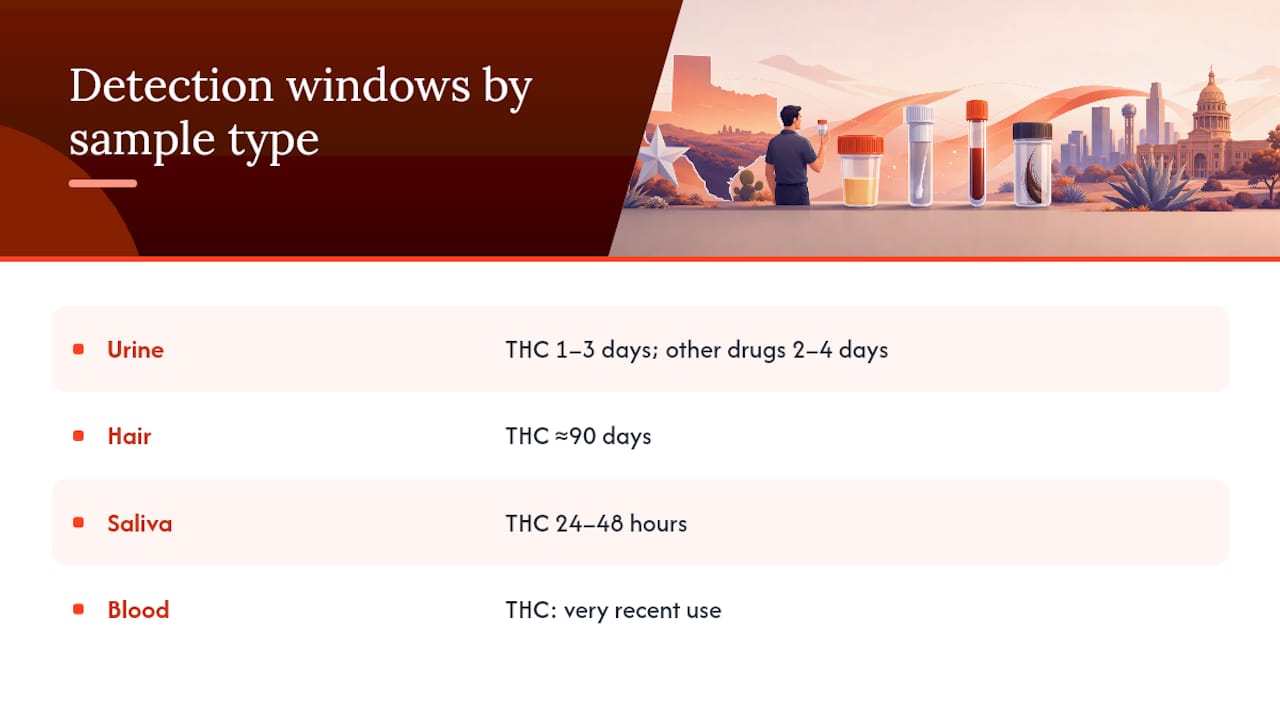
Employers and courts in Texas use four main sample types, and the testing method they pick determines your detection window. Urine testing is most common and typically catches THC for one to three days for occasional users, longer for daily users. Hair testing can detect use going back roughly 90 days. Saliva tests cover a shorter recent window, often 24 to 48 hours. Blood tests are rarer outside legal or medical settings but detect very recent use. Cocaine, amphetamines, PCP, and opiates generally clear urine faster than THC, often within two to four days for a single use.
Medical Marijuana and THC Positives
Texas offers no employment shield for THC. Even registered participants in the state’s limited medical cannabis program can be disciplined or denied hire over a positive marijuana test, because Texas law doesn’t require employers to accommodate cannabis use, medical or not. Your only real leverage is documentation: give your prescribing information to the MRO, not the collector, and let the review process run its course.
How to Show Up Prepared and Avoid a Procedural Failure
Bring a government-issued photo ID, your appointment confirmation, and written proof of any prescriptions, plus a list of recent over-the-counter products or CBD use. Collectors record chain-of-custody details, sample temperature, and tamper checks. They don’t record medical explanations. Save that for the MRO review, which is where prescription disclosure actually matters.
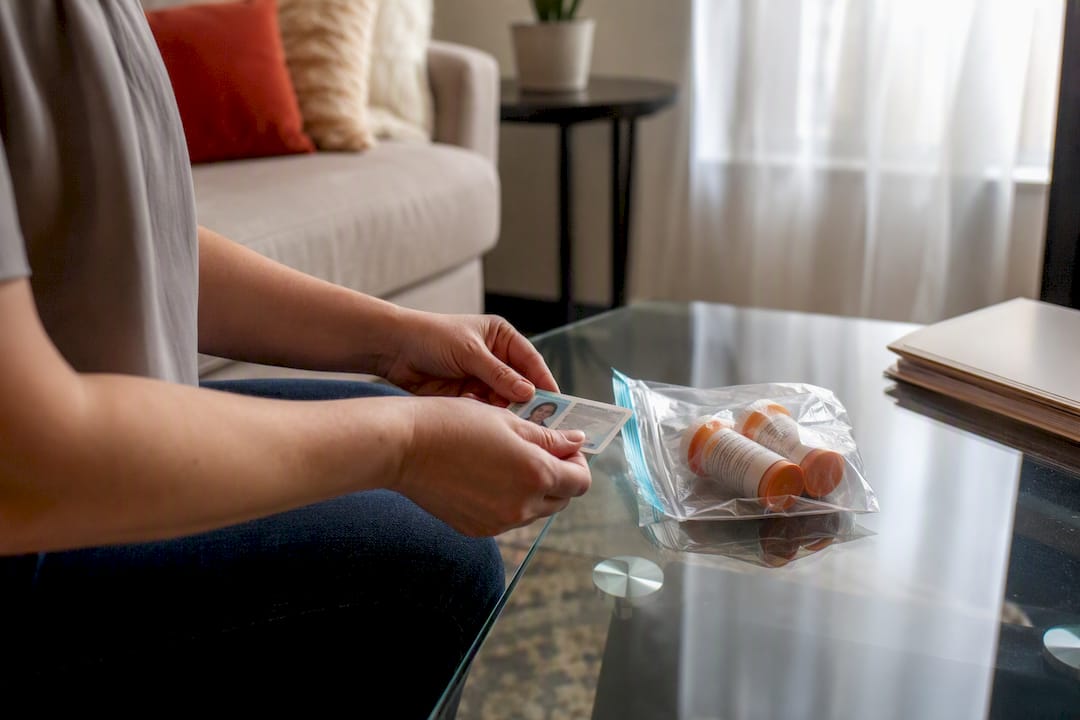
Pro Tip: Ask in advance what sample type you’ll give and confirm whether the employer or you are covering the cost. Reputable employers pay directly. A request that you front the fee or use a prepaid card is a red flag for a scam.
If you have shy bladder or test anxiety, know that collectors can typically offer up to 40 ounces of water over a three-hour window. Walking out before providing a sample is generally treated as a refusal, which most policies equate with a positive.
Safe, Legal Ways to Prepare for a Texas Drug Test
There are legal options for preparing responsibly, and Passmydrugtest exists for exactly that: educational content and detox products built for people who want to know where they stand before an official screen, not after.
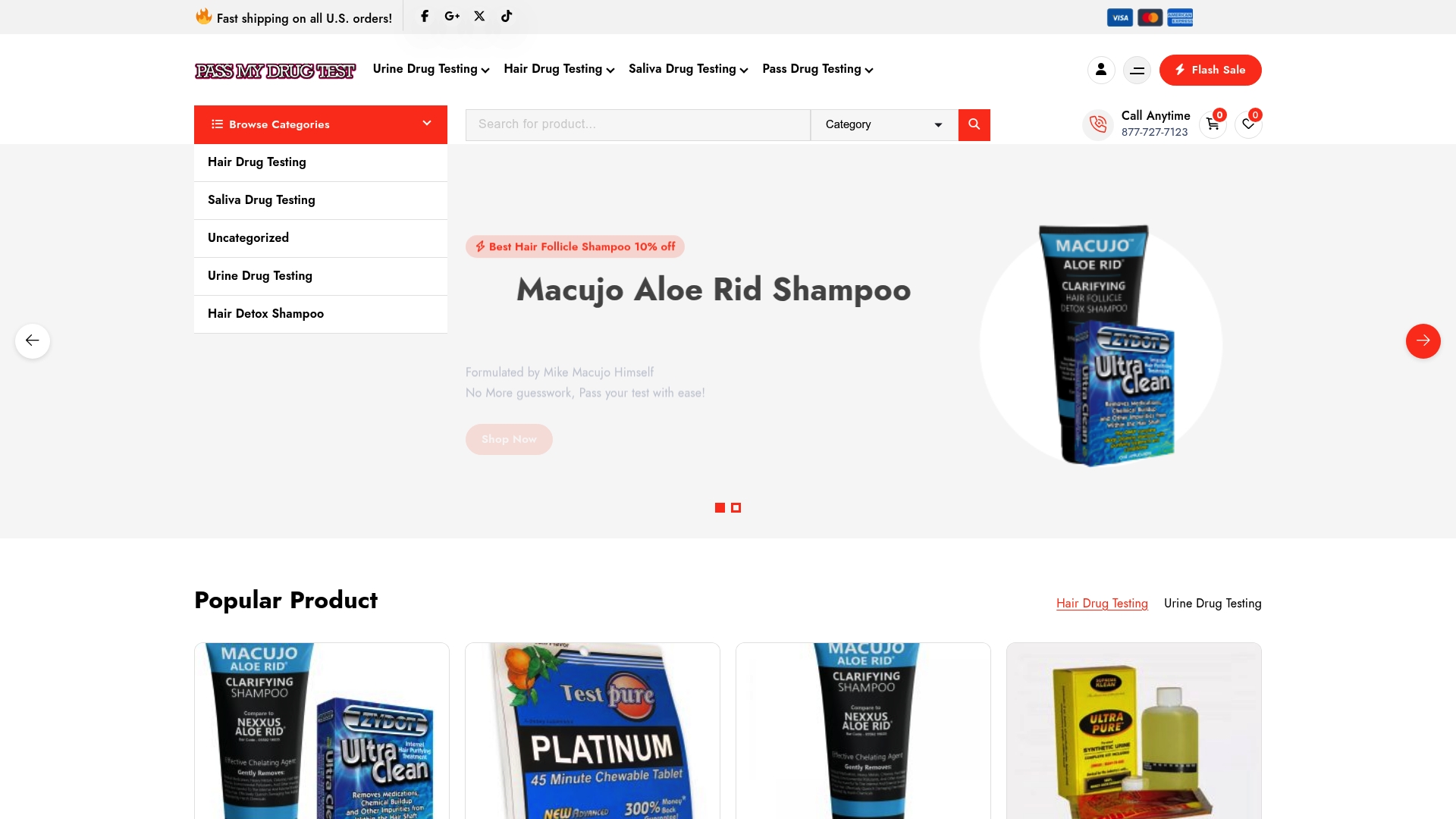
Formal legal protections in Texas are thin. Prescription disclosure to the MRO is free and often the strongest card you hold. Beyond that, preparation is on you. If you’re weighing a detox product or want to check your status before an official employment drug test, start with an at-home test kit to see where you stand, and read the ingredient list on any detox product before you use it. Skip anything promising guaranteed results through adulterants, and never send payment through a prepaid card to a “tester” who isn’t your actual collection site. Browse Passmydrugtest’s product categories and guides to plan your timeline realistically, then book what fits your situation.
Where to Verify the Rules and Get Help
- Review TWC guidance on workplace drug testing for policy basics.
- Check the TDLR model policy for licensing-level testing schedules.
- See what happens at collection before your appointment.
- Talk to an employment attorney if consequences involve termination, licensing action, or a probation violation.
Frequently Asked Questions
Can a Texas employer fire me for refusing a drug test?
Yes. Most written policies treat refusal the same as a positive result, and Texas gives employers broad authority to enforce that.
Do I have to tell the collector about my prescriptions?
No. Prescription disclosure goes to the MRO during confirmation review, not to the person collecting your sample.
Does probation drug testing follow different rules than workplace testing?
Probation testing is court-ordered and typically follows stricter schedules and consequences, but it relies on the same chain-of-custody and confirmatory testing standards used in employment screening.
Who pays for a Texas drug test?
Employers typically arrange and cover testing costs. Being asked to pay upfront, especially through a prepaid card, is a common scam indicator.
This article is general information, not a substitute for advice from a qualified lawyer. Consult a qualified legal professional about your own circumstances before acting on anything here.
Sources
- Drug Testing in the Workplace
- TDLR Model Policy 4.24 (drug testing policy)
- What Happens at a Drug Screening? | Quest Diagnostics
- Texas Drug Test Laws: Rights, Rules, and Consequences – LegalClarity
- tex._labor_code_section_21.120