

Gabapentin Drug Test: What You Need to Know
Gabapentin will not show up on a standard workplace or pre-employment drug test. Routine 5-panel and 10-panel screens check for THC, cocaine, opioids, amphetamines, and PCP, not gabapentin, so a typical urine cup test comes back negative regardless of how much Neurontin is in your system. It only turns up when someone orders a specialized gabapentin test or an expanded prescription drug panel, and both Quest Diagnostics and LabCorp run those assays when a clinician, court, or treatment program specifically requests one.
If you’re facing one of those expanded tests, two things matter more than anything else:
- Disclose your prescription before testing, in writing if possible.
- Ask which panel is being run so you know whether gabapentin is even a target.
Pro Tip: Keep a photo of your prescription bottle and pharmacy printout on your phone. If a Medical Review Officer calls to verify a positive, you can send documentation in seconds instead of scrambling to find your pharmacy’s number.
Key Takeaways
Gabapentin stays out of routine drug panels, but expanded prescription screens, LC-MS/MS confirmation, and renal health together determine whether and how long it actually gets detected.
| Point | Details |
|---|---|
| Standard panels miss it | Gabapentin isn’t federally scheduled, so 5-panel and 10-panel workplace tests don’t screen for it. |
| Urine detection is short | Healthy adults typically clear gabapentin from urine within 1 to 4 days. |
| Kidney function drives everything | Impaired renal clearance can extend detection windows well past typical ranges. |
| Confirm before trusting a screen | Immunoassay positives should be confirmed with LC-MS/MS through labs like Quest or LabCorp. |
| Plan ahead with Passmydrugtest | Passmydrugtest’s detox products and testing guides help readers prepare for a known screening date. |
Table of Contents
- Why Gabapentin Usually Isn’t on Standard Drug Panels
- Detection Windows by Specimen: Urine, Blood, Saliva, and Hair
- How Labs Detect Gabapentin: Screening vs. Confirmation
- Who Orders Gabapentin Testing, and Why
- Factors That Change How Long Gabapentin Stays Detectable
- What to Do If You’re Tested or Get a Positive Result
- Can Gabapentin Cause a False Positive on a Drug Test?
- Why the Conventional Advice on Gabapentin Testing Misses the Point
- Preparing for a Screening You’re Not Sure About
- Frequently Asked Questions
- Sources
Why Gabapentin Usually Isn’t on Standard Drug Panels
Gabapentin isn’t a federally scheduled controlled substance, so it never made the cut for the routine 5-panel and 10-panel workplace screens that dominate pre-employment and random workplace testing. Those panels are built around THC, cocaine, opiates, amphetamines, and PCP, plus a few additions on the 10-panel version like benzodiazepines and barbiturates.
Labs can add gabapentin to a toxicology panel without much technical difficulty. Its absence from routine screens is a policy choice, not a chemistry problem.
Gabapentin testing exists and is widely available through major reference labs. It just isn’t part of the default menu employers order.
Expanded testing typically comes from:
- Pain management clinics monitoring compliance
- Addiction treatment programs tracking co-use
- Courts, probation officers, or parole boards
- Forensic toxicologists in postmortem cases
Detection Windows by Specimen: Urine, Blood, Saliva, and Hair
Urine is the specimen almost everyone means when they ask “how long does gabapentin stay in your system for testing.” In someone with normal kidney function, gabapentin’s half-life runs about 5 to 7 hours, which translates to a urine detection window of roughly 1 to 4 days. Some clinical resources put the window closer to 2 to 4 days, depending on dose and hydration.
| Specimen | Typical detection window | Common method |
|---|---|---|
| Urine | 1–4 days | Immunoassay/ELISA screen, LC-MS/MS confirmation |
| Blood | approximately one day | LC-MS/MS quantitative |
| Saliva | 1–2 days | Rapid immunoassay (less common) |
| Hair | potentially detectable for several weeks to months | LC-MS/MS (rarely ordered for gabapentin) |
Kidney function changes everything. Because gabapentin clears the body almost entirely through the kidneys unchanged, impaired renal function can stretch that half-life well past 7 hours, sometimes into days, pushing detection windows far beyond the typical range for healthy adults.

How Labs Detect Gabapentin: Screening vs. Confirmation
Most gabapentin testing follows a two-step workflow that mirrors how labs handle any prescription drug screen: a fast, cheap screen followed by a slower, precise confirmation.
- Immunoassay/ELISA screening flags the presence of gabapentin quickly and cheaply. Neogen’s gabapentin ELISA kit is a common example used in forensic and clinical screening settings.
- LC-MS/MS confirmation gives a quantitative result and rules out cross-reactivity issues. Quest Diagnostics runs this method under test code 39407, reporting results against a reference guideline around 1,000 ng/mL.
- LabCorp’s order code 790394 covers a comparable urine gabapentin test, reported in µg/mL or ng/mL depending on the lab.
Any presumptive positive from an ELISA screen should get confirmed with quantitative mass spectrometry before anyone treats it as a final result, according to Neogen’s own product guidance.
Sample handling matters too. Quest’s specimen requirements specify volume and storage conditions, and shipping urine outside those parameters can get a sample rejected before it’s even tested.
Who Orders Gabapentin Testing, and Why
Pain management clinics run gabapentin panels most often, usually to confirm patients are taking the medication as prescribed rather than diverting it. Addiction treatment programs are close behind, largely because of how frequently gabapentin turns up alongside opioids.
One clinical and forensic study out of St. Louis found gabapentin in roughly 28 to 30% of certain tested samples, with most of those positives also showing opioids. That co-use pattern is exactly why programs monitoring opioid safety often add gabapentin to their panels.
Other settings that commonly order it:
- Probation and court-mandated drug monitoring
- Forensic and postmortem toxicology
- Hospital toxicology workups for suspected overdose
Some states have also reclassified gabapentin as a controlled substance at the state level, which tends to increase how often it appears in state-supervised testing programs.
Pro Tip: If you’re in a pain management or suboxone program, ask your provider directly whether gabapentin is part of their standard panel. Programs vary widely, and a quick question saves you from guessing.
Factors That Change How Long Gabapentin Stays Detectable
Kidney function is the single biggest variable. Since gabapentin leaves the body through renal excretion without being metabolized, anyone with reduced kidney function clears it far more slowly than someone with healthy kidneys.
Beyond renal health, several other factors shift the timeline:
- Dose and formulation (immediate-release vs. extended-release like Gralise)
- Frequency of use (occasional dosing clears faster than daily chronic use)
- Age, body mass, and hydration level
- Other medications competing for renal clearance
A single low dose clears relatively fast. Chronic, high-dose use builds up and takes longer to fully leave the system.
Patients on dialysis or with severe kidney disease can see detection windows stretch well beyond the typical 1 to 4 day range, sometimes by several days, because their kidneys can’t clear the drug at a normal rate.
What to Do If You’re Tested or Get a Positive Result
- Ask which panel is being used. Confirm whether gabapentin is actually a target before assuming a routine test will catch it.
- Disclose your prescription immediately, ideally with a copy of the prescription label or pharmacy record in hand.
- Request confirmatory testing. If an initial screen flags gabapentin, ask specifically for LC-MS/MS confirmation rather than accepting a presumptive immunoassay result.
- Preserve chain-of-custody documentation if the result affects employment, legal proceedings, or custody matters.
Pro Tip: Request a copy of the actual lab report, not just a pass/fail summary, and share it with the Medical Review Officer or your prescribing clinician. They can interpret quantitative values in context far better than an HR representative can.
This is general information, not medical advice. Talk to your prescriber if you have specific questions about your gabapentin regimen and how it might interact with a scheduled test.
Can Gabapentin Cause a False Positive on a Drug Test?
Gabapentin rarely triggers a false positive for benzodiazepines or opioids. Its chemical structure doesn’t closely resemble either drug class, so cross-reactivity on standard immunoassays is uncommon.
When cross-reactivity concerns do arise, confirmatory LC-MS/MS testing resolves them by identifying the exact compound present rather than relying on an antibody-based screen.
If you believe a positive result is inaccurate, request confirmatory testing and submit your prescription documentation. Combining both steps is the fastest way to get an inaccurate flag corrected before it becomes a bigger problem.
Why the Conventional Advice on Gabapentin Testing Misses the Point
Most explainers stop at “gabapentin isn’t on standard panels” and call it a day. That’s technically true, but it undersells how quickly the picture changes once you’re in a monitored setting like pain management, addiction treatment, or a court-ordered program. The real question isn’t whether gabapentin can be detected. It’s whether the person or entity testing you has a reason to look for it.
The conventional wisdom also glosses over kidney function, which I think is the most underrated variable in this entire topic. People fixate on “how many days does gabapentin stay in urine” as if it’s a fixed number, when renal health can shift that window dramatically. If you have any kidney impairment, generic detection window advice basically stops applying to you.
My honest take: the smartest move isn’t trying to predict whether a test will catch gabapentin. It’s controlling what you can control. Disclose the prescription, know your panel, and keep documentation ready. That single habit resolves more testing headaches than any amount of detection-window math ever will.
Preparing for a Screening You’re Not Sure About
If you’re staring down a scheduled urine screen and you’re unsure exactly what it covers or whether you’ll pass it, guessing isn’t a great strategy. Passmydrugtest built its detox product line specifically for people who want a clear plan instead of uncertainty heading into test day, whether that’s a same-week home test to check where you stand or a same-day cleanse designed around a known testing timeline.
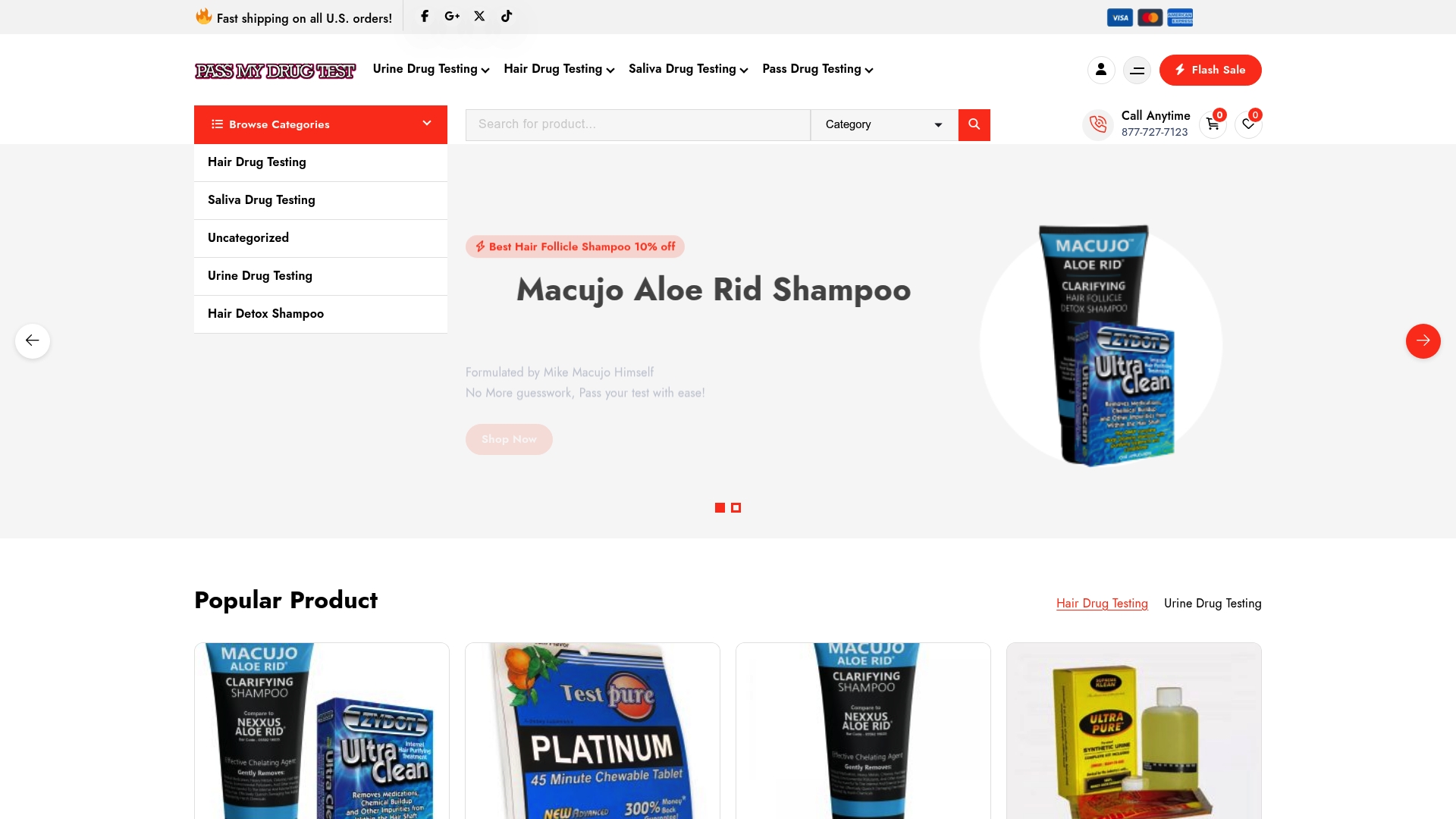
Unlike generic advice forums that leave you piecing together detection windows on your own, Passmydrugtest pairs its products with straightforward drug testing method guides so you know exactly what a given test checks for before you buy anything. If you have a screening date coming up, start by checking the detox product line and picking the option that matches your timeline and test type.
Frequently Asked Questions
Does gabapentin show up on a regular urine drug test?
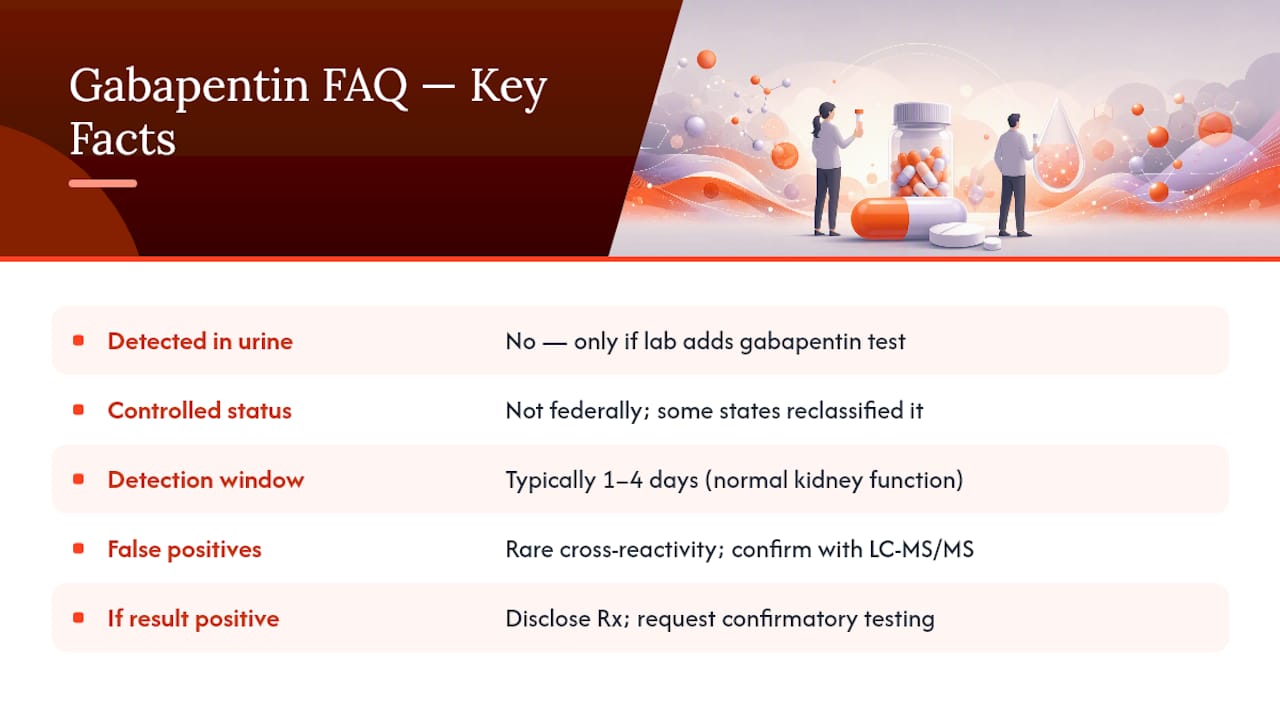
No. Standard workplace urine tests don’t screen for gabapentin unless the lab specifically adds a prescription drug panel or a dedicated gabapentin assay.
Is gabapentin considered a controlled substance for testing purposes?
Not federally, though some states have reclassified it, which increases the odds of testing in state-supervised programs like probation.
How long does gabapentin stay in your urine?
Typically 1 to 4 days in someone with normal kidney function. Impaired renal function can extend that window significantly.
Can a false positive drug test happen because of gabapentin?
It’s uncommon. Gabapentin rarely cross-reacts with benzodiazepine or opioid immunoassays, and any questionable result can be resolved with confirmatory LC-MS/MS testing.
What should I do if my gabapentin prescription causes a positive result?
Disclose your prescription with documentation, request confirmatory testing, and work with the Medical Review Officer or your prescriber to clarify the result.
This article is general information, not a substitute for advice from a qualified doctor. Consult a qualified healthcare professional about your own circumstances before acting on anything here.
Sources
- MMWR — Gabapentin testing context (CDC)
- Gabapentin prevalence: clinical and forensic experience in St. Louis, Missouri, USA (PMC)
- Drug Monitoring, Gabapentin, Quantitative, Urine — Quest Diagnostics
- 790394: Gabapentin, Urine — LabCorp