
U.S. Military Drug Test Rules: Applicant Testing Within 72 Hours
All U.S. service members and new entrants are subject to mandatory drug testing, and a confirmed positive result triggers a Medical Review Officer evaluation plus possible administrative or disciplinary action. Testing relies mainly on observed urinalysis, with hair and oral fluid used in some programs. What happens after a positive depends heavily on the circumstances, the service branch, and command discretion.
TL;DR:
- Cannabinoid positives require both a 50 ng/mL screening result and a 15 ng/mL confirmation result for the THC metabolite before verification.
- Medical Review Officers check positives for medication explanations; Army soldiers must be referred to the Army Substance Abuse Program within five duty days.
- Ask for the test’s premise code and document collection details, because authorization or chain of custody errors may support a retest request or challenge.
- Detection varies by specimen: urine THC may remain detectable for days or weeks, hair for months, and oral fluid from hours to days.
- Voluntary self identification can favor treatment, but commanders retain discretion; refusing or tampering with a specimen can bring consequences comparable to a confirmed positive.
Table of Contents
- Who the rules apply to and why the military tests
- Which tests and substances the military screens for
- How military drug testing is actually conducted
- What happens after a positive or disputed result
- Member options and rights before and after testing
- Timelines and detection windows you should know
- Practical tips and resources for service members
- A straight answer for anyone facing a military drug test
- Where to learn more about testing technologies and products
- FAQ
- Sources
Who the rules apply to and why the military tests
10 U.S.C. §978 requires applicants to be tested for drug and alcohol use and evaluated for dependency, typically within 72 hours of entering active duty. This statute forms the legal backbone for testing new accessions before they ever report to their first unit.
Once in uniform, coverage does not stop at accession. Active-duty members, reservists, and many applicants fall under ongoing periodic and random testing programs, and each service maintains testing quotas along with assigned inspection codes to track why a given test occurred.
The reasoning behind the program is consistent across branches:
- Deterrence: regular, unpredictable testing discourages drug use before it starts.
- Readiness: a drug-free force maintains the physical and mental sharpness military duties require.
- Safety: operating weapons, vehicles, and sensitive equipment demands sobriety.
- Early identification: testing can surface service members who need substance abuse treatment before a problem escalates.
Which tests and substances the military screens for
The primary method remains observed urine collection, but the military also uses hair specimen testing and oral-fluid testing in certain programs. Field point-of-care test devices exist too, though results from these are non-evidentiary and cannot stand alone as the basis for action.
The standard panel covers several drug classes:
- Cannabinoids (THC)
- Cocaine
- Amphetamines and MDMA
- Opioids
- Benzodiazepines
- Synthetic cannabinoids and select designer drugs
A confirmed cannabinoid result requires passing two separate thresholds. Published cutoff concentration tables list an initial immunoassay screening cutoff of 50 ng/mL for cannabinoids, with a confirmation cutoff of 15 ng/mL for the THC metabolite 11-nor-THC-COOH on the follow-up mass spectrometry test. Each drug class carries its own pair of cutoffs, and services periodically update the panel as new substances emerge, so a specimen that screens positive still has to clear the confirmation threshold before it counts as a verified positive.
How military drug testing is actually conducted
Selection method shapes how a test unfolds and what it means for the person tested. Common premise codes identify the reason: random inspection, unit sweep, probable cause, voluntary consent, command-directed, or new-entrant testing. Knowing which code applies to a given test helps a service member understand whether the process followed proper authorization.
- Selection and notification. Depending on the premise code, a member may be chosen by random computer selection, named in a unit-wide sweep, or directed to test based on specific suspicion.
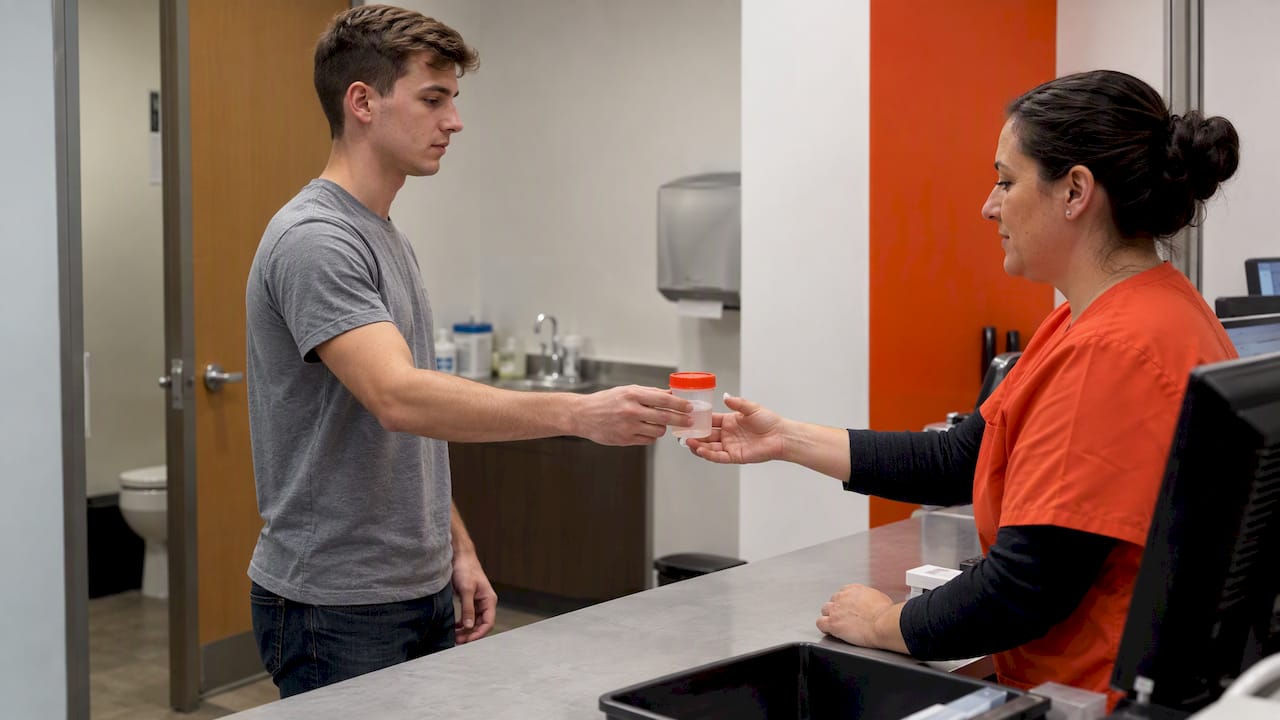
- Observed collection. A same-gender observer maintains an unobstructed view throughout specimen collection to prevent tampering, and the specimen must meet a minimum volume requirement; a member who cannot produce enough urine within the allotted window, commonly up to four hours, follows a shy-bladder procedure rather than being automatically marked as a refusal.
- Chain of custody. Every specimen moves through a documented chain of custody to a DoD-certified laboratory, and that paperwork matters because any break in procedure can become grounds for a retest request or an administrative challenge later.
What happens after a positive or disputed result
A positive screen does not finalize anything on its own. A Medical Review Officer reviews every positive before it becomes official, checking for legitimate medical explanations such as a prescribed medication that could account for the result, and confirming the laboratory findings are sound. This review step exists specifically to catch false positives before they reach a commander.
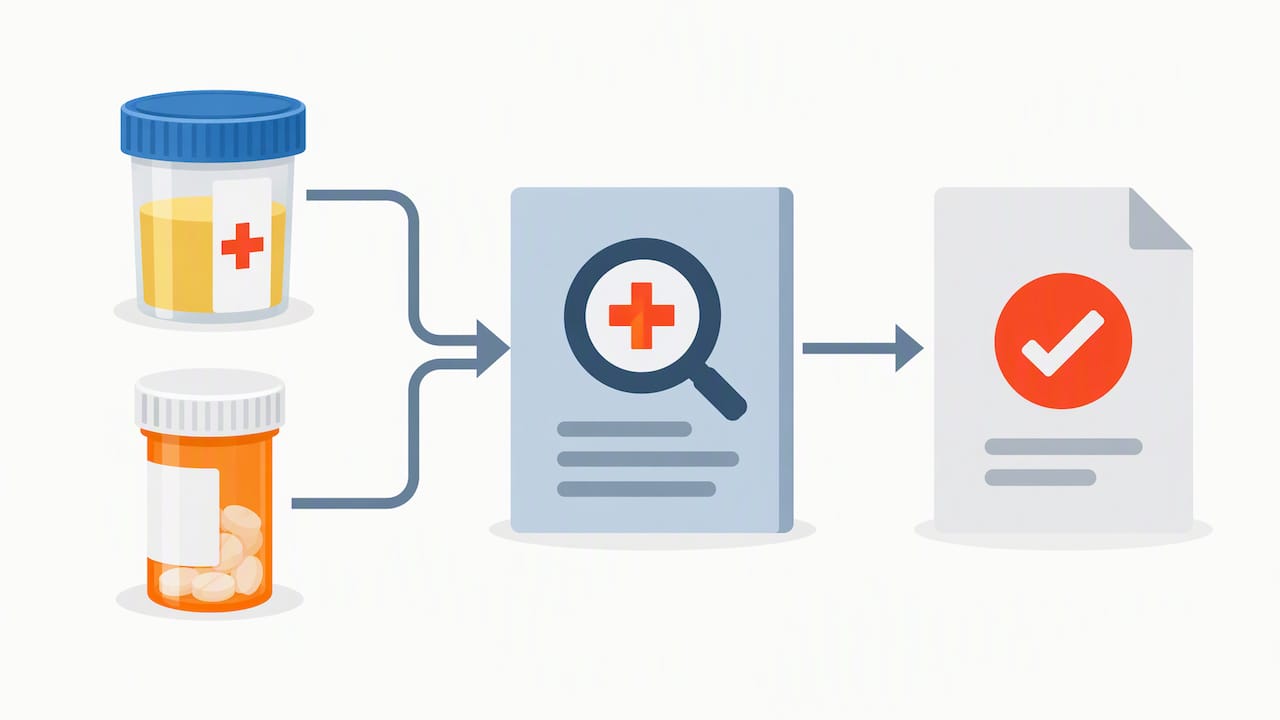
Once the MRO validates a result, strict timelines kick in. AR 600-85 requires the Army to refer a soldier to the Army Substance Abuse Program within five duty days of a validated positive, a timeline meant to connect the service member with assessment quickly rather than let the case sit.
From there, outcomes vary by situation:
- Mandatory referral to a substance abuse treatment or counseling program.
- Administrative separation from service in many cases.
- Action against an existing security clearance.
- UCMJ proceedings in more severe or repeat cases.
- The option to request documentation or challenge a result through proper channels if a procedural error occurred.
Member options and rights before and after testing
Self-identification changes the calculus. Military OneSource notes that voluntary self-identification can shift a case toward treatment rather than immediate punishment, though commanders still retain discretion over how to handle each situation.
Refusing to provide a specimen, or submitting an adulterated or substituted sample, is treated as a constructive refusal and typically brings its own administrative or disciplinary consequences, often comparable to a confirmed positive.
- Ask for the specific premise code that triggered your test; it tells you whether the selection was random, directed, or consent-based.
- Keep your own notes on the collection process, including the observer’s conduct and any delays or irregularities.
- Contact your servicing legal office (SJA) and medical staff early if you plan to dispute a result or a procedural step.
Pro Tip: Write down the date, time, and observer’s name immediately after any collection; small details are easy to forget once days pass and far harder to dispute later.
Timelines and detection windows you should know
New-entrant testing deadlines move fast. Many services test recruits within 72 hours of reporting for duty under accession guidance tied to 10 U.S.C. §978, so anything in a recruit’s system at the time of reporting has limited time to clear before a screen.
- Urine: detection windows vary widely by substance and usage pattern, with THC detection times ranging from a few days for occasional use to several weeks for frequent, heavy use.
- Hair: detection can extend to months after use, covered in more detail in our hair drug test window guide.
- Oral fluid: generally the shortest window, covering recent use from hours up to a few days.
These are estimates, not guarantees. Individual metabolism, hydration, body fat, and frequency of use all shift the actual window.
Practical tips and resources for service members
If you are unsure why you were selected for testing, ask for the premise code and request documentation; this record matters if you later believe a procedural error occurred. Preserve your own notes on dates, times, and anyone involved in the collection.
If you are weighing whether to self-identify a substance issue, reach out to medical and command resources early. Our military drug test overview covers the testing process from the recruit’s perspective in more depth.
- For technical detail on specimen types, see our explainer on how a saliva drug test works.
- For civilian comparison, our preemployment drug testing page explains how workplace screening differs from military procedures.
A straight answer for anyone facing a military drug test
The rules around military drug testing are strict, but they are not designed as a trap. The MRO review step exists precisely to filter out legitimate medical explanations before anyone faces consequences, and the referral timelines built into regulations like AR 600-85 push commands toward getting help to people quickly rather than burying cases in paperwork. What catches people off guard is not the testing itself but the assumption that a positive result ends a career automatically. It often does not, especially when a member cooperates, documents the process, and uses the resources available early. The biggest mistake is staying silent and hoping a problem resolves itself before the next inspection.
— MIchael
Where to learn more about testing technologies and products
Understanding the mechanics behind specimen types can help you make sense of what a test actually screens for and how results get confirmed. We carry a range of product categories built around these technologies, including Hair Drug Testing, Saliva Drug Testing, Urine Drug Testing, and Hair Detox Shampoo supplies.
These pages offer additional resources and product categories to learn about testing technologies, not a guarantee of any particular outcome. Visit Passmydrugtest to browse the full range and find the product category that matches your situation.
This article is general information, not a substitute for advice from a qualified lawyer. Consult a qualified legal professional about your own circumstances before acting on anything here.
FAQ
Does the military drug test recruits?
Yes, recruits are tested as part of the accession process, with many services conducting testing within 72 hours of reporting for duty under 10 U.S.C. §978. This initial screen applies before enlistment is finalized in most cases.
Are you drug tested before joining the Army?
Applicants are tested for drug and alcohol use and evaluated for dependency as part of the entry process, per federal law governing new entrants. The Army conducts this screening close to the point of accession rather than waiting until after training begins.
Can I join the military with past drug use?
Past drug use is evaluated case by case during the accession and medical screening process rather than through the drug test itself, which looks for current use. Specific eligibility standards vary by service and situation, so prospective enlistees should discuss their history directly with a recruiter rather than assume disqualification.
Does the Army test for peptides?
The standard Army drug testing panel focuses on established drug classes like cannabinoids, cocaine, amphetamines, opioids, and benzodiazepines rather than peptides. Peptide and performance-enhancing substance policies fall under separate guidance, so service members with questions should check current Army Substance Abuse Program materials or ask their unit’s prevention leader directly.
Sources
- 10 U.S.C. §978 (prelim) — drug and alcohol testing of new entrants
- AR 600-85 — The Army Substance Abuse Program (23 July 2020)
- Cutoff concentrations in the Military Drug Abuse Testing Program (Navy DDD PDF)
- Military OneSource — Military policy and treatment for substance use