
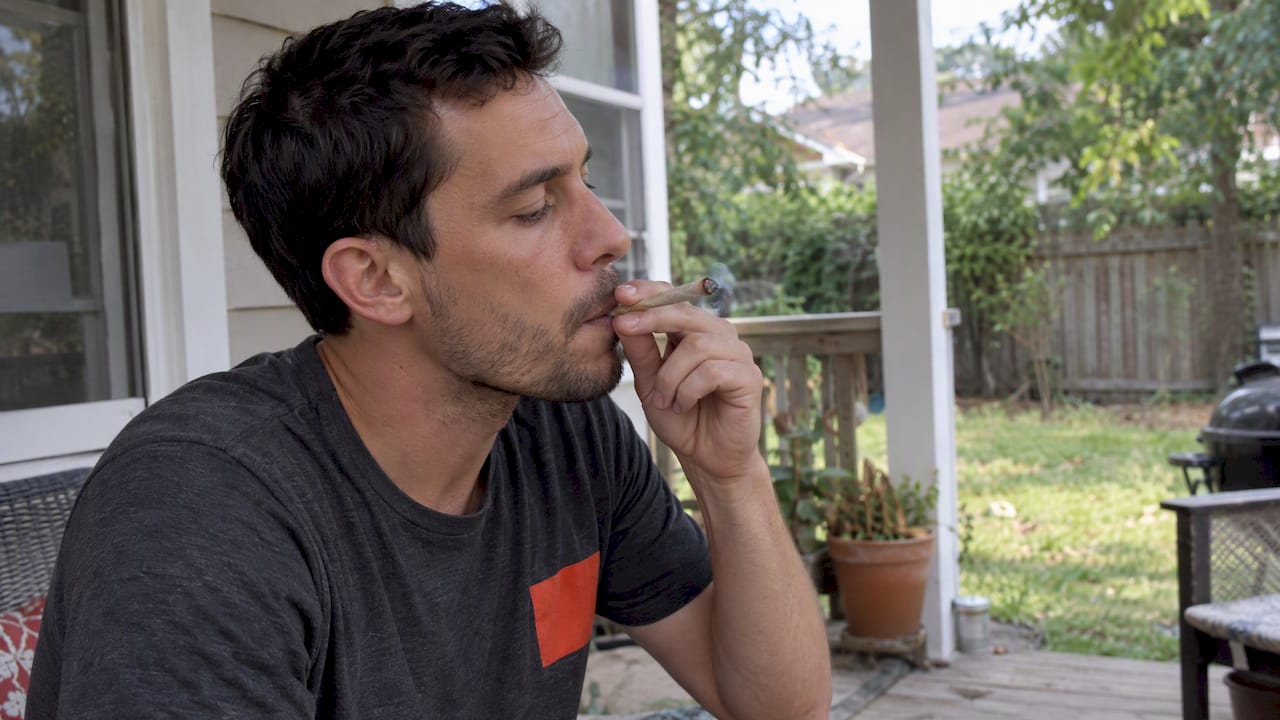
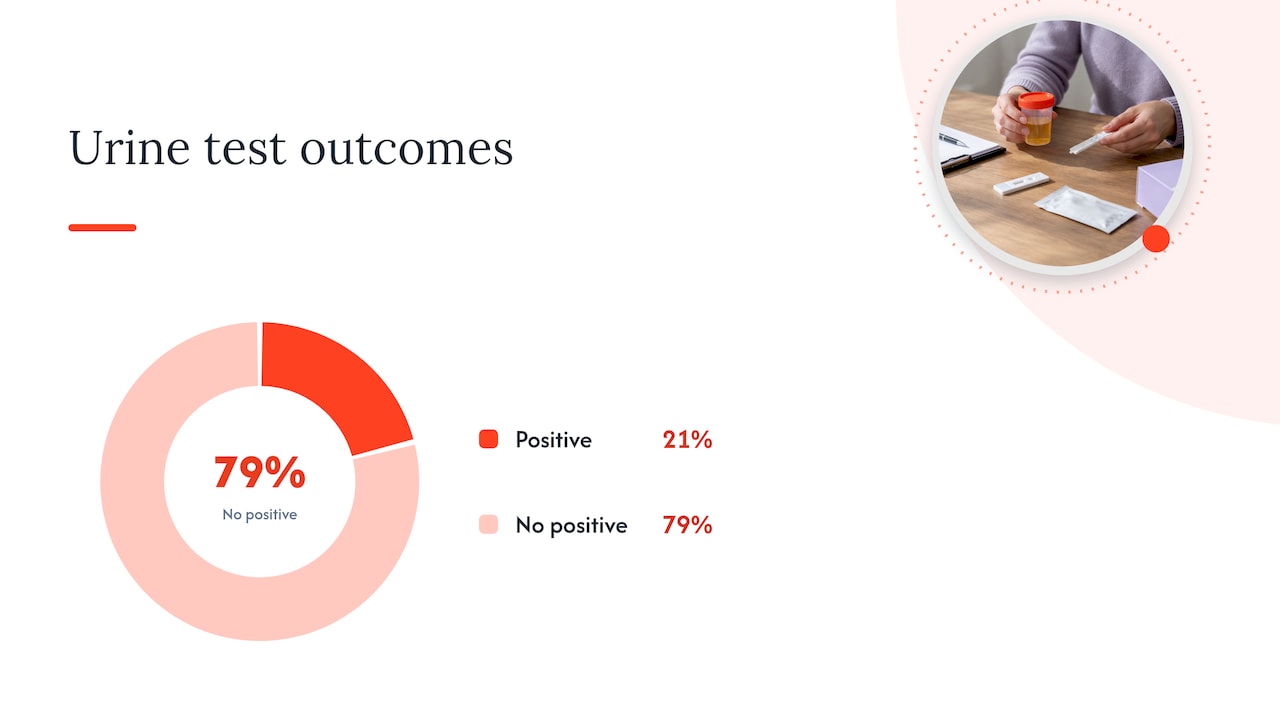
Smoked Once? One Study Found 21% Positive on Urine Drug Tests
A single smoked dose may be less likely to show up on a saliva, breath, or blood test as time passes, but it can still register on a urine test depending on dose and metabolism. Workplace urine screens follow a 50 ng/mL immunoassay cutoff with a 15 ng/mL GC/MS confirmation, the standard that shapes most detection windows. Important variables include test type, dose and potency, and your own metabolism and body fat.
TL;DR:
- At federal urine cutoffs of 50 ng/mL for screening and 15 ng/mL for confirmation, 21% of smoked sessions in one infrequent user study tested positive.
- Saliva, blood, and breath tests target recent use, while hair testing is less likely to capture one isolated session than repeated exposure.
- Higher doses or stronger products can raise urine metabolite levels, while body composition, metabolism, timing, and urine concentration make individual results harder to predict.
- DOT testing uses urine only; a nonnegative screen receives laboratory confirmation, and a Medical Review Officer reviews it before donors can request split specimen retesting.
- A home urine test can offer a rough indication before screening, but workplace results may differ, and detox products have uncertain effectiveness.
Table of Contents
- 1. Detection windows by test type
- 2. Factors that change detection likelihood: dose, body composition, metabolism, hydration, and test cutoffs
- 3. Practical expectations for workplace and DOT testing
- 4. Best practices if you recently smoked once
- 5. How cannabis product type changes detection odds
- 6. Do detox products actually work for a single use?
- 7. Practical perspective: thinking about risk after one use
- 8. How we can help you prepare and check your status
- FAQ
- Sources
1. Detection windows by test type
Each drug test looks for a different marker, and that difference can matter for a single smoked session. Urine tests screen for THC-COOH, an inactive metabolite. Saliva, blood, and breath tests can look for parent THC, but detection varies by test and timing.
Urine is the test most likely to catch a one-time smoked dose, and it’s also the test most employers use. A controlled study of infrequent cannabis users found that urinary THCCOOH peaked after administration, and at the federal 50 ng/mL screening and 15 ng/mL confirmatory cutoffs, 21% of smoked sessions in that study produced a positive result. That means most single-use smoking sessions in the study did not trigger a positive at those cutoffs, though a meaningful share did, and individual results varied by dose.
Saliva (oral fluid) tests are designed to detect recent use, though the detection window varies. Saliva tests may measure active THC, but detection depends on the test and timing. This may make it useful when an employer or officer is assessing recent cannabis use.
Blood tests may measure active THC, but detection varies with the test and timing. Blood draws may be used in clinical evaluations or accident investigations rather than routine employment screening.
Hair testing can reflect past exposure, but its usefulness varies in a single-use scenario. A single smoking session may be less likely to register on a hair test than repeated use, though results depend on the test and circumstances.
Breath tests for cannabis are still developing and are intended to assess recent use. Their use in workplace testing programs may vary.
Sweat patches are used occasionally in monitoring programs, but there is limited controlled data on how they perform after a single use, and they are not a common tool for this situation.
- Urine detects THC-COOH and may have a longer detection window than some other test types.
- Saliva and blood tests may detect active THC, with results depending on test type and timing.
- Hair testing can reflect past exposure, but a single isolated use may not be detected.
2. Factors that change detection likelihood: dose, body composition, metabolism, hydration, and test cutoffs
Whether a single smoked session shows up depends on several interacting variables.
- Dose and potency: a larger dose or higher-potency product may increase urine concentrations and affect how long cannabis metabolites are detectable.
- Body fat: body composition may influence how THC is distributed and cleared, though individual results vary.
- Metabolism and individual variation: people may process and clear THC-COOH differently, so results can vary even after similar use.
- Hydration and urine concentration: hydration can affect urine concentration, and laboratory procedures may identify diluted samples.
- Timing relative to the test: timing can affect results, and urine tests measure metabolites rather than active THC.
Pro Tip: If you’re estimating your own risk, consider the test type, dose, and time since use rather than relying on a detox product.
3. Practical expectations for workplace and DOT testing
Employers may use urine screening, which has established testing procedures. Under federal guidance, a screen is reported non-negative at the 50 ng/mL immunoassay cutoff and confirmed with GC/MS at 15 ng/mL or higher for THC-COOH.
DOT-regulated testing follows a specific process:
- Only urine specimens are used for DOT drug testing, per DOT employer guidance, covering pre-employment, random, reasonable suspicion, post-accident, and return-to-duty scenarios.
- A non-negative screen is subject to confirmatory testing at an HHS-certified laboratory, and split-specimen procedures may allow a portion to be retested.
- The Medical Review Officer reviews every non-negative result, interviews the donor, and determines whether there’s a legitimate medical explanation before the result is reported to the employer.
If you’re facing a non-negative result, ask about split-specimen retesting, cooperate with the MRO interview, and review your employer’s testing policy. One detail worth knowing ahead of time: SAMHSA’s own MRO case studies note that passive inhalation is highly unlikely to explain a confirmed urine positive at the cutoff concentrations federal programs use, so that explanation rarely changes an outcome.
4. Best practices if you recently smoked once
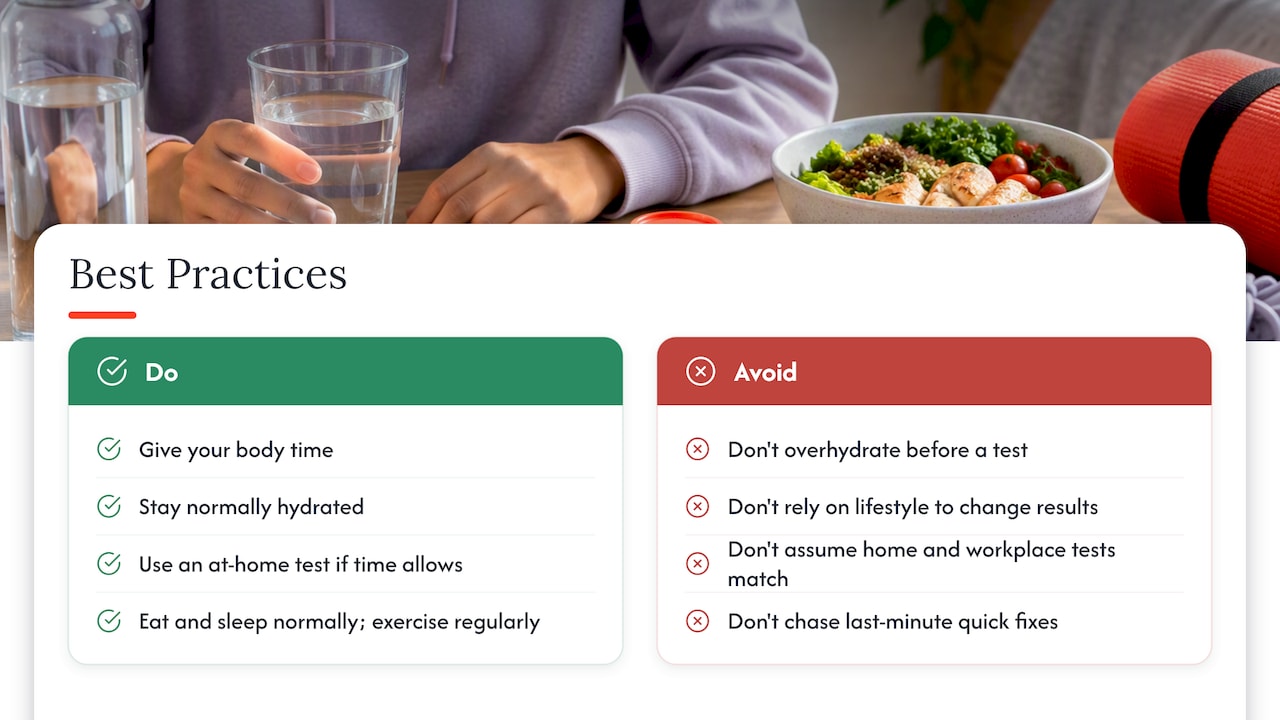
The safest and most reliable approach after a single smoked session is simple: give your body time. Urine THC-COOH concentrations can decline as the metabolite clears, but the timing and likelihood of a positive result vary.
Stay normally hydrated. Excessive water intake before a test may affect urine concentration, and laboratories may identify diluted samples. Eating normally and maintaining regular exercise and sleep support general wellbeing, but should not be relied on to change a test result.
If timing allows, an at-home urine test may offer an indication of your status, but its results may not match a workplace test. That may be more useful than last-minute shortcuts, though results and clearance vary between individuals. If a test is scheduled with little notice, being upfront with yourself about the realistic timeline matters more than chasing a quick fix that doesn’t match how THC-COOH actually clears from urine.
5. How cannabis product type changes detection odds
The form of cannabis and frequency of use may both affect detection. THC dose and potency vary across flower, concentrates, vapes, and dabs, and may affect test results.
A higher-potency product may affect urine THCCOOH concentrations and the likelihood of a positive result. The infrequent-user study measuring urinary THCCOOH found different positive-result rates for vaporized and smoked sessions at the same federal cutoffs, suggesting that administration method may affect whether a session is detected.
In practice, this means someone who took one hit of high-THC concentrate is working with a different risk profile than someone who had one puff of lower-potency flower, even though both would describe themselves as having smoked once. If you’re trying to estimate your own odds, knowing roughly how potent what you used was matters as much as knowing how long ago you used it.
6. Do detox products actually work for a single use?
Detox drinks, cleansing pills, and specialty shampoos are marketed for different testing situations, but their effectiveness after a single use is uncertain. For someone who smoked once, time and individual circumstances may matter more than product claims.
Detox drinks may affect urine concentration, and laboratories may identify diluted samples. Detox shampoos are formulated for hair testing specifically, targeting surface residue on the hair shaft rather than urine metabolites, so they address a different test type entirely and aren’t a substitute for giving your body time before a urine screen.
For a one-time use, the most dependable approach is still accurate self-testing to see where you actually stand, paired with realistic expectations about the natural timeline rather than relying on a product to erase a single session faster than biology allows.
7. Practical perspective: thinking about risk after one use
Panic doesn’t change your test result, but understanding which test you’re facing does. Saliva, blood, and breath tests clear within hours to a day, so if your test is any of those and some time has passed, your realistic risk is already low. Urine is the one that deserves attention.
If a urine test is close, an at-home check and a clear memory of your use date matter more than anything else. If the test is DOT-regulated, know your rights going in: split-specimen retesting and MRO review are built into the process, and following your employer’s instructions protects you procedurally.
— MIchael
8. How we can help you prepare and check your status
If you smoked once and have a test coming up, the fastest way to cut uncertainty is checking where you actually stand before the real screen happens. We carry at-home urine and saliva testing kits, so you can check your status before a workplace screen.
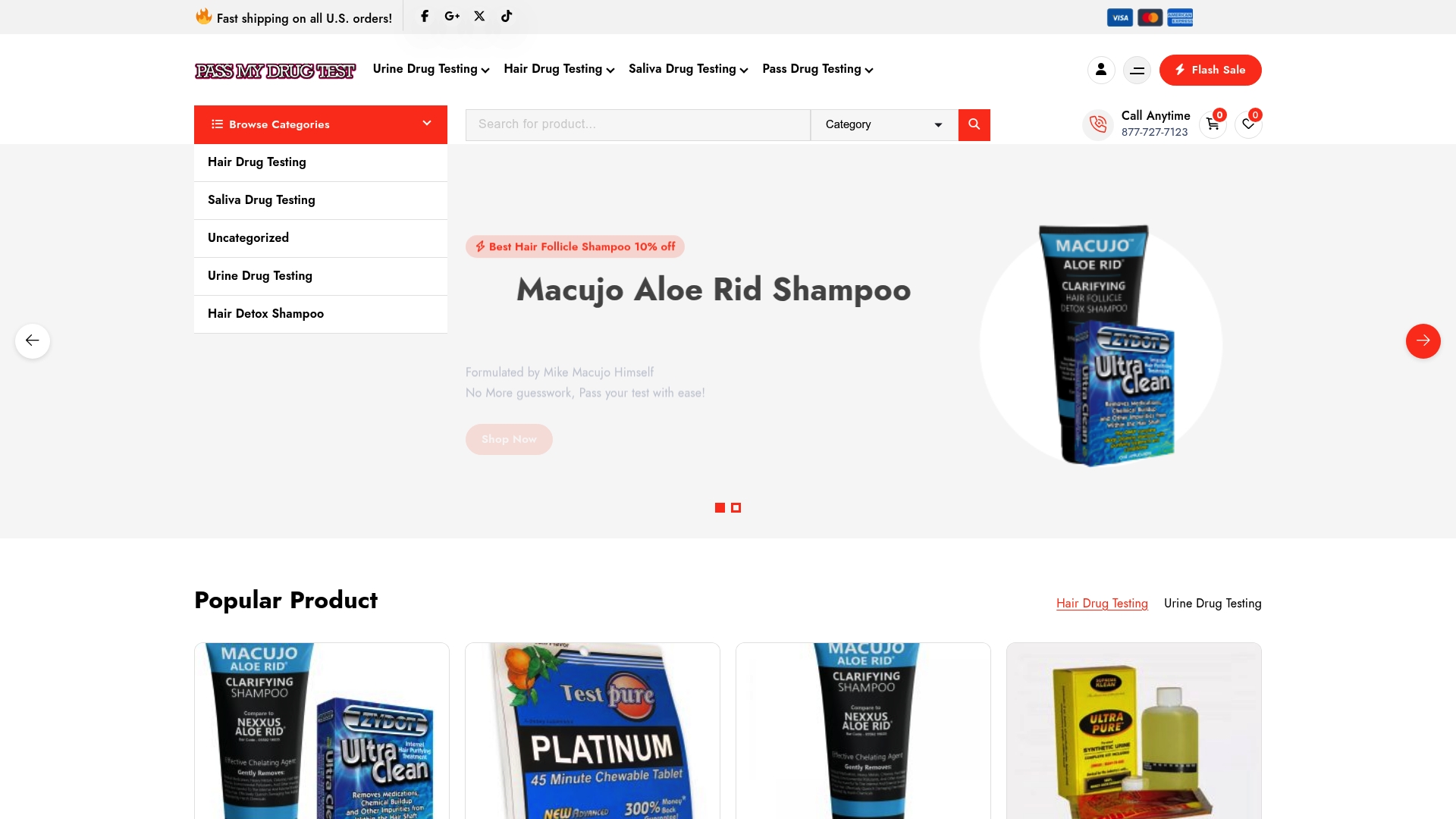
- At-home urine and saliva test kits let you confirm your status ahead of an employer-administered test.
- Curated hair detox shampoos and other preparation products ship fast with live phone support if you have questions about which option fits your situation.
- Our detection times guide breaks down timelines by test type if you want to dig deeper before you buy.
Browse our urine, saliva, and hair testing options to find the kit that matches the test you’re actually facing.
FAQ
Will I pass a drug test if I smoked two weeks ago?
For most infrequent or first-time users, two weeks is generally enough time for urine THC-COOH to drop below the standard 50 ng/mL screening cutoff, since a single lower-dose session tends to clear faster than repeated heavy use. Individual results still vary with dose, body fat, and metabolism, so an at-home test close to the actual screening date gives the most reliable personal read.
What happens after a positive drug test?
A non-negative screening result is sent for confirmatory GC/MS testing, and if that confirms positive, a Medical Review Officer reviews the result and interviews the donor before it’s reported to the employer. The donor can typically request split-specimen retesting within a set window if they want the second portion of the sample independently confirmed.
Can I fail a drug test because of secondhand smoke?
Passive exposure to cannabis smoke is highly unlikely to produce a confirmed positive at the cutoff concentrations used in federal urine testing programs, and MROs generally do not accept passive inhalation as an explanation for a confirmed result. A confirmed positive almost always reflects direct use rather than secondhand exposure.
How do I explain a failed drug test to an employer?
The appropriate channel is the MRO interview, not a direct conversation with your employer, since the MRO is specifically responsible for reviewing non-negative results and any medical explanation under federal review procedures. Being honest and cooperative during that interview, and knowing your right to split-specimen retesting, matters more than how you frame it afterward to HR.
Sources
- Urinary Excretion Profile of 11-Nor-9-Carboxy-Δ9-Tetrahydrocannabinol (THCCOOH) Following Smoked and Vaporized Cannabis Administration in Infrequent Cannabis Users – PMC
- 2025 Medical Review Officer (MRO) Case Studies – Urine
- What Employers Need To Know About DOT Drug and Alcohol Testing