
Avoid a Failed Screen: 4 U.S. Workplace Tests and Safe Prep Options
Follow the collector’s instructions exactly, disclose any prescription medications before the test, and treat at-home kits as a preliminary check rather than a final answer. Certified labs and a Medical Review Officer handle the real verdict. If you’re facing a hair test, understand it detects months of past use, so last-minute detox products won’t move the needle much.
TL;DR:
- Detection windows vary significantly by specimen type, with hair testing revealing use over the past 90 days and blood indicating very recent use within hours.
- Confirmatory testing using GC-MS or LC-MS is mandatory after a positive screen to verify exact substances, with specimen integrity checks to prevent tampering.
- Preparation should include identifying the specimen type, discontinuing nonessential drugs early, and bringing proper documentation for prescription medications.
- Federal and state laws differ widely, affecting notice requirements, testing procedures, and protections for medical marijuana users, depending on jurisdiction.
- Disclosing prescriptions to the Medical Review Officer and following collection instructions precisely are key to avoiding false positives and invalidations.
Table of Contents
- Which Specimen Types and Drug Panels Do Employers Use?
- How Do Screening and Confirmatory Tests Actually Work?
- How Should You Prepare Before and On Test Day?
- What Happens After a Non-Negative or Positive Result?
- How Do Federal and State Laws Shape Drug Testing?
- What Rights and Privacy Protections Do Employees Have?
- How Does Medical Marijuana Legalization Affect Workplace Testing?
- What Should You Look for in an Employer’s Drug Testing Policy?
- How Do You Handle Prescription Medications During a Test?
- What Do Job Seekers Consistently Get Wrong About Testing?
- Where to Find Testing Supplies and Guidance
- Sources
Which Specimen Types and Drug Panels Do Employers Use?
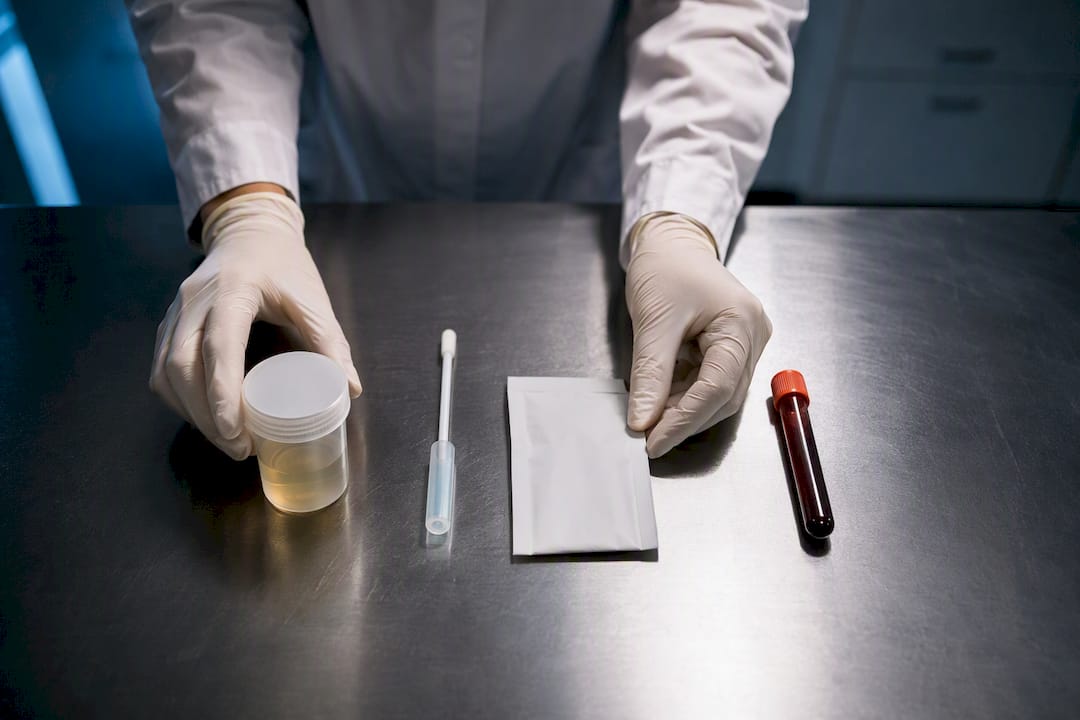
Workplace drug screening in the USA typically relies on one of four specimen types, and which one your employer chose determines almost everything about how you should prepare. Urine remains the most common because it’s cheap, well-validated, and covers a useful detection window. Oral fluid is gaining ground for its speed and lower collection hassle. Hair testing is used in safety-sensitive or executive roles where employers want a longer look-back window. Blood testing is rare outside post-accident or medical-legal situations.
Most employers use a 5-panel screen covering amphetamines, cocaine, marijuana, opiates, and PCP. Expanded panels running 7 to 12 analytes add benzodiazepines, barbiturates, and other substances. Federal programs updated their authorized testing panels to include fentanyl and norfentanyl starting July 7, 2025, reflecting how fast panel design tracks the opioid crisis.
Detection windows vary sharply by specimen:
- Urine: Typically detects use within the last few hours up to several days, depending on the substance.
- Oral fluid: Generally catches use from the last few hours up to one or two days.
- Hair: Can reveal patterns of use going back roughly 90 days.
- Blood: Reflects very recent use, often within minutes to hours.
That last point matters more than most job seekers realize. Preparation strategies built around detox drinks or short-term abstinence apply mainly to urine and sometimes oral fluid. A hair drug test is a different animal entirely, and no last-minute product changes that reality.
How Do Screening and Confirmatory Tests Actually Work?
Every non-negative workplace result starts with an immunoassay screen, a fast chemical test that flags the presence of drug classes at or above a cutoff level. Immunoassays are cheap and quick, but they’re not perfectly specific. Certain medications and even some foods can trigger a false positive on the initial screen.
That’s why federal guidelines and most private employer programs require confirmatory testing on anything non-negative. Labs run GC-MS or LC-MS, gas or liquid chromatography paired with mass spectrometry, which identifies the exact molecular structure of a substance rather than just a chemical class reaction. This two-step process is the industry standard specifically because immunoassays trade specificity for speed, and confirmatory testing closes that gap before anyone’s job is on the line.
A quick reality check: a single non-negative screening result is not a final verdict. It’s a flag that triggers a more precise second test, reviewed by a licensed physician before anything gets reported to your employer.
Collection sites and labs also run specimen integrity checks to catch tampering:
- Temperature reading immediately after collection, typically expected in the 90°F to 100°F range.
- Creatinine and pH testing to detect diluted or substituted specimens.
- Adulterant panels checking for substances like glutaraldehyde, peroxides, or nitrites sometimes added to mask results.
These checks exist because commercial adulterants and synthetic urine are well known to labs, and detection methods have kept pace. Federal Mandatory Guidelines set the technical standards labs must follow, which is part of why certified lab results carry legal weight that a drugstore test strip never will.
How Should You Prepare Before and On Test Day?
Preparation works best as a sequence, not a scramble. Here’s the order that actually reduces avoidable mistakes:
- Confirm the specimen type and panel. Ask your employer or read the notice. Urine, oral fluid, and hair each call for different timelines and expectations.
- Stop nonessential product use well ahead of the date. The further out from your test, the more options you realistically have, especially for a urine screen.
- Gather documentation for any prescription medications. A current prescription bottle or pharmacy printout speeds up the MRO review if a legitimate medication triggers a screen.
- Use an at-home test kit as a pre-check, not a guarantee. At-home kits are designed for personal screening and aren’t a substitute for certified lab results required for employment decisions.
- On the day, bring photo ID and arrive normally hydrated. Overhydrating can dilute your specimen, which labs flag and may require a retest under observed conditions.
- Follow the collector’s instructions precisely. Empty pockets, remove bulky outerwear if asked, and don’t touch water sources in the collection area. Collection sites disable faucets and add bluing agents to toilets specifically to prevent tampering.
- Know your rights around observed collection. Direct observation is generally reserved for specific circumstances, like a suspected prior dilution, not standard for routine screens.
Pro Tip: If you’re using a detox drink, shampoo, or synthetic product ahead of a test, read the instructions completely and follow them to the letter. Timing errors, not product quality, cause most disappointing results.
Attempting to swap or dilute a specimen risks immediate invalidation and possible disciplinary action, so any product-based strategy should stay within the bounds of what’s legal and what the collection site’s procedures allow.
What Happens After a Non-Negative or Positive Result?
A lab-confirmed positive doesn’t go straight to your employer. It goes to a Medical Review Officer first, a licensed physician trained to review results against your medical history before anyone reports a final decision.
The MRO will typically contact you directly to ask about prescription medications or other legitimate explanations. This is the moment prescription documentation earns its keep. If you take a prescribed stimulant, opioid pain medication, or anything else that could trigger a screen, having that paperwork ready shortens the review considerably.
For federal and safety-sensitive testing programs, you generally have the right to request a split-sample retest, meaning a portion of your original specimen gets tested at a different certified lab. Timelines and exact procedures vary by program, so ask your MRO or HR contact about the specific window to request one.
Practical next steps if you get a non-negative result:
- Respond to the MRO’s outreach promptly and provide medical documentation.
- Ask about split-sample retest eligibility and deadlines if your situation qualifies.
- Follow your employer’s internal appeal or grievance procedure exactly as written.
How Do Federal and State Laws Shape Drug Testing?
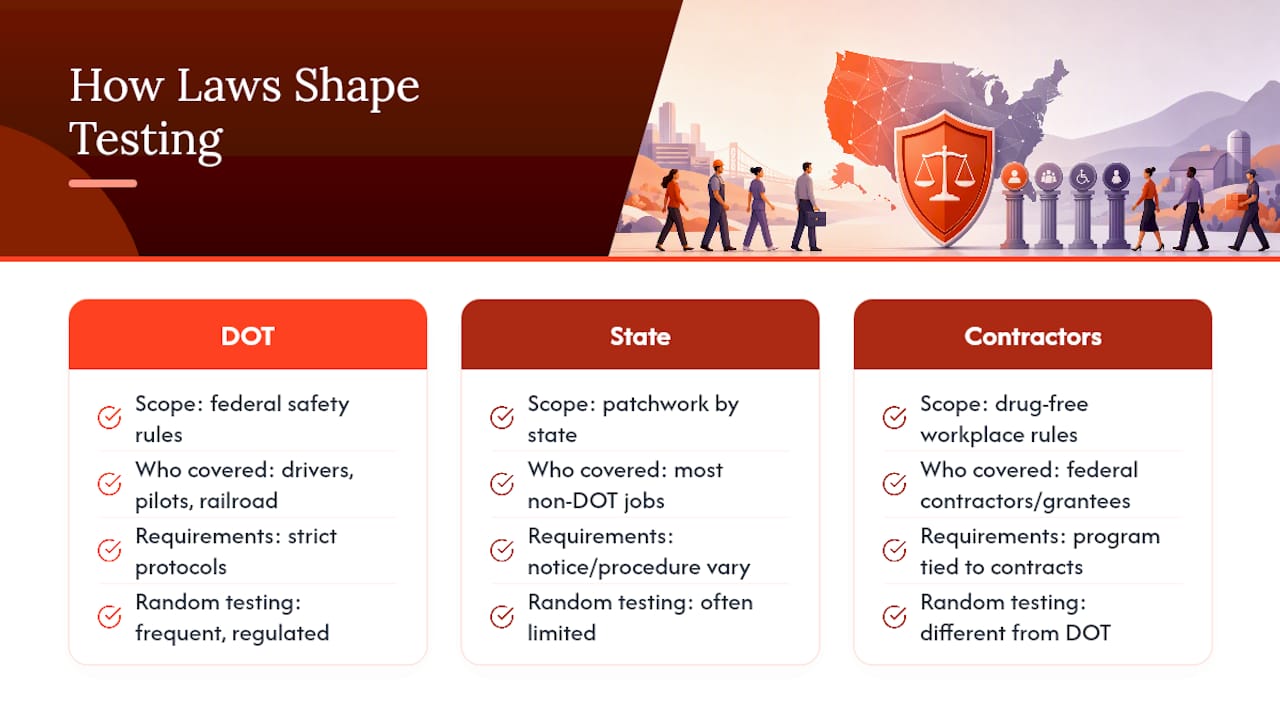
Federal law doesn’t mandate workplace drug testing across the board, but it does regulate specific industries heavily. The Department of Transportation requires testing for safety-sensitive positions like commercial drivers, pilots, and railroad workers, with strict protocols around random testing frequency and reporting.
Outside DOT-regulated jobs, drug testing rules are largely a state-by-state patchwork. Some states require employers to follow specific notice and procedural requirements before testing. Others impose limits on random testing for non-safety-sensitive roles or require confirmatory testing before any adverse action. A handful of states mandate that employers offer a rehabilitation option before termination for a first positive result.
This inconsistency means two workers in similar jobs but different states can face very different rules. A warehouse employee in one state might have strong statutory protections around notice and appeal rights. A similar worker one state over might have almost none beyond what their employer’s own policy states voluntarily.
Federal contractors and grant recipients also fall under separate requirements tied to maintaining a drug-free workplace, which is different from DOT safety testing but often confused with it. If you’re unsure which framework applies to your job, your offer letter or employee handbook usually states which program governs your testing, and that detail changes what rights and appeal windows apply to you.
What Rights and Privacy Protections Do Employees Have?
Employees generally have a reasonable expectation that drug test results stay confidential and get shared only with people who need to know, typically HR and the MRO. Results shouldn’t circulate informally among coworkers or supervisors outside that need-to-know chain.
Observed collection, where a same-sex monitor watches the actual specimen collection, is not the default. It’s generally reserved for specific situations, like a previous specimen flagged for dilution or suspected substitution. Standard collections use privacy stalls with water sources disabled, not direct observation.
You also generally have the right to disclose relevant medical information privately to the MRO rather than to your employer directly. This protects you from having to explain a prescription for a controlled substance to a manager who has no medical training and no need to know the specifics.
Notice matters too. Many states require employers to have a written policy and to give reasonable notice before testing, particularly for random or unannounced screens. If your employer never provided a written drug testing policy, that’s worth asking about, since the absence of clear written procedure can itself be a compliance gap depending on your state.
Privacy protections don’t erase the reality that a confirmed positive can affect employment. But the process itself, from collection through MRO review, is built around limiting who sees your information and why.
How Does Medical Marijuana Legalization Affect Workplace Testing?
Medical marijuana is legal in most states now, but that legality rarely translates into workplace protection. This is the single biggest point of confusion for job seekers and current employees alike.
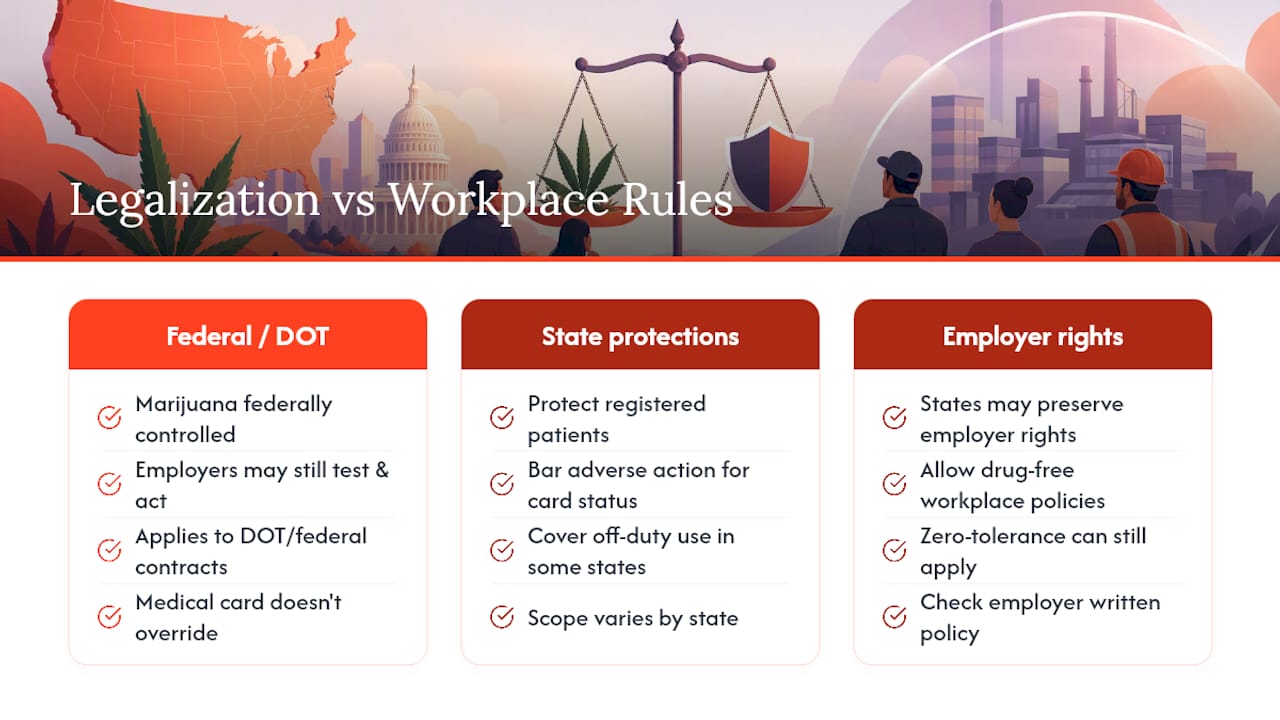
Marijuana remains a federally controlled substance, and most employers, especially those bound by DOT regulations or federal contracts, can still test for it and take action on a positive result regardless of state medical marijuana laws. A valid medical marijuana card generally does not override a zero-tolerance workplace policy for safety-sensitive roles.
Some states have carved out specific employment protections for registered medical marijuana patients, prohibiting employers from taking adverse action based solely on card status or off-duty use. Other states explicitly preserve an employer’s right to maintain a drug-free workplace regardless of medical marijuana status. The gap between these two approaches is wide, and it’s entirely state-dependent.
Practically, this means a marijuana metabolite showing up on a standard 5-panel screen can still cost someone a job offer in states with strong protections, if the employer’s policy or job category falls outside the carve-out. If you hold a medical marijuana card, check your specific state’s employment statute and your prospective employer’s written policy before assuming legal use protects your job. Assuming otherwise is one of the most common and costly mistakes job seekers make right now.
What Should You Look for in an Employer’s Drug Testing Policy?
Written workplace drug policies generally fall into a few common formats, and knowing which one applies to you changes how you prepare.
Pre-employment only policies test candidates once, typically after a conditional job offer, with no ongoing testing afterward. Random testing programs select employees periodically without advance notice, common in DOT-regulated and safety-sensitive industries. Reasonable suspicion policies test only when a supervisor observes specific behavioral indicators. Post-accident policies trigger testing after workplace incidents, regardless of fault.
When reviewing your employer’s policy, or asking for one if you haven’t seen it, look for these specifics:
- Which specimen type and panel size the policy specifies.
- Whether random testing applies to your role and how selection works.
- The stated consequence for a first non-negative result, since many policies distinguish between termination and a rehabilitation referral.
- Whether the policy references federal Mandatory Guidelines or state-specific procedures.
- Notice requirements and your right to explain a positive result before final action.
A vague or unwritten policy is itself a red flag. Employees are better protected, and better prepared, when the rules are specific and on paper rather than left to a supervisor’s discretion in the moment.
How Do You Handle Prescription Medications During a Test?
Prescription medications are the most common cause of a confusing non-negative result, and they’re also the easiest to resolve if you handle them correctly.
Disclose relevant prescriptions to the MRO, not to HR or your supervisor. The MRO is a licensed physician bound by medical confidentiality, and their entire job is verifying whether a lab result has a legitimate medical explanation before it becomes a workplace issue. Bring or have ready your prescription bottle, pharmacy printout, or a note from your prescribing doctor if the MRO requests documentation.
Certain legal medications are known to trigger positives on immunoassay screens for drug classes they don’t actually belong to. Some cold medications, certain antidepressants, and specific prescription pain relievers can flag amphetamine or opioid panels before confirmatory testing sorts it out. This is exactly why the two-step screen-then-confirm process exists, and it’s why panicking over an initial non-negative result is usually premature.
If you’re taking a legally prescribed controlled substance, like a stimulant for ADHD or an opioid for chronic pain, keep documentation current and accessible before any testing event, not scrambling to find it after a call from the MRO’s office. That single habit resolves the majority of prescription-related testing confusion before it becomes a job-threatening problem.
What Do Job Seekers Consistently Get Wrong About Testing?
The most common mistake is overhydrating the night before a urine test, which dilutes the specimen and often triggers a retest under tighter scrutiny rather than a clean pass. Right behind it: not disclosing prescriptions to the MRO, which turns a routine medical explanation into an unnecessary standoff.
The other pattern worth naming is trusting vague “guaranteed” claims about detox products without reading how a specific product actually works or what specimen type it’s designed for. A hair test and a urine test call for entirely different approaches, and no single product bridges that gap.
Honest disclosure and following the collector’s rules exactly are consistently the two actions that matter most. Everything else, including product choice, works better once those fundamentals are handled.
— MIchael
Where to Find Testing Supplies and Guidance
You can find resources online to research specimen types, compare detox products, and select a kit that matches your situation. There are detox drinks, shampoos, synthetic urine products, and chewable options available online alongside at-home drug test kits for a preliminary check before the real thing.
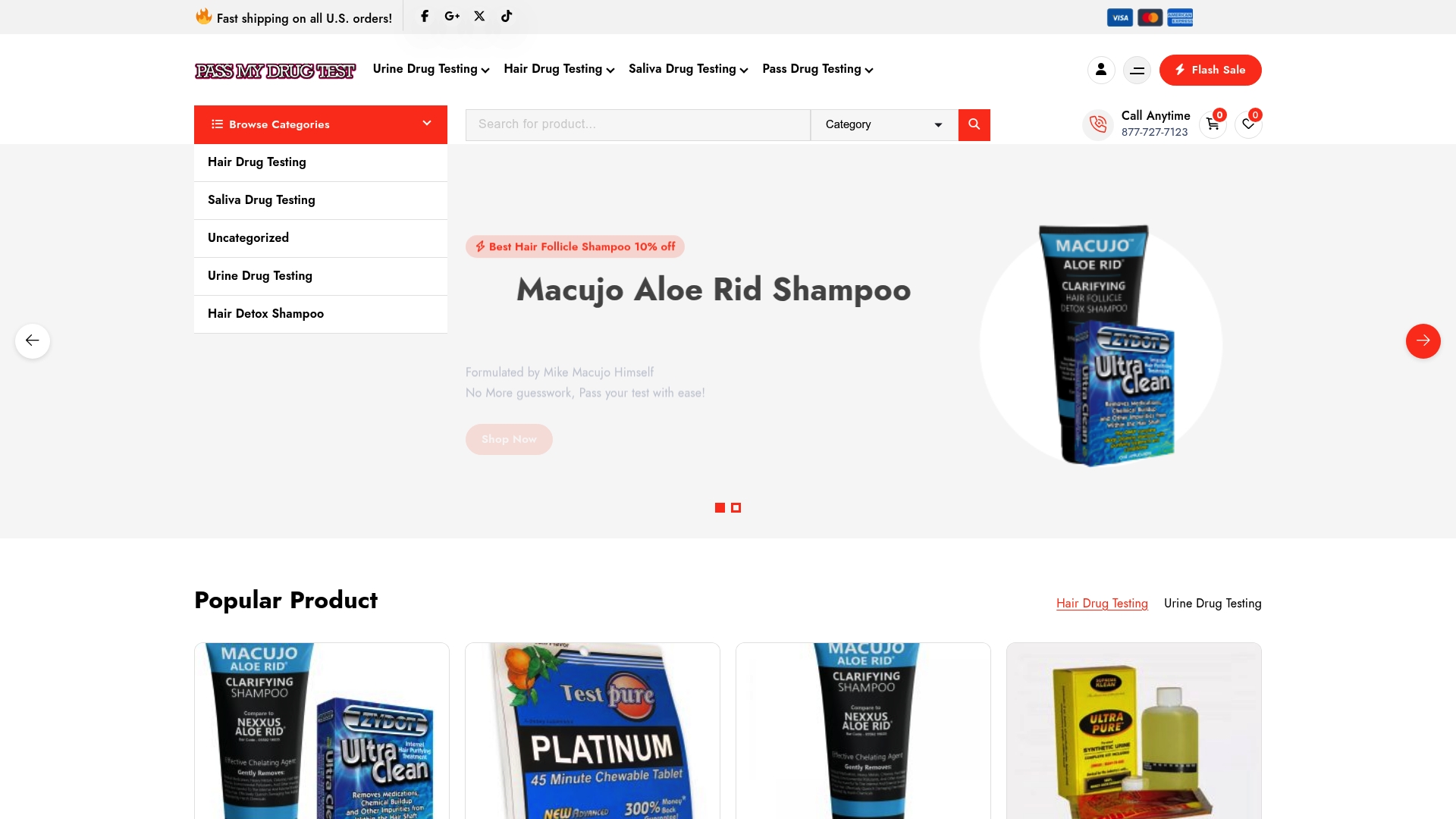
Many suppliers offer shipping within the United States, and some provide phone support during business hours if you have questions about product suitability for your timeline or specimen type. For those preparing for a job screen, there are web resources that discuss product options suited to that scenario, such as the pre-employment testing page. Browse the drug testing products category now to see what matches your test date and specimen type before you run out of prep time.
This article is general information, not a substitute for advice from a qualified doctor. Consult a qualified healthcare professional about your own circumstances before acting on anything here.
Sources
- MedlinePlus — Drug testing
- StatPearls / NCBI — Drug testing overview
- SAMHSA — Drug‑free workplace / drug testing resources
- Concentra — Pre-employment drug tests overview