
Tramadol Drug Test: How Labs Confirm Positives at a 25 ng/mL Cutoff
Tramadol can show up on a drug test, but it will not show up on a standard 5- or 10-panel screen unless the lab specifically tests for opioids like tramadol or runs an extended panel. Urine typically shows tramadol for about 1 to 4 days after the last dose, saliva and blood for up to about two days, and hair for an extended period. A definitive positive requires lab confirmation, usually by LC-MS/MS with a cutoff near 25 ng/mL for tramadol and its main metabolite.
TL;DR:
- Most standard drug panels do not detect tramadol unless they include an extended opioid test, and confirmatory LC-MS/MS testing is necessary for legal or clinical proof.
- Tramadol typically stays detectable in urine for 1 to 4 days, but detection windows vary based on dose, metabolism, organ function, and use frequency.
- Blood and saliva detect tramadol for up to two days, while hair and nails can show use over weeks to months, depending on growth rates and specimen type.
- Rapid immunoassay screens are unreliable for tramadol due to poor cross-reactivity, making lab confirmation essential after a positive presumptive result.
- Confirmed positive results rely on a 25 ng/mL cutoff for tramadol and its metabolite, with testing turnaround times of 2 to 4 days for accurate analysis.
Table of Contents
- Tramadol Detection Windows by Specimen Type
- How Labs Actually Detect Tramadol
- What Changes How Long Tramadol Stays Detectable
- What a Positive Tramadol Result Actually Means
- Interpreting a Non-Negative Screen Without Panicking
- After a Confirmed Positive: What to Do Next
- Why We Cover Tramadol Testing in This Kind of Detail
- Drug Test Kits and Screening Tools for Tramadol Concerns
- The Gap Between “Detectable” and “Actually Tested For”
- Sources
Tramadol Detection Windows by Specimen Type
Detection time depends heavily on which specimen a lab collects, and the ranges below reflect typical use, not guarantees for any one person.
| Specimen | Typical Detection Window | Common Use Case | What Affects the Range |
|---|---|---|---|
| Urine | 1 to 4 days | Pre-employment, workplace, probation | Dose, hydration, kidney function |
| Blood/serum | up to a couple of days | Clinical monitoring, ER toxicology | Half-life, frequency of use |
| Saliva | up to about two days | Roadside, rapid workplace checks | Oral pH, recent dosing |
| Hair | Weeks to months | Forensic, legal, long-term history | Hair growth rate, treatment |
| Fingernail | Months | Long-term retrospective testing | Nail growth speed |
Most employer drug panels are built around opioids like morphine, codeine, and oxycodone rather than synthetic analgesics such as tramadol. If tramadol matters for a specific screening, the requesting party generally has to order an extended opiate panel or a tramadol-specific assay rather than assume a routine panel picks it up.
How Labs Actually Detect Tramadol
Rapid immunoassay screens, the kind used for quick urine or saliva checks, are built to flag broad drug classes fast and cheap. They are not reliable for tramadol specifically because tramadol’s chemical structure does not cross-react well with most standard opioid immunoassay reagents. That is a big reason tramadol gets missed on routine tests even when someone has taken it recently.
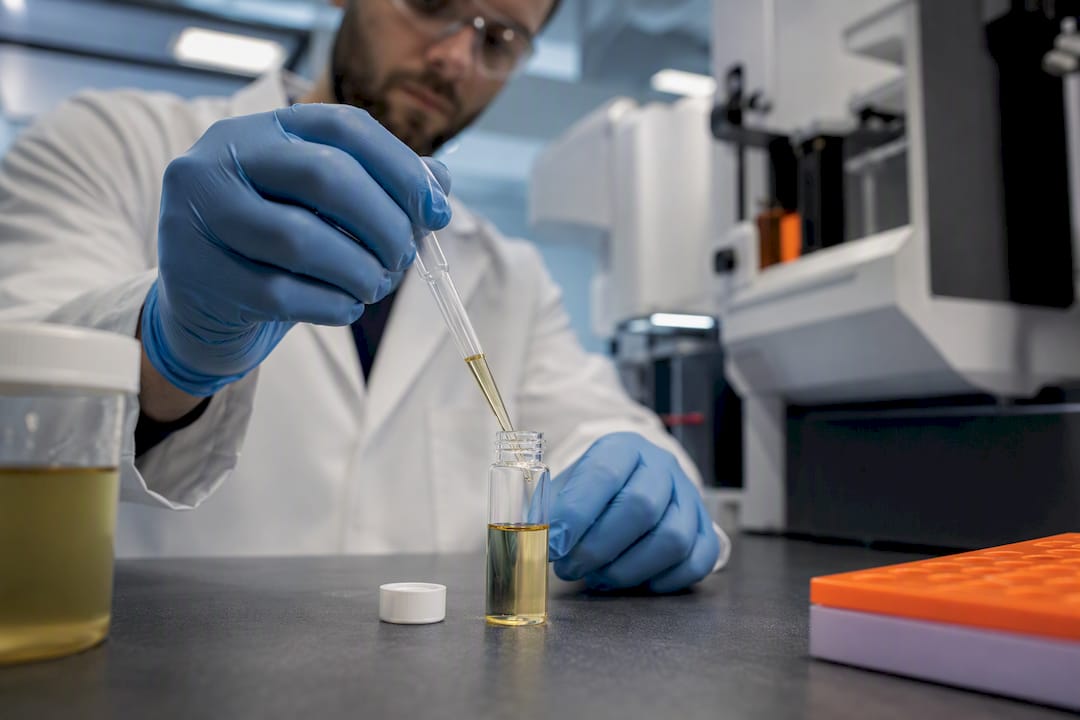
Laboratory confirmation works differently. It uses LC-MS/MS or GC-MS to separate and identify molecules with far greater specificity than any point-of-care strip. Lab reports commonly list results under names like TRA, TRAM, or O-desmethyltramadol, since the metabolite is measured alongside the parent drug.
A few practical notes worth knowing before you’re staring at a lab order form:
- Confirmatory testing is typically ordered only after a presumptive positive or when a provider needs precise, chronic-use monitoring.
- Turnaround for LC-MS/MS confirmation commonly runs two to four days, according to Marshfield Labs’ documented process.
- Screening tests and confirmation tests are billed and coded differently, and the confirmation step is the one that carries legal or clinical weight.
Statistic Callout: Confirmatory LC-MS/MS testing for tramadol commonly uses a cutoff of 25 ng/mL for both tramadol and O-desmethyltramadol, the threshold that separates a reportable positive from background noise.
What Changes How Long Tramadol Stays Detectable
Detection time is not a fixed number. It shifts based on a handful of variables that matter more than people expect.
- Dose and formulation. Extended-release tramadol stays in the body longer than immediate-release versions, extending the detection window on the back end.
- Metabolism speed. Genetic differences in the CYP2D6 enzyme mean some people convert tramadol to O-desmethyltramadol much faster than others, which changes how long each compound stays measurable.
- Age, liver, and kidney function. Slower clearance organs mean slower drug elimination, full stop.
- Body composition and hydration. Diluted urine can push concentrations below a lab’s cutoff even when tramadol is technically still present.
- Frequency of use. Someone taking tramadol daily for chronic pain will clear it more slowly than someone who took a single dose, since repeated dosing builds tissue accumulation.
What a Positive Tramadol Result Actually Means
A cutoff concentration is not an arbitrary number labs pull from nowhere. It’s the line above which a lab is confident it is detecting real tramadol or metabolite, not background interference. Both Mayo Clinic Laboratories and Marshfield Labs report using an LC-MS/MS cutoff around 25 ng/mL for tramadol and O-desmethyltramadol.
The workflow generally runs in two stages:
- A screening test flags a specimen as presumptive positive, negative, or needing further review.
- A confirmatory LC-MS/MS test then quantifies exact concentrations of both tramadol and its metabolite, which is why lab reports often list both compounds separately rather than a single “tramadol” line.
Labs report the metabolite alongside the parent drug because O-desmethyltramadol is pharmacologically active and, in some people, present at higher concentrations than tramadol itself. Confirmation panels for opioid analytes like this are sometimes billed under CPT code 80373, a detail worth knowing if you’re trying to decode a lab invoice or a chain-of-custody form.
Statistic Callout: Marshfield Labs lists a typical analytical turnaround of a few days for tramadol quantitation once a specimen reaches the lab, separate from screening turnaround, which is usually same-day.
Interpreting a Non-Negative Screen Without Panicking
A presumptive positive is not a final verdict. Immunoassay screens sacrifice specificity for speed, and while tramadol false positives are uncommon, cross-reactivity with other medications is not zero. Every non-negative screen deserves a confirmatory look before anyone treats it as fact.
- Request confirmatory LC-MS/MS testing rather than accepting the screening result as final.
- Share prescription documentation with whoever ordered the test, ideally in writing.
- Ask for chain-of-custody records if the result could affect employment or legal standing.
- If a Medical Review Officer is involved, contact them directly. They exist specifically to interpret results like this.
- Ask the lab how long it retains specimens, since a stored sample can sometimes support a retest without a new collection.
After a Confirmed Positive: What to Do Next
Once LC-MS/MS confirms a positive, the priority shifts from disputing the science to managing the paperwork and the fallout.
- Get written proof of any legitimate prescription and make sure the prescriber’s contact information is available if the testing authority wants to verify it.
- Request a full copy of the lab report, not just a pass/fail summary. The quantitative values matter if this ever gets disputed.
- Ask about specimen retention windows in case an independent retest becomes necessary.
- If workplace discipline or legal consequences are on the table, loop in a Medical Review Officer early and consider talking to a lawyer who handles drug-testing disputes.
Moving fast and keeping documentation organized tends to matter more than anything else at this stage.
Why We Cover Tramadol Testing in This Kind of Detail
Passmydrugtest built this guide because tramadol confuses standard drug panels in ways most people never learn until they’re already facing a test. The site pairs educational content like this with shipping and customer support for people comparing detox and testing products. This section stays factual. Product options live just below.

Drug Test Kits and Screening Tools for Tramadol Concerns
If you want to check your own results before a formal screening, at home options exist for exactly that purpose. Passmydrugtest carries drug testing products built around specific specimen types, along with information on false positive drug testing for anyone confused by an unexpected screen result.
Someone facing a pre-employment or workplace screen benefits from knowing exactly which specimen type is in play and what a lab’s confirmation process looks like before the sample gets collected, not after. For readers dealing with hair-based testing specifically, the hair drug test detection times page breaks down how those much longer windows work. Whatever the situation, always follow lab collection instructions to the letter and loop in a healthcare provider about any current prescriptions before a scheduled test. Browse the drug testing products catalog to find the kit that matches your specimen type and timeline.
The Gap Between “Detectable” and “Actually Tested For”
Most guides on this topic treat detection time as the whole story. It isn’t. The more useful question is whether anyone is even looking for tramadol in the first place, and the honest answer most of the time is no. Standard workplace and legal panels are opioid-focused in a narrow, outdated sense, built around drugs that were common decades ago. Tramadol slipped into wide medical use after those panels were standardized, and a lot of testing infrastructure never caught up.
That gap cuts both ways. It means plenty of tramadol users go untested for it entirely, which breeds a false sense of security. It also means when tramadol testing does get ordered, it’s usually because someone specifically suspects use, whether that’s a probation officer, a pain management clinic monitoring compliance, or an employer responding to a specific incident. A targeted test carries more weight than a routine one, and readers should treat it that way. Detection windows matter less than understanding why the test is happening in the first place.
— MIchael
This article is general information, not a substitute for advice from a qualified doctor. Consult a qualified healthcare professional about your own circumstances before acting on anything here.
Sources
This guide draws on lab-level references and clinical summaries rather than guesswork:
- TRAM – Overview: Tramadol and Metabolite, Random, Urine — Mayo Clinic Laboratories
- Tramadol Quantitation, Urine — Marshfield Labs
- Drugs
- How long does tramadol stay in your system? — Healthline