
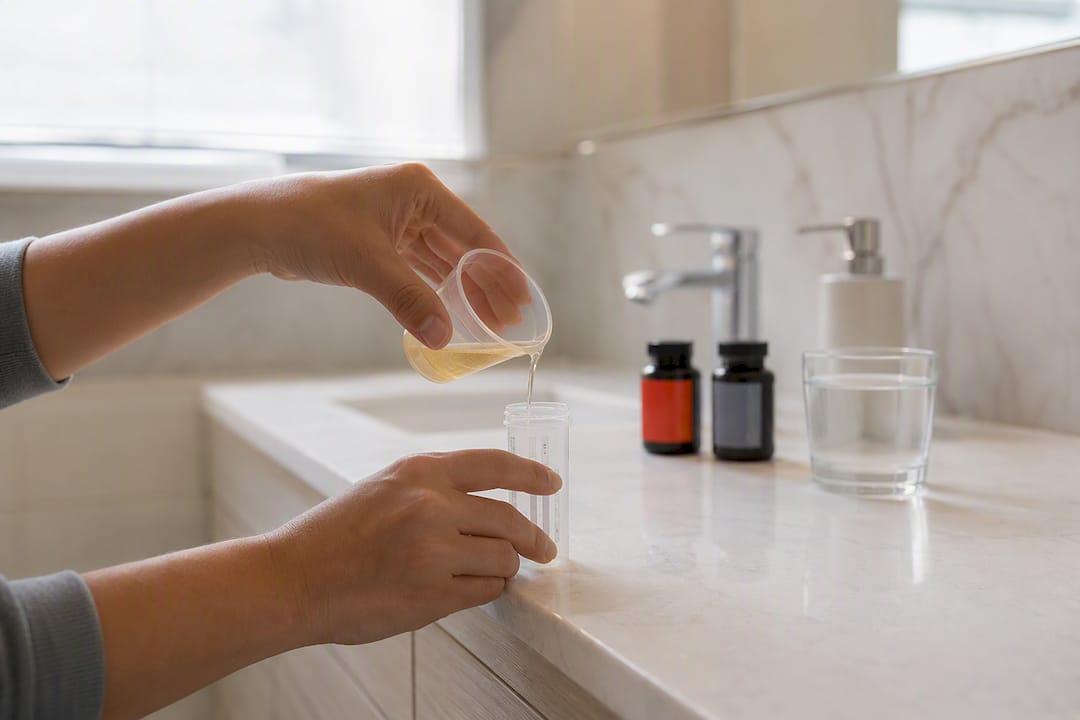
Vinegar Won’t Fool a Drug Test: pH Flags, Safer Options
Vinegar does not help you pass a drug test. Drinking it, including apple cider vinegar, does nothing to speed up how your body clears THC or other metabolites, and modern labs are built specifically to catch tampering. The only lab evidence tying vinegar to a “negative” result involves pouring it directly into a urine sample in a test tube, not drinking it, and even that trick usually gets caught by specimen validity testing. Your best move is abstinence and time, backed up by an honest look at the alternatives below.
TL;DR:
- Drinking vinegar does not alter urine pH enough to mask drug metabolites because stomach and kidney buffers neutralize acetic acid before it reaches the urine.
- Laboratory research shows vinegar added directly to urine can produce false negatives on test strips, but only in controlled lab conditions, not in real ingestion scenarios.
- Specimen validity tests flag vinegar’s low pH and dilution, often leading to retests or sanctions, making vinegar a risky adulterant rather than a reliable detox method.
- The only effective way to pass drug tests involves time, abstinence, proper hydration, and accurate disclosure, not unproven home remedies or dietary acid tricks.
- Attempting vinegar detox risks health issues like esophageal irritation and medical complications from overhydration, along with potential legal or employment penalties for invalid tests.
Table of Contents
- Why the Vinegar Drug Test Myth Won’t Die
- How Urine Drug Screens Actually Catch You (Or Don’t)
- What Laboratory Research Actually Shows About Vinegar and Drug Screens
- The Real Risks of Trying a Vinegar Detox
- What Actually Reduces Your Risk of a Positive Result
- Your Checklist for the Days Before a Test
- Why This Myth Keeps Coming Back
- Where to Go for an Honest Next Step
- Sources
Why the Vinegar Drug Test Myth Won’t Die
The idea has a strange kind of logic to it, which is exactly why it spreads so easily on forums and comment sections. People assume that because vinegar is acidic, it must somehow “clean out” the body the same way it cuts through grease on a stovetop. That is not how human metabolism works, but the analogy feels convincing enough that it gets repeated as fact.
Three claims show up again and again in these threads:
- Drinking vinegar changes your urine’s pH enough to hide drug metabolites.
- Vinegar acts as a “detox,” flushing THC-COOH and other compounds out of fat cells faster than normal.
- Chugging vinegar with water dilutes urine enough to drop metabolite concentration below a lab’s cutoff.
None of these hold up. Acetic acid, the active compound in vinegar, sits at a pH of roughly 2 to 3, which is intensely acidic compared to normal urine. Swallowing it does not transfer that acidity into your bladder in any meaningful way; your stomach and kidneys buffer it long before it reaches your urine. The “detox” claim ignores basic pharmacology. THC metabolites store in fat tissue and release slowly over days or weeks, and no amount of dietary acid speeds that release.
What keeps the myth alive is survivorship bias. Someone drinks vinegar, passes a low-sensitivity screen they were likely to pass anyway because their use was light or their test date was late enough, and posts about it online. Nobody posts the failures. Multiply that pattern across thousands of forum threads and you get a persistent myth with zero underlying mechanism.
How Urine Drug Screens Actually Catch You (Or Don’t)
Standard workplace and legal drug screens run in two stages, and understanding both is the fastest way to see why the vinegar trick collapses in practice.
The first stage is an immunoassay screen, a quick chemical test looking for specific drug classes. For marijuana, the common screening cutoff is 50 ng/mL of THC-COOH. Anything below that reads negative; anything at or above it triggers stage two. The second stage is confirmatory testing, almost always gas chromatography-mass spectrometry (GC-MS), which identifies the exact compound and its precise concentration. GC-MS is far more specific than the initial screen and is the standard follow-up after any positive result.
Running alongside both stages is specimen validity testing (SVT), a set of checks designed to catch tampering before the drug results even matter. SVT typically measures:
- pH, normally between 4.5 and 8.0 in healthy urine
- Creatinine, a waste product that indicates whether urine is genuinely concentrated
- Specific gravity, a measure of how diluted or concentrated the sample is
- Oxidants and other adulterants, chemicals that shouldn’t be present in human urine at all
- Visual appearance, including color, temperature, and clarity at the time of collection
A sample with a pH below 4.5 gets flagged as adulterated or invalid, and vinegar’s natural pH of around 3.0 sits well outside the normal range. If a specimen fails SVT, the lab doesn’t just shrug and move on. Depending on the employer or court’s policy, a dilute or invalid result often triggers a mandatory supervised retest, and in legal or probation contexts it can carry the same weight as a confirmed positive. You can read more about how labs identify tampered or abnormal specimens on Passmydrugtest’s page on clean urine drug tests.
What Laboratory Research Actually Shows About Vinegar and Drug Screens
Here’s where the myth gets a sliver of real science attached to it, and where a lot of online advice badly misreads what that science means.
A peer-reviewed laboratory study tested how various household adulterants affect point-of-care immunoassay strips. Researchers found that adding 9% acetic acid vinegar directly to urine samples produced false negative results on several rapid immunoassay test strips, particularly for cannabinoids. That is a genuine finding, but notice the method: researchers poured vinegar into collected urine in a controlled lab setting. Nobody in that study drank vinegar and then produced urine that fooled a test strip.
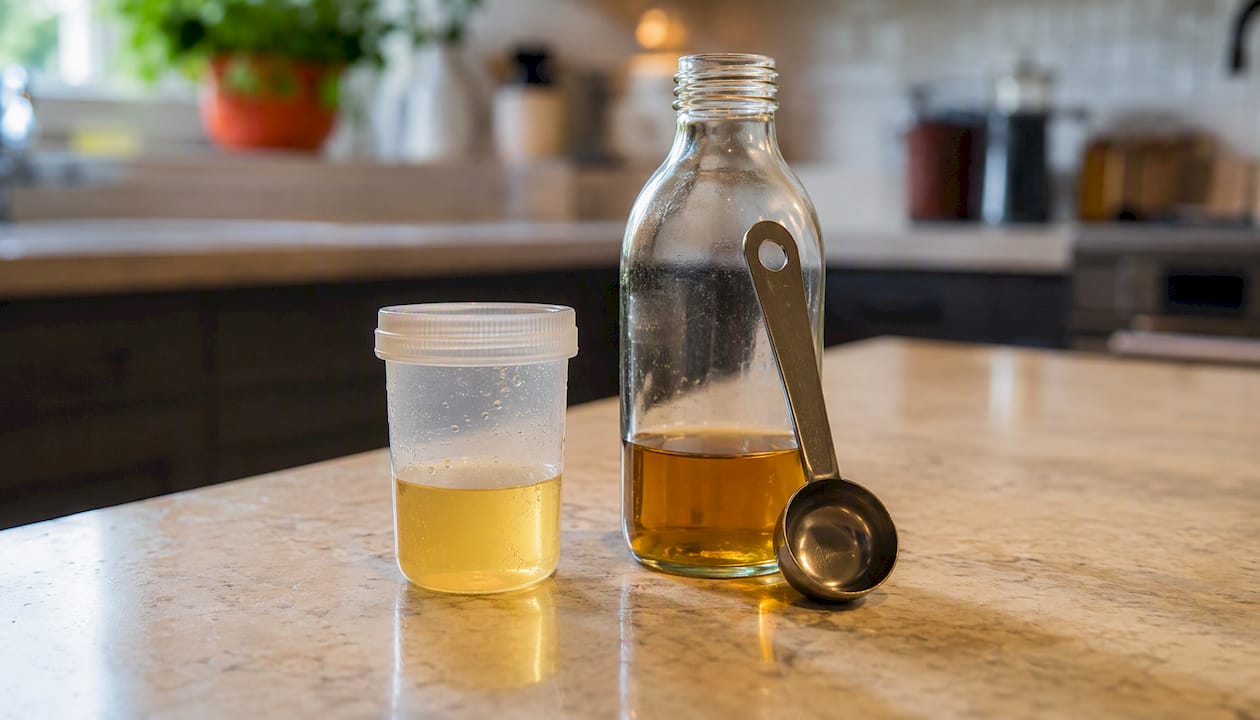
That distinction matters because your body does not let ingested acid pass through unchanged. Digestion neutralizes acetic acid long before it reaches your kidneys, and your blood’s buffering systems keep your internal chemistry within a tight range regardless of what you eat or drink. Vinegar poured straight into a cup has direct chemical contact with the test strip’s reagents. Vinegar swallowed and digested never gets that chance.
There’s also the confirmatory testing problem. Even if a cheap immunoassay strip misfires due to added acid, that same strip is rarely the final word in a real drug screening program. Confirmatory GC-MS testing catches what field strips miss, and SVT is specifically designed to flag the pH shift that vinegar contamination causes in the first place.
There is no scientific evidence that drinking vinegar, including apple cider vinegar, clears drug metabolites from your system or reliably helps you pass a urine, blood, hair, or saliva drug test. The mechanisms people cite (acidity, detoxing, dilution) don’t hold up against how your body actually processes and stores these compounds.
That’s the honest summary from Healthline’s review of the vinegar detox claim, and it lines up with how testing labs describe their own detection capabilities. In vitro adulteration and drinking a beverage are two entirely different chemical events, and only one of them shows up in the research.
The Real Risks of Trying a Vinegar Detox
Attempting this trick carries two separate categories of risk, and both are worse than most people expect going in.
The health risks come first. Undiluted or large-volume vinegar consumption is genuinely hard on your body. Repeated exposure to concentrated acetic acid erodes tooth enamel, irritates the esophagus and stomach lining, and can trigger nausea or worse in anyone drinking it in the quantities online guides suggest. People on certain medications, particularly those affecting potassium or blood sugar, face additional interaction risks that rarely get mentioned in the forum posts pushing this method.
The testing risks are just as serious, and more likely to actually derail your situation:
- Chugging vinegar alongside large amounts of water to “flush” your system commonly produces a dilute specimen with low creatinine and specific gravity.
- Programs that detect a dilute sample typically require a supervised retest, often on short notice and under direct observation.
- In many workplace and legal contexts, a dilute or invalid result is treated with the same suspicion as a positive, sometimes triggering disciplinary action or a compliance violation on its own.
- Overhydration itself carries a rare but real medical risk called hyponatremia, dangerously low sodium levels that can cause confusion, seizures, or worse in extreme cases.
Pro Tip: If you’re worried a hydration-based approach might flag your sample as dilute, moderate water intake instead of overloading it. A pale yellow color, not clear, is what most labs consider a normal, credible sample.
You can find more detail on how overhydration gets flagged in Passmydrugtest’s breakdown of dilution risks.
What Actually Reduces Your Risk of a Positive Result
If vinegar is off the table, what’s left that has real evidence behind it? A few things, ranked by how much they actually control the outcome.
- Time and abstinence. This is the only method with a genuine physiological mechanism behind it. Detection windows vary widely by substance, frequency, and individual metabolism, but time since last use and usage frequency are the primary factors that determine detectability for cannabis and most other substances. There’s no shortcut around this; your body clears metabolites on its own schedule, not on your test date’s schedule.
- Disclosure and documentation. If you’re taking a prescribed medication that could trigger a false positive or an unexpected flag, bringing documentation to your screening protects you far more reliably than any drink you could try. Legal or court-ordered tests especially benefit from getting ahead of the issue with your attorney or the testing administrator.
- Medical support for dependence. If frequent use has made abstinence difficult on your own, supervised detox programs and physician guidance address the underlying issue rather than papering over a single test date. This is the option most people skip past looking for a faster fix, but it’s the one with actual long-term value.
- Evaluating commercial detox products honestly. Some consumer products are formulated to support your body’s natural elimination processes over days, not hours, and they work within realistic timeframes rather than promising same-day miracles. Knowing what a given test actually screens for, and how much lead time you realistically have, matters more than any single product’s marketing claims.
None of these are as fast or effortless as pouring vinegar into a glass of water. All of them are grounded in how your body and modern lab testing actually work, which is the difference between a real plan and a rumor.
Your Checklist for the Days Before a Test
If a test is on the calendar and you’re deciding what to actually do, work through these in order.
- Find out if postponement is possible. Some employers and legal contexts allow a short delay, especially if you disclose a legitimate medical reason. It costs nothing to ask.
- Gather documentation for any prescription medications. Certain legal drugs can trigger flags on a screen, and having your prescription information ready avoids unnecessary complications.
- Get legal or medical advice for court-ordered testing. Probation officers and defense attorneys have seen every version of this situation and can tell you what actually applies to your case, which generic internet advice cannot.
- Hydrate normally, not aggressively. Drink water at a normal rate. Overloading your system in the final hours is far more likely to produce a flagged dilute sample than a clean negative.
- Plan for the possibility of a supervised retest. If your result comes back dilute or invalid, know in advance what your program requires so you’re not caught off guard.
- Consider whether the real issue is dependence, not the test. If you’re consistently anxious about screenings because use has become frequent, that’s worth addressing with a professional rather than managing test by test.
Pro Tip: Write down your medication list and dosages before you go in for any screening, even one you think is routine. It takes two minutes and eliminates one entire category of false-positive risk.
Why This Myth Keeps Coming Back
Myths like the vinegar trick survive because they offer a shortcut that feels plausible, and because occasional false negatives from cheap test strips get misread as proof of a real effect. What actually happened in that lab study was contamination of a sample rather than detoxification of a body. The gap between those two things is the whole story.
I’d add this: the same pattern shows up with niacin, bleach, and a dozen other kitchen-cabinet “hacks” that circulate every few years under a new name. They all rely on the same false premise, that fooling a $2 test strip is the same as fooling a lab with GC-MS and specimen validity checks running behind it. It isn’t, and treating your test date like a chemistry experiment usually backfires worse than doing nothing at all. Readers are better served by understanding what a test actually measures than by chasing another version of the same myth.
— MIchael
Where to Go for an Honest Next Step
If you’re facing an upcoming screening and want options grounded in how testing actually works, rather than kitchen-cabinet folklore, Passmydrugtest built its resources around exactly that gap. You get straight information on what a test screens for and product categories built around realistic timeframes, not same-hour miracle claims.
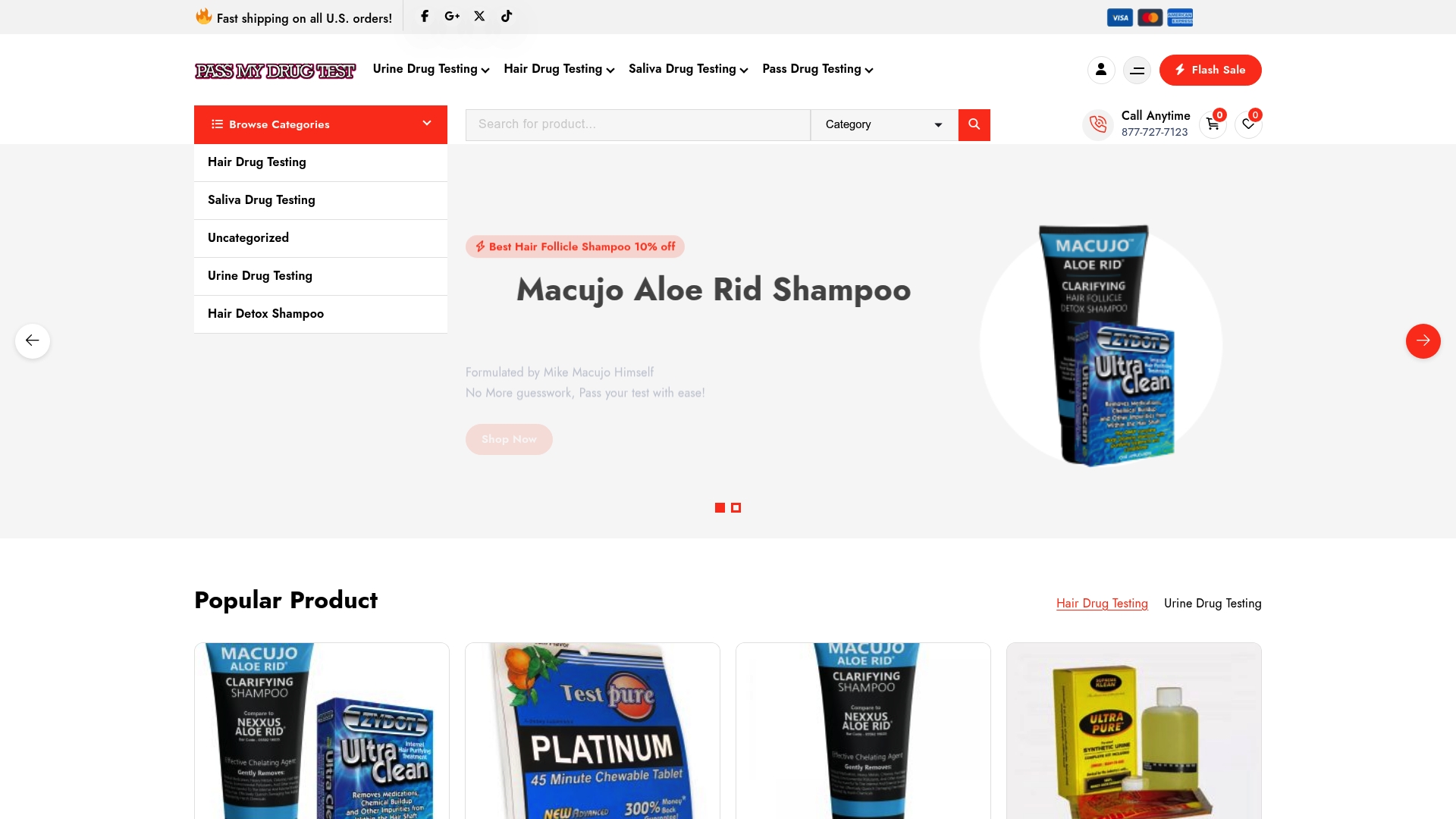
The detox products category lays out cleanses, drinks, and chewable options with honest information about what each is designed to support and over what timeframe, since nothing works instantly and no product should be marketed as if it does. If your situation involves an employer-administered screening, the employee urine drug testing guide walks through what to expect procedurally. And if you’re weighing synthetic urine as an option for your specific circumstances, review the legal and ethical considerations on the synthetic urine kit guide before deciding anything.
None of this is a guarantee, and Passmydrugtest won’t pretend otherwise. Start by browsing the detox product category that matches your timeline, then make your decision with real information in hand instead of a forum post.
Sources
For further reading, the peer-reviewed study on urine adulterants and immunoassay strips covers the lab data directly. Healthline’s explainer summarizes the clinical consensus in plain language, while CDC’s cannabis research page and the clinical drug testing reference cover detection windows and lab procedure in more depth.
This article is general information, not a substitute for advice from a qualified doctor. Consult a qualified healthcare professional about your own circumstances before acting on anything here.
- Does Vinegar Really ‘Clean’ Your System in 24 Hours? | Healthline
- Effect of urine adulterants on commercial drug abuse screening test strip results | PMC
- Clinical Drug Testing (NCBI Bookshelf)
- CDC cannabis facts & research
- Diluted urine guidance | Yavapai County