
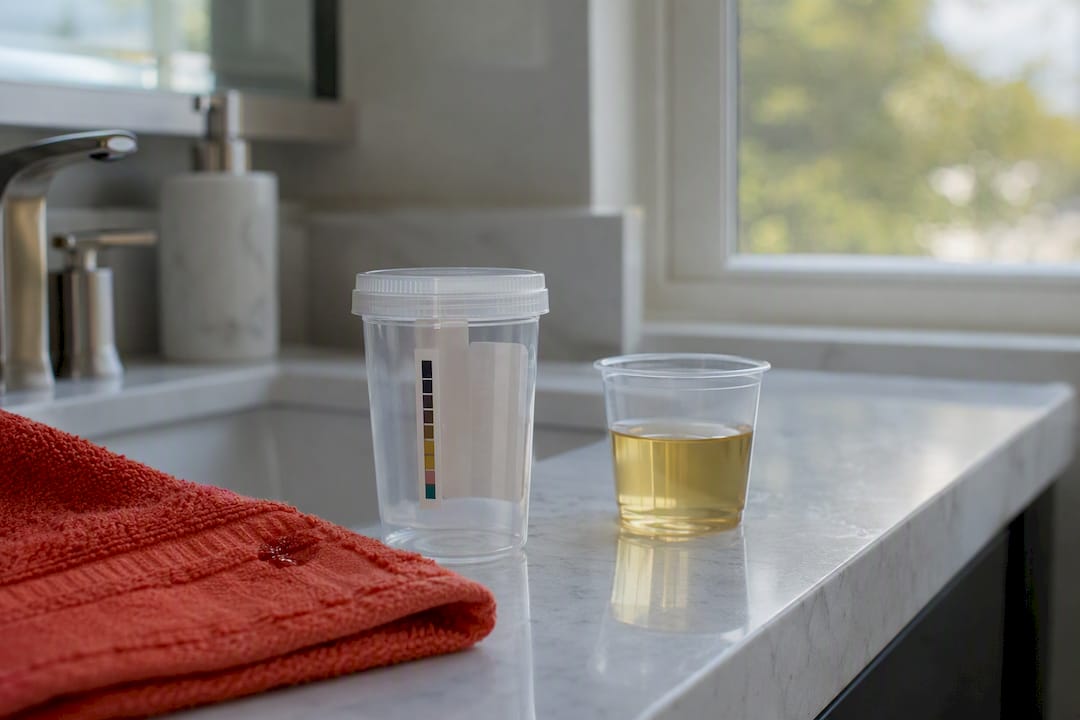
Last Minute Drug Test: What Works in 24–72 Hours and What Labs Flag
There’s no pill, drink, or trick that guarantees a clean result on short notice. The only reliable path is abstinence plus time, and even a day or two of prep can shift your odds depending on the test type and your usage history. Confirm exactly what’s being tested and how it’s collected before you do anything else, and treat any product or method promising a guaranteed pass with suspicion, since neither the FDA nor independent lab science backs that claim.
TL;DR:
- Last-minute drug tests are best approached by confirming the test type and collection conditions, especially whether the collection will be observed.
- Hydration helps only if the test is unobserved urine collection, but excessive water intake or adulteration attempts are likely to be detected and backfire.
- Different tests have varied detection windows: urine typically detects recent use within days, saliva and blood have shorter windows, while hair tests look back up to 90 days.
- Detox products and home remedies rarely work reliably; the most effective solution is abstinence, with three days often enough for single-use, but ineffective against hair or chronic use.
- Preparing documentation and choosing the fastest available collection site are more effective than last-minute tactics, which often do not change the outcome if proper collection procedures are enforced.
Table of Contents
- What to Do First When You Get a Last Minute Drug Test Notice
- How Do Drug Tests Work and What Are the Detection Windows?
- Do Detox Drinks and Synthetic Urine Actually Work?
- Where Can You Get a Same-Day Drug Test?
- Why Is Abstinence the Only Real Guarantee?
- What Triggers a Lab Red Flag and What Happens Next?
- What Should You Do With 24, 48, or Only a Few Hours Left?
- Who’s Behind This Guide?
- The Truth About Last-Minute Drug Test Tactics
- Where to Buy Last-Minute Drug Test Solutions
- Sources
What to Do First When You Get a Last Minute Drug Test Notice
The first hour matters more than anything you buy afterward. Panic leads to bad decisions, like dumping something in a cup or chugging a gallon of water, both of which labs are specifically trained to catch.
Start here:
- Identify the test type. Ask directly, or check your notice: urine, saliva, blood, or hair. Each has a different detection window and a different vulnerability to last-minute tactics.
- Find out if collection is observed. Federal and many employer-mandated tests require a monitor in the room or right outside the stall. That single fact rules out most tricks people read about online.
- Locate your prescriptions. If you take anything that could trigger a positive (certain ADHD medications, some antibiotics, prescribed opioids), print or photograph the prescription label now. You’ll want it on hand for the Medical Review Officer if a result comes back non-negative.
If it’s a urine test and you have a few hours of lead time, moderate hydration can help move a borderline result toward negative, but “moderate” is the operative word. Drinking two or three glasses of water spread over a few hours is reasonable. Drinking a gallon in twenty minutes is not. Labs measure specific gravity and creatinine specifically because overhydration produces a flat, watery sample that reads as an obvious attempt to dilute, which is treated as its own kind of red flag.
Do not add anything to the cup. No salt, no vinegar, no over-the-counter powder. Every one of these shows up on an adulterant screen, and getting caught tampering is almost always worse for your record than a positive result would have been.
If you need a same-day collection, urgent care centers, walk-in labs, and occupational health clinics are usually your fastest options, often faster than trying to book through a hospital lab. Call ahead. Ask if they do the specific panel you need (5-panel, 10-panel, DOT-regulated, or non-regulated), and bring a government ID. Some locations require an appointment even for “walk-in” service, especially during busy hours.
A short list of what generally helps versus what backfires:
- Helps: confirming the exact panel, arriving well before closing time, bringing ID and prescription documentation, moderate water intake.
- Backfires: chugging water fast, adding anything to a sample, showing up without ID, guessing at the test type instead of confirming it.
Pro Tip: Call the testing site and ask point-blank whether the collection will be observed. Staff will usually tell you, and it changes your entire strategy, since observed collection eliminates substitution as an option entirely.
How Do Drug Tests Work and What Are the Detection Windows?
Every test method measures something different, and that difference is exactly why a tactic that works for one test does nothing for another.
Urine tests look for drug metabolites, the byproducts your body creates after breaking down a substance, not the drug itself. This is the most common test for employment because it’s cheap and the window is wide enough to be useful. Most drugs clear a first-time or occasional user’s system within a few days, but research compiled by the National Library of Medicine puts the general range at roughly one to seven days, with about three days being typical for a broad range of substances after the most recent use.
Saliva tests detect the parent drug itself, which means the window is shorter, usually somewhere in the range of a day or two for most substances. They’re increasingly popular for random workplace testing because they’re harder to cheat: there’s no cup to swap, and observation is built into the collection.
Blood tests have the shortest window of any common method, often just hours to a couple of days, because blood only carries actively circulating substances rather than accumulated waste products. Blood draws are typically reserved for post-accident testing, medical situations, or legal cases where recent impairment matters more than a general usage history.
Hair tests work backward from everything else. Instead of a short window, they can detect drug use going back roughly 90 days, since drug metabolites bind into the hair shaft as it grows. This is why hair testing shows up more in pre-employment screening for safety-sensitive roles and in custody cases, where an employer or court wants a longer look than a urine test can offer. If you’re facing one, understanding hair follicle detection timelines before your appointment matters more than any last-minute urine tactic ever could.
THC is the outlier. Occasional users often clear urine tests within days, but chronic, heavy users can show detectable metabolites for several weeks after their last use, because THC stores in fat tissue and releases back into the bloodstream slowly over time.
A few variables stretch or shrink these windows for any drug:
- Frequency of use — daily users build up metabolite reserves that take longer to clear than a single occasion would.
- Metabolism and hydration habits — faster metabolisms and consistent hydration tend to clear substances somewhat quicker.
- Body composition — fat-soluble drugs like THC linger longer in people with higher body fat percentages.
- Dose and potency — a higher dose simply takes longer to fully process out.
Employers and courts choose test types based on what they’re trying to answer. A trucking company doing DOT-mandated testing almost always uses urine, because federal regulations specify it. A construction firm worried about long-term drug use for a safety-sensitive role might request hair. A court handling a custody dispute might want hair testing precisely because it can’t be beaten by a few days of abstinence. Knowing which one you’re facing tells you immediately whether short-notice tactics have any chance at all.
Do Detox Drinks and Synthetic Urine Actually Work?
Short answer: it depends entirely on the method, and most of what’s marketed online overpromises. Here’s what the evidence and real lab practice actually show for each approach.
Dilution
Drinking extra water to flush your system is the oldest trick in the book, and it has a real, if limited, effect. Diluting your urine lowers the concentration of metabolites, which can push a borderline result under a screening cutoff. The problem is that labs know this trick exists and test for it directly. Specimen validity testing checks creatinine levels and specific gravity, and a sample that’s too watery gets flagged as “dilute” or “substituted” rather than reported as a clean negative. Depending on the testing policy, a dilute result can mean an automatic retest, sometimes under direct observation the second time. If you’re leaning on this method, understanding how clean urine dilution risks actually play out at the lab level matters more than the folk wisdom around it.
Detox drinks and pills
These are the biggest category of last-minute purchases, and the honest answer is that clinical evidence for their effectiveness is thin. Most work by encouraging urination and mild dilution rather than doing anything that actually accelerates metabolism or clearance. A review of adulteration attempts found evidence for detox product effectiveness limited and inconsistent, while noting that labs have developed screens specifically to catch chemical evidence of tampering. That doesn’t mean every product is worthless, some formulations do support the same dilution mechanism that plain water achieves, but it does mean you shouldn’t treat a $40 bottle as a guaranteed fix. Treat detox drinks as a supplement to a hydration strategy, not a replacement for one.
Synthetic urine
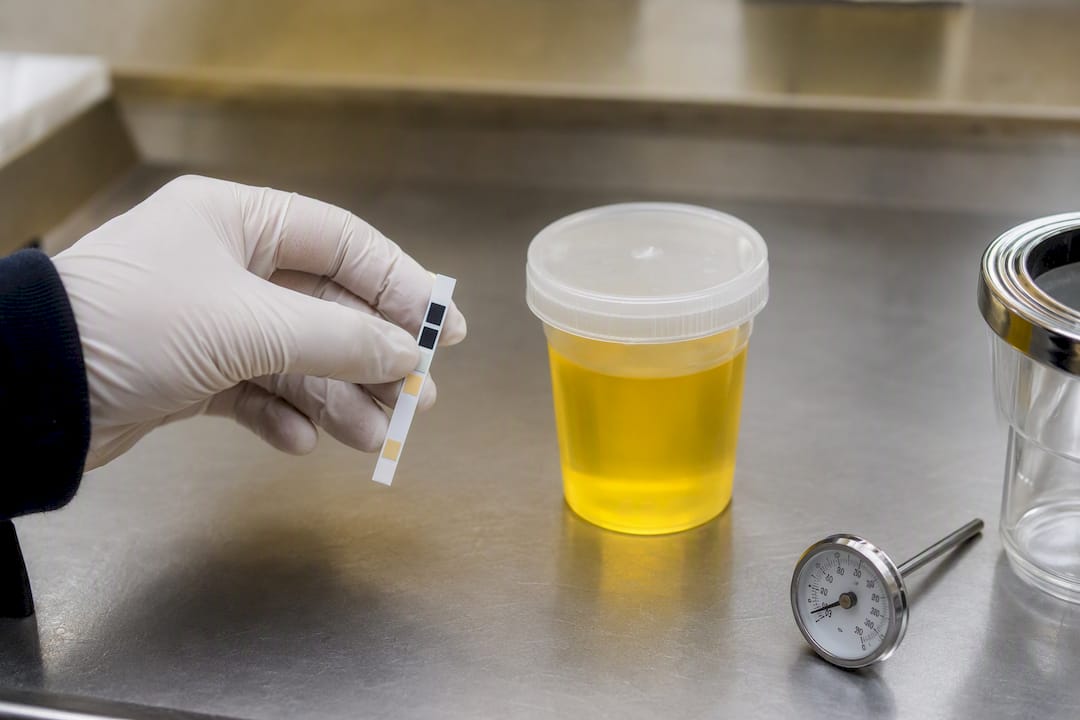
This is the tactic with the highest stakes and the highest variance. Synthetic urine can pass a screening test when it closely mimics real urine’s temperature, pH, specific gravity, and creatinine levels, and when the collection isn’t observed. That’s a big “when.” Most regulated tests, DOT-mandated ones especially, require observed or monitored collection specifically to prevent substitution. Temperature strips on the collection cup catch out-of-range samples within minutes, since real urine leaves the body around 94 to 100°F and cools fast. If you’re considering this route, you need to understand exactly what a testing method actually checks for at your specific facility before assuming an unobserved collection is guaranteed.
Adulterants and oxidizers
Products marketed to add directly to a sample, bleach, eye drops, various powders, are the riskiest category by far. Labs run oxidant and pH screens specifically to catch these, and a flagged adulterant result is treated far more seriously than a positive drug result in most workplace policies, sometimes triggering immediate termination or disqualification rather than a retest. There’s also a legal dimension: tampering with a specimen in certain regulated contexts (DOT testing, court-ordered testing) can carry its own legal consequences separate from whatever the underlying drug test would have shown.
Home remedies
Cranberry juice, niacin, vinegar shots, activated charcoal. None of these have reliable evidence behind them, and some (high-dose niacin especially) carry real health risks, including liver stress and skin reactions, for essentially no benefit. If a remedy shows up as a home hack on social media with no clinical backing, assume it does nothing to your actual metabolite levels and may just make you feel sick.
Pro Tip: If you’re weighing whether a same-day product purchase makes sense, ask what problem it’s actually solving. Dilution support and creatine-based creatinine normalizers address a measurable lab check. Vague “detox” claims with no mechanism usually don’t.
Why confirmation testing changes the math
Here’s the part most last-minute guides skip. A positive result on an initial screen isn’t the end of the process. Initial immunoassay screens are presumptive, meaning they flag a likely positive but aren’t definitive proof. Positive screens typically get sent for confirmatory testing using GC-MS or LC-MS, lab methods that identify the exact molecular structure of what’s in the sample rather than just detecting a general class of compound. This is significant because it means a tactic that might fool a cheap immunoassay screen often gets caught at the confirmation stage anyway, and a false claim that “I never took anything” becomes much harder to sustain once a specific compound and concentration show up on paper.
Where Can You Get a Same-Day Drug Test?
If you need results fast, understand that “same-day” almost always refers to collection, not final results. Getting to a collection site quickly is the one part of this process you can actually control.
Rapid on-site screens use immunoassay strips or cassettes and give a presumptive readout in five to ten minutes. These are common at urgent care centers and some staffing agencies for pre-employment purposes. They’re fast, but they’re not the final word, since anything non-negative typically gets sent out for lab confirmation.
Lab-confirmed results, the kind an employer’s HR department or a court will actually rely on, generally take three to seven business days once the sample reaches the lab. No amount of urgency on your end speeds that internal processing up.
Same-day collection is genuinely available in most areas. Your best bets, roughly in order of speed:
- Urgent care centers — many offer walk-in drug screening collection without an appointment.
- Occupational health clinics — often used by employers directly, sometimes faster if you’re sent with paperwork already in hand.
- Walk-in commercial labs — chains that handle both consumer and employer-ordered testing frequently offer same-day collection slots.
Acting fast on scheduling matters even though it can’t touch the lab’s internal turnaround time. If a hiring manager is waiting on your result to finalize an offer, getting your specimen collected today instead of three days from now is the one lever you actually have. Bring a government-issued photo ID to every appointment. Expect the collection itself, for urine tests specifically, to potentially be observed or semi-observed depending on the employer’s policy, and expect a chain-of-custody form that documents who handled your sample from collection to lab delivery. If you want a broader sense of what’s realistic inside a compressed timeline, this breakdown of what’s achievable in 24 hours covers the honest boundaries.
Why Is Abstinence the Only Real Guarantee?
Every tactic covered so far works around the edges of a test. Abstinence removes the substance from your system entirely, which is the only mechanism that reliably produces a true negative rather than a manipulated one. Dilution, synthetic urine, and detox drinks all try to hide or mask something that’s still present. Time is the only strategy that eliminates it.
Conservative windows to plan around, based on detection-window research:
- Alcohol: typically clears within 24 hours for standard urine tests, though specialized tests (EtG) can detect it for up to 80 hours.
- Cocaine: generally 2 to 4 days for occasional use.
- Opioids: usually 1 to 3 days, longer for extended-release formulations.
- Amphetamines: roughly 2 to 4 days.
- THC: a few days for occasional users, but weeks for chronic heavy users due to fat storage.
Three days of abstinence might be genuinely enough if you used a single time and you’re not a regular THC user. Three days does almost nothing if you’re a daily cannabis user facing a urine test, and it does nothing at all against a hair test, which reaches back roughly 90 days regardless of what you do this week.
What Triggers a Lab Red Flag and What Happens Next?
Labs don’t just report a number. They run a validity panel alongside the drug screen specifically to catch tampering, and understanding what they check explains why so many last-minute tactics fail.
Standard validity checks include:
- Temperature — checked within minutes of collection; out-of-range samples suggest substitution.
- Creatinine level — abnormally low levels suggest dilution or substitution.
- Specific gravity — measures urine concentration; extreme values flag dilution.
- pH and oxidant screens — catch chemical adulterants like bleach, peroxide, or commercial “cleansing” additives.
When a specimen fails one of these checks, the standard process usually involves either a recollection, often under direct observation this time, or a note in the report flagging the sample as dilute, substituted, or adulterated rather than negative or positive. If the drug screen itself comes back non-negative, it goes to confirmatory GC-MS or LC-MS testing, and a Medical Review Officer reviews the confirmed result before it’s reported to the employer. This is exactly where prescription documentation matters. If a confirmed positive matches a medication you’re legally prescribed, the MRO can classify the result differently once you provide that paperwork.
The consequences from here vary widely. A workplace failure can mean a withdrawn job offer, termination, or a required treatment referral depending on company policy. A legal or custody-related failure can affect court proceedings directly. In either case, your best move if you believe a result is wrong isn’t to argue with HR, it’s to formally request the confirmatory test and provide any relevant medical documentation through the proper channel.
What Should You Do With 24, 48, or Only a Few Hours Left?
Your options narrow sharply as the clock runs out, so match your actions to how much time you actually have.
If you have only a few hours:
- Confirm the exact test type and whether collection will be observed.
- If it’s urine and unobserved, moderate hydration (not overhydration) is your only meaningfully low-risk lever.
- Skip additives entirely. The downside of getting caught outweighs any theoretical upside.
- Gather prescription documentation now, before you’re standing at the collection site.
If you have about 24 hours:
- Continue measured hydration rather than a single large intake right before collection.
- Avoid intense exercise in the final day. Heavy exertion can temporarily spike creatinine and metabolite release from fat stores, working against you rather than for you.
- Some people use creatine supplements to help normalize creatinine levels if dilution is likely, though evidence here is anecdotal rather than clinically robust, so treat it as a minor lever, not a fix.
- If your case involves cannabis specifically, understand that 24 hours changes almost nothing for a regular user, even with every tactic combined.
If you have 48 to 72 hours:
- Everything above, plus moderate, sustained physical activity that supports natural metabolism rather than one exhausting session.
- Focus on balanced meals and consistent water intake rather than any single “flush” attempt.
- Confirm and organize documentation for any prescribed medications that could otherwise trigger a false positive.
- Recognize the evidence ceiling. Three days will not clear a chronic user’s THC metabolites and won’t touch a hair test at all.
Pro Tip: Once you’re inside the final 12 hours before an observed collection, stop looking for a workaround and start preparing your documentation instead. That single shift in focus, from tactics to paperwork, protects you more than almost anything else on this list.
At some point, usually once observed collection or a hair test is confirmed, last-minute tactics stop being useful and the smarter move is preparing for confirmatory review: gathering prescriptions, understanding your rights to request a retest, and being honest with yourself about what a realistic outcome looks like.
Who’s Behind This Guide?
Passmydrugtest operates as both a marketplace and an information hub for people navigating drug testing under real time pressure, whether that’s a workplace screen, a legal requirement, or a personal decision. The site ships fast on U.S. orders, which matters when “last minute” actually means hours, not weeks, and customer support is available by phone during published business hours for anyone unsure which product fits their specific test type.
This guide was contributed by Michael, a Passmydrugtest contributor focused on translating clinical detection-window research and lab-testing protocol into practical guidance people can use under deadline pressure. The goal throughout has been separating what the science and lab practice actually support from what’s just aggressive marketing copy dressed up as a guarantee.
If you’re weighing a specific product against your specific situation, timing, test type, and history of use, phone support can walk you through which category actually fits before you spend money on something that won’t hold up at the collection site.
The Truth About Last-Minute Drug Test Tactics
Most of what circulates online about beating a drug test on short notice is either outdated, exaggerated, or written by someone who’s never seen a validity panel flag a diluted sample. The evidence supports a much narrower set of moves than the internet suggests: confirm your test type, understand whether collection is observed, use moderate hydration if it’s genuinely an option, and treat every additive product as a legal and professional risk rather than a shortcut.
What’s overrated is the idea that any single product replaces preparation. What’s underrated is how much a documented prescription or a fast, well-chosen collection appointment actually protects you compared to a bottle of detox tea. If you’re facing a hair test or you’re a daily user staring down a urine screen with three days to go, the honest move is recalibrating your expectations, not doubling down on tactics that were never built for your situation. Prioritize the boring stuff first: confirm the rules, gather your paperwork, and only then decide whether a product genuinely fits your timeline.
— MIchael
Where to Buy Last-Minute Drug Test Solutions
If you’re up against the clock, Passmydrugtest is built for exactly this moment: fast U.S. shipping and a catalog organized by test type instead of a wall of generic detox products you have to sort through yourself. Depending on your situation, that might mean a detox product matched to your usage history, a synthetic urine kit for unobserved collection scenarios, or an at-home test kit to check where you actually stand before an official screening.
The fastest way to choose correctly is matching the product to your exact test type and your timeline, not grabbing whatever has the biggest “guaranteed” claim on the label. If you’re unsure which category fits, phone support during business hours can walk you through it directly. Start on the drug testing methods page to confirm what you’re actually facing, then choose your product from there before your window closes.
This article is general information, not a substitute for advice from a qualified doctor. Consult a qualified healthcare professional about your own circumstances before acting on anything here.
Sources
- Substance Use and Detection Windows — NCBI (NCBI Bookshelf)
- Adulteration and attempts to cheat drug tests — PMC
- Drugs of Abuse Home-Use Test — FDA
- 5 Panel Rapid Drug Screen (Urine) – Any Lab Test Now