
What Does a 12 Panel Drug Test Screen For?
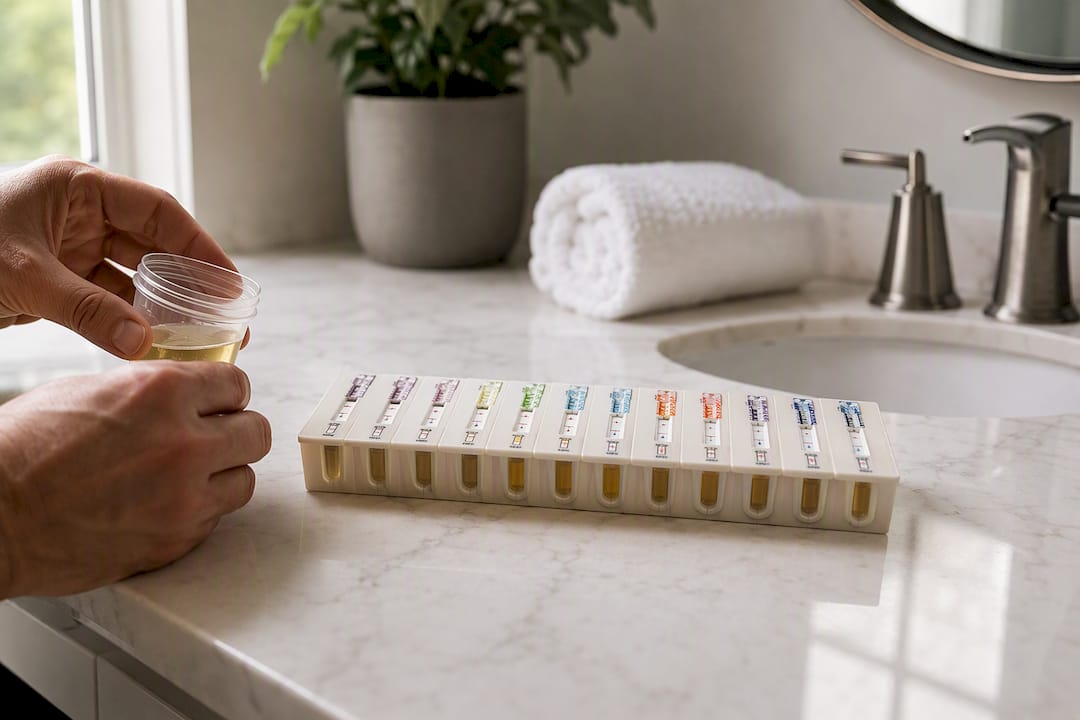
A 12-panel drug test screens urine for 12 substance classes: amphetamines, methamphetamine, cocaine, marijuana (THC), opiates, oxycodone, benzodiazepines, barbiturates, methadone, MDMA, PCP, and propoxyphene (or a manufacturer substitute like tramadol or buprenorphine). Urine is the standard sample. Every positive screen should get confirmed by a lab before anyone treats it as final.
TL;DR:
- Marijuana can remain detectable for several weeks in long-term, daily users due to fat tissue storage, whereas occasional users clear it in days.
- Confirmatory testing using GC-MS or LC-MS is essential after a positive screen, especially when prescription use or false positives are involved.
- Detection windows vary based on body fat, hydration, liver and kidney function, and test cutoff levels, affecting how long substances stay in urine.
- Certain medications, like pseudoephedrine and poppy seeds, can cause false positives, making confirmatory testing crucial for accurate results.
- Availability of at-home testing kits and detox products can help individuals assess their status before a drug test, but they do not guarantee specific outcomes.
Table of Contents
- The 12-Panel Drug List: What Each Analyte Actually Detects
- How Does a 12-Panel Drug Test Actually Work?
- How Long Do These Drugs Stay in Your System?
- What Causes a False Positive on a Drug Screen?
- What Happens During Collection and When Do Results Come Back?
- Who’s Behind This Drug Testing Guide?
- What Should You Actually Do With This Information?
- Get Ahead of Your Next Screening With the Right Tools
- Where This Information Comes From
- Sources
The 12-Panel Drug List: What Each Analyte Actually Detects
Not every 12-panel kit lists analytes in the exact same order, and a handful swap one or two out for newer drugs. But the core group below is what you’ll find on the overwhelming majority of strips sold for employment drug testing and legal screening. Here’s the breakdown, one substance at a time.
- Amphetamines (AMP): Catches prescription stimulants like Adderall and Dexedrine along with illicit amphetamine. Urine detection generally ranges from a couple of days for occasional use to somewhat longer for heavier daily use.
- Methamphetamine (mAMP): Kept on a separate strip from amphetamines because the metabolites differ chemically. Meth typically clears urine in 3 to 5 days, according to detection-window data compiled by the National Library of Medicine. Some cold and allergy medications containing certain decongestants can trigger cross-reactivity on the initial screen, which is one reason confirmation testing exists.
- Cocaine (COC): The strip actually detects benzoylecgonine, the metabolite cocaine breaks down into, not cocaine itself. That metabolite is detectable in urine for a few days after use.
- Marijuana / THC: This is where usage pattern matters more than almost any other analyte on the list. An occasional user might clear THC in a few days; however, a daily, long-term user can test positive for several weeks after their last use, because THC metabolites store in fat tissue and release slowly back into the bloodstream.
- Opiates: Detects morphine, codeine, and the heroin metabolite 6-monoacetylmorphine. Typical urine detection window lasts for a few days. Poppy seed consumption is a genuine, well-documented cause of a false positive here, which is part of why labs don’t stop at the screening step.
- Oxycodone: Deliberately separated from the general opiate strip. Oxycodone (found in OxyContin and Percocet) has a different chemical structure than morphine-derived opiates, so a generic opiate test frequently misses it entirely. If oxycodone use is a concern, the panel needs its own dedicated strip, not just the standard opiate line.
- Benzodiazepines (BZO): Covers drugs like Xanax, Valium, and Ativan. Short-acting benzodiazepines clear in about several days, while long-acting ones like diazepam can linger in urine for extended periods in regular users, per NCBI’s detection-window reference.
- Barbiturates (BAR): Older sedatives such as phenobarbital and secobarbital. Short-acting barbiturates clear within several days; long-acting types can remain detectable for multiple weeks.
- Methadone (MTD): Included specifically because methadone shows up so often in addiction treatment monitoring and pain management programs. Methadone is detectable in urine for several days up to about a week.
- MDMA (ecstasy/molly): Despite a short detection window of about 1 to 4 days, MDMA stays on most standard 12-panel builds because of its prevalence at concerts, festivals, and among younger test populations.
- PCP (phencyclidine): Rare compared to the other 11 analytes, but its inclusion persists because PCP use correlates with erratic and sometimes dangerous behavior, which matters in safety-sensitive workplaces. Detection typically runs several days, extending toward multiple weeks in heavy, chronic users.
- Propoxyphene (or a substitute): Propoxyphene, once sold as Darvocet, was pulled from the U.S. market years ago over cardiac safety concerns. Plenty of 12-panel kits still list it out of habit or legacy formatting. However, many manufacturers now swap it for tramadol or buprenorphine instead, since those drugs see far more real-world use today. Buprenorphine typically has a detection window lasting about a week. This substitution is exactly why panel configurations vary from one drug testing method or brand to the next, and it’s worth checking the specific analyte list before assuming a kit covers what you need.
How Does a 12-Panel Drug Test Actually Work?
Every 12-panel screen starts with an immunoassay, a rapid chemical reaction where antibodies bind to specific drug metabolites in the urine sample. If enough metabolite is present to cross a preset threshold, called a cutoff, the strip flags a presumptive positive. These cutoffs are measured in nanograms per milliliter (ng/mL), and they’re not universal. A federal DOT-regulated test uses different cutoff levels than a private employer’s non-DOT panel, which is one reason two tests on the same person can technically disagree.
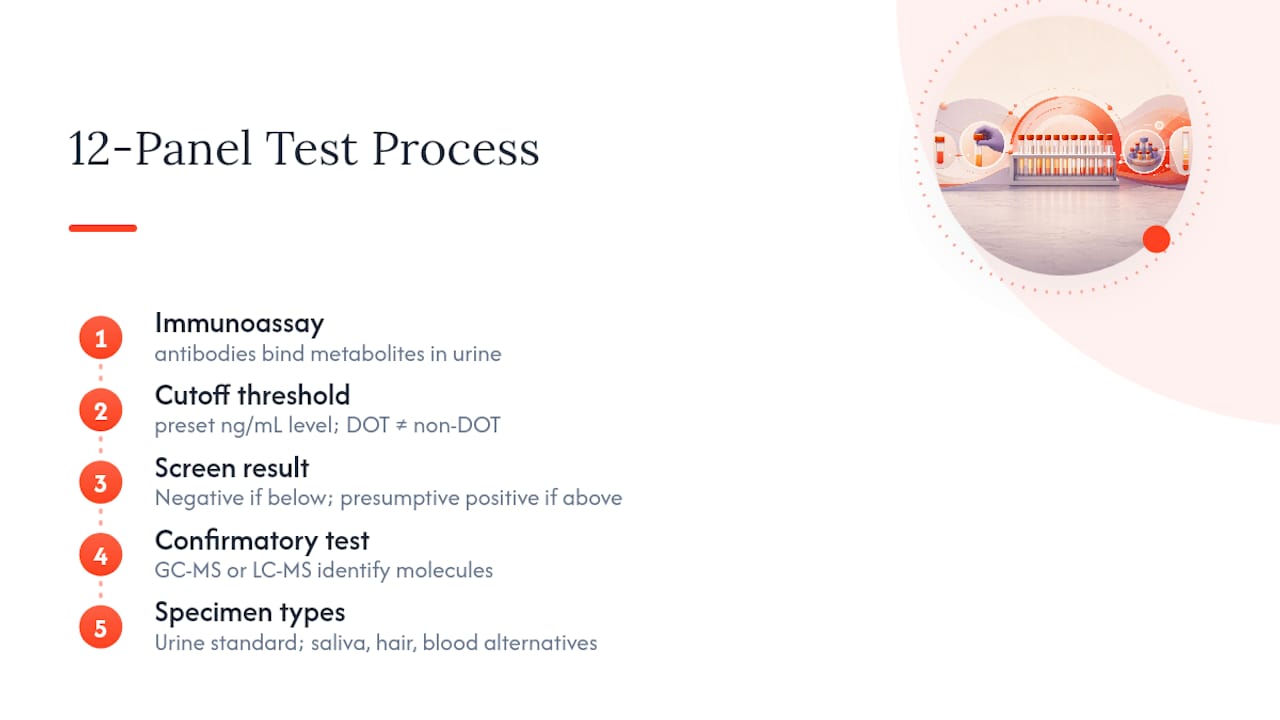
A presumptive positive is not a confirmed positive. MedlinePlus explains that any initial positive screen in a legal or employment context should get retested using gas chromatography-mass spectrometry (GC-MS) or liquid chromatography-mass spectrometry (LC-MS). These confirmatory methods identify the exact molecular structure of what’s in the sample, rather than relying on an antibody’s general reaction. Urine remains the standard specimen for workplace testing because it’s noninvasive and offers a reasonably short detection window. Saliva, hair, and blood exist as alternatives, each with its own tradeoffs in window length and collection difficulty.
How Long Do These Drugs Stay in Your System?
Detection windows aren’t fixed numbers. They’re ranges shaped by how the body processes each substance, and by how much of it went in.
Frequency of use drives most of the variation. Someone who smokes marijuana once a month might clear it in a few days. A daily user can carry detectable THC metabolites for a month or longer, because the compound accumulates in fat cells faster than the body eliminates it. The NCBI’s detection-window data reflects this split for nearly every analyte on the 12-panel list, not just THC.
A handful of other factors shift the numbers further:
- Body composition: Higher body fat percentage extends detection time for fat-soluble drugs like THC.
- Hydration and urine concentration: Overly dilute urine can trigger a retest requirement rather than a clean result.
- Liver and kidney function: Slower metabolism and clearance mean longer detection windows, particularly in older adults.
- Test cutoff sensitivity: A lower cutoff catches trace amounts that a higher-cutoff device would report as negative.
For a substance-specific deep dive, resources like Passmydrugtest’s cocaine detection guide and hair testing detection windows break down individual timelines in more depth than a general panel overview can.
What Causes a False Positive on a Drug Screen?
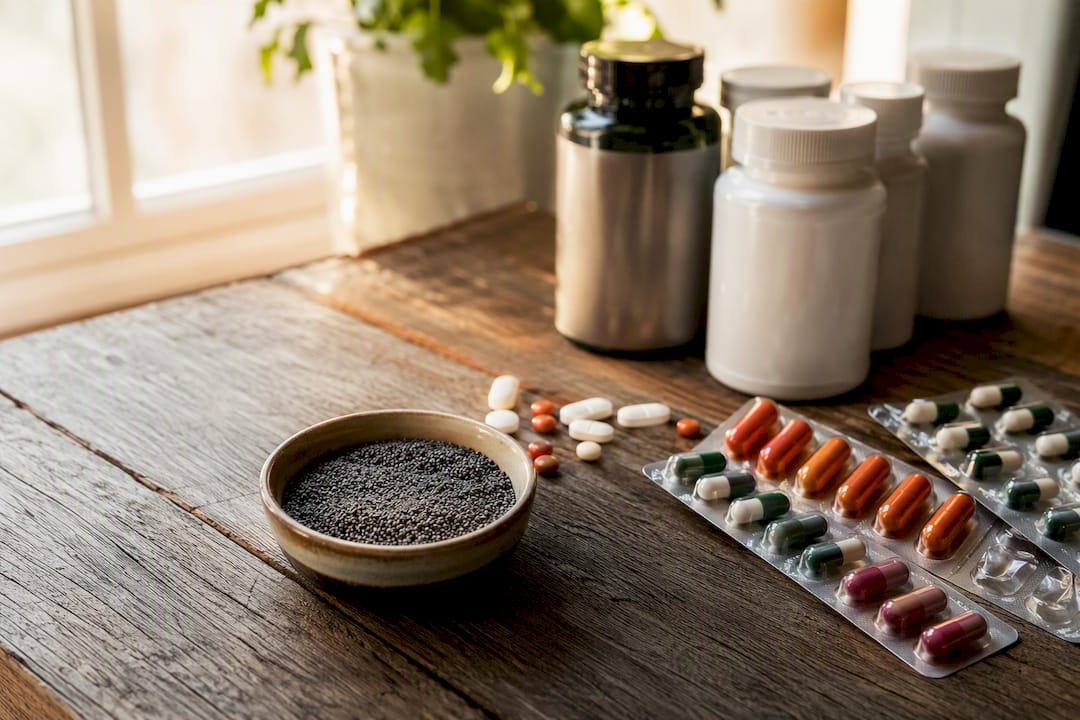
False positives happen, and they’re rarely random. Certain antibiotics have flagged false positives on opiate screens. Over-the-counter cold and allergy medications containing pseudoephedrine or dextromethorphan can cross-react on amphetamine and PCP panels. Poppy seed bagels or muffins have triggered opiate positives in documented cases. Some supplements and even certain foods create similar noise.
This is exactly why confirmatory testing exists as a required step, not an optional extra. SAMHSA’s testing standards call for strict chain-of-custody procedures in regulated employment and legal testing, meaning every sample is tracked, sealed, and logged from collection through lab analysis. If you test positive and you’re on a legitimate prescription, document it before your test if possible, and request confirmatory testing rather than accepting a presumptive result as final. A false positive resource walks through the disclosure and dispute process in more detail.
What Happens During Collection and When Do Results Come Back?
Most 12-panel collections are unobserved, meaning you provide the sample privately. Observed collection, where a monitor watches directly, gets reserved for situations with a documented history of tampering or specific legal mandates like probation.
The initial immunoassay screen returns results in minutes to a few hours. If it’s negative, that’s usually the end of it. A presumptive positive triggers GC-MS or LC-MS confirmation, which typically takes a few days depending on the lab’s workload. If confirmed, most employers and legal programs allow you to submit documentation for a legitimate prescription or, in some cases, request a retest of the split sample.
Who’s Behind This Drug Testing Guide?
This guide was researched and written by Michael, drawing on public health and regulatory sources including SAMHSA, MedlinePlus, and NCBI. Passmydrugtest combines that kind of educational reference material with a full e-commerce catalog of detox and test products, fast shipping on U.S. orders, and phone-based customer assistance. For deeper procedural questions, the urine testing and cutoff guide and false positive resource cover ground this overview only touches on.
What Should You Actually Do With This Information?
If you’re facing a 12-panel screen, start by checking your prescriptions against the list above, especially oxycodone and benzodiazepines, where legitimate use commonly triggers positives. Request confirmatory testing if a result surprises you, and check your employer’s or treatment provider’s specific policy before assuming the worst. The sources below and Passmydrugtest’s own guides are built to help you get from confusion to a clear next step.
— MIchael
Get Ahead of Your Next Screening With the Right Tools
Reading the detection windows above is one thing. Knowing where you actually stand before test day is another, and that’s where Passmydrugtest’s product catalog fills the gap the science alone can’t close. Passmydrugtest carries an at-home marijuana test kit that lets you check your own THC status privately before you’re sitting in a waiting room, plus a full line of detox products for passing a drug test if you’re working against the clock on one of the substances covered above.
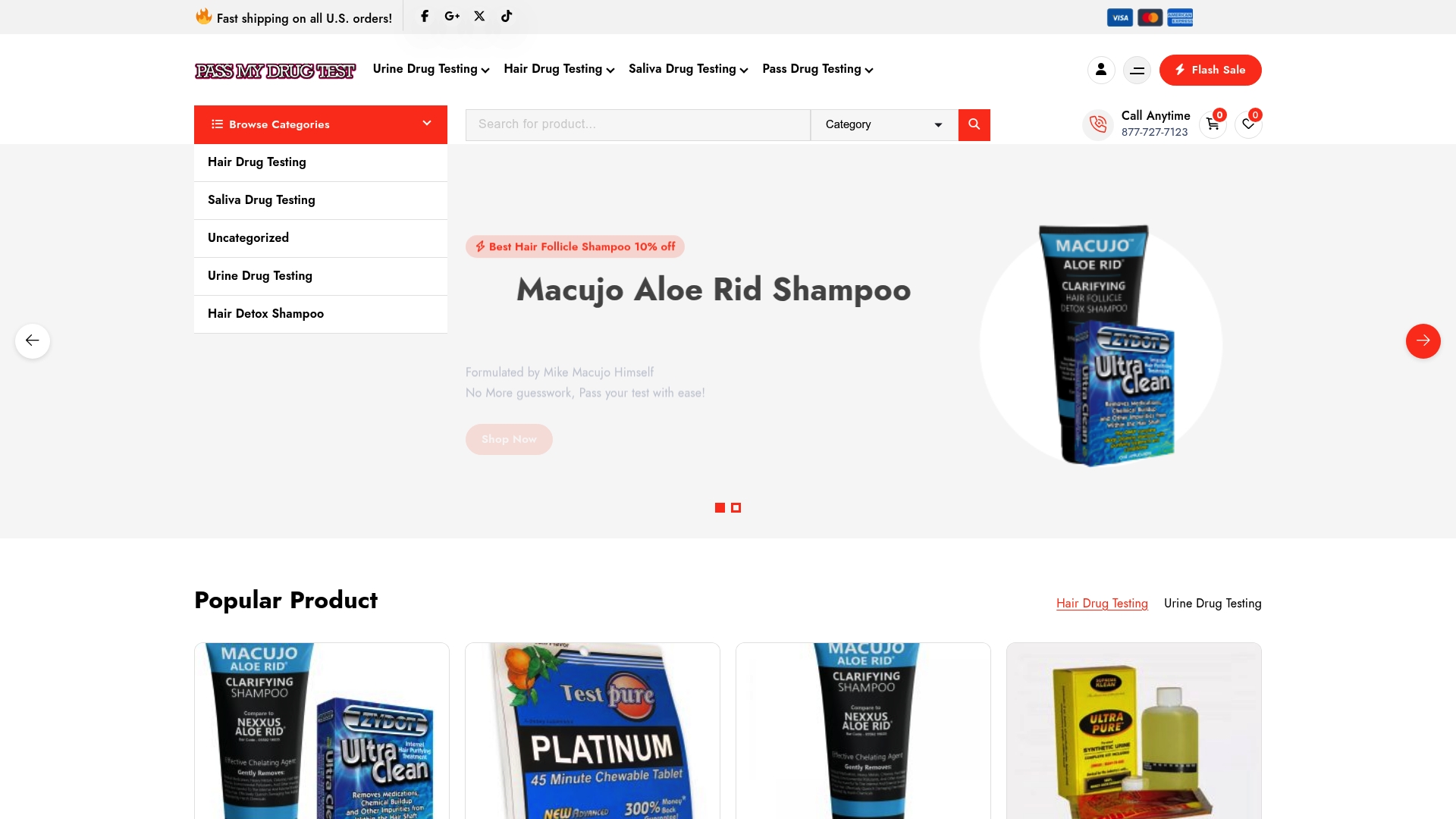
None of these products override your body’s chemistry or guarantee a specific outcome. Read the detection-window and false-positive guidance on this site before you buy anything, so you know exactly what you’re working with and why a given product exists. Browse the detox product category or check the marijuana test kit page to see what fits your specific timeline.
Where This Information Comes From
- SAMHSA — federal standards for workplace and regulated drug testing programs
- MedlinePlus — Drug Testing — plain-language lab test explanations
- National Library of Medicine (NCBI) — clinical detection-window data
- U.S. Food and Drug Administration — device clearance and regulatory context
This article is general information, not a substitute for advice from a qualified doctor. Consult a qualified healthcare professional about your own circumstances before acting on anything here.
Sources
- National Library of Medicine (NCBI) — Drug testing detection windows
- MedlinePlus — Drug testing
- SAMHSA
- U.S. Food and Drug Administration — Medical devices