
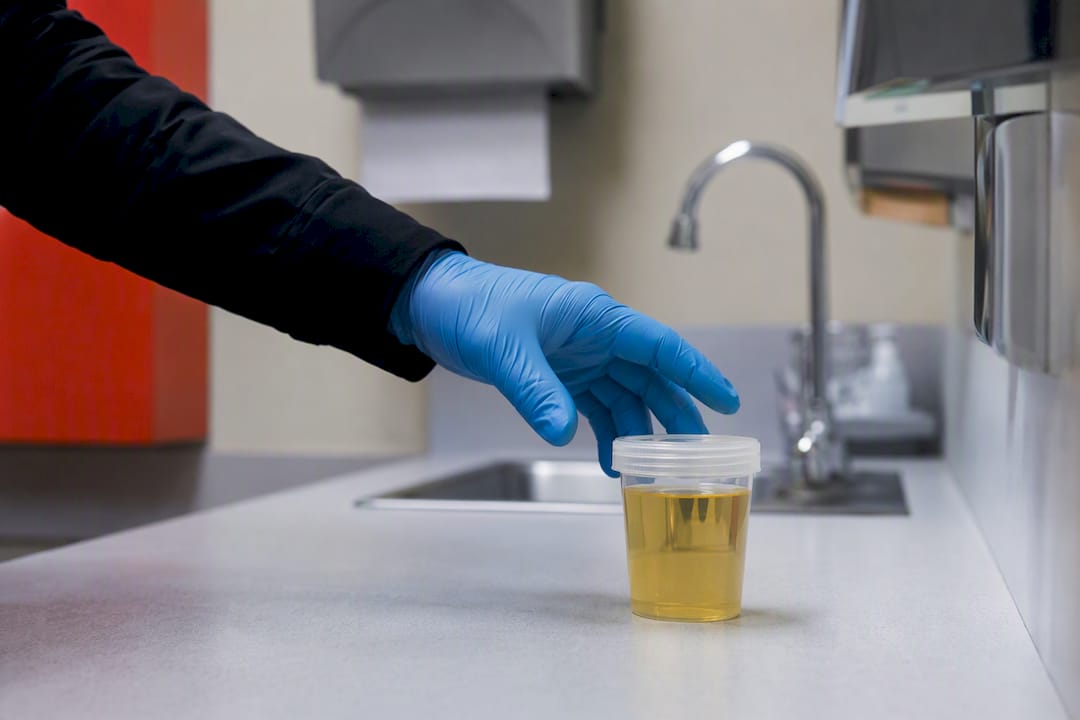
What a Supervised Drug Test Involves and When It’s Required
A supervised drug test, more precisely called a directly observed collection, is a urine screening in which a same-gender collector watches you produce the sample rather than waiting outside the stall. It is not the default procedure. It applies in narrow, defined circumstances: DOT-regulated return-to-duty and follow-up tests, court or probation orders, and cases where a prior sample showed signs of tampering.
If you have been told your next test will be observed, the reason usually falls into one of these buckets:
- A federal safety-sensitive job requiring a DOT return-to-duty or follow-up test
- A court order or probation condition, often following a prior violation
- Suspicion of tampering on an earlier sample (unusual temperature, an adulterant, or a device found on your person)
The rest of this guide walks through the procedure itself, your rights during it, what counts as a refusal, and how to challenge a result you believe is wrong.
Key Takeaways
Direct observation during a urine drug test is legally restricted to specific triggers like DOT return-to-duty tests, court orders, and confirmed tampering, and refusing or interfering carries the same consequences as a positive result.
| Point | Details |
|---|---|
| Observation has limits | Federal rules restrict direct observation to defined triggers, not general suspicion or convenience. |
| Refusal is broadly defined | Leaving a specimen unsealed and out of sight, or failing to produce enough volume, both count as refusal. |
| Confirmatory testing protects you | GC/MS or LC-MS/MS testing catches immunoassay false positives and is your recourse for disputed results. |
| Validity checks catch tampering | Temperature, creatinine, and specific gravity checks detect nearly all common substitution or dilution attempts. |
| Passmydrugtest offers preparation resources | The site pairs educational guides with test kits and detox products for lawful, informed preparation. |
Table of Contents
- What Is a Supervised Drug Test, and How Does It Differ From Direct Observation?
- When Is an Observed Collection Ordered?
- What Actually Happens During an Observed Collection
- Your Rights, What Counts as Refusal, and What Follows
- Screening Tests, Confirmatory Testing, and How Long Drugs Show Up
- Getting Through the Day of Your Test Without an Accidental Refusal
- If Your Result Comes Back Positive or Disputed
- Frequently Asked Questions
- Sources
What Is a Supervised Drug Test, and How Does It Differ From Direct Observation?
The terms get used loosely, and that causes confusion. “Supervised” often just means a collector stays nearby, checks your ID, and confirms the specimen’s temperature and integrity without watching you urinate. “Directly observed” is stricter: the collector visually watches the urine leave your body and enter the cup.
Direct observation carries specific procedural safeguards:
- The observer must be the same gender as the donor, unless a state law dictates otherwise
- Transgender and nonbinary donors may be offered an oral fluid alternative where policy allows it
- Clothing checks (raising a shirt, lowering pants briefly) confirm no prosthetic device or hidden substance is present
- The donor cannot leave the room, and the collector cannot look away, once voiding begins
Most workplace tests never trigger direct observation. It is reserved for the situations described in the next section, and understanding employee urine drug testing policies ahead of time helps you know which category you fall into.
When Is an Observed Collection Ordered?
Direct observation is not discretionary in DOT-regulated industries. It is triggered by specific, listed conditions, not a collector’s hunch.
- Return-to-duty and follow-up tests. Every one of these is observed under 49 CFR § 40.67, with no exceptions, for anyone returning to safety-sensitive duty after a prior violation.
- Temperature or tampering red flags. If a specimen reads outside the accepted range, or the collector finds a device or substance meant to alter the sample, the next collection must be observed.
- Court and probation orders. Judges and probation officers can require observed testing on their own authority, especially after a prior positive result or evidence that a donor previously substituted or diluted a sample. Probation systems use it as a supervision tool, and courts lean on it more heavily when integrity concerns exist, according to the Center for Justice Innovation.
- Private employer policy, outside DOT rules. Employers not bound by federal transportation regulations have more latitude, and state law varies widely on what they can require. What is standard for a truck driver under DOT authority may not apply at all to an office job in a state with stricter privacy statutes.
What Actually Happens During an Observed Collection
The process follows a fixed sequence, and knowing each step in advance removes most of the anxiety.
- ID and explanation. The collector checks your photo ID and explains, in writing or verbally, why observation is required for this specific test.
- Clothing check. You raise your shirt, lower pants or a skirt to the knees, and turn around once so the collector can see there is nothing hidden.
- Production and immediate temperature read. You produce the specimen while observed; the collector checks the temperature strip on the cup within four minutes of voiding, a window set to catch substituted or pre-warmed samples, per clinical testing standards.
- Sight rule until sealed. The unsealed specimen must stay in your line of sight from the moment it leaves your body until it is sealed into the A and B bottles. If it leaves sight unsealed, the collection is void and must be repeated.
- Validity testing. Beyond drug screening, the lab checks creatinine and specific gravity to confirm the sample is actual, undiluted human urine, and runs an adulterant panel for bleach, nitrites, or other tampering agents.
Pro Tip: Ask the collector to confirm their credentials and the specific regulatory reason for observation before you begin. You have a right to that explanation, and asking calmly rarely slows the process down.
Your Rights, What Counts as Refusal, and What Follows
You are entitled to know why observation was ordered and to see that the person collecting the specimen is properly authorized to do so. Those protections exist precisely because direct observation intrudes on privacy, and regulators built in limits to keep it from being used arbitrarily.
Refusal is defined more broadly than most people expect. It is not limited to flatly declining the test.
- Leaving an unsealed specimen out of the collector’s or your own sight
- Failing to provide the required volume within the allotted time, without a valid medical explanation
- A verified adulterated or substituted result, which DOT treats identically to a refusal
- Interfering with the collection process or refusing to follow observation instructions
The consequences track the seriousness of that definition. For DOT-regulated employees, a refusal means immediate removal from safety-sensitive duties and a report to the Drug and Alcohol Clearinghouse. For someone on probation, it can mean a violation hearing. In both cases, you retain the right to request testing of the B-sample, the sealed backup portion of your original specimen, within the window your program allows.
Screening Tests, Confirmatory Testing, and How Long Drugs Show Up
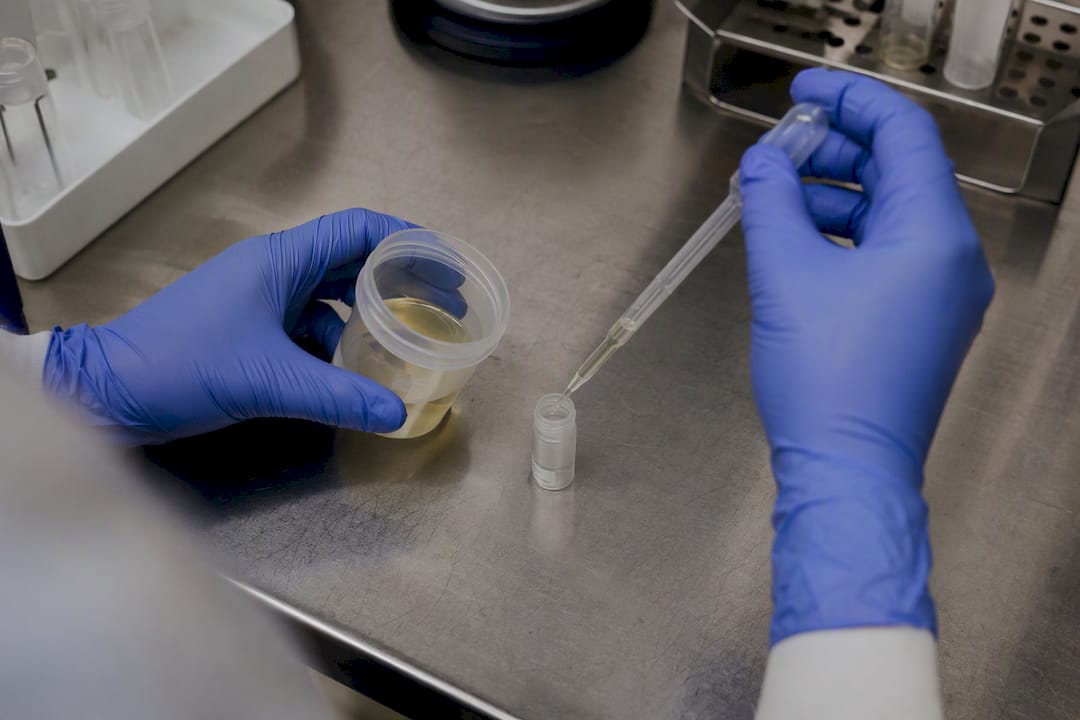
Most initial screens use immunoassay (IA) technology because it is fast and cheap, but it is also prone to false positives from cross-reacting medications and certain foods. That is why any contested or formal positive result gets sent for confirmatory testing using gas chromatography-mass spectrometry (GC/MS) or liquid chromatography-tandem mass spectrometry (LC-MS/MS), methods with far higher specificity, as outlined in peer-reviewed testing research.
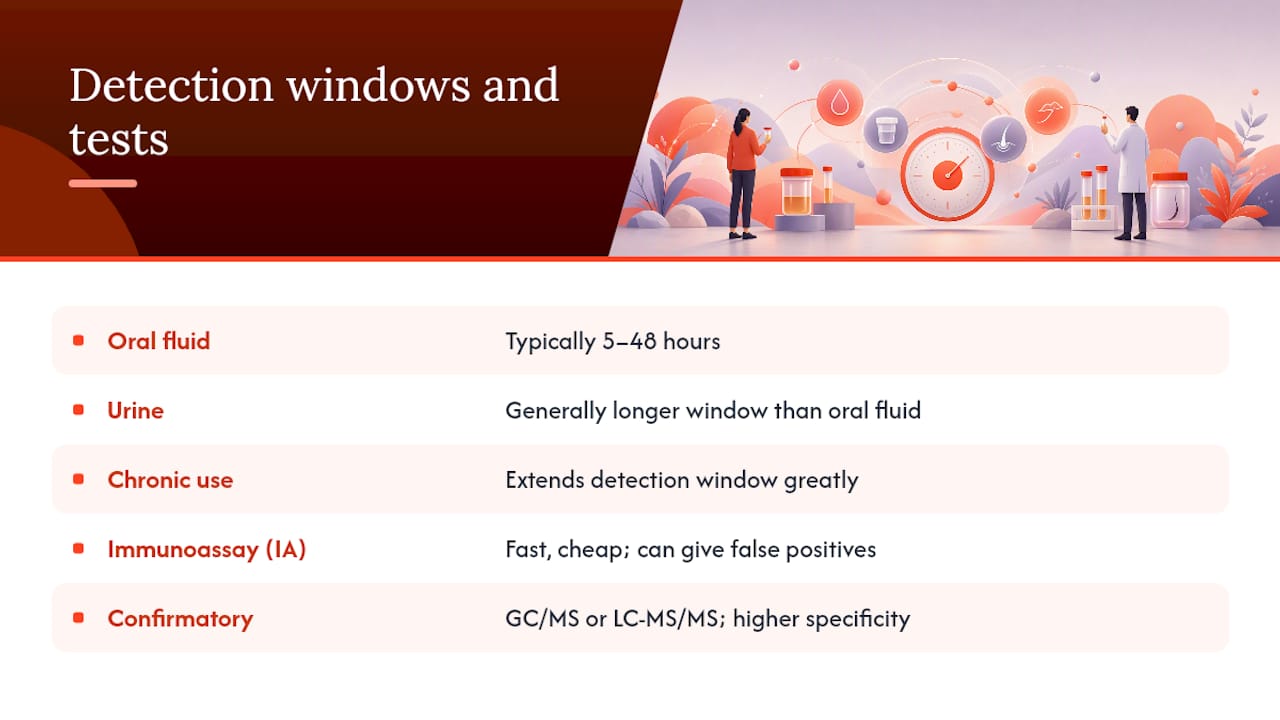
Detection windows vary by substance and by how heavily and how often someone has used it. Urine testing generally detects recent use over a longer window than oral fluid, which typically only picks up use within 5 to 48 hours, according to NIDA. Chronic, heavy use of some substances extends the window well beyond that of occasional use, which is one reason false positive results on initial screens need confirmatory follow-up rather than an automatic assumption of guilt.
Getting Through the Day of Your Test Without an Accidental Refusal
Bring a government-issued photo ID, any paperwork the testing site requested, and a list of current prescriptions and over-the-counter medications you’re taking. Plan for the visit to take longer than expected. Transportation and wait times are a real burden for people on probation especially, and showing up rushed increases the odds of a shy bladder situation turning into a technical refusal.
- If you cannot produce enough urine, you’re generally given up to three hours and reasonable fluids to try again before a physician evaluation is required
- Attempting to substitute or dilute a sample dramatically raises the stakes, since a verified adulterated result counts as a refusal, not a lesser offense
- Specimen validity checks catch nearly all common tampering attempts, so trying to beat the test this way rarely works and usually backfires
Pro Tip: If you take a prescription that could plausibly trigger a positive screen, tell the collector and have documentation ready before the test, not after a positive result comes back.
If Your Result Comes Back Positive or Disputed
- Contact the Medical Review Officer (MRO) assigned to your case immediately and request B-sample testing within the window your program specifies, often 72 hours.
- Gather documentation: current prescriptions, relevant OTC medication use, and any medical history that could explain the result.
- Consider an independent confirmatory test or a toxicology consult if the stakes are high enough to justify the cost.
- If the test was probation or court ordered, notify your attorney right away and ask about a procedural review or an evidentiary hearing.
A note on privacy and getting it right
Nobody enjoys being watched while they urinate into a cup, and pretending that discomfort doesn’t matter would be dishonest. But the rules around direct observation exist specifically to keep it rare and bounded, not routine. Knowing your rights, and the narrow, documented reasons observation can be required, is the best protection you have against it being misused. If you’re preparing for any kind of screening and want to understand your options more fully, our drug testing on the job resource walks through employer-side policy in more depth.
How Passmydrugtest Can Help You Prepare
Facing a supervised or observed collection is stressful enough without also guessing which product or resource actually applies to your situation. Passmydrugtest built its site specifically so you don’t have to piece that research together from scattered forum posts and outdated blog comments.
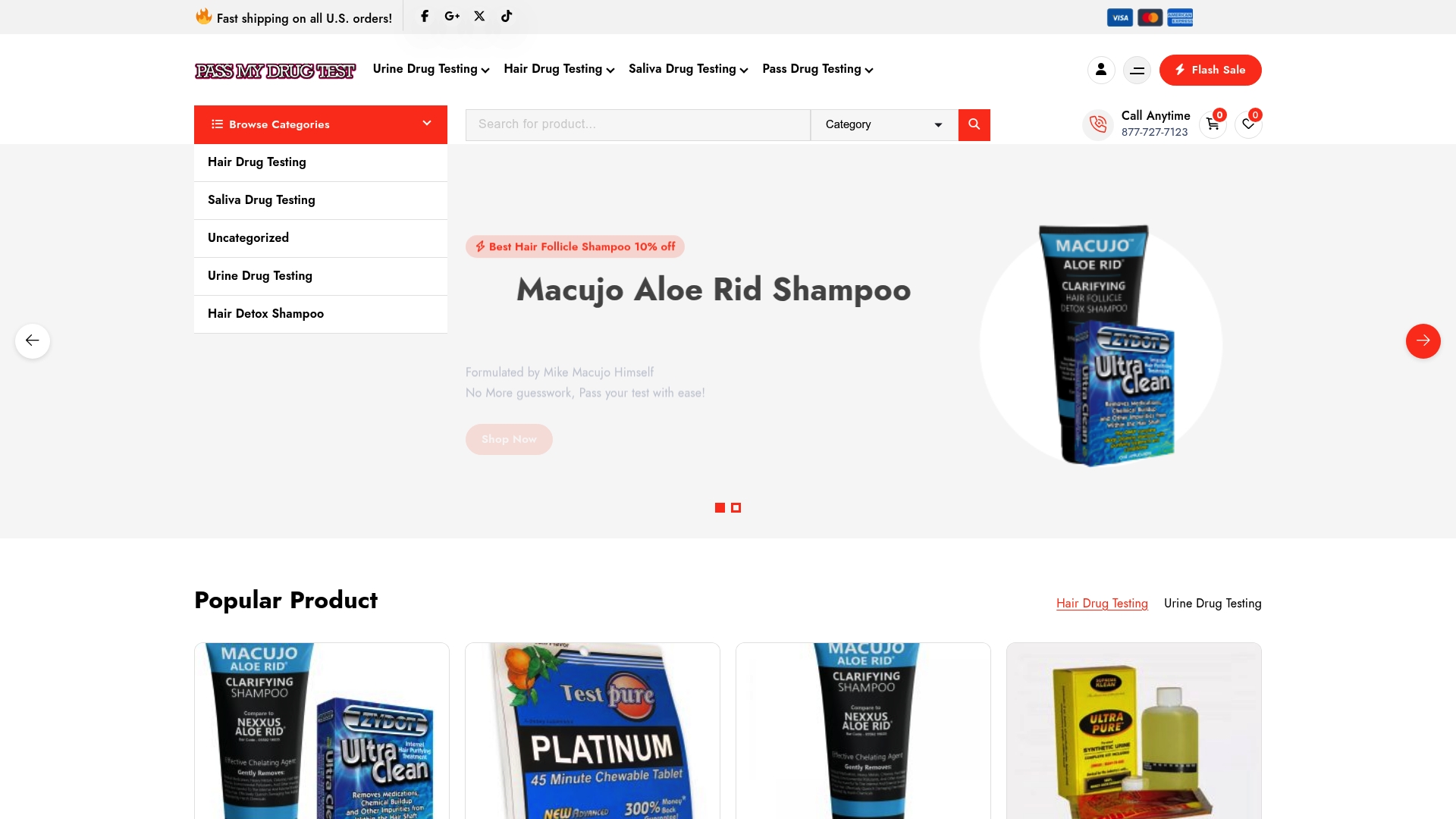
Browse the site’s detailed guides on detection windows and detox timing, or go straight to a specific product if you already know what you need, including the drug testing marijuana kit for at-home screening before a scheduled test. Every product page pairs the item with the education needed to use it correctly, and orders placed within the published cutoff ship the same day on US orders. If you have questions about which option fits your specific timeline or test type, customer assistance is available by phone during published business hours to help you decide before you check out.
Frequently Asked Questions
What is a supervised drug test exactly?
It typically refers to a collection where a monitor confirms specimen integrity without watching urination directly, distinct from a fully observed collection where the collector watches the void itself.
Can an employer require a directly observed test without cause?
DOT-regulated employers can only require it for the specific triggers in 49 CFR § 40.67, such as return-to-duty tests or prior tampering evidence. Non-regulated private employers have more discretion, subject to state law.
What happens if I refuse an observed collection?
DOT treats refusal the same as a positive result: immediate removal from safety-sensitive duty and a report to the Clearinghouse. Probation cases can trigger a violation hearing.
Can I request a retest if I dispute a positive result?
Yes. You can request B-sample testing through the Medical Review Officer within your program’s specified window, often 72 hours after notification.
How long do drugs stay detectable in urine?
It varies by substance, frequency, and metabolism, but urine testing generally offers a longer detection window than oral fluid, which typically covers only 5 to 48 hours, per NIDA.
This article is general information, not a substitute for advice from a qualified lawyer. Consult a qualified legal professional about your own circumstances before acting on anything here.
Sources
- eCFR / DOT 49 CFR § 40.67 — When and how is a directly observed collection conducted
- Objective testing — urine and other drug tests (PMC)
- Drug testing | National Institute on Drug Abuse (NIDA)