
Does Vaping Show Up on a Drug Test?
Labs do not test for “vaping.” They test for whatever substance you put in the device: nicotine, THC, or occasionally something you did not even know was in the cartridge. A vape drug test is really shorthand for a standard drug screen that happens to catch what you vaped, and the answer depends entirely on which panel gets ordered.
Nicotine only shows up if someone specifically orders a cotinine or nicotine test. Standard 5-panel and 10-panel workplace screens almost never include it. THC is a different story. If you vape a product that contains delta-9 THC, it produces the exact same metabolite, THC-COOH, that a routine marijuana test looks for, and it will show up.
- Vaped nicotine: invisible to a standard workplace panel, detectable only on a dedicated cotinine test.
- Vaped THC: detectable on any standard marijuana or THC panel, same as smoked cannabis.
- Mislabeled CBD or “THC-free” carts: can trigger a positive marijuana screen due to contamination found in independent testing.
Before you assume anything, find out exactly which panel you’re facing. And if a screen comes back positive and you don’t think it should have, ask for the confirmatory GC-MS or LC-MS result before you panic. Statistic to remember: immunoassay screens are just a first pass, not a verdict.
Key Takeaways
Vaping itself is never the analyte a lab searches for; nicotine only appears on dedicated cotinine tests, while THC from a vape triggers the same standard marijuana panel that smoking does.
| Point | Details |
|---|---|
| Panel name determines risk | Standard 5-panel and 10-panel tests generally exclude nicotine but always include THC. |
| THC vapes behave like smoked cannabis | Vaped THC produces the same THC-COOH metabolite that routine marijuana screens detect. |
| Confirmation testing matters | A positive immunoassay screen should be confirmed with GC-MS or LC-MS before you accept the result as final. |
| CBD contamination is a real risk | Independent testing shows some CBD vapes contain enough THC to trigger a positive screen. |
| Self-testing removes the guesswork | Passmydrugtest’s at-home THC and cotinine kits let you check your status days before an official test. |
Table of Contents
- Which Drug Tests Actually Screen for Vape Substances?
- How Long Does Vape Residue Stay Detectable?
- What Makes a Vape More or Less Likely to Trigger a Positive?
- Can Nicotine Cause a False Positive on a THC or Drug Test?
- How Should You Prepare for a Vape-Related Drug Test?
- Why Trust This Guidance on Vape Testing?
- What People Get Wrong About Vape Testing
- Check Your Status Before the Official Test Does It for You
- Sources
Which Drug Tests Actually Screen for Vape Substances?
The panel name tells you almost everything. A standard 5-panel urine test checks for THC, cocaine, amphetamines, opiates, and PCP. A 10-panel adds barbiturates, benzodiazepines, methadone, propoxyphene, and quaaludes. Neither one, in its default form, screens for nicotine, because nicotine is legal and employers generally have no reason to flag it unless they’re specifically trying to enforce a tobacco-free policy or an insurer is checking for smoking status.
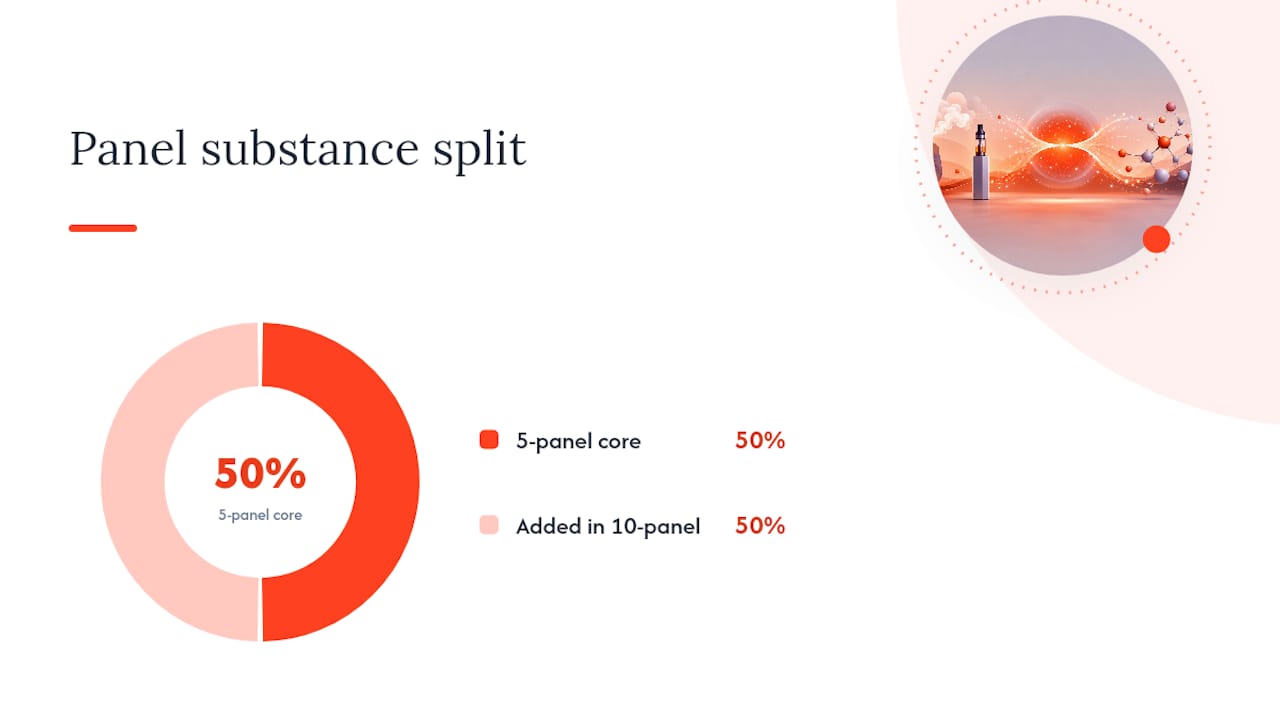
Nicotine and cotinine testing is its own category, ordered separately by employers with smoke-free hiring policies, life insurance underwriters, or clinicians tracking a patient’s smoking cessation progress. Cotinine, the metabolite your body produces from nicotine, is the actual analyte these tests target, because it lingers in your system longer and more reliably than nicotine itself does, according to UR Medicine’s clinical reference.
Specimen type changes what gets caught and for how long:
- Urine is the workplace default for THC and the most common choice for cotinine tests too.
- Oral fluid (saliva) picks up more recent exposure to both nicotine and THC, making it useful for same-day or next-day screening.
- Blood detects active nicotine and THC directly but is used less often outside of clinical or legal settings because it’s invasive and has a shorter window.
- Hair catches long-term patterns of use, particularly for THC, over a much longer stretch than any other specimen.
Every specimen type follows the same basic workflow. Labs run an initial immunoassay screen first because it’s fast and cheap, then confirm any positive result with gas chromatography-mass spectrometry or liquid chromatography-mass spectrometry. That two-step process exists because immunoassays are sensitive but not always specific. They can flag structurally similar compounds as a false alarm, which is exactly why a screening result should never be treated as final on its own.
If you’re staring down a pre-employment or legal test and don’t know which category you fall into, the drug testing method breakdown walks through specimen types side by side so you can figure out what actually applies to your situation.
How Long Does Vape Residue Stay Detectable?
Detection windows vary enormously depending on what you vaped, how often, and which specimen the lab uses. There’s no single number that applies to everyone, but the ranges below reflect typical patterns.
| Substance & Specimen | Occasional Use | Frequent/Chronic Use |
|---|---|---|
| Nicotine, urine (cotinine) | a few days | up to a couple of weeks |
| Nicotine, saliva (cotinine) | about one to a few days | several days |
| Nicotine, blood | about one to a few days | about a week |
| THC, urine (THC-COOH) | a few days | a few weeks, sometimes longer |
| THC, saliva | up to a few days | up to a week |
| THC, blood | hours to a few days | up to a week or more |
| THC, hair | Not typically detected from a single use | Up to 90 days |
These ranges shift based on metabolism, hydration, body fat percentage, and how much you actually consumed in a session. Someone who vapes THC daily builds up stored metabolites in fat tissue that release slowly over weeks, while an occasional user clears it much faster. The WebMD guide to nicotine testing notes that abstaining and avoiding secondhand smoke exposure near your test date is the only reliable way to bring cotinine levels down before a screening.
Hair testing deserves a separate note because it works completely differently from the other specimens. Rather than detecting recent use, it captures a timeline as hair grows, which is why detection windows for hair can stretch to 90 days or more for chronic THC use, even when urine and blood have long since cleared. That makes hair the specimen most likely to expose a pattern of use rather than a single incident.
Cutoff thresholds also matter more than most people realize. Every test has a concentration cutoff below which a sample reads negative regardless of trace presence, and test catalogs list specific cutoff values that vary from lab to lab. A result that’s borderline at one lab’s cutoff might read clean at another’s, which is part of why estimates are estimates, not guarantees.
What Makes a Vape More or Less Likely to Trigger a Positive?
Two people who vaped the same number of times on the same day can get opposite results, and it usually comes down to a handful of variables that have nothing to do with luck.
What’s actually in the cartridge matters more than the device itself. A delta-9 THC vape will register on any standard marijuana panel. Delta-8 and delta-10 products occupy murkier legal and testing territory, but many immunoassay screens still flag them because the chemical structures overlap closely enough. Mislabeled or contaminated CBD vapes are a real and documented risk: independent lab testing has repeatedly found THC contamination in products marketed as THC-free, sometimes at levels high enough to cause a positive.
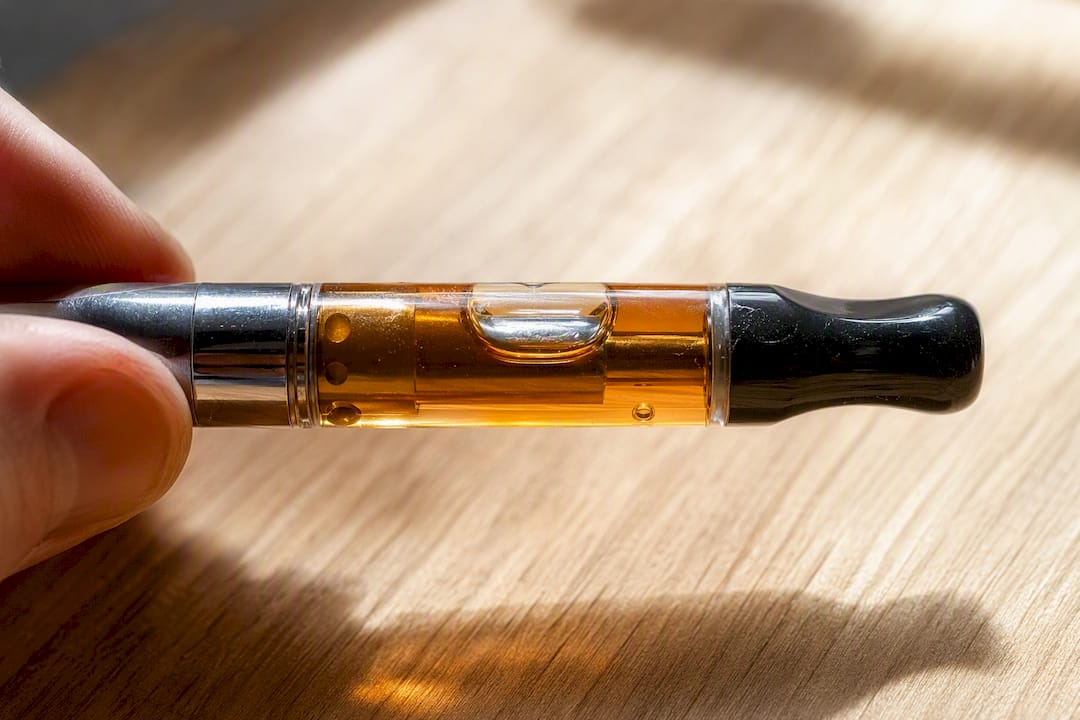
How you use it shapes the numbers just as much. Frequency, inhalation depth, and how long you hold each pull all affect how much active compound actually enters your bloodstream. A single light puff behaves nothing like a daily habit of deep, sustained inhalation.
Your body plays a role too. Higher body fat percentage tends to store THC metabolites longer, since THC binds to fat tissue. Metabolism speed, hydration, and age all shift the timeline, though none of these factors let you outrun a test entirely.
The lab itself sets the final bar. Cutoff levels and the choice between immunoassay screening and confirmatory GC-MS or LC-MS testing determine sensitivity, and a highly sensitive lab will catch what a less sensitive one might miss.
Pro Tip: If you’re using a CBD vape and have any reason to worry about a THC screen, ask the seller for a current third-party lab certificate before you buy, not after you fail a test.
Can Nicotine Cause a False Positive on a THC or Drug Test?
No. Nicotine does not cause a confirmed false positive for THC, amphetamines, or opioids on a properly run lab test. That claim shows up constantly online and it simply doesn’t hold up once confirmatory testing enters the picture.
What actually happens is cross-reactivity at the immunoassay screening stage, where the first-pass chemical test occasionally reacts to a compound that resembles the target substance closely enough to trigger a flag. That’s exactly why confirmatory testing with GC-MS or LC-MS exists: it isolates and identifies the exact molecule rather than relying on a chemical reaction that can be fooled.
Legitimate causes of an unexpected positive tend to fall into a short list:
- A CBD vape contaminated with THC that the label never disclosed.
- Certain prescription or over-the-counter medications that metabolize into compounds resembling a screened substance.
- A shared device or cartridge that carried residue from someone else’s product.
- Lab error or specimen mishandling, which is rarer but does happen.
If a screen comes back positive and you believe it’s wrong, ask specifically for confirmatory testing and request the chain-of-custody documentation and lab report rather than accepting the initial immunoassay result as final.
How Should You Prepare for a Vape-Related Drug Test?
Start by figuring out which test you’re actually facing, because the right move for a THC panel is different from the right move for a cotinine test, and guessing wrong wastes the time you have to prepare.
- Identify the panel. Ask your employer, testing facility, or the paperwork itself whether the screen targets THC, nicotine and cotinine specifically, or a broader standard panel. This single question shapes every decision after it.
- Order a matching at-home or lab test. If you vaped THC, an at-home THC panel tells you where you stand before the real test does. If nicotine is the concern, a cotinine test serves the same purpose.
- Read the result correctly. An at-home immunoassay strip gives you a fast screen, not a legal-grade result. Treat a positive strip as a warning sign and a negative strip as reassuring but not bulletproof, since lab cutoffs can differ from consumer kits.
- Abstain for the appropriate window. Based on the detection windows above, stop vaping THC at least a week out for light use, longer for daily use. For nicotine, a few days of complete abstinence plus avoiding secondhand smoke gives cotinine levels the best chance to drop.
- Skip unverified CBD products entirely in the days leading up to a test. This is the single easiest way to accidentally fail a THC screen you didn’t see coming.
- Test yourself a few days ahead, not the morning of. That buffer gives you time to react if the result surprises you.
One honest warning belongs here: dilution tricks, detox teas promising overnight miracles, and unproven home remedies mostly don’t work the way forums claim, and some carry real legal risk if a lab flags your sample as adulterated or substituted. The home remedies breakdown covers which methods have any real basis and which are just internet folklore. Self-testing ahead of time and giving yourself an honest abstinence window remain the two moves backed by actual clinical logic rather than wishful thinking.
Why Trust This Guidance on Vape Testing?
Passmydrugtest operates as both an information resource and a direct seller of at-home testing products, which means the guidance here connects straight to tools you can actually use rather than theory alone.
Understanding which panel you’re facing, and confirming your own status before an official test, beats guessing every time. A cotinine strip or THC panel costs little next to the price of an unexpected failed screening.
The site ships fast within the United States and offers phone support during published business hours if you have questions about which kit matches your situation. Beyond at-home THC testing kits, readers can dig into specimen-specific testing methods or the long detection window tied to hair follicle testing for a fuller picture of long-term exposure risk.
- At-home THC and cotinine test kits shipped fast within the United States.
- Phone support during published business hours for product questions.
- Educational guides covering specimen types, false positives, and detection windows.
Author: Michael
What People Get Wrong About Vape Testing
The biggest misconception isn’t about nicotine causing false positives. It’s that people treat “vaping” as one category when it’s really two completely different risk profiles wearing the same disguise. Nicotine vaping is a near non-issue for the overwhelming majority of workplace and pre-employment screens, because nobody’s ordering a cotinine panel unless there’s a specific reason to. THC vaping is the opposite. It behaves exactly like smoked cannabis in a lab’s eyes, no better, no worse.
Where conventional advice falls short is in treating CBD products as automatically safe. That assumption gets people in trouble more than actual THC vaping does, because they genuinely believe they’re clean. The mislabeling problem is documented, not hypothetical, and it’s the single most avoidable failure on this list.
If I had to prioritize one thing: stop guessing and verify. A test that costs a few dollars and takes minutes tells you more than any forum thread about detox timelines. Know your panel, know your product, test yourself first.
— MIchael
Check Your Status Before the Official Test Does It for You
Passmydrugtest exists for exactly the moment this article describes: you know roughly what you vaped, you’re not sure what panel you’re facing, and guessing feels like a bad plan. Instead of waiting to find out at the clinic, order a test that matches your actual risk and get a real answer days in advance.
For THC exposure, the at-home marijuana test kit gives you a private read on where you stand, using the same THC-COOH threshold logic labs rely on. If you’re not sure which specimen type or panel applies to your situation, the drug testing method guide breaks down urine, saliva, blood, and hair options so you’re not ordering the wrong kit. And if you’ve already been flagged and think the result is wrong, the false positive screening resource walks through how to request confirmation and chain-of-custody documentation.
Orders ship fast within the United States, and phone support is available during published business hours if you need help picking the right kit for your situation. Order your at-home panel today and know your actual status before anyone else does.
Sources
- Laboratory testing workflow and confirmatory testing (NCBI Bookshelf)
- Nicotine and cotinine (UR Medicine / URMC)
- Nicotine blood, urine, and saliva tests: what to expect (WebMD)
- Contamination and mislabeled CBD product risks (Pinnacle Recovery)