
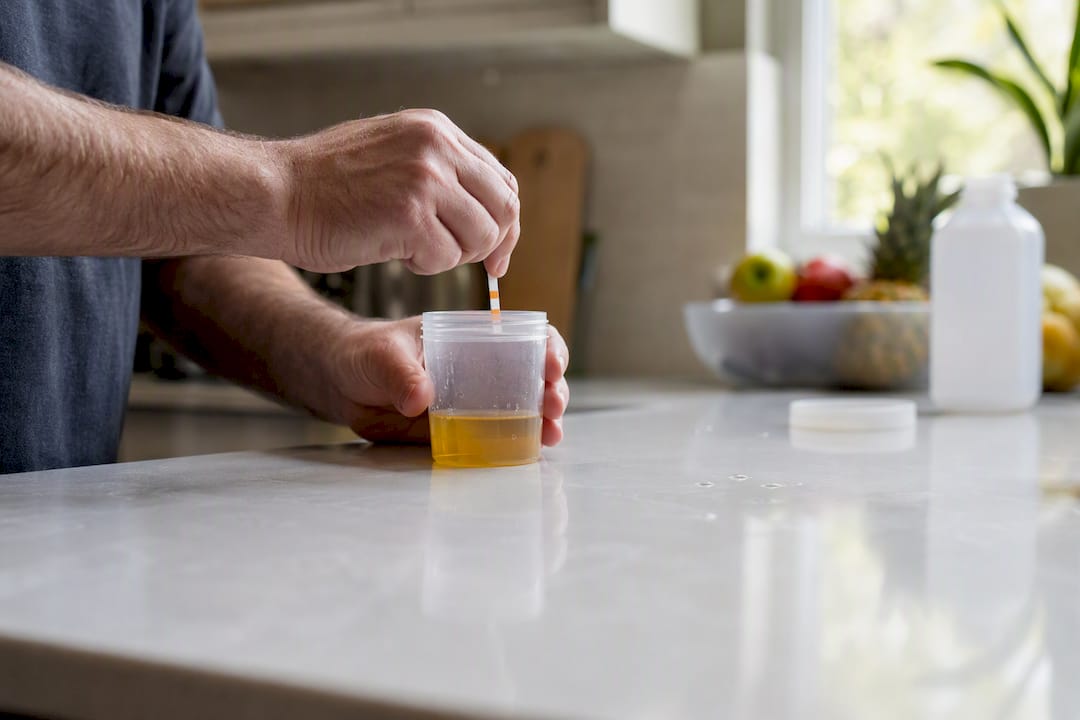
Home Drug Test Accuracy: What the Numbers Actually Show
Home drug tests are useful screening tools, but they are not definitive. Any positive result needs confirmation by a certified lab using GC/MS before you treat it as fact. Three things push home drug test accuracy off track: testing outside the drug’s detection window, cutoff thresholds that decide what counts as “positive,” and simple user error like misreading a faint line or storing a kit in a hot car. The FDA is explicit that these kits screen, they do not diagnose.
If you just ran a test, do this before you act on the result:
- Photograph the result within the read window stated on the package insert.
- Do not throw away the test cassette or its box.
- Send any positive for GC/MS lab confirmation before making decisions about employment, custody, or treatment.
Key Takeaways
Home drug test accuracy depends less on the test brand and more on cutoff levels, detection timing, storage conditions, and correct use.
| Point | Details |
|---|---|
| Screening, not diagnosis | Treat every home test as presumptive; confirm positives with GC/MS lab testing. |
| Timing drives results | Testing too early or too late relative to use is the leading cause of false negatives. |
| Line intensity is not concentration | Any visible T line means negative regardless of how faint it appears. |
| Storage and handling matter most | User error and improper storage cause more inaccuracy than the test chemistry itself. |
| Passmydrugtest supports the full process | The site pairs FDA-cleared kit options with guidance on lab confirmation and correct use. |
Table of Contents
- How Accurate Are Home Drug Tests, and How Do They Work?
- What Makes a Home Drug Test Accurate or Inaccurate?
- Interpreting a Home Test Result: What to Do Next
- A Practical Checklist for Getting a Reliable Home Test Result
- Where PassMyDrugTest Fits Into the Picture
- Comparative Accuracy Rates Among Popular Home Drug Test Brands
- Why Home Kits Struggle With Synthetic and Less Common Substances
- How Age, Hydration, and Metabolism Affect Test Results
- How to Choose a Reliable Home Drug Test Kit
- When to Move Past a Home Test and Seek Professional Help
- Sources
How Accurate Are Home Drug Tests, and How Do They Work?
Most home kits use immunoassay screening, a chemical reaction that flags whether a drug metabolite is present above a set concentration. It’s fast and cheap, but it’s a blunt instrument compared to lab chromatography. That tradeoff is the whole story of home drug test accuracy: speed and privacy in exchange for a wider margin of error.
Urine is the most common specimen for home kits because metabolites concentrate there and collection is simple. Saliva tests catch very recent use but lose sensitivity fast. Hair testing detects use over a much longer stretch, but it’s rarely built into consumer home kits since it usually requires lab processing.
| Specimen | Typical detection window | Best for |
|---|---|---|
| Urine | Hours to several days, longer for chronic heavy use | General screening, most home kits |
| Saliva | within a couple of days | Confirming very recent use |
| Hair | Weeks to months | Longer-term use history, lab-based |
Rapid, point-of-care tests generally run less sensitive than lab methods, and detection windows shift a lot depending on the specific drug, dose, and how often someone uses. There is no single number that applies to every substance.
What Makes a Home Drug Test Accurate or Inaccurate?
Cutoff levels drive most of the confusion around home drug test accuracy. A cutoff is the concentration threshold a test needs to see before it reports positive. Set the cutoff too high relative to how much of a substance is actually in the sample, and the test reports negative even though the drug is technically there. Cutoff thresholds differ by test and by drug class, which is why two different kits can disagree on the same sample.
Cross-reactivity works the other direction, producing false positives. Certain OTC decongestants, some prescription medications, and even poppy seeds have all been documented as triggers for false positive readings on immunoassay screens. This is a big reason why a single home kit is not the final word, and it’s worth reading up on the common causes of a false positive urine test before you panic over a result.
Storage matters more than most people assume. Heat and humidity degrade the reagents inside a test strip, and a kit left in a glove compartment through a summer heat wave will not behave like one stored properly at room temperature.
User error rounds out the list, and it usually comes down to two mistakes: reading the result outside the manufacturer’s stated window, or misinterpreting a faint line.
Pro Tip: Any visible line at the test (T) position means negative, no matter how faint. Only a completely absent T line counts as a presumptive positive. Line intensity has nothing to do with how much of the drug is present.
Manufacturers report accuracy figures often between 90 and 99 percent under controlled lab conditions. Real-world numbers run lower, because real life includes rushed collections, expired kits, and people testing at the wrong time.
Interpreting a Home Test Result: What to Do Next
A home kit gives you a direction, not a verdict. What you do after the strip changes color depends on whether it’s positive or negative and what’s riding on the outcome.
- Positive result: Treat it as presumptive only. Retain the test device, photograph the result, and send the sample or a fresh one for GC/MS confirmatory testing at a certified lab, since that method is what holds up legally and clinically.
- Negative result but you still suspect use: Timing is usually the culprit. Retest at the correct interval for that substance, or skip straight to lab testing if the stakes are high.
- Employment or legal situations: Chain-of-custody matters. An unsupervised home test, positive or negative, generally will not satisfy an employer or a court. That requires an observed collection at a certified facility.
Pro Tip: If a kit includes a mail-in lab confirmation envelope, use it. Skipping that step is the single most common reason a home result gets disputed later.
A Practical Checklist for Getting a Reliable Home Test Result
Reliability starts before you open the box.
- Buy an FDA-cleared kit and check the expiration date and storage instructions before you use it, not after.
- Follow the collection and read-window instructions to the letter. Reading a result 20 minutes early or late skews it.
- Avoid drinking excessive fluids before a urine test, since dilution can push a genuine positive below the cutoff.
- Store the kit at the recommended temperature and run the test itself in a clean, well-lit space so you can read the line clearly.
- Choose kits that support or include lab confirmation, and keep a photo and the physical device as documentation.
- For anything tied to employment or a legal proceeding, skip the home kit entirely and use a certified, observed collection service instead.
Pro Tip: Studies on real-world test performance consistently point to user error and improper storage as bigger accuracy killers than the chemistry itself. The test strip is rarely the weak link. The process around it usually is.
Where PassMyDrugTest Fits Into the Picture
Passmydrugtest.com operates as both a marketplace and an information hub for people trying to understand drug testing before they buy anything. That dual role matters here: you’re not just picking a kit off a shelf, you’re deciding how much confidence to place in a result.
This article was written under Passmydrugtest’s editorial guidance by Michael, drawing on FDA screening standards and clinical sourcing rather than personal testing claims.
A presumptive result is a starting point, not an ending point. The kits sold and referenced on Passmydrugtest are built around that principle: screen first, confirm anything meaningful with a certified lab.
For readers building out their own knowledge base, Passmydrugtest maintains detailed guides covering drug testing facts and causes of false positive results. Orders ship fast within the U.S., and phone support is available during published business hours if you’re unsure which kit fits your situation.
- Marketplace and education combined, not just product listings.
- Guidance points toward certified lab confirmation for anything that matters legally or professionally.
- Author attribution and sourcing tied to regulatory guidance, not marketing claims.
Comparative Accuracy Rates Among Popular Home Drug Test Brands
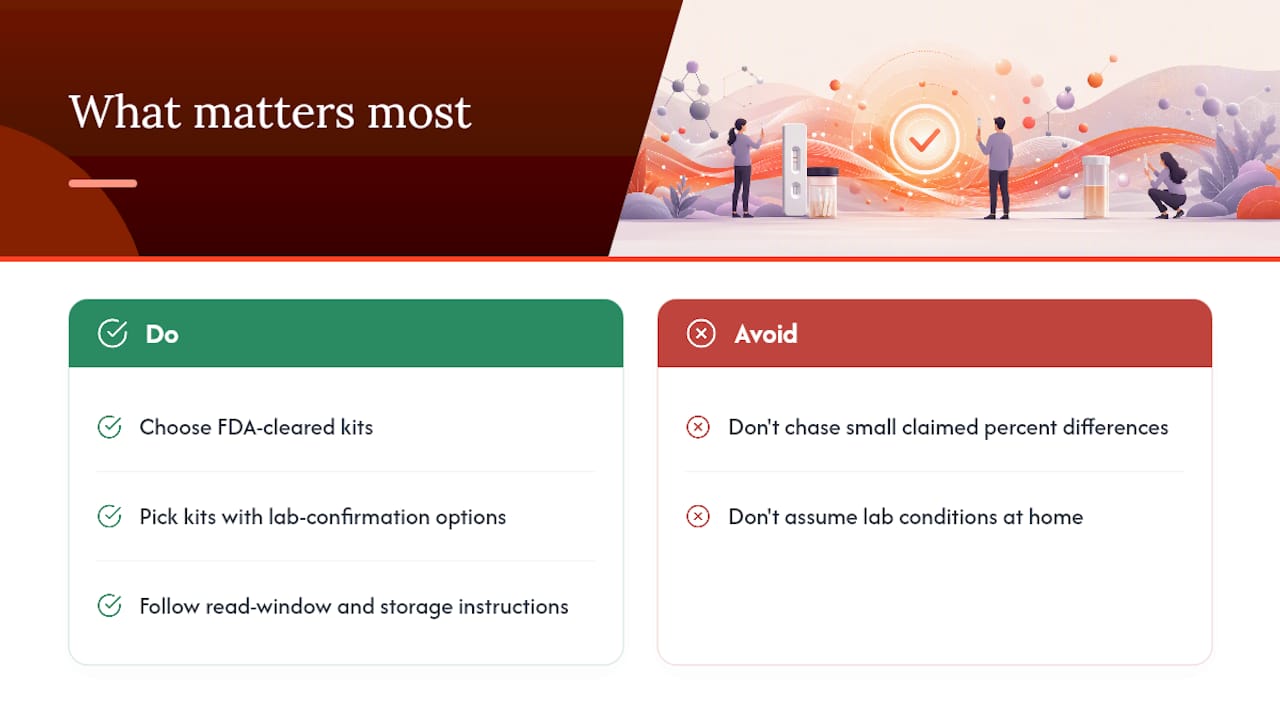
Manufacturers across the home testing market tend to cluster their published accuracy claims in a similar range, typically citing figures between 90 and 99 percent under laboratory conditions. That similarity is not an accident. Most FDA-cleared kits use comparable immunoassay chemistry and similar cutoff standards set by federal guidelines, so brand-to-brand differences in raw accuracy tend to be small when the tests are used exactly as directed.
The real spread shows up outside the lab. Two identical kits, used by two different people, can produce different outcomes depending on how closely each person followed the read-window timing, how the kit was stored before use, and whether the person diluted a urine sample without realizing it. A five-panel kit and a twelve-panel kit built by the same manufacturer will also perform differently against certain drug classes, simply because more panels mean more individual cutoff thresholds that each need to be cleared correctly.
Rather than chasing a specific brand’s marketing percentage, focus on two concrete things: whether the kit is FDA-cleared, and whether it offers or supports a path to lab confirmation. Those two factors affect real-world reliability more than the difference between one manufacturer’s claimed 97 percent and another’s claimed 99 percent, numbers that mostly reflect controlled testing conditions you won’t replicate at your kitchen sink.
Why Home Kits Struggle With Synthetic and Less Common Substances
Standard immunoassay panels are built to detect specific, well-established drug classes: THC, opiates, cocaine metabolites, amphetamines, and a handful of others. That design works well for common substances, but it creates a blind spot for anything chemically newer or less standardized.
Synthetic cannabinoids, novel synthetic opioids, and designer stimulants often have molecular structures that don’t trigger the antibody reactions a standard immunoassay strip is calibrated for. A kit built to catch natural THC metabolites may completely miss a synthetic cannabinoid, even though the two produce similar effects. This isn’t a flaw specific to any one brand. It’s a structural limitation of screening technology that hasn’t caught up to how fast synthetic drug formulations change.
The practical implication: a clean home test result does not rule out synthetic substance use. If there’s specific concern about a substance outside the standard panel, a generic multi-panel home kit is the wrong tool. That situation calls for a lab that runs targeted GC/MS or LC/MS analysis for the specific compound in question, since those methods identify substances by molecular structure rather than relying on an antibody reaction that may not recognize a newer compound at all.
How Age, Hydration, and Metabolism Affect Test Results
Home drug test accuracy isn’t just about the kit. The person taking the test changes the outcome, too.
Hydration is the biggest and most controllable variable. Drinking large amounts of water before a urine test dilutes the sample, which can push a genuine drug concentration below the cutoff threshold and produce a false negative. Some testing kits include a creatinine or specific-gravity indicator specifically to flag an over-diluted sample as invalid.
Metabolism varies by individual and shifts detection windows in ways a generic chart can’t fully capture. Someone with a faster metabolism may clear a substance from urine sooner than someone with a slower one, even at the same dose and frequency. Body fat percentage matters too, particularly for THC, since its metabolites store in fat tissue and release slowly over time, which is why detection windows for regular cannabis users run longer than for occasional users.
Age plays a smaller but real role, mostly through its effect on kidney function and metabolic rate, both of which slow with age in most people. None of these factors change the chemistry of the test itself. They change how much of a substance is actually present in the sample at the moment of testing, which is exactly what a cutoff threshold is measuring against.
How to Choose a Reliable Home Drug Test Kit
Start with FDA clearance. That single certification filters out a lot of lower-quality products before you even compare features, since it means the manufacturer has demonstrated the kit meets baseline performance standards.
After that, match the kit to your actual need rather than buying the biggest panel available. A single-panel THC kit makes sense if that’s the only concern; a broader multi-panel kit makes more sense for general screening where the substance in question is unknown. Check the cutoff levels listed on the package insert against your specific situation, since a test calibrated for heavy chronic use may miss lighter, more occasional use.
Look for kits that pair with lab confirmation, either through an included mail-in envelope or a clearly stated partnership with a certified lab. That single feature does more for real-world reliability than almost anything else on the box. Also check the expiration date at purchase, not just at first use, since a kit sitting on a shelf for a year loses potency in its reagents.
Finally, read the instructions before you buy, not after. If the read-window is oddly narrow or the storage requirements are unusually strict, that’s worth knowing before you’re standing in a bathroom trying to hit a five-minute deadline.
When to Move Past a Home Test and Seek Professional Help
A home kit answers a narrow question: is a metabolite present above a cutoff, right now. It cannot tell you why someone is using a substance, how dependent they may be, or what to do about it. That’s where the limits of a screening tool become obvious fairly quickly.
If a positive result keeps repeating despite genuine efforts to stop, or if someone shows signs of dependence alongside the positive test, a home kit is not the right tool anymore. That situation calls for a conversation with a physician, addiction counselor, or a substance abuse helpline, not another test strip.
For anything tied to a job, a custody arrangement, or a legal proceeding, skip repeated home testing altogether and go straight to a certified collection facility. Chain-of-custody procedures and observed collection exist precisely because home results, however carefully done, don’t carry the same weight.
Parents testing a teenager face a different kind of stakes. A positive result is a starting point for a conversation, not a verdict to act on alone. Involving a pediatrician or a licensed counselor tends to produce better outcomes than repeated at-home retesting, which can strain trust without adding useful information.
Author Perspective: When a Home Test Makes Sense
Home tests fit low-stakes personal monitoring or an early check before a bigger decision. Once a job, a custody case, or a legal outcome hinges on the result, an observed collection at a certified lab is the only route that holds up. When privacy and accuracy pull in different directions, ask a clinician before assuming either one wins by default.
How PassMyDrugTest Can Help You Choose the Right Kit
Passmydrugtest.com exists for exactly the moment you’re in right now: trying to figure out which kit actually fits your situation instead of guessing off a store shelf. Unlike a general pharmacy display with three unlabeled options, every product page here pairs the kit with the education needed to use it correctly, including detection windows, cutoff levels, and when lab confirmation is worth the extra step.
Browse the drug testing method guide to match a kit to your specific need, whether that’s a broad multi-panel screen or a THC-specific kit. If detox timing is part of your plan, the detox products category lays out preparation options alongside the testing supplies. Orders ship fast within the U.S., and phone support during business hours is there if you’re stuck choosing between two kits. Reach out to customer support or place an order today to get the right kit in hand before you need it.
Sources
- Drugs of Abuse Home Use Test — FDA
- How to Read an At-Home Drug Test & How Accurate Are They? — MyMedicalLab
- At-Home Drug Tests: What They Are and How They Work — Healthline
- Rapid tests — MedlinePlus
- Are At-Home Drug Tests Accurate? — RPH Labs
This article is general information, not a substitute for advice from a qualified doctor. Consult a qualified healthcare professional about your own circumstances before acting on anything here.