
Detox Pills vs Drinks: Why Labs, NCCIH, and SAMHSA Warn
Neither detox pills nor detox drinks are proven to reliably make a urine drug test come back negative. Both rely mainly on dilution or temporary masking rather than removing drug metabolites, and both carry real safety concerns, including electrolyte imbalance and undisclosed ingredients. The NCCIH and SAMHSA both caution against relying on these products, a point we return to throughout this guide.
TL;DR:
- Detox pills and drinks rely mainly on dilution and masking ingredients, which can be detected by lab tests and often do not guarantee a negative result.
- Frequent use of these products may cause serious health issues, including dehydration, electrolyte imbalance, and adverse reactions from unlisted ingredients.
- Laboratory testing routinely screens for dilution and adulteration, making the chances of passing a test with these products very unreliable.
- Effective detoxing requires time and abstinence, as no supplement can speed up the body’s natural elimination of drug metabolites.
- Relying on unregulated detox products poses more health risks than potential benefits, especially for individuals with pre-existing health conditions.
Table of Contents
- What Detox Pills and Detox Drinks Are
- How These Products Claim to Work
- What the Evidence Says About Effectiveness
- Health Risks and Safety Concerns
- How Labs Detect Dilution and Tampering
- What Actually Works Instead
- Evidence Highlights and Publisher Notes
- Is the Risk Worth It?
- How Passmydrugtest Can Help
- FAQ
- Sources
What Detox Pills and Detox Drinks Are
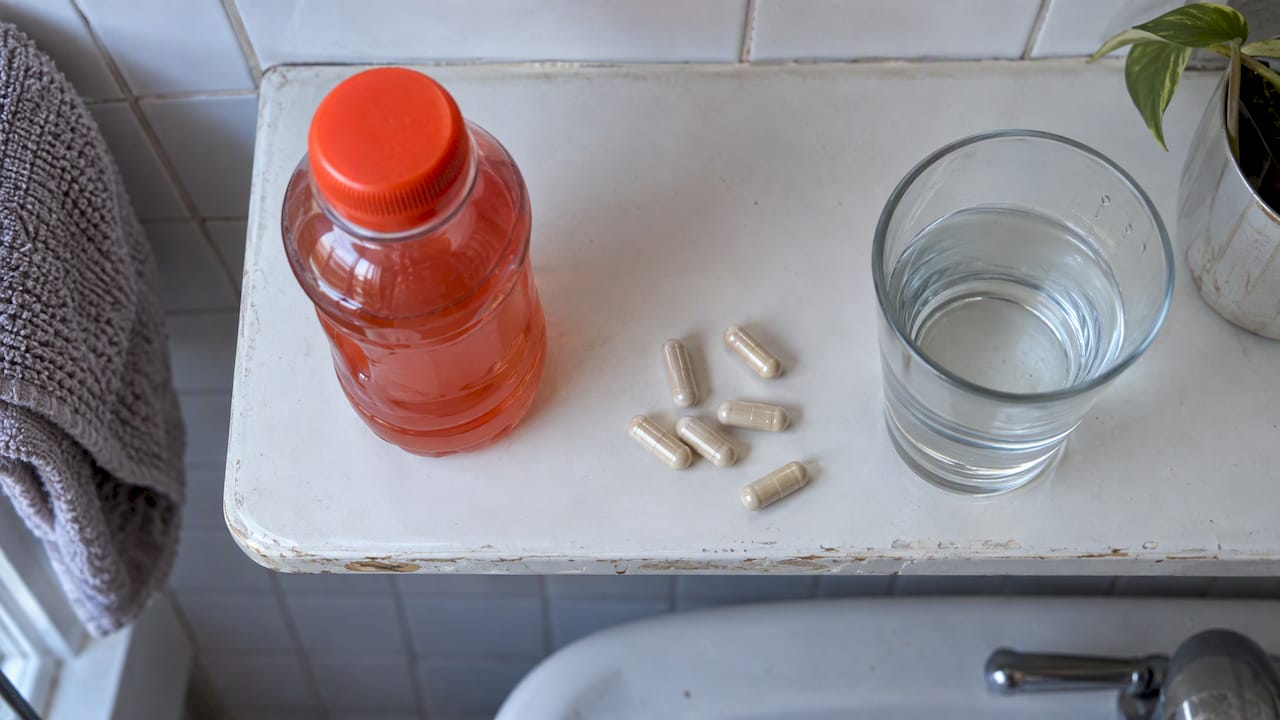
A detox drink is a liquid formula, often sold in a bottle meant to be consumed within an hour or two of a test, built around water, herbal extracts, and vitamins. A detox pill or capsule is the same basic concept in solid form, usually taken with large amounts of water in the hours leading up to a test.
Both categories are sold as dietary supplements, which means neither goes through the approval process the FDA uses for drugs, and neither is evaluated specifically for its claimed effect on drug test results, a gap the NCCIH notes directly.
Typical ingredients include:
- Creatine or creatinine precursors, meant to replace the creatinine diluted out of the urine.
- B vitamins, especially riboflavin, added for their yellow color to make diluted urine look normal.
- Diuretics like dandelion root or caffeine, intended to speed urine production.
- Herbal blends (milk thistle, burdock root, juniper) marketed as liver or kidney support with no established role in metabolite clearance.
Because these are supplements, label accuracy varies, and the NCCIH points out that some products sold for detox purposes have been found to contain hidden or unlisted ingredients.
How These Products Claim to Work
The core mechanism behind most detox drinks is dilution. Drinking a large volume of liquid in a short window increases urine volume, which lowers the concentration of drug metabolites and can push a result below a lab’s cutoff, at least temporarily. Labs counter this by measuring creatinine and specific gravity, two markers that drop sharply when urine is overly diluted.
Detox pills generally work the same way but add ingredients meant to disguise dilution rather than prevent it. Our guide to detox drinks breaks down how these formulas are marketed compared to how they actually perform under lab scrutiny.
- Dilution: large fluid intake lowers metabolite concentration and creatinine levels.
- Masking: added creatine attempts to restore a normal creatinine reading.
- Cosmetic correction: riboflavin and other vitamins restore a yellow color diluted urine otherwise lacks.
- In vivo vs in vitro: drinking a product changes the sample from inside the body, while adding something directly to a collected sample is adulteration, a separate and more easily flagged category.
Advertised effectiveness windows for detox drinks are typically brief, representing short-term masking effects rather than any change in how quickly the body clears a substance, according to consumer health summaries. That mismatch between a marketed window and actual physiological clearance is the central problem with this entire category: the body still needs the same amount of time to process and eliminate metabolites, no matter what was swallowed beforehand.
What the Evidence Says About Effectiveness
The NCCIH states plainly that detox pills and drinks are not medically proven to remove drug metabolites or guarantee a negative test. Research on these products is limited, often lacks peer review, and the agency notes there is no reliable evidence they speed up the natural detoxification work already handled by the liver and kidneys.
Lab practice backs this up. SAMHSA guidance for Medical Review Officers documents routine specimen validity testing designed specifically to catch dilution and adulteration, which means the exact tactics these products rely on are the ones labs are built to detect. A dilute result does not simply pass. It typically triggers a recollection request or additional scrutiny rather than a clean negative.
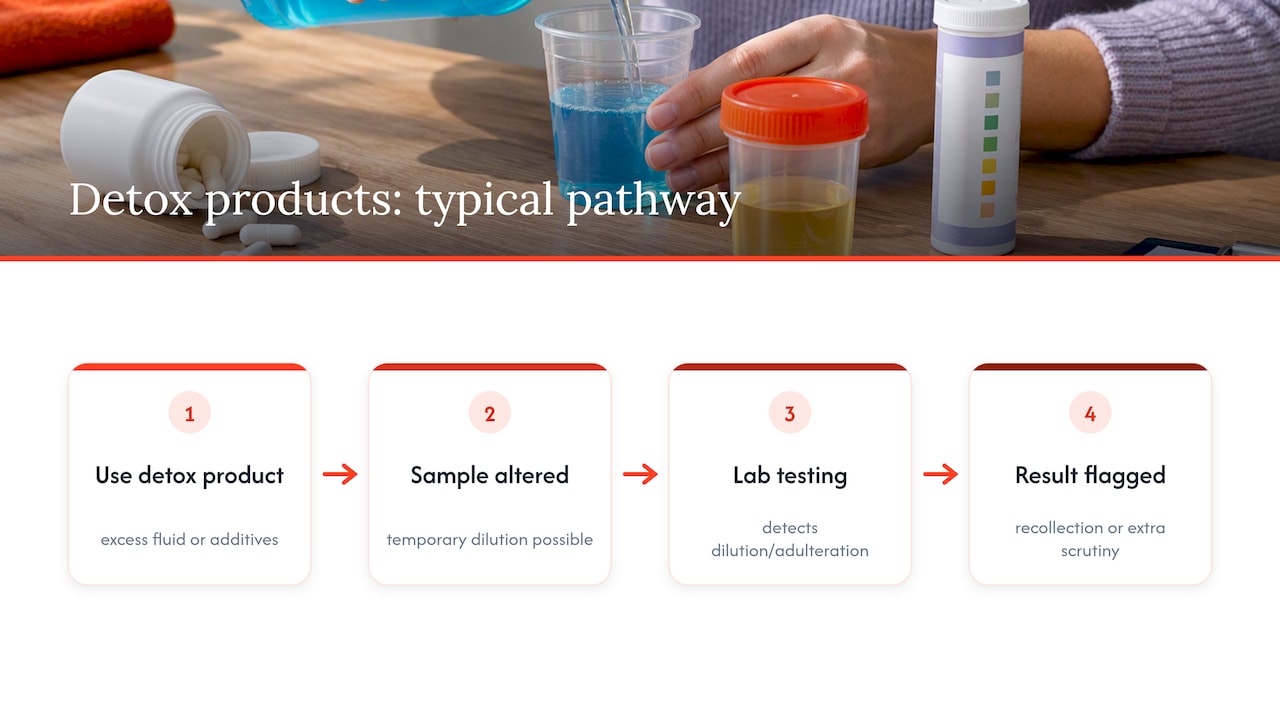
The clinical record adds a harder edge to this picture. A documented case published in PMC describes a patient who developed psychosis after using a commercial detox kit, with the case review tying the adverse effect to the kit’s combination of excess fluid intake, creatine, and herbal ingredients meant to mimic normal urine markers. That single case does not prove every product carries the same risk, but it demonstrates that “mimicking normal urine” is an active pharmacological act with consequences, not a passive or harmless one.
Put together, the honest takeaway is this: these products can occasionally produce a temporarily diluted sample that slips through, but the more common outcome documented by labs and agencies is detection, a flagged specimen, and a follow-up collection rather than a clean pass. Occasional anecdotal success stories do not amount to a reliable method, and no authoritative source treats them as one.
Health Risks and Safety Concerns
The biggest overlooked risk with detox pills and drinks is the body stress involved in actually using them as directed. Most instructions call for drinking far more water than normal in a short window, sometimes combined with diuretics, which strains the kidneys and dilutes the body’s own electrolytes.
- Dehydration and electrolyte imbalance from rapid, excessive fluid intake combined with diuretic ingredients.
- Hidden or unlisted ingredients, a problem the NCCIH has flagged in products marketed for detox purposes.
- Serious adverse events, including the psychosis case documented in PMC, tied to the herb and creatine combinations common in these kits.
- Medication interactions and added risk for anyone with existing kidney, liver, or heart conditions, since diuretics and unregulated herbal blends can compound strain on organs already under stress.
The NCCIH also notes that detox cleanses have caused acute diarrhea severe enough to cause malabsorption, a particular danger for people with pre-existing health conditions. Because these are supplements rather than regulated drugs, quality control varies from brand to brand, and contamination or undeclared additives remain a real possibility.
Pro Tip: If you take any prescription medication, talk to a pharmacist before using any detox product, since diuretics and herbal extracts can interact in ways that are not listed on the label.
How Labs Detect Dilution and Tampering
Modern drug testing labs do not simply check for the presence of a substance. They run specimen validity tests designed to catch exactly the tactics detox products use. SAMHSA manuals document specific thresholds for creatinine and specific gravity that flag a sample as dilute, along with pH and temperature checks performed at the moment of collection.
- Creatinine and specific gravity below set thresholds classify a sample as dilute, a result that is flagged rather than simply read as negative.
- Temperature checks, required within minutes of collection under federal collection procedures, catch substituted or synthetic samples that are not body temperature.
- Exogenous biomarkers, including compounds like benzisothiazolone, can signal a sample was adulterated or synthetic rather than naturally produced.
- Split-specimen and recollection procedures give a documented path for retesting when a first sample comes back dilute or invalid.
Labs have reduced the prevalence of undetected synthetic or adulterated samples by shifting toward multi-marker validity testing and confirmation methods like LC-MS/MS, according to SAMHSA research documentation. This is the detail most detox product marketing leaves out: the testing side of this equation has kept pace with the masking tactics, which is why a diluted or adulterated sample so often leads to a follow-up test rather than a clean result. Our breakdown of creatinine checks covers exactly how labs flag these samples in practice.
What Actually Works Instead
Abstinence remains the only reliable way to produce a clean urine test, since it is the one approach that does not depend on beating a detection method, only on time. Detection windows vary by substance and test sensitivity, but understanding the realistic range matters more than any product claim.
- Know your detection window. Ranges vary significantly by substance, frequency of use, and metabolism, so treat any specific number as a rough guide rather than a guarantee.
- Consider medical detox if dependence is involved. Supervised withdrawal management addresses physical dependence directly, rather than attempting to mask it for a single test.
- If a test is imminent, keep expectations realistic. Standard hydration is fine, but excessive water intake mainly risks a dilute flag and a repeat test, not a guaranteed pass.
- Avoid unregulated detox products as a primary strategy. The evidence and case reports above show the risk often outweighs the uncertain benefit.
- Talk to a clinician if withdrawal symptoms are a concern. Medical guidance is the safer path when dependence, not a single test, is the underlying issue.
Our guide to same-day detox realities walks through what is actually achievable when a test is hours away rather than weeks.
Evidence Highlights and Publisher Notes
This guide draws on the NCCIH’s consumer guidance on detox products, SAMHSA’s federal workplace testing manuals, and a documented clinical case published in PMC describing adverse effects from a commercial detox kit. We built our educational content at PassMyDrugTest.com around these primary sources rather than marketing claims, and we maintain detailed category guides on hair, saliva, and urine testing for readers who want to go deeper into a specific test type.
Is the Risk Worth It?
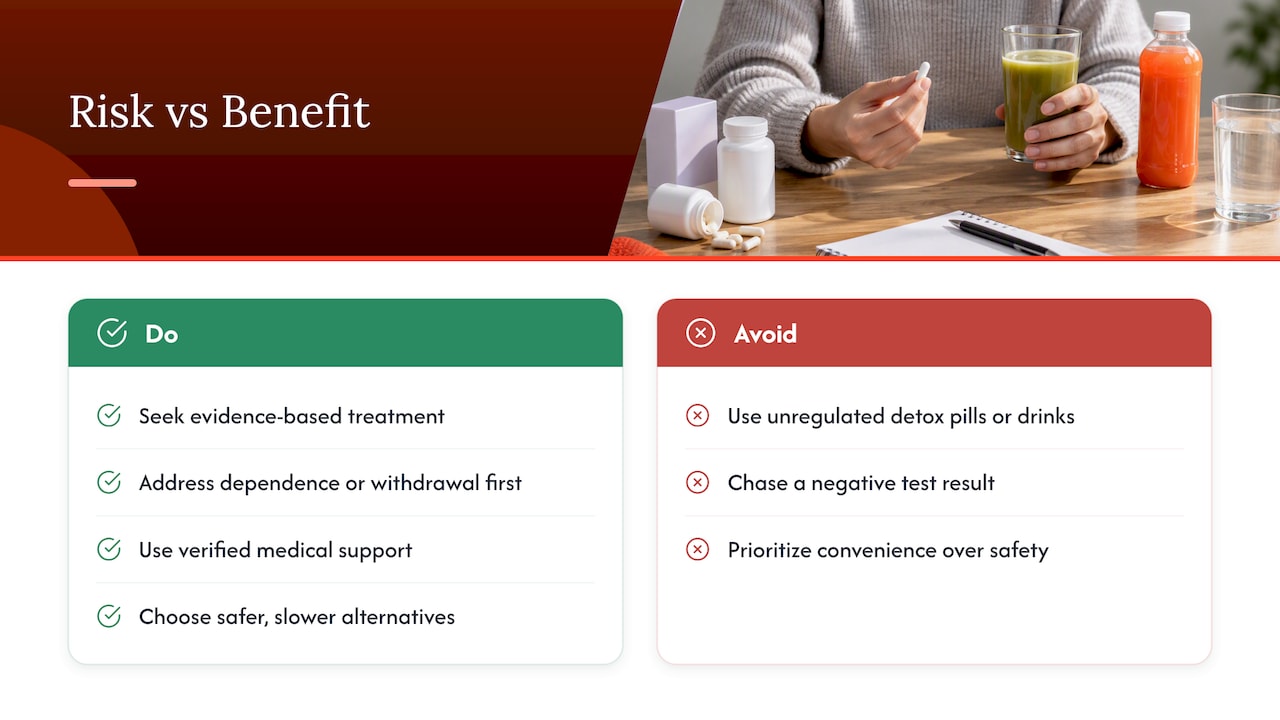
Our honest view is that chasing a negative result through unregulated detox pills or drinks is a bad trade. The documented safety risks, from electrolyte imbalance to the psychosis case tied to a commercial kit, are real and verified, while the benefit is uncertain at best and contradicted by how specimen validity testing actually works.
If dependence or withdrawal risk is part of the picture, that is the problem worth solving first, not the test itself. Evidence-based alternatives, even when slower or less convenient, carry far less downside than a product with no proven track record.
— MIchael
How Passmydrugtest Can Help
We built PassMyDrugTest.com around the idea that informed decisions beat guesswork, especially with something as consequential as a drug test. Alongside educational guides like the ones linked throughout this article, we carry product categories for hair, saliva, and urine testing, plus hair detox shampoo, with fast United States shipping and phone support if you want help matching a product to your specific situation.
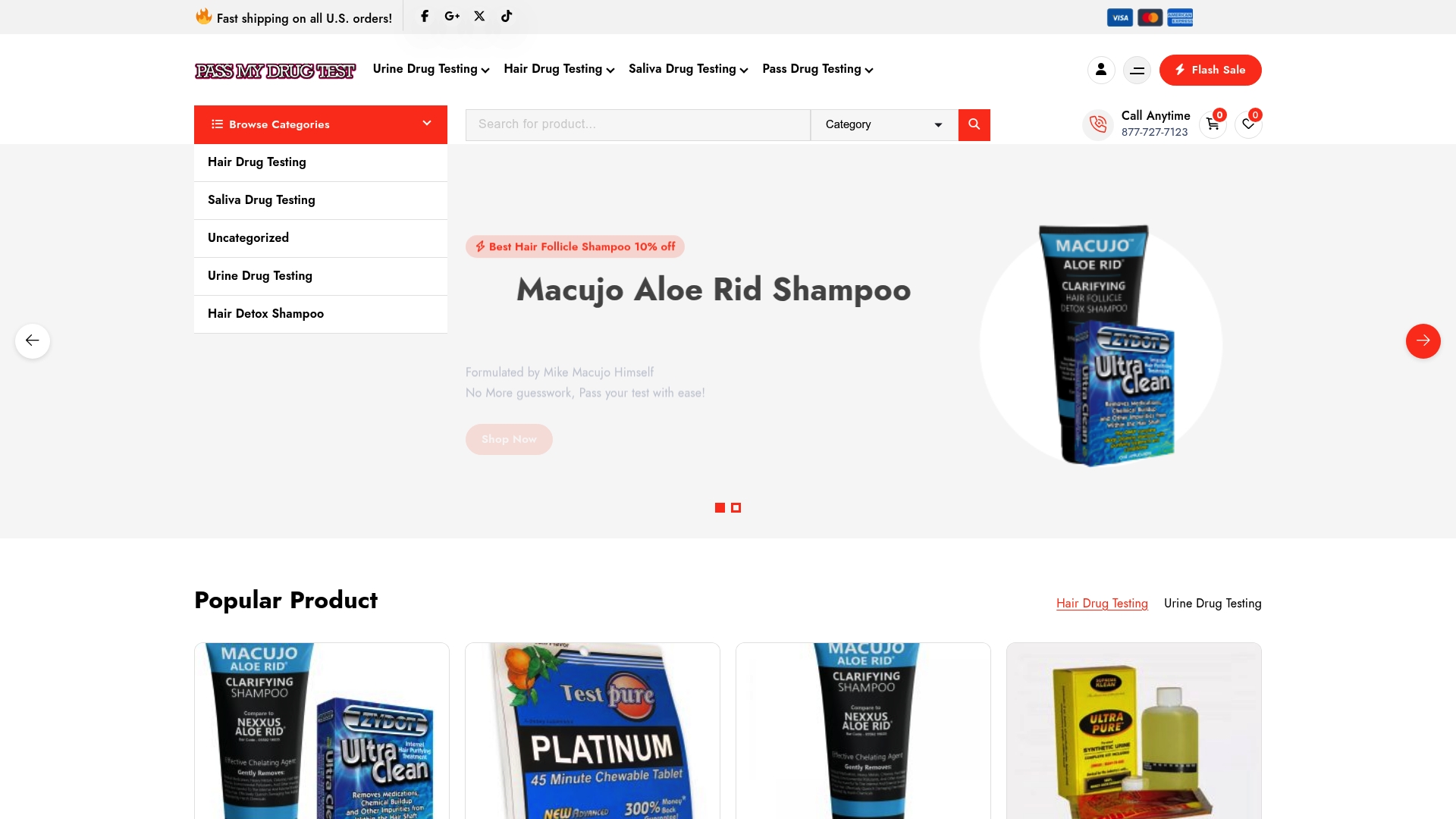
- We offer educational content covering every major test type, not just one method.
- We offer a selection of product categories rather than a single generic option.
- We offer phone support during business hours to assist with questions before ordering.
We make no guarantees about outcomes, since no product can promise a specific result. Visit our main product categories to compare options or call our support line with questions about your situation.
FAQ
Are detox pills good for you?
Detox pills are not proven to provide a health benefit, and some have been linked to real harm, including a documented case of psychosis tied to a commercial detox kit. The NCCIH notes these products can also cause dehydration and digestive issues, so they carry risk without a confirmed upside.
What is the best thing to drink to flush your system?
Plain water at a normal, steady pace supports the kidneys and liver, which already handle the body’s natural filtering work, far better than an aggressive detox formula. The NCCIH points out that no drink has been shown to accelerate this process beyond what the body already does on its own.
What is the healthiest way to detox my body?
The healthiest approach is simply giving your liver and kidneys time, since they are already designed to clear substances without any added product. Staying hydrated, eating normally, and avoiding unregulated supplements is the approach the NCCIH supports over commercial detox kits.
How long does it take for a detox to cleanse your body?
There is no fixed timeline, since clearance depends on the substance, how much and how often it was used, and individual metabolism, and detox products do not reliably shorten this process. The NCCIH is clear that no supplement has been shown to speed up the body’s own clearance work.
Sources
- Detoxes and cleanses: What you need to know — NCCIH
- A case of psychosis after use of a detoxification kit and a review of techniques, risks, and regulations — PMC
- Medical Review Officer (MRO) Manual — SAMHSA