
Labs Catch This: Creatinine Checks Make Detox Drinks Detectable
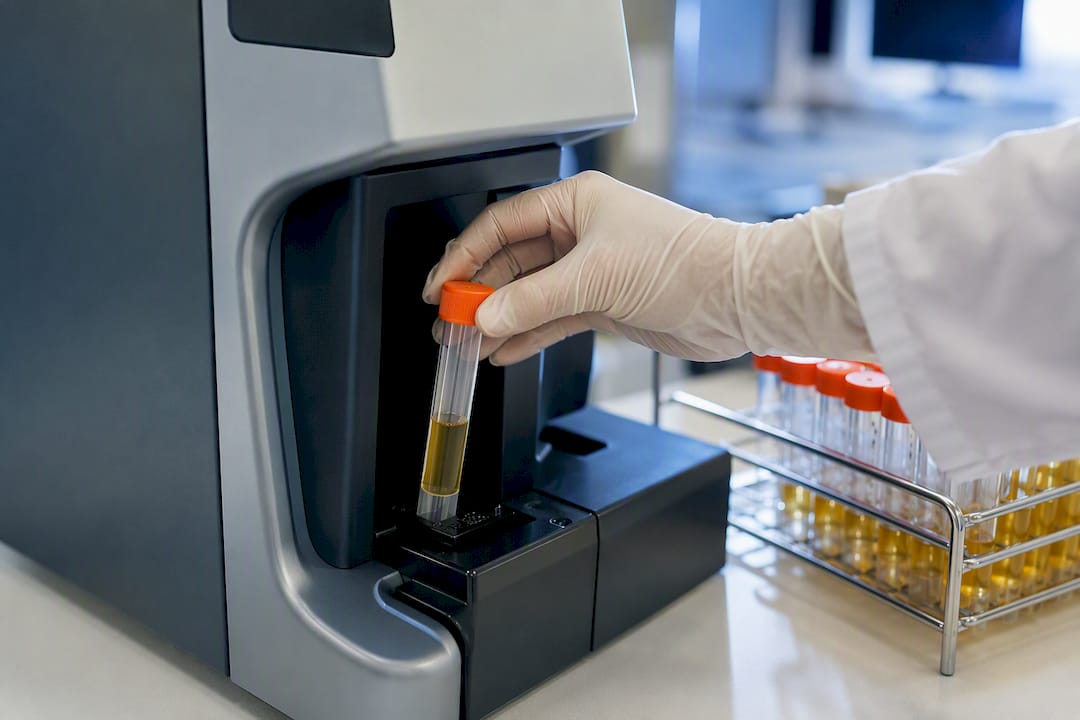
No, detox drinks don’t reliably remove drug metabolites, and most attempts to use one leave detectable fingerprints in a urine sample. Labs flag the dilution through creatinine and specific gravity checks, not by identifying a brand name. The safer, more dependable path is time, abstinence, or a medically supervised detox rather than a bottled shortcut.
TL;DR:
- Detox drinks do not remove drug metabolites from the body and only temporarily dilute urine samples, which are often detectable through lab checks.
- Standard lab tests evaluate markers like creatinine and specific gravity to detect dilution, with flags leading to sample rejection or further investigation.
- Dilution effects in urine only last a few hours, and tests on hair, blood, or saliva are unaffected since they measure substances directly in the body or hair segments.
- Relying on detox drinks carries health risks such as overhydration and false negatives, and results are often invalidated if lab markers indicate tampering.
- Achieving reliable test results depends on time and medically supervised detoxification rather than unproven bottled solutions.
Table of Contents
- Detox Drink Detectable Claims vs. How the Body Actually Clears Drugs
- How Labs Catch a Diluted or Detox Drink Detectable Sample
- Does a Detox Drink Work the Same Across Urine, Hair, Blood, and Saliva Tests?
- What Happens If a Sample Gets Flagged as Diluted or Adulterated
- Realistic Timelines and Safer Ways to Prepare for a Test
- What Passmydrugtest Offers Beyond a Bottle of Detox Tea
- The Honest Take on Detox Drinks and Drug Tests
- Ready to Prepare the Right Way? Here’s Where to Start
- Sources
Detox Drink Detectable Claims vs. How the Body Actually Clears Drugs
Walk into any smoke shop or search “pass a drug test fast” and you’ll find the same pitch: drink this, flush your system, test clean in a few hours. The products come in a few standard formats, and the ingredient lists rarely surprise anyone who’s looked at more than one.
- Herbal diuretic blends: dandelion root, juniper, or uva ursi teas marketed to “flush toxins” by making you urinate more.
- Vitamin-loaded drinks: heavy B-vitamin doses meant to restore urine’s yellow color after dilution washes it out.
- Electrolyte and creatine additives: some formulas include creatine or creatinine-adjacent compounds to try to mask the telltale sign of a diluted sample.
- Straight water-loading kits: just instructions to drink large volumes of water on a schedule before your test.
None of these mechanisms touch how drugs actually leave your body. THC and its metabolites store in fat tissue and release slowly over days or weeks. Opioids and stimulants clear faster but still follow a metabolic timeline set by your liver and kidneys, not by anything you drink in the parking lot before a test. What a detox drink actually does is dilute the urine sample so metabolite concentration drops below a lab’s cutoff, temporarily. That’s dilution. It’s different from adulteration, which means adding a chemical (like bleach or peroxide) directly to a collected sample, and different again from substitution, which means swapping in someone else’s urine or a synthetic product entirely.
Fluid-loading research backs up the “temporary” part directly. Studies on fluid loading and urine dilution found that false-negative effects from heavy water intake show up within about 90 minutes, but metabolite levels bounce back to baseline within 8 to 10 hours. That’s a narrow window to time perfectly, and it assumes the lab doesn’t notice the dilution in the first place, which brings up the real problem.
How Labs Catch a Diluted or Detox Drink Detectable Sample
Labs don’t need to know what’s in your detox drink. They just need to look at a handful of physiological markers that any healthy kidney produces within a predictable range, and dilution throws those numbers off in a way that’s hard to fake.
Creatinine is the big one. It’s a waste product your muscles generate at a steady rate, and normal urine creatinine typically falls between 20 and 400 mg/dL. Specific gravity measures how concentrated the urine is compared to plain water. Under federal transportation testing rules, a specimen gets classified as “dilute” when creatinine and specific gravity fall below typical healthy concentrations, according to Rehab. Drop below those dilute thresholds entirely and the sample often gets classified as “substituted,” a far more serious flag.
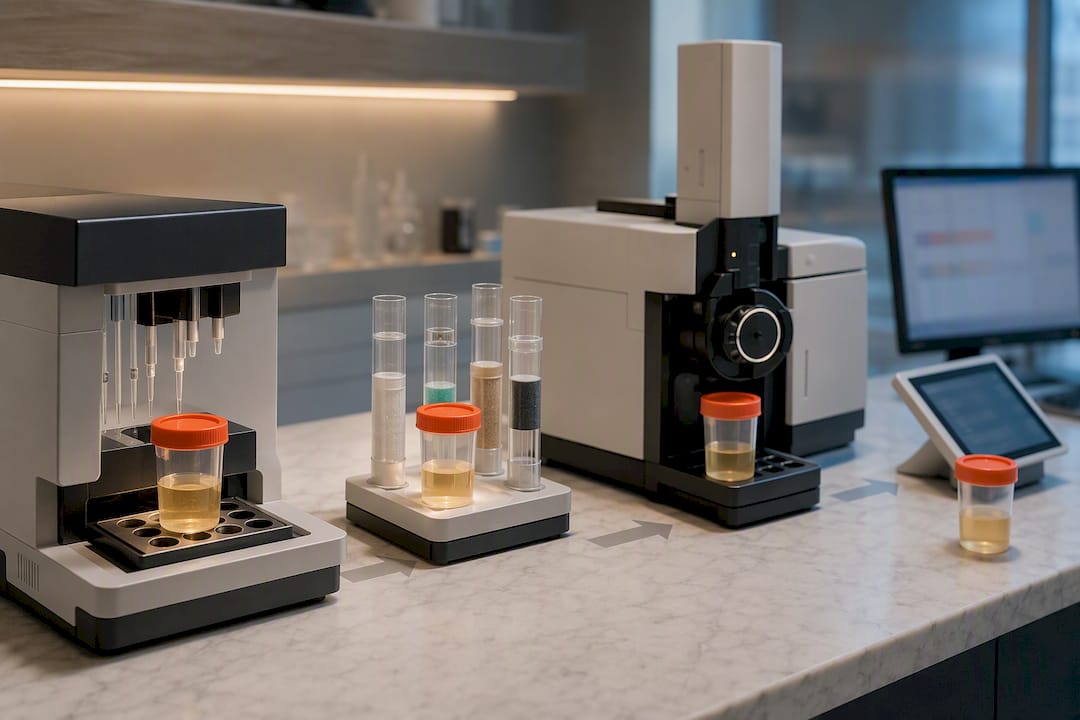
Specimen validity testing, or SVT, runs several checks in the same pass:
- Temperature: collected samples must read between 90 and 100 degrees Fahrenheit within minutes of collection, catching anyone who swapped in a stored or synthetic sample.
- pH level: normal urine sits between roughly 4.5 and 8; readings outside that range suggest an added chemical.
- Oxidant and adulterant screens: specific tests detect bleach, nitrites, glutaraldehyde, and other masking agents people add directly to a cup.
- Creatinine and specific gravity: the dilution markers described above.
Pro Tip: If your urine at home looks nearly clear instead of pale yellow, that’s often a visual cue your creatinine is running low. Labs see the same signal numerically, and a clear sample rarely passes SVT undetected.
Anything unusual gets kicked to confirmatory testing, typically gas chromatography-mass spectrometry (GC-MS), which identifies the exact chemical compounds present rather than relying on the faster immunoassay screen used first. A literature review on adulterants and specimen validity found labs run these integrity checks specifically because dilution and adulteration attempts are common enough to justify the extra step, and flagged specimens are frequently treated as equivalent to a refusal to test. Once SVT flags something, the sample typically goes to a Medical Review Officer for evaluation, which can trigger a retest or, in workplace settings, an observed collection where someone watches you produce the next sample.
Does a Detox Drink Work the Same Across Urine, Hair, Blood, and Saliva Tests?
The honest answer is that a detox drink’s entire mechanism only applies to one test type, and it’s increasingly the easiest one for labs to catch tampering on anyway.
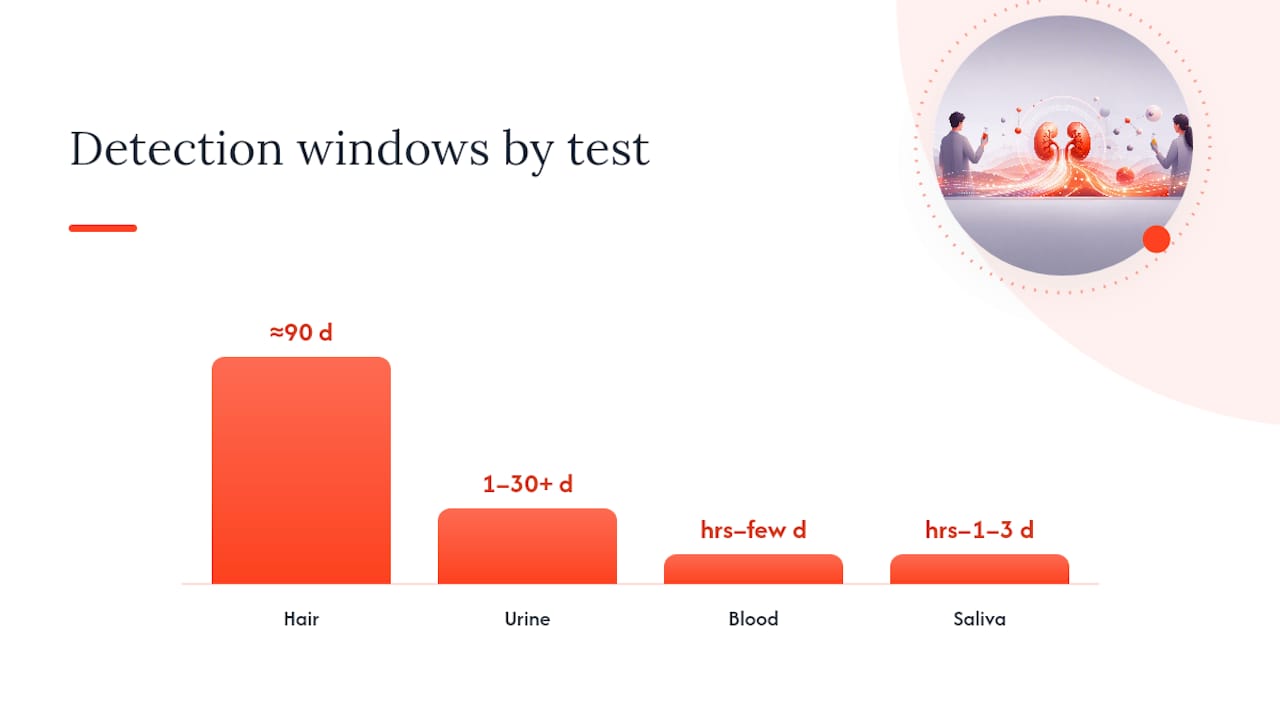
| Test type | Detection window | Affected by detox drinks? | Why |
|---|---|---|---|
| Urine | 1 to 30+ days depending on substance | Yes, temporarily | Dilution lowers metabolite concentration until SVT catches it |
| Hair | Up to about 90 days | No | Metabolites are embedded in the hair shaft, not filtered through fluid intake |
| Blood | Hours to a few days | No | Measures the parent compound directly in circulation |
| Saliva | Hours to 1 to 3 days | No | Also measures parent compound; drinking water doesn’t alter oral fluid chemistry |
Hair testing has a detection window of up to roughly 90 days according to rehab.com, and nothing about drinking fluids changes what’s already locked into the hair shaft. Saliva testing and blood tests both look for the parent drug compound circulating in your system rather than a metabolite concentration in urine, so dilution simply doesn’t apply.
Substance matters as much as test type. THC is highly fat soluble, which is why it lingers in urine for weeks in frequent users even though the psychoactive effects wore off days earlier. Opioids and amphetamines tend to clear from urine within one to three days for occasional use, giving detox drink users a much narrower and riskier timing window since there’s less margin for error. Benzodiazepines vary widely depending on the specific drug. Some clear in a couple of days, while others with longer half-lives can show up for a week or more.
The trend in testing is also moving against tampering generally. Directly observed collection policies, along with improvements in saliva testing accuracy, have reduced how much substitution or dilution tactics actually accomplish, according to research on urine adulteration detection. If a collector watches you produce the sample, a detox drink swap or substitution strategy loses most of its value before it starts.
What Happens If a Sample Gets Flagged as Diluted or Adulterated
Getting caught isn’t a minor inconvenience. Many drug testing programs, including DOT-regulated workplace testing, treat an adulterated or substituted specimen as equivalent to a confirmed positive or an outright refusal to test. That distinction matters because a refusal often carries the same consequences as failing outright: disqualification from a job offer, termination, or in safety-sensitive roles, mandatory evaluation before returning to work.
Beyond the testing consequences, the products themselves carry health risks people don’t think about:
- Overhydration and electrolyte imbalance: drinking several liters of water in a short window can cause hyponatremia, a genuinely dangerous drop in blood sodium.
- Unregulated ingredients: most detox drinks are sold as dietary supplements, and the NCCIH notes that supplements aren’t held to the same safety or efficacy standards as approved medications.
- False sense of security: relying on a drink instead of an honest timeline often means walking into a test with worse odds than doing nothing at all.
Pro Tip: If you’re on a legitimate prescription that could trigger a positive result, bring documentation to your test before it happens, not after. A verified prescription explanation reviewed by an MRO carries far more weight proactively than as a defense after a flagged sample.
Realistic Timelines and Safer Ways to Prepare for a Test
Clinical reviews are consistent on this point: there’s no substitute for time when it comes to clearing substances from your system, and commercial products haven’t demonstrated reliable clinical validation as a shortcut, per a review on detox and clearance published through the NIH. Occasional THC use typically clears urine within 3 to 10 days; regular or heavy use can extend that window to 30 days or longer. Opioids and stimulants generally clear within a few days for occasional use. Benzodiazepines depend heavily on which specific drug and how long you’ve used it.
For heavier or dependent use, medically supervised detox is worth considering, particularly when withdrawal symptoms are a factor and abstinence alone feels unmanageable or unsafe to attempt solo.
If you have real time before a scheduled test, here’s a practical sequence:
- Calculate your actual window based on substance, frequency, and body composition, then build in a buffer beyond the minimum estimate.
- Stay hydrated normally, not excessively, since overloading fluids in the final hours does more to trigger an SVT flag than to help you.
- Use an at-home test kit a day or two before the real one to check where you actually stand, rather than guessing.
- Avoid adulterants entirely. Anything you add directly to a sample is exactly what oxidant screens are built to catch.
- Talk to a professional if withdrawal, dependency, or a legitimate medical prescription is part of the picture, before test day, not during the review process.
What Passmydrugtest Offers Beyond a Bottle of Detox Tea
Passmydrugtest combines straightforward education with a product catalog built around the realities covered above, not marketing promises. That means guides on specimen validity markers alongside actual detox products and false-positive information sit on the same site, so you can read the mechanism before you buy anything.
Fast shipping on US orders and phone-based customer support during business hours mean you’re not left guessing after checkout, either. At-home test kits let you check your own status privately before a real screening, which is a far more useful pre-test step than any drink promising a quick fix…
The Honest Take on Detox Drinks and Drug Tests
People reach for detox drinks out of panic, not ignorance, and that’s worth saying plainly. But panic-driven shortcuts tend to produce exactly the outcome you’re trying to avoid: a flagged sample that reads worse than a straightforward positive would have. Transparency about what actually clears your system, and what doesn’t, protects you more than any bottle on a gas station shelf. Time, honesty about your situation, and professional guidance beat a gamble every time.
— MIchael
Ready to Prepare the Right Way? Here’s Where to Start
Guesswork before a test costs you more than the price of a product ever could. Passmydrugtest gives you a place to check where you actually stand before test day, instead of hoping a last-minute drink covers for you. Browse the full drug testing products lineup to compare test kits and preparation options suited to your specific timeline and substance history.
If hair testing is part of your situation, the hair test detection window guide walks through exactly what a 90-day window means for your planning. And if you’re unsure which approach fits your circumstances, Passmydrugtest’s customer support team is available by phone during business hours to talk through your specific situation before you spend money on the wrong solution. Start by checking your own status with an at-home kit, then decide what, if anything, else you need.
Sources
- Rehab
- Literature review on adulterants and specimen validity — Europe PMC
- Study on fluid loading and urine adulteration detection — PMC