
Will a Weekend’s Use Trigger a 50 ng/mL Urine Drug Test?
A weekend smoker faces real but variable detection risk: urine tests, the most common employment screen, can flag THCCOOH metabolites for several days after a single session. Saliva and blood windows are shorter, often clearing within a day or two, while hair testing rarely catches a single weekend’s use at all. Individual biology and the specific program’s cutoff level change these odds significantly.
TL;DR:
- Urine tests detect THC metabolites and can identify weekend use for several days, especially with standard cutoffs like 50 ng/mL, but individual factors vary greatly.
- Saliva and blood tests detect recent use within hours to a day or two, while hair tests rarely catch single incidents due to a lag in incorporation.
- Occasional weekend users typically clear urine within one to two weeks, but repeated use can extend detection times into several weeks due to fat storage of metabolites.
- Factors such as body fat, method of consumption, metabolic rate, and testing method influence how long THC remains detectable.
- Home tests provide rough estimates and should be confirmed with lab testing if results are positive or borderline.
Table of Contents
- 1. Detection windows by test type explained
- 2. Realistic timelines for occasional weekend use
- 3. Factors that change how long THC stays detectable
- 4. How workplace cutoffs and testing programs shape your result
- 5. Checking yourself before the real test
- 6. What the research actually shows about occasional users
- 7. Common myths about passing a drug test after weekend use
- 8. Hydration, exercise, and diet: what actually helps
- 9. Do detox methods that claim to speed elimination actually work?
- 10. A publisher’s view on realistic expectations
- 11. How PassMyDrugTest helps you prepare
- FAQ
- Sources
1. Detection windows by test type explained
Each specimen type measures something different, which is why the same weekend session can show up on one test and not another.
Urine tests screen for THCCOOH, the inactive metabolite your body produces after breaking down THC. Most workplace immunoassays use a 50 ng/mL cutoff, while confirmatory GC/MS testing can detect concentrations as low as 15 ng/mL, according to the Merck Manual. A lower cutoff catches smaller traces and extends the practical detection window.
Oral fluid (saliva) tests detect the parent THC compound rather than its metabolite. Controlled research found THC present in oral fluid up to 13.5 hours after smoking, though workplace-style cutoffs can stretch reported positivity windows to 30 hours or more in some cases, per a controlled oral-fluid study.
Blood tests also measure parent THC and reflect recent impairment more than long-term use. The window is short for occasional users, typically hours, though it can run longer in heavy users with more stored cannabinoids.
Hair testing detects cumulative exposure over months but has a 7 to 10 day incorporation lag before new use even appears in the hair shaft. A single weekend session will not show up on a hair test taken the following Monday.
Sweat patches, used less often outside of court-ordered monitoring, track continuous exposure over days to weeks rather than a single incident.
- Urine: metabolite-based, days-long window for occasional users
- Saliva: parent-compound based, shorter and more recent
- Blood: short window, reflects acute exposure
- Hair: long-term pattern, not single-incident
- Sweat: continuous monitoring over an extended period
The number that matters most: the standard screening cutoff for urine immunoassays is 50 ng/mL, and whether you clear that threshold depends heavily on timing and personal factors.
2. Realistic timelines for occasional weekend use
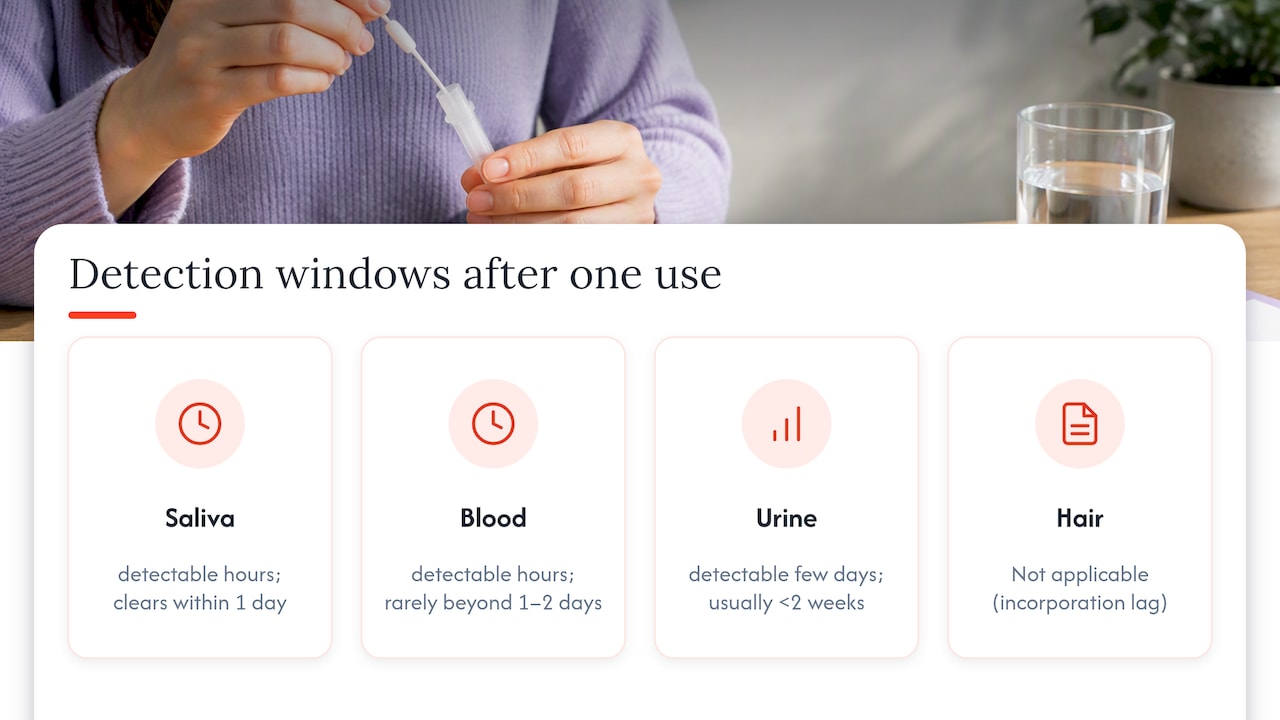
A single weekend session behaves very differently from a pattern of repeated weekend use. For one isolated use, saliva is typically detectable for several hours and generally clears within a day. Blood is detectable for hours and rarely beyond one to two days. Urine is often detectable for a few days, with most occasional users clearing common immunoassay cutoffs in less than two weeks. Hair testing is not applicable to a single incident due to the incorporation lag.
Repeated weekend use changes the math. THCCOOH accumulates in fat tissue faster than the body clears it when sessions happen weekly, which can push urine detection windows from days into multiple weeks. Someone who smokes once on a Saturday night clears differently than someone who smokes both weekend days, and both differ sharply from someone smoking on three or four weekends across a month. The more frequent the pattern, the more the body behaves like a regular user’s, even if each individual session is modest. This is the gap that catches a lot of self-described “occasional” smokers off guard: the body does not reset fully between sessions if they are close enough together.
3. Factors that change how long THC stays detectable
Detection time is not fixed. It shifts based on who you are and how you used.
- Frequency and cumulative dose matter more than any other single factor: more sessions mean more stored THCCOOH and a longer clearance curve.
- Body fat stores THC metabolites, so higher adiposity tends to extend urinary detection windows compared to leaner body composition.
- Route of administration affects metabolite levels: a peer-reviewed study of infrequent users found vaporized cannabis sometimes produced qualitatively higher urinary THCCOOH than smoking the same nominal dose.
- Metabolic rate and genetics vary from person to person, so two people using identical amounts can clear at different speeds.
- Testing method itself matters: immunoassay screens are fast but less specific, while confirmatory GC/MS testing catches lower concentrations and is harder to argue against. A diluted or adulterated specimen often triggers a separate flag rather than a clean negative.
Pro Tip: If you are estimating your own risk, assume the lower end of any “clears in X days” range applies only if you used once, lightly, and have average body composition. Add buffer time for anything else.
4. How workplace cutoffs and testing programs shape your result
Not all drug testing programs are built the same, and the differences change whether a given THC level gets reported as positive.
DOT-regulated testing follows strict, federally defined procedures: certified laboratories, chain-of-custody protocols, and sometimes observed collection. Instant point-of-care urine tests are not authorized for DOT-regulated testing, according to the Department of Transportation’s employer guidance.
Federal guidance from SAMHSA specifies which analyte gets reported for each specimen type: urine testing reports THCCOOH, while oral-fluid testing reports THC itself.
- DOT programs: certified labs only, no instant POC tests, strict chain of custody
- Federal workplace guidance: standardized cutoffs by specimen type
- Private employers and courts: may choose different specimen types or cutoffs entirely
The figure to remember: a 50 ng/mL immunoassay cutoff is common in federal workplace testing, but a private employer could legally set a different threshold.
5. Checking yourself before the real test
A home test can give you useful information, but it is not the final word.
- Choose a kit that matches the specimen type and cutoff level you actually expect to face, since a 50 ng/mL urine kit tells you something different than a 20 ng/mL one.
- Read results within the exact window the instructions specify, since reading too early or too late skews accuracy.
- Test first-void morning urine when possible, since metabolite concentrations tend to run higher after overnight accumulation.
- Treat a positive home result as a signal to expect a lab-confirmed positive in most employment or legal contexts, and treat a negative as reassuring but not conclusive.
The FDA’s guidance on home-use drug tests is direct about this: these kits provide a presumptive screening result, and any positive should be confirmed through laboratory testing before anyone treats it as definitive.
6. What the research actually shows about occasional users
A controlled dosing study of infrequent cannabis users found urinary THCCOOH typically peaks 4 to 6 hours after use, with positivity rates shifting depending on whether the lab applied a 20, 50, or 100 ng/mL cutoff, according to the PMC urinary excretion study. A separate oral-fluid study comparing occasional and frequent smokers found THC detectable in saliva for hours rather than days in most occasional users, though sensitive workplace cutoffs extended some windows well beyond that. Cutoff choice, not biology alone, often decides whether a borderline case reports positive.
7. Common myths about passing a drug test after weekend use
A lot of bad advice circulates among occasional users, and most of it does not hold up.
One persistent myth is that drinking large amounts of water right before a test will flush THC out entirely. In reality, overloading on water mainly dilutes the sample, which most labs flag as a suspicious or invalid specimen rather than a clean negative, often triggering a retest requirement.
Another common belief is that a single intense workout the morning of a test will burn off THC stored in fat cells fast enough to help. Exercise can temporarily release stored THC into the bloodstream, which may briefly raise detectable levels rather than lower them.
Some assume cranberry juice, niacin, or vinegar “cleanses” the system on a biological level. None of these have demonstrated reliable detoxifying action on THCCOOH; the body clears the metabolite on its own metabolic timeline regardless of what you drink.
There is also a widespread assumption that “I only smoke on weekends” automatically means a fast, guaranteed clear result. As covered earlier, accumulation from repeated weekend sessions can extend detection well past what a true one-time use would show. Occasional does not always mean low-risk, especially close to a testing date.
Finally, many people overestimate how much a home test result predicts the outcome of a lab-confirmed screen, when in practice the confirmatory method used in employment and legal settings is often more sensitive than a basic at-home strip.
8. Hydration, exercise, and diet: what actually helps
Hydration, exercise, and diet all influence THC metabolism, but not in the dramatic ways marketing claims suggest.
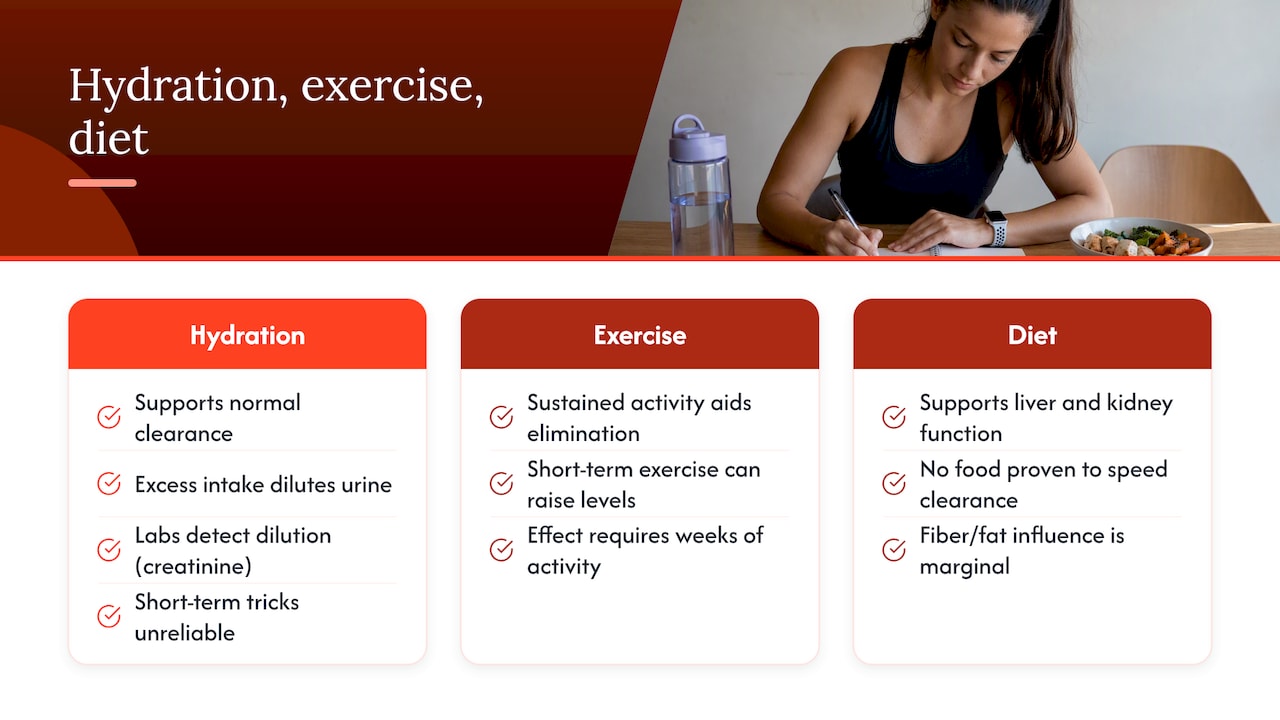
Normal hydration supports the body’s regular clearance processes and is reasonable as a general health habit. Excessive water intake right before a test, however, risks producing a dilute specimen, which labs typically catch through specific gravity and creatinine checks rather than letting it pass as negative.
Exercise affects fat metabolism over time, and since THC metabolites are stored in fat tissue, sustained physical activity over weeks can support the body’s natural elimination process. The catch is timing: exercising shortly before a test can mobilize stored THC into the bloodstream and temporarily raise urinary concentrations rather than lower them.
Diet plays a supporting role at best. A generally healthy diet supports normal liver and kidney function, which are the organs actually responsible for metabolizing and excreting THCCOOH. There is no specific food or supplement with demonstrated ability to accelerate that clearance beyond what the body does on its own schedule. Fiber and fat intake can influence how metabolites move through the digestive system, but the effect on urine test timing is marginal at best.
The most reliable lever remains time itself. Programs built around hydration or diet changes in the day or two before a test are working against a narrow window, while habits sustained over weeks have more biological room to matter.
9. Do detox methods that claim to speed elimination actually work?
Detox drinks, pills, and cleanses marketed to accelerate THC elimination make bold promises, but the scientific support behind most of them is thin to nonexistent.
Most commercial detox products rely on diuretics, vitamins, and herbal blends intended to dilute urine or mask metabolite presence rather than genuinely accelerate THCCOOH breakdown. Diluting a sample can lower the measured concentration below a cutoff, but it also risks triggering a dilute-specimen flag, which many testing programs treat as its own red flag requiring a retest.
There is no peer-reviewed evidence showing that any over-the-counter product meaningfully speeds up the liver and kidney processes that actually metabolize and excrete THCCOOH. The body’s elimination timeline is driven by individual biology, not supplement intake.
That said, some products are designed for a narrower, more honest purpose: temporary dilution and masking for a specific testing window, used with full awareness of the dilution-flag risk, rather than any claim of biologically accelerating clearance. Readers considering this route should understand the distinction between genuine elimination and temporary dilution, since conflating the two leads to disappointment or a flagged result.
10. A publisher’s view on realistic expectations
Weekend use is not risk-free just because it is infrequent. If you are anxious about an upcoming test, a home test gives you real information, and extra buffer days help more than any shortcut. Skip risky adulteration tricks: they often cause more problems than the original concern.
— MIchael
11. How PassMyDrugTest helps you prepare
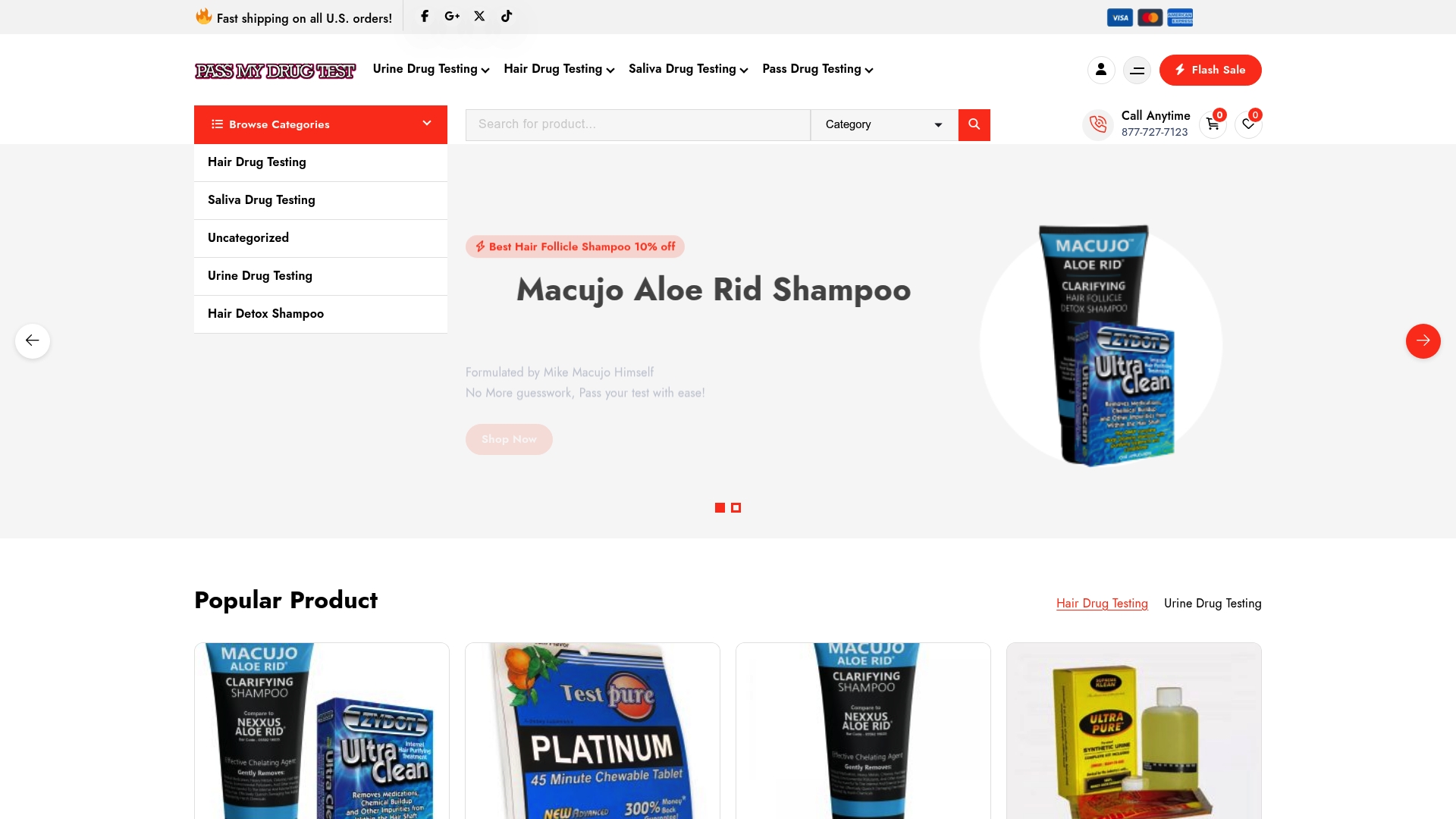
Weekend smokers rarely have the luxury of months to prepare, so what matters is having the right test on hand and the right information fast. PassMyDrugTest.com carries home urine test kits, saliva test kits, and hair detox shampoo for readers facing specific specimen types, along with educational guides that walk through each scenario in plain language. Orders ship fast within the United States, and phone support is available during business hours if you need help picking the right product for your situation.
- Home urine kits for last-minute self-checks before an employment screen
- Saliva test kits for readers facing oral-fluid collection
- Hair detox shampoo for those with upcoming follicle testing
- Phone support to help match a product to your specific timeline
Visit Passmydrugtest to browse the full catalog and find the option that fits your testing window.
FAQ
Will I pass a drug test if I smoked a week ago?
It depends on frequency and the test’s cutoff level, but many occasional users clear common 50 ng/mL urine immunoassay thresholds within about a week of a single session, according to Merck Manual. Repeated use in the days before the test extends that window considerably.
How long does it take to clear a drug test after you stop smoking?
For a single occasional use, saliva and blood typically clear within one to two days, while urine can take up to about a week for most occasional users under standard cutoffs. Heavier or repeated use pushes urine clearance into multiple weeks due to THCCOOH accumulation in fat tissue.
Can a heavy smoker pass a drug test?
Heavy, frequent smokers face significantly longer detection windows than occasional users because THCCOOH builds up in fat stores faster than the body eliminates it. Clearance for daily or near-daily users can extend well beyond what applies to someone who uses only on occasional weekends.
Can you pass a drug test if you haven’t smoked in two months?
Two months without use is generally enough time for urine, saliva, and blood tests to clear THC metabolites for the large majority of users, since even chronic use rarely produces detection windows that long under standard cutoffs. Hair testing is the exception, since it reflects a historical pattern rather than recent abstinence.
Does a home drug test guarantee the same result as a lab test?
No. The FDA classifies home drug tests as presumptive screens, and a positive result is typically followed by laboratory confirmation using more sensitive methods like GC/MS.
Sources
- Urinary excretion profile of 11-nor-9-carboxy-Δ9-tetrahydrocannabinol (THCCOOH) following smoked and vaporized cannabis administration in infrequent cannabis users
- SAMHSA — Drug-free workplace FAQs
- Drugs of abuse home use test — FDA
- Oral fluid cannabinoid concentrations following controlled smoked cannabis in chronic frequent and occasional smokers
- Merck Manual: Drug testing