
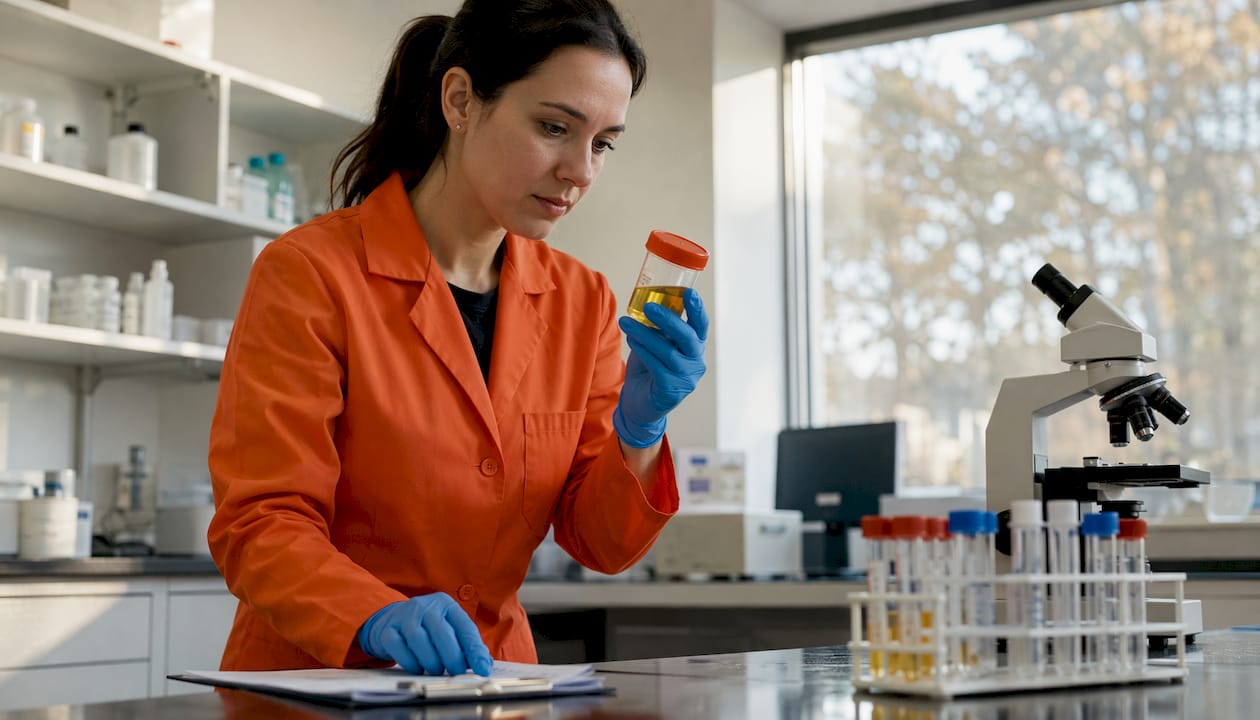
5 Panel Drug Test: What It Screens For and What to Expect
A 5-panel drug test is a urine-based screening that checks for five substance classes: THC (marijuana), cocaine, amphetamines, opioids/opiates, and phencyclidine (PCP). It is the DOT baseline panel for safety-sensitive transportation employees and the most common starting point for U.S. workplace drug programs.
The test detects metabolites, the byproducts your body produces as it breaks down a drug, not the drug itself or any sign of current impairment. A positive screen is presumptive until a certified lab confirms it.
The five substance classes screened:
- THC (marijuana): metabolite THC-COOH
- Cocaine: metabolite benzoylecgonine
- Amphetamines: amphetamine and methamphetamine
- Opioids/opiates: morphine, codeine, 6-acetylmorphine (6-AM)
- Phencyclidine (PCP): PCP itself
Table of Contents
- What a 5 panel drug test is and how it works
- The five substance classes and what labs actually detect
- Cutoff concentrations, the lab workflow, and what the numbers mean
- How long each substance stays detectable by specimen type
- How to interpret your result and what to do next
- U.S. regulatory context: DOT, SAMHSA, and state marijuana rules
- Why tests detect metabolites, not impairment, and why that matters
- Key Takeaways
- The 5-panel is a starting point, not always the finish line
- Preparing for a 5-panel test? Passmydrugtest has what you need
- Useful sources and further reading
What a 5 panel drug test is and how it works
The standard workflow runs in two stages. First, a lab runs an immunoassay screen on the urine sample. If that screen comes back presumptive positive, the sample goes to a second, more precise test using gas chromatography-mass spectrometry (GC-MS) or liquid chromatography-tandem mass spectrometry (LC-MS/MS) to confirm the specific metabolite and its concentration. That confirmatory step is what separates a preliminary flag from a reportable result.
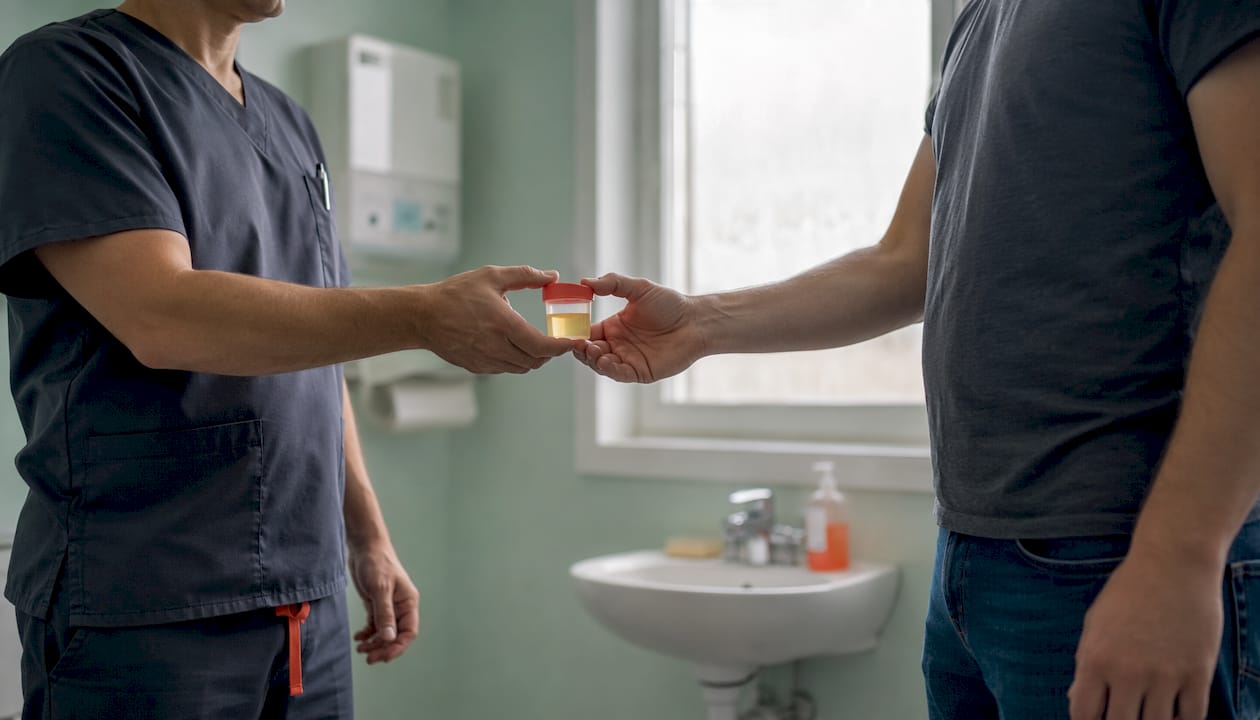
Urine is the default specimen for DOT-regulated testing and the workplace standard more broadly. It balances cost, a practical detection window, and straightforward collection logistics. Quest Diagnostics notes that urine is accepted for DOT testing and covers the detection window most workplace programs need. Hair, saliva, and blood are alternatives, each with different trade-offs covered in the detection windows section below.
Why employers choose the 5-panel:
- It satisfies DOT requirements under 49 CFR Part 40 for safety-sensitive roles
- Cost is lower than expanded panels, which matters for high-volume screening
- It covers the five substances with the highest prevalence in workplace testing programs
Non-DOT employers sometimes move to 10- or 12-panel tests when prescription drug misuse is a concern, a point worth revisiting in the perspective section.
The five substance classes and what labs actually detect
Each substance class has a specific metabolite the lab targets. Knowing which metabolite matters because it determines detection windows, cutoff thresholds, and how prescription or over-the-counter (OTC) drugs can trigger a presumptive positive.
| Substance Class | Primary Metabolite(s) Detected | Common Prescription/OTC Interactions |
|---|---|---|
| THC (marijuana) | THC-COOH | Dronabinol (Marinol); hemp-derived CBD products may cause low-level positives |
| Cocaine | Benzoylecgonine | Topical cocaine used in ENT procedures (rare medical context) |
| Amphetamines | Amphetamine, methamphetamine | Adderall, Vyvanse, Ritalin, some cold decongestants (pseudoephedrine at high doses) |
| Opioids/opiates | Morphine, codeine, 6-acetylmorphine (6-AM) | Prescription opioids (hydrocodone, oxycodone), codeine-containing cough syrups, poppy seeds (at very high consumption) |
| Phencyclidine (PCP) | PCP | Dextromethorphan (DXM) in high doses; ketamine in some immunoassay cross-reactions |
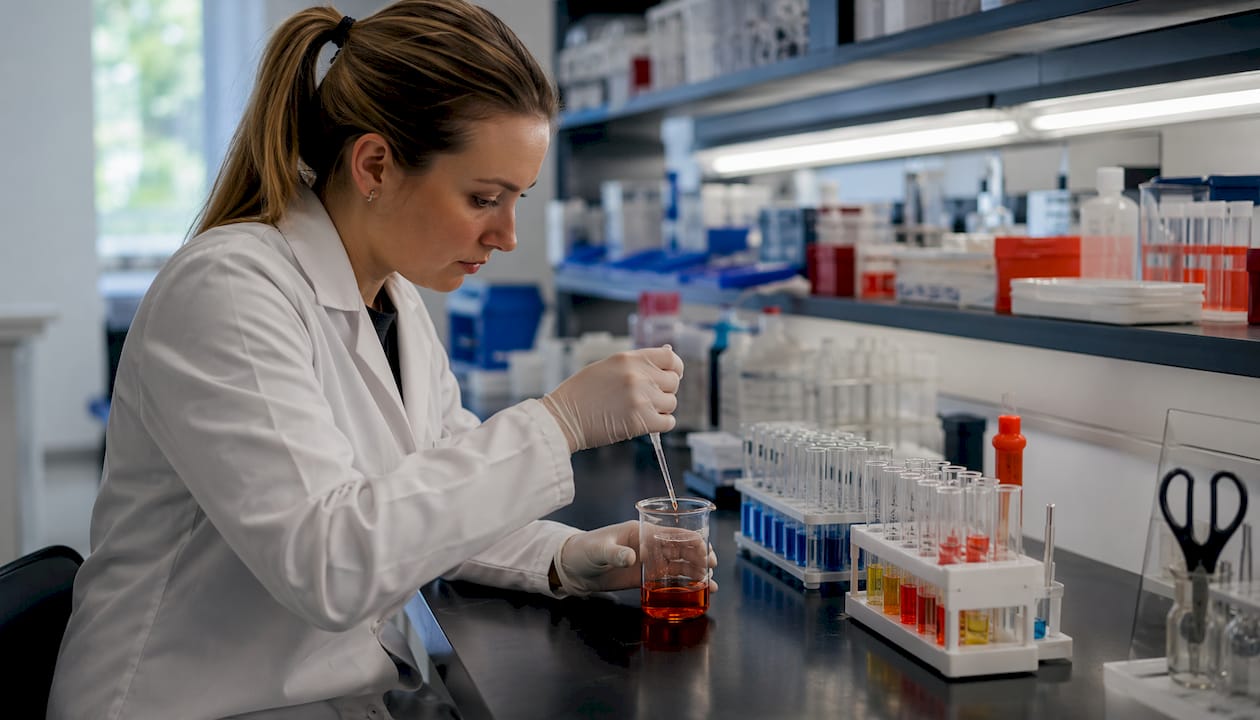
A few notes on SAMHSA and DOT naming conventions: federal regulations use the term “opiates” for naturally derived compounds (morphine, codeine) and have expanded coverage to include semi-synthetic opioids. The presence of 6-AM specifically indicates heroin use, since it is a unique heroin metabolite not produced by other opioids.
When a prescription drug could explain a positive, the Medical Review Officer (MRO) is the person who evaluates that explanation. Disclosing medications to the MRO, not to the employer, is the correct channel.
Cutoff concentrations, the lab workflow, and what the numbers mean
SAMHSA and DOT set specific cutoff concentrations for both the initial immunoassay screen and the GC-MS/LC-MS/MS confirmation. A result must exceed the screen cutoff to be flagged, and then must exceed the confirmatory cutoff to be reported as positive. This two-threshold design filters out trace environmental exposure and low-level cross-reactions.
| Substance | Initial Screen Cutoff (ng/mL) | Confirmatory Cutoff (ng/mL) |
|---|---|---|
| THC-COOH | 50 | 15 |
| Benzoylecgonine (cocaine) | 150 | 100 |
| Opiates (morphine/codeine) | 2,000 | 2,000 |
| Amphetamines | 500 | 250 |
| PCP | 25 | 25 |
These figures reflect SAMHSA/DOT standard urine cutoffs for regulated workplace testing. Private employers not covered by DOT may adopt different thresholds, though many use SAMHSA values as a benchmark.
The step-by-step workflow:
- Collection and chain of custody: The donor provides a urine specimen at a collection site. The collector documents the sample, seals it with tamper-evident tape, and initiates a chain-of-custody form that tracks the sample from collection to final report.
- Immunoassay screen: The lab runs the initial screen. Results below the cutoff are reported negative. Results at or above the cutoff are flagged as presumptive positive.
- GC-MS or LC-MS/MS confirmation: A presumptive positive triggers confirmation testing at a SAMHSA-certified laboratory. The confirmatory method identifies the specific metabolite and its concentration.
- MRO review: A licensed physician serving as MRO reviews all confirmed positives, contacts the donor to discuss any legitimate medical explanation, and issues the final verified result to the employer.
Turnaround time for a negative result is typically 24–48 hours. Confirmed positives requiring MRO review can take 3–5 business days. Employers generally pay for pre-employment and random testing; individuals paying out of pocket for self-testing can expect to pay varying amounts depending on the collection site and lab.
Pro Tip: Chain-of-custody documentation is your primary protection against a disputed result. If you are an employer, verify that your collection site uses a federal custody and control form (CCF). If you are an individual, keep your copy of the CCF receipt.
How long each substance stays detectable by specimen type
Detection windows are estimates, not guarantees. Frequency of use, body fat percentage, metabolism rate, and dose all shift the window for any individual. Published ranges are population-level approximations.
| Substance | Urine | Hair (~90 days) | Saliva | Blood |
|---|---|---|---|---|
| THC (marijuana) | Single use: a few days; daily use: several weeks | Up to 90 days | 1–3 days | Up to a day |
| Cocaine | A few days | Up to 90 days | 1–2 days | 12–24 hours |
| Amphetamines | A few days | Up to 90 days | 1 day | 12–24 hours |
| Opioids/opiates | A few days (heroin/morphine); a few days (codeine) | Up to 90 days | 1 day | 6–12 hours |
| PCP | Several days for single use; longer for chronic use | Up to 90 days | 1–3 days | 24–48 hours |
Hair testing covers roughly 90 days of history because drugs and their metabolites become incorporated into the hair shaft as it grows. That longer window makes hair useful for post-accident or return-to-duty contexts. Saliva and blood reflect very recent use, which is why they appear in roadside or post-incident scenarios. Urine sits in the middle: long enough to catch recent use, short enough to be practical for most employment screening purposes.
For more detail on how collection methods differ across specimen types, Passmydrugtest has a drug testing method overview that covers urine, hair, saliva, and blood side by side.
Pro Tip: If you use marijuana in a legal state and face a urine test, the detection window for daily users can stretch well past two weeks. Treat published windows as conservative minimums, not hard cutoffs.
How to interpret your result and what to do next
A negative result means no substance was detected above the cutoff at the time of collection. It does not certify the person is drug-free; it means the test found nothing reportable. A positive result from the immunoassay screen alone is presumptive, not final. No employer should take adverse action based solely on a screen result.
Common causes of false positives and invalid samples:
- Certain OTC medications (ibuprofen, pseudoephedrine, dextromethorphan) can trigger presumptive positives on immunoassay screens
- Poppy seed consumption has triggered opiate positives at the 2,000 ng/mL threshold in documented cases
- Diluted samples (creatinine below 2 mg/dL or specific gravity below 1.001) are reported as invalid or dilute
- Adulterated samples (oxidizing agents, bleach, nitrites) are flagged by validity testing run alongside the drug screen
- Substituted samples (creatinine below 2 mg/dL and specific gravity outside 1.001–1.020) are reported as substituted, which is treated as a refusal to test under DOT rules
For a deeper look at what triggers a false positive urine test and how labs handle those cases, Passmydrugtest covers the most common culprits.
Next steps for individuals after a presumptive positive:
- Contact the MRO directly, not the employer, to disclose any prescription medications or medical conditions
- Request the confirmatory GC-MS or LC-MS/MS result in writing
- If the MRO verifies the positive, ask about the appeals process or request a split-specimen retest if one was collected
- Consult an employment attorney if adverse action is taken before MRO review is complete
Next steps for employers after a presumptive positive:
- Pause any adverse employment action until the MRO issues a verified result
- Follow your written drug-free workplace policy and, for DOT-covered roles, follow 49 CFR Part 40 procedures exactly
- Document all steps in the process for legal defensibility
- If the MRO verifies a positive, proceed per policy: removal from safety-sensitive duties, referral to a Substance Abuse Professional (SAP), or other defined action
Pro Tip: Under DOT rules, a donor has 72 hours to contact the MRO after being notified of a positive result. Missing that window does not eliminate the right to explain, but it complicates the process. Act quickly.
U.S. regulatory context: DOT, SAMHSA, and state marijuana rules
The DOT 5-panel is not optional for covered employers. Under 49 CFR Part 40, any employer with safety-sensitive transportation employees (truck drivers, pilots, railroad workers, pipeline operators, transit workers, and others) must use the exact DOT panel, urine specimens only, SAMHSA-certified labs, and a qualified MRO. Deviating from any element of that protocol is a federal compliance violation.
SAMHSA sets the cutoff concentrations and laboratory certification standards that DOT adopts. SAMHSA’s role is technical and regulatory: it certifies labs, publishes mandatory guidelines, and sets the science behind the numbers employers use.
Key regulatory points:
- DOT-covered employers cannot substitute hair, saliva, or blood for urine in their regulated testing programs
- The five-panel composition is fixed for DOT; employers cannot add substances to the regulated panel on their own
- Non-DOT private employers have more flexibility: they can choose expanded panels, different specimen types, and different cutoffs, subject to state law
- Several states (California, New York, New Jersey, and others) have enacted laws limiting or prohibiting pre-employment marijuana testing for most private employers; some states restrict testing to safety-sensitive roles only
- State laws do not override federal DOT requirements for covered employees
The gap between federal DOT rules and state marijuana protections creates real complexity for employers with mixed workforces. A driver covered by DOT has no marijuana protection regardless of state law. A non-safety-sensitive office employee in New York or California may have significant protections. Getting this distinction wrong exposes employers to litigation.
Why tests detect metabolites, not impairment, and why that matters
A drug test does not measure whether someone is impaired right now. It measures whether a metabolite, the chemical residue left after the body processes a drug, is present above a threshold. Medical research is clear on this: a positive result shows prior use within an estimated detection window, not current intoxication or diminished capacity.
This distinction has real consequences for HR decisions. A THC-positive urine result could reflect use from three weeks ago in a daily user, well outside any window of impairment. An amphetamine positive could reflect a legitimate Adderall prescription. Neither result, on its own, tells you whether the person was impaired at work.
Practical implications for employers and individuals:
- Fitness-for-duty assessments, observed behavior reports, and supervisor documentation are separate tools from drug testing and serve a different evidentiary purpose
- MRO review exists precisely because metabolite detection requires medical interpretation, not just a lab number
- Lab confirmation via GC-MS or LC-MS/MS is required before any result is treated as definitive; immunoassay screens produce presumptive results only
- Employers relying solely on a positive screen for termination, without MRO review, face legal exposure under the ADA and state employment laws
The science also explains why detection windows vary so much. THC is fat-soluble and accumulates in body tissue, which is why a daily user can test positive weeks after last use while an infrequent user clears in days. Cocaine metabolites clear faster because the compound is water-soluble. These are biological realities, not loopholes.
Key Takeaways
A 5 panel drug test screens for five substance classes using urine, detects metabolites rather than impairment, and requires GC-MS or LC-MS/MS confirmation before any positive result is treated as final.
| Point | Details |
|---|---|
| Five substances covered | THC, cocaine, amphetamines, opioids/opiates, and PCP are the standard five classes. |
| Urine is the DOT standard | DOT-regulated employers must use urine specimens and SAMHSA-certified labs under 49 CFR Part 40. |
| Cutoffs filter noise | SAMHSA standard urine cutoffs (e.g., 50 ng/mL for THC-COOH, 150 ng/mL for cocaine, 2,000 ng/mL for opiates, 500 ng/mL for amphetamines, 25 ng/mL for PCP) exist to exclude trace environmental exposure. |
| Detection windows are estimates | Frequency, metabolism, and dose shift windows; treat published ranges as approximations, not guarantees. |
| Passmydrugtest resources | Passmydrugtest offers educational guides and preparation products for individuals and employers navigating urine, hair, and other specimen-based testing. |
The 5-panel is a starting point, not always the finish line
The standard 5-panel does its job well for DOT compliance and basic workplace screening. For most safety-sensitive transportation roles, it is exactly what the law requires and nothing more is needed. But the test has real blind spots, and pretending otherwise does not serve employers or individuals well.
The panel misses benzodiazepines, barbiturates, methadone, buprenorphine, and a range of other commonly misused prescription drugs. A healthcare employer, a post-accident investigation, or a return-to-duty program for someone with a documented substance history probably needs a 10-panel test or a customized panel that adds those classes. The 5-panel was designed for a specific regulatory purpose, not as a comprehensive substance abuse screen.
State marijuana laws add another layer of complexity that the 5-panel was not designed to navigate. The test cannot distinguish between use that happened yesterday and use that happened three weeks ago. In states where off-duty marijuana use is legally protected, a positive THC result from a non-DOT employer can create more legal risk than it resolves, particularly without a clear written policy and MRO review.
Hair testing is worth considering when the goal is a longer history window rather than recent use detection. The roughly 90-day window catches patterns that a urine test misses entirely. The trade-off is cost, collection complexity, and the fact that hair testing is not accepted for DOT-regulated programs.
The bottom line: use the 5-panel when it fits the regulatory requirement or the risk profile. Expand the panel when prescription drug misuse is a realistic concern. And whatever panel you use, the MRO review step is not optional overhead. It is the mechanism that makes the result legally defensible.
Preparing for a 5-panel test? Passmydrugtest has what you need
Whether you are an individual facing a pre-employment screen or an HR manager setting up a workplace testing program, knowing the test is only half the equation. Passmydrugtest gives you the practical side: educational guides on urine testing methods, at-home test kits so you can check your own status before a formal screen, and a full range of detox products for those who need to prepare.
The site covers urine, hair, saliva, and blood specimen types with clear, no-nonsense guidance on detection windows and what to expect at each stage of the process. If hair testing is part of your situation, the hair testing information section walks through the 90-day window and what factors affect it.
No product can guarantee a specific test outcome, and confirmatory testing and MRO review are outside any preparation product’s control. What Passmydrugtest does is give you accurate information and quality products so you can make informed decisions before your test date.
This article is general information, not legal or medical advice. Confirm current DOT and SAMHSA requirements with the relevant federal agency or a qualified professional for your specific situation.
Useful sources and further reading
- SAMHSA Workplace Drug Testing Resources — federal guidelines, certified lab lists, and employer program resources
- SAMHSA Federal Workplace Laws — overview of federal drug-free workplace requirements
- DOT 5-Panel Notice (transportation.gov) — the official DOT notice establishing the 5-panel for regulated employers
- 49 CFR Part 40 (transportation.gov) — the full DOT drug and alcohol testing procedures regulation
- Medical News Today: Why drug tests detect metabolites — clinical explanation of metabolite detection and impairment limits
- Passmydrugtest: Drug Testing Methods — specimen type comparisons and preparation guidance
- Passmydrugtest: False Positive Drug Test Screening — how labs and MROs handle questionable results
Always review your employer’s written drug-free workplace policy and check your state’s current marijuana testing laws before drawing conclusions from any test result.