
THC Users: How Exercise Affects Blood Versus Urine Drug Tests
Short answer: vigorous exercise can temporarily raise blood THC in some users, but it is unlikely to reliably change a urine test. If you know you are facing a blood draw, skip hard cardio or unfamiliar fat-burning workouts beforehand. For urine testing, keep your activity level normal and avoid extreme hydration swings or fasting.
TL;DR:
- Exercise can cause a short-term increase in blood THC levels but does not reliably alter urine test results for THC-COOH.
- Blood THC levels may rise immediately after intense workouts, especially in individuals with higher body mass indexes, but this effect is temporary.
- Urine tests measure metabolites that are unaffected by single workouts, and hydration tricks can cause dilution that labs flag regardless of exercise.
- For blood tests, avoid vigorous exercise beforehand, while normal activity levels suffice for urine testing, which is less sensitive to fitness routines.
- Labs conduct multiple testing steps and validity checks to prevent exercise or hydration attempts from causing false negatives or positives.
Table of Contents
- How exercise moves THC around the body
- What the studies say about exercise and THC levels
- Which specimen type you’re facing changes the risk
- A practical checklist before your test
- How labs and medical review officers handle unusual results
- Keeping perspective on exercise and testing
- If you want test kits or preparation products
- Sources
- FAQ
How exercise moves THC around the body
THC is lipophilic, which means it binds readily to fat tissue rather than dissolving in water. Once cannabis is used, a portion of THC gets stored in fat cells, where it can linger well after the initial high fades. Exercise, especially anything intense enough to trigger meaningful lipolysis (the breakdown of fat for energy), can release some of that stored THC back into the bloodstream.
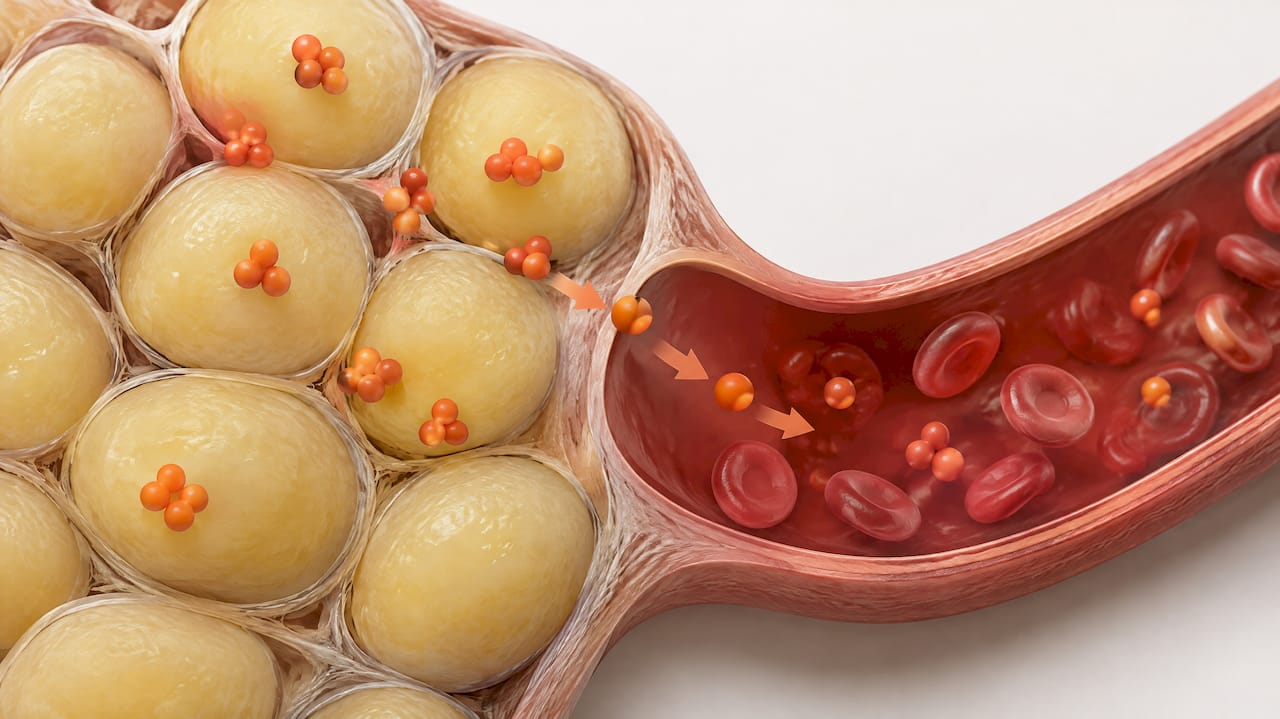
That mechanism explains why a workout can nudge blood THC levels up, at least briefly. But testing labs measure different things depending on the specimen. Blood and saliva tests look for parent THC, the active compound. Urine tests look for THC-COOH, a metabolite the liver produces after processing THC, and that metabolite follows its own timeline, largely independent of a single exercise session.
A few distinctions matter here:
- Parent THC (blood, saliva) reflects what is circulating right now and can shift within minutes of activity.
- THC-COOH (urine) reflects metabolic clearance that happens over days, not a single workout session.
- A transient rise in blood THC does not automatically translate into a detectable change in a urine sample collected the same day.
Pro Tip: If you are unsure which specimen type your test uses, ask the testing coordinator directly. The answer changes which precautions actually matter.
What the studies say about exercise and THC levels
The research on this topic is small but specific enough to be useful. Two human studies are typically cited, and both focus on different specimens.
- A 2013 study of 14 regular cannabis users found that 35 minutes of stationary cycling produced a small, statistically significant increase in plasma THC immediately after exercise. That rise had disappeared by the two-hour mark and correlated with participants’ body mass index.
- A 2014 controlled study of six chronic daily users found no major differences in serum or urine cannabinoid levels before and after a 45-minute moderate-intensity workout, even when combined with 24 hours of food deprivation.
Put together, these studies point toward the same practical conclusion from two directions: exercise can move the needle on blood THC, at least briefly, but the urine data has not shown a comparable effect. Neither study involved large sample sizes, and neither has been replicated at scale, so the honest framing is risk management rather than prediction. Treat blood testing as the scenario with documented, if temporary, exercise sensitivity, and treat urine testing as comparatively stable against a single workout.
Which specimen type you’re facing changes the risk
The type of test matters more than any single behavior you might change the night before.
- Blood tests are the most sensitive to recent activity because they measure parent THC directly, and the 2013 cycling study showed a measurable, if short-lived, increase here.
- Urine tests measure THC-COOH, and the available evidence does not show exercise reliably shifting results. The bigger urine-specific risk is specimen validity, meaning dilution from excess fluid intake, which labs flag independently of anything related to exercise.
- Saliva tests detect recent use, similar in spirit to blood, but there is no dedicated exercise study showing meaningful change from a single workout.
- Hair tests reflect drug use over roughly the prior several weeks to months, and a single exercise session has no plausible mechanism to alter that longer record.
Knowing which test you’re scheduled for narrows the list of things actually worth worrying about.
A practical checklist before your test
If you have a test coming up, the right precautions depend heavily on timing and specimen type.
- If you expect a blood draw, skip vigorous cardio or any unfamiliar fat-burning workout for several hours beforehand when your schedule allows it.
- If you expect a urine test, keep your exercise routine normal rather than suddenly ramping up or stopping; dramatic changes paired with fasting are more likely to cause problems than help.
- Avoid water-loading to “flush” anything before a urine collection. Overhydration can produce a dilute sample, which commonly triggers a retest.
- Maintain your usual fluid intake rather than panic-drinking large volumes right before collection.
- If you did work out shortly before your appointment, mention it to the collector. Honesty here costs nothing and avoids confusion later.
- If a result comes back borderline, remember that the medical review officer process includes a review step and the option of split-specimen testing.
Pro Tip: The safest version of “preparation” is boring: normal hydration, normal activity, no last-minute experiments. For broader preparation guidance beyond exercise timing, see this practical approach to passing a urine test, and for a wider rundown of what to avoid entirely, this overview on beating a marijuana drug test covers common missteps.
How labs and medical review officers handle unusual results
Drug testing labs do not rely on a single pass or fail. Most programs start with an immunoassay screen, a fast preliminary test, and follow a positive result with confirmatory testing using gas chromatography-mass spectrometry or liquid chromatography-tandem mass spectrometry. These confirmatory methods are far more specific and catch false positives the initial screen might flag.
Urine samples also go through validity checks before anyone looks at the cannabinoid result itself.
- Creatinine and specific gravity readings tell the lab whether a sample is too dilute to interpret reliably.
- A dilute or substituted specimen can prompt a donor interview or a request for recollection rather than an automatic pass or fail.
- A medical review officer reviews positive, adulterated, substituted, or invalid results, interviews the donor when needed, and documents the outcome. Donors also have the right to request split-sample (B) testing if they dispute a result.
That process exists precisely to catch edge cases, including someone who exercised heavily before a blood draw or hydrated unusually before a urine collection.
Keeping perspective on exercise and testing
The evidence here is thin, and that cuts both ways. A single cycling session can nudge blood THC up for a short window, but nothing in the available research supports treating a workout, a sauna session, or a sweat-it-out plan as a dependable way to beat a urine test. The better use of your energy is understanding your specimen type and sticking to routine behavior instead of improvising risky shortcuts the day of a test. Panic moves, like extreme hydration or sudden fasting, cause more problems than a treadmill session ever would.
— MIchael
If you want test kits or preparation products
Understanding the science only gets you so far when a real test is on the calendar. You can find at-home urine tests, saliva tests, hair detox shampoos, and sample kits to check where you stand before an actual screening instead of guessing. Fast shipping and phone support during business hours may be available to help get answers quickly.
Browse the full range at the Passmydrugtest product catalog, or go directly to the hair drug testing category if a follicle test is what you’re preparing for.
Sources
- Exercise increases plasma THC concentrations in regular cannabis users
- Can Physical Exercise or Food Deprivation Cause Release of Fat-Stored Cannabinoids?
- 2024 Medical Review Officer (MRO) Case Studies – Urine
FAQ
Does exercise get drugs out of your system quicker?
No reliable evidence shows that exercise speeds up how quickly THC clears from your system. A 2014 study of chronic daily users found no significant change in urine or serum cannabinoid levels after a 45-minute workout.
What not to do before a urine drug test?
Avoid sudden changes to your routine, including intense fasting or overhydrating to try to dilute your sample. Labs check creatinine and specific gravity specifically to catch dilute specimens, which can trigger a retest rather than help you pass.
Will pre-workout affect a drug test?
Pre-workout supplements are not part of the exercise-and-THC research discussed here, and standard drug screens are not designed to detect typical pre-workout ingredients. If a specific product contains an unusual additive, check its label, since testing panels vary by program.
Does exercise metabolize drugs faster?
Exercise can cause a brief, temporary rise in blood THC by releasing it from fat stores through lipolysis, but this is not the same as faster metabolism or clearance. The 2013 cycling study found that effect faded within about two hours and did not reflect an overall speedup in how the body eliminates THC.