
Up to 30 Day Detection: Washington Cannabis Testing for Job Applicants
Yes, standard urine, hair, and saliva tests used by Washington employers can detect cannabis, and the detection window depends heavily on test type and lab cutoff. Abstinence is the only dependable way to guarantee a negative result. Trusted resources including SAMHSA and Labcorp outline how certified labs process samples, and an online resource offers education and screening products for people who want to check their status before an official test.
TL;DR:
- Most workplace urine tests detect THC for up to three days after a single use, but heavy or chronic use can result in detection beyond 30 days.
- Hair testing can reveal cannabis use over the past 90 days, making it more effective for identifying patterns of regular consumption.
- Detection windows are primarily influenced by use frequency, body fat, and lab cutoff levels, with lower thresholds extending the detection period.
- Growing trends show employers in Washington shifting away from routine testing for non-safety-sensitive roles, but federal standards still strictly apply for certain industries.
- The only reliable way to guarantee a negative test is abstinence; attempts to mask or accelerate clearance, such as detox drinks or excessive hydration, are unreliable and often backfire.
Table of Contents
- Test types and typical THC detection windows
- What changes your detection timeline
- How labs and collection sites process your sample
- Practical preparation: what to do before test day
- Myths and risky shortcuts that tend to backfire
- Overview of Washington’s cannabis testing landscape
- Workplace testing requirements you’re likely to encounter
- What a positive result can mean for your job prospects
- Medical versus recreational use: does it change the testing?
- Recent shifts in how cannabis testing gets applied
- What test takers should know about their own rights
- A straight answer on realistic expectations
- Where to find testing products and guidance
- Sources
- FAQ
Test types and typical THC detection windows
The test type your employer or testing site chooses determines how far back cannabis use can be traced. Urine testing remains the most common method for pre-employment and workplace screening, and its detection window shifts based on how often you use.
- Single use: typically detectable for about 3 days in urine.
- Moderate use (around four times a week): commonly detectable for 5 to 7 days.
- Chronic, heavy use: metabolites can exceed 30 days in some cases.
Hair testing tells a different story. A standard 1.5-inch hair sample reflects roughly the most recent 90 days of growth, so it can pick up patterns of use that urine tests miss entirely. Shorter clippings shrink that window, while longer samples can stretch it back further, which is why hair follicle testing is often reserved for jobs with stricter safety requirements. For a closer look at how sample length affects the outcome, see hair drug test detection times.
Saliva and blood tests work on a much shorter clock. According to Cleveland Clinic, oral fluid testing generally catches use within a window of hours up to a day or two, and blood testing operates on a similarly narrow timeline. Both are built to catch recent use rather than establish a longer history, which makes them less common for routine pre-employment screening. Sweat testing, done through a patch worn over several days, can show a multi-day to multi-week pattern, but it is rarely used outside of specific monitoring programs like probation.
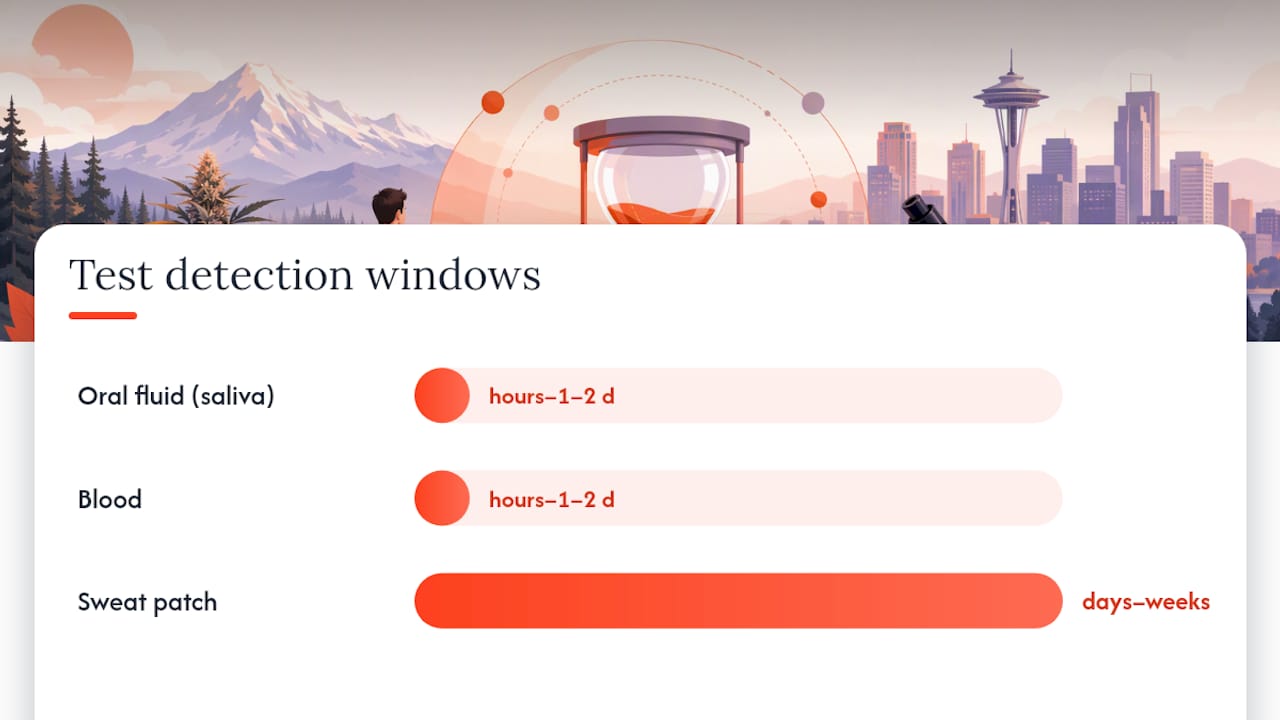
A detection window of up to 30 days for heavy users in urine means occasional users face a very different risk profile than daily users, and that gap is the single biggest factor in whether someone tests positive.
What changes your detection timeline
No two people clear THC at the same rate. Frequency of use is the biggest driver: someone who uses once might clear their system in days, while someone who uses daily can carry detectable metabolites for weeks because THC accumulates in fat tissue and releases slowly.
- Frequency and cumulative dose: more sessions per week generally mean more stored THC and a longer detection window, an effect confirmed in detection window research on cannabinoid metabolism.
- Body composition and metabolism: THC is fat-soluble, so people with higher body fat can store and release metabolites over a longer stretch, while a faster metabolism tends to clear them sooner.
- Lab cutoff levels: the NTCRC review by Paul L. Cary found that a lower cutoff, such as 20 ng/mL versus 50 ng/mL, meaningfully extends the window in which a sample can flag positive.
- Confirmation testing practices: labs that run confirmation at lower thresholds are more likely to catch residual metabolites that a higher-cutoff screen would miss.
A rough rule of thumb: occasional users face the lowest risk beyond a week, moderate users should plan for two to three weeks of caution, and daily or near-daily users should treat a full month as the safer estimate before any test with a low cutoff.
How labs and collection sites process your sample
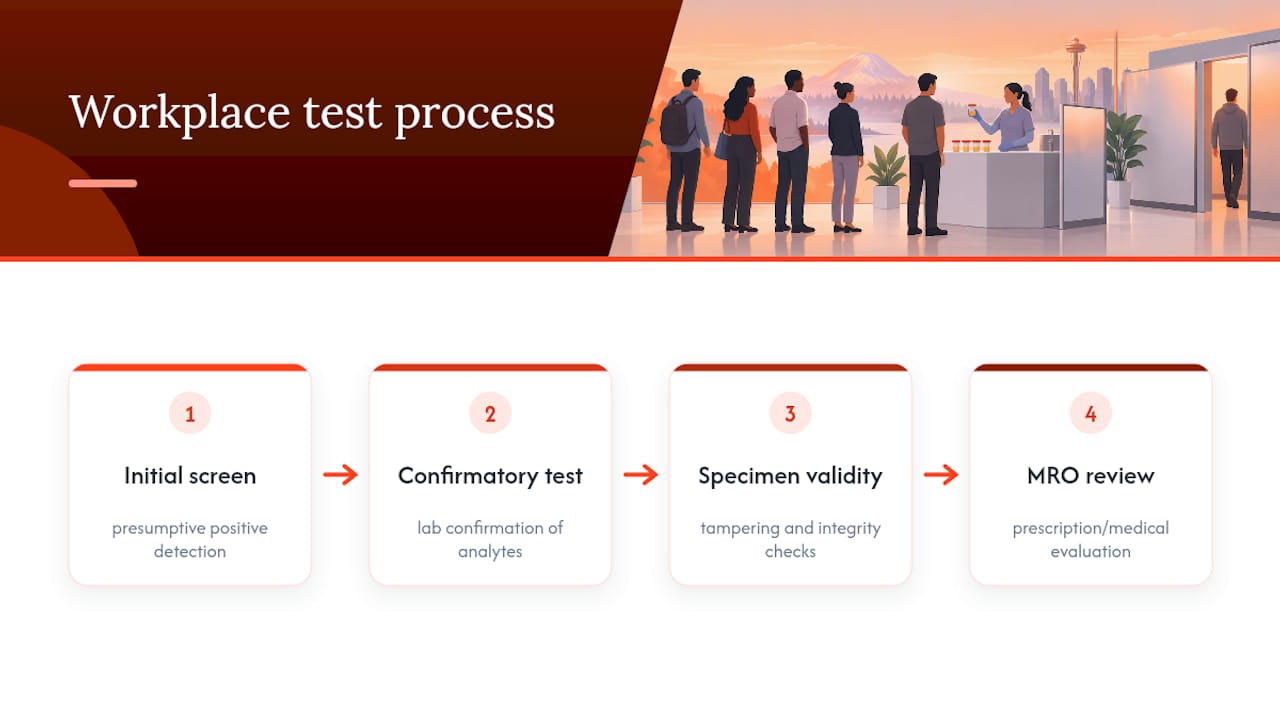
Understanding the testing workflow helps explain why some results get flagged for review even when a donor believes they are clean. Most workplace programs start with an immunoassay screen, a quick chemical test that flags likely positives. Anything that screens positive then goes through confirmation testing.
- Screening versus confirmation: a positive immunoassay result is confirmed using gas chromatography/mass spectrometry (GC/MS) or liquid chromatography/mass spectrometry (LC/MS), which the PubMed Central review describes as the standard for ruling out false positives from cross-reacting substances.
- Specimen validity testing: collection sites check creatinine and specific gravity levels, and SAMHSA notes this is standard practice for detecting diluted or adulterated samples.
- The Medical Review Officer’s role: a licensed physician reviews positive results and considers documented prescriptions before a result is finalized, according to SAMHSA guidance on workplace testing programs.
- At-home versus lab results: a faint line on an at-home strip can register differently than a lab’s quantitative confirmation, since the two methods use different sensitivity thresholds.
Collection sites also take steps like securing water sources and adding dye to toilet water, a practice Quest Diagnostics confirms is meant to deter tampering during the collection process.
Practical preparation: what to do before test day
The most reliable plan starts with a realistic timeline based on your use pattern and the test type you’re facing. Occasional users can often clear a standard urine screen within about a week, while daily users should plan for closer to a month, particularly if the lab uses a lower cutoff.
- Set an abstinence start date based on your usage frequency and the test type, giving yourself the most conservative estimate you can manage.
- Confirm your appointment details and bring valid photo identification, since collection sites will not proceed without it.
- Avoid excessive fluid intake right before your appointment, since overhydrating can trigger a diluted-sample flag rather than help you.
- Skip intense exercise in the hours before a test, since working out can temporarily release stored THC into your bloodstream.
- Follow the collector’s instructions exactly, including any wait times or handwashing steps, to avoid an unnecessary retest.
- Test yourself at home first if you have any doubt about your status, using an at-home kit as a low-stakes check before the real thing.
If your test is only days away, understand the limits of what’s possible: no product can guarantee an instant, complete clearance of THC metabolites, according to Labcorp’s overview of the testing process. What can help is confirming your risk level with an at-home screen and making sure you understand the collection process ahead of time, covered in more detail in this guide to pre-employment drug testing.
Pro Tip: If you’re unsure where you stand, test yourself with an at-home kit two to three days before your appointment rather than guessing.
Myths and risky shortcuts that tend to backfire
A lot of the advice circulating online sounds convincing but does not hold up under lab scrutiny. Instant detox drinks and masking agents are popular, but Labcorp’s research on testing preparation points to abstinence as the only dependable strategy, since no product reliably eliminates THC metabolites on demand.
- Instant detox kits: often unreliable and, in some cases, detectable as adulterants during specimen validity testing.
- Overhydration or substitution: drinking excessive water or trying to swap samples commonly triggers a diluted or invalid result, per Quest Diagnostics.
- Exercising right before testing: can temporarily raise metabolite levels in blood and urine by releasing THC stored in fat tissue.
- Safer bets: abstinence, an at-home check beforehand, and documentation of any prescriptions ready for MRO review if needed.
Overview of Washington’s cannabis testing landscape
Washington was among the first states to legalize recreational cannabis, and that history shapes how testing plays out for job seekers and employees across the state. Because cannabis remains a Schedule I substance federally, employers in Washington still commonly use the same standardized urine, hair, and saliva tests found nationwide, run through HHS-certified labs.
For job applicants, this means state legalization does not eliminate the practical reality of a workplace screen. The testing methods, detection windows, and lab procedures described earlier in this guide, urine, hair, saliva, and the underlying screening and confirmation process, apply the same way in Washington as they do elsewhere in the country. What differs from state to state is less about how the sample is tested and more about which employers choose to test and how they act on results, which is shaped by the broader legal environment rather than the science of detection itself.
For readers focused on the practical side, the takeaway is straightforward: if you are applying for a job in Washington and expect a cannabis screen, the same detection windows, lab cutoffs, and preparation strategies covered above are what will determine your outcome, not your location.
Workplace testing requirements you’re likely to encounter
Most Washington employers that drug test rely on the same standardized methods used across the country: urine screening as the default, with hair or saliva testing reserved for specific roles, particularly safety-sensitive positions or jobs regulated by federal transportation rules. Federal contractors and transportation-related employers often have testing obligations tied to federal, not state, standards, which means those programs follow HHS-certified lab procedures regardless of state cannabis policy.
For most other employers, testing is a matter of internal policy rather than a legal mandate, so practices vary by company and by industry. A construction firm with safety-sensitive equipment may test more aggressively than an office job with no such requirements. What stays consistent is the testing process itself: a screen followed by confirmation, specimen validity checks, and MRO review when a prescription or medical explanation is in play, exactly as outlined by SAMHSA’s guidance on workplace drug testing programs.
If you’re applying for a role that involves testing, the smartest move is to assume the standard urine cutoff and timeline apply, and to prepare accordingly using the frequency-based estimates covered earlier. Reviewing marijuana urinalysis detection times before your appointment can help you set realistic expectations for your specific use pattern.
What a positive result can mean for your job prospects
A confirmed positive result at the lab level typically goes through MRO review before it’s reported to an employer, giving donors with a documented prescription a chance to explain the result. Outside of that narrow exception, a positive confirmed by GC/MS or LC/MS, the gold standard described in peer-reviewed research on cannabinoid testing, is generally treated as a positive result by the employer, regardless of state cannabis laws.
The practical fallout depends heavily on the individual employer’s policy rather than any single statewide rule. Some companies rescind job offers outright for a positive pre-employment screen, while others in safety-sensitive industries may require a negative result before allowing someone to start work at all. Current employees who test positive may face disciplinary action up to termination, particularly in roles tied to federal safety regulations where zero-tolerance policies are standard.
This is exactly why understanding your own detection window matters so much. A single use days before a scheduled test carries meaningfully less risk than daily use, and knowing where you fall on that spectrum, using the frequency-based windows covered earlier in this guide, is the most useful thing you can do to protect a job offer or current position.
Medical versus recreational use: does it change the testing?
From a laboratory standpoint, a urine, hair, or saliva sample does not distinguish between cannabis used medically and cannabis used recreationally. The chemistry behind detection, screening immunoassays followed by GC/MS or LC/MS confirmation, is identical either way, and the PubMed Central review on cannabinoid interpretation confirms that confirmation methods measure metabolite presence, not the reason for use.
Where the distinction can matter is in the MRO review stage. A donor with documented authorization for medical use has something concrete to present during that review, which is part of why SAMHSA’s guidance emphasizes that MROs are licensed physicians trained to evaluate medical explanations for a positive result. Whether that documentation changes the outcome still depends entirely on the individual employer’s policy, since a positive is a positive at the lab level regardless of the reason behind it.
For job applicants and employees alike, the safest assumption is that medical use provides context for an MRO conversation but does not change the detection science covered throughout this guide. Detection windows, cutoffs, and confirmation procedures work the same way no matter which category your use falls into.
Recent shifts in how cannabis testing gets applied
The regulatory and employment landscape around cannabis testing has continued to shift in recent years, though the core science of detection has not changed. What has evolved is employer behavior: a growing number of companies have voluntarily scaled back cannabis screening for non-safety-sensitive roles, largely in response to labor market pressures and shifting public attitudes toward legal cannabis use.
Federally regulated positions, particularly those covered by Department of Transportation rules, remain the exception, since those programs continue to follow HHS-certified lab standards outlined by SAMHSA regardless of any state-level trend. For job applicants in Washington, the practical reality heading into 2026 is that testing policy varies significantly by employer and industry rather than following one uniform statewide direction.
The most reliable approach remains the same regardless of these shifts: assume you may be tested, understand your personal detection window based on frequency and test type, and prepare using the conservative timelines covered earlier in this guide rather than betting on a company’s current policy staying the same by the time you apply.
What test takers should know about their own rights
Every donor going through a workplace drug test has certain procedural protections built into standard testing programs. Chief among them is the right to MRO review before a positive result reaches an employer, a safeguard SAMHSA describes as a core part of certified lab programs, giving donors a documented chance to explain a result tied to a legitimate prescription.
Donors also have the right to expect that any positive screening result gets confirmed through GC/MS or LC/MS rather than being reported off a preliminary immunoassay alone, since the PubMed Central review identifies confirmation testing as the standard safeguard against false positives from cross-reacting substances. Collection procedures themselves are also standardized: sites are expected to secure water sources and follow consistent specimen validity protocols, as Quest Diagnostics outlines, which protects donors from an unfair chain-of-custody dispute.
None of these protections change the underlying detection science covered earlier, but they do mean a positive result is not the final word without a review process behind it. Understanding that process, and keeping any relevant documentation ready, is one of the few things fully within a test taker’s control.
A straight answer on realistic expectations
Most of what circulates online about beating a drug test is noise. The chemistry doesn’t care about a detox tea or a clever trick, and the labs running confirmation testing are specifically built to catch the shortcuts people try. What actually works is boring: know your usage pattern, give yourself real time, and check your own status with an at-home test before you walk into an official one.
I’d rather tell a reader an uncomfortable truth than sell false confidence. If you have a month before a test and you’re a daily user, plan for the full month. If you have three days, be honest about your odds and prepare documentation for an MRO conversation if you have a legitimate prescription. That’s not a marketing message, it’s just how the science works.
— MIchael
Where to find testing products and guidance
If you’re getting ready for a urine, hair, or saliva test and want a straightforward place to compare options, An online resource carries curated product categories built around exactly that need, backed by fast United States shipping and phone support if you’re not sure what fits your situation.
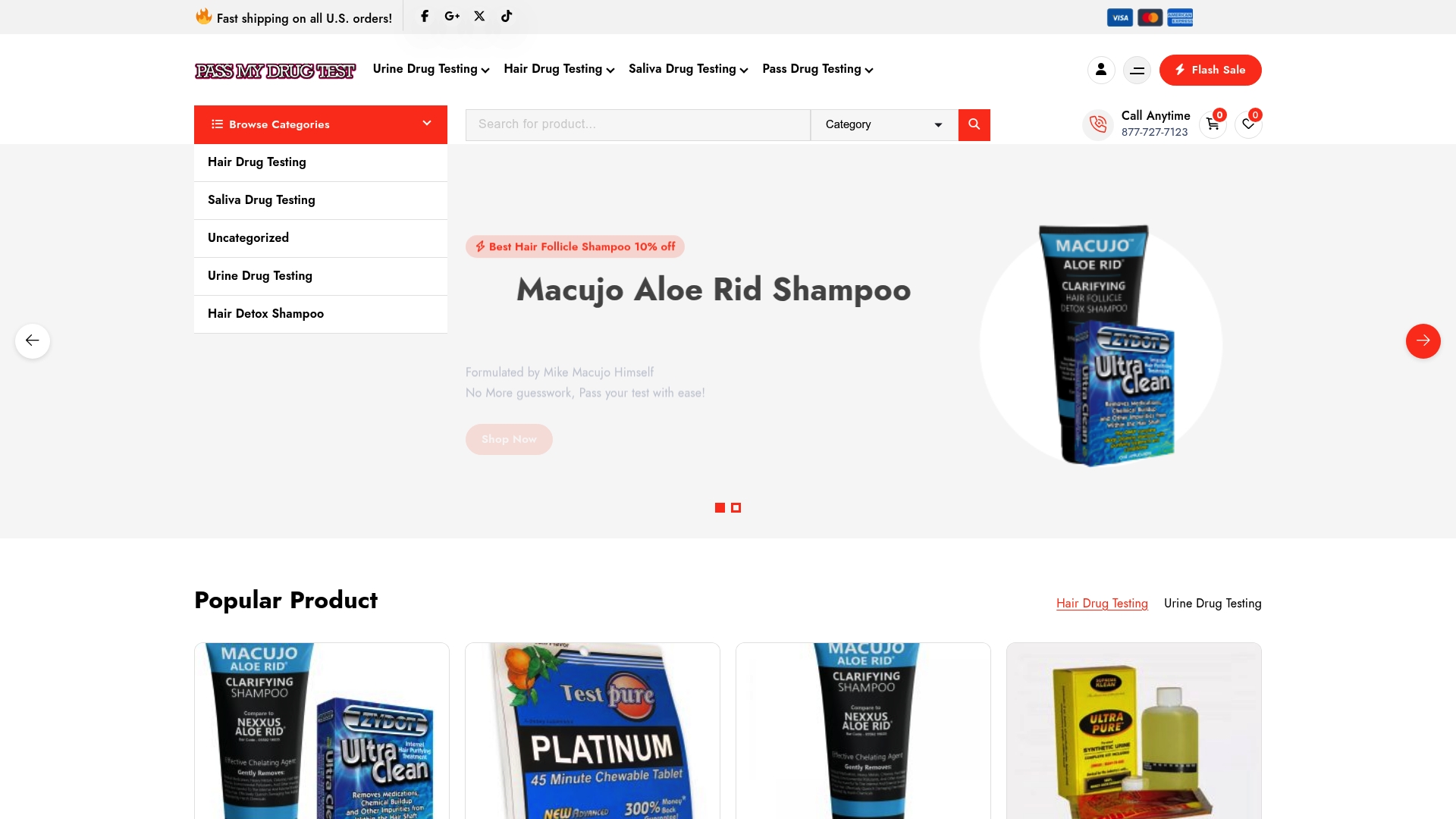
- Urine drug testing: options for people preparing for a standard urine-based screen.
- Hair drug testing: relevant for anyone facing a hair follicle test with a longer detection window.
- Hair detox shampoo: a category built specifically for hair testing scenarios.
- Saliva drug testing: for readers who need to self-check before an oral fluid screen.
Every category page includes details to help you match a product to your specific test type and timeline, and the Passmydrugtest homepage is the fastest way to browse everything in one place, with a real person available by phone if you have questions about which option fits your circumstances.
Sources
- How long does THC stay in your system? Detection and more — Medical News Today
- The marijuana detection window: determining the length of time cannabinoids will remain detectable in urine — NTCRC (Paul L. Cary)
- Drug testing resources for drug-free workplace programs — SAMHSA
- False-positive interferences and interpretation of cannabinoid concentrations — PubMed Central review
FAQ
How long does cannabis stay detectable in a urine test?
For a single use, urine tests typically detect THC for about 3 days. Moderate use around four times a week extends that to roughly 5 to 7 days, while chronic heavy use can push detection past 30 days depending on the lab’s cutoff level.
Can drinking a lot of water help me pass a urine test?
Overhydrating tends to backfire rather than help, since collection sites check creatinine and specific gravity levels specifically to catch diluted samples. A flagged dilute result often leads to a required retest rather than a clean pass.
Does exercise before a test affect the result?
Intense exercise close to a test can temporarily release stored THC from fat tissue into the bloodstream, which may raise detectable levels rather than lower them. The safer move is to avoid vigorous exercise in the hours before your appointment.
What’s the difference between a screening test and a confirmation test?
A screening test, usually an immunoassay, gives a quick preliminary result that can include false positives from unrelated substances. Any positive screen is typically confirmed using GC/MS or LC/MS, a more precise method that labs treat as the standard for verifying results.
Where can I check my own status before an official drug test?
An at-home test kit is a practical way to check your status a few days ahead of an official screening, and an online resource offers urine, hair, and saliva testing categories suited to different situations. Testing yourself first can help you set realistic expectations before the appointment that actually counts.