
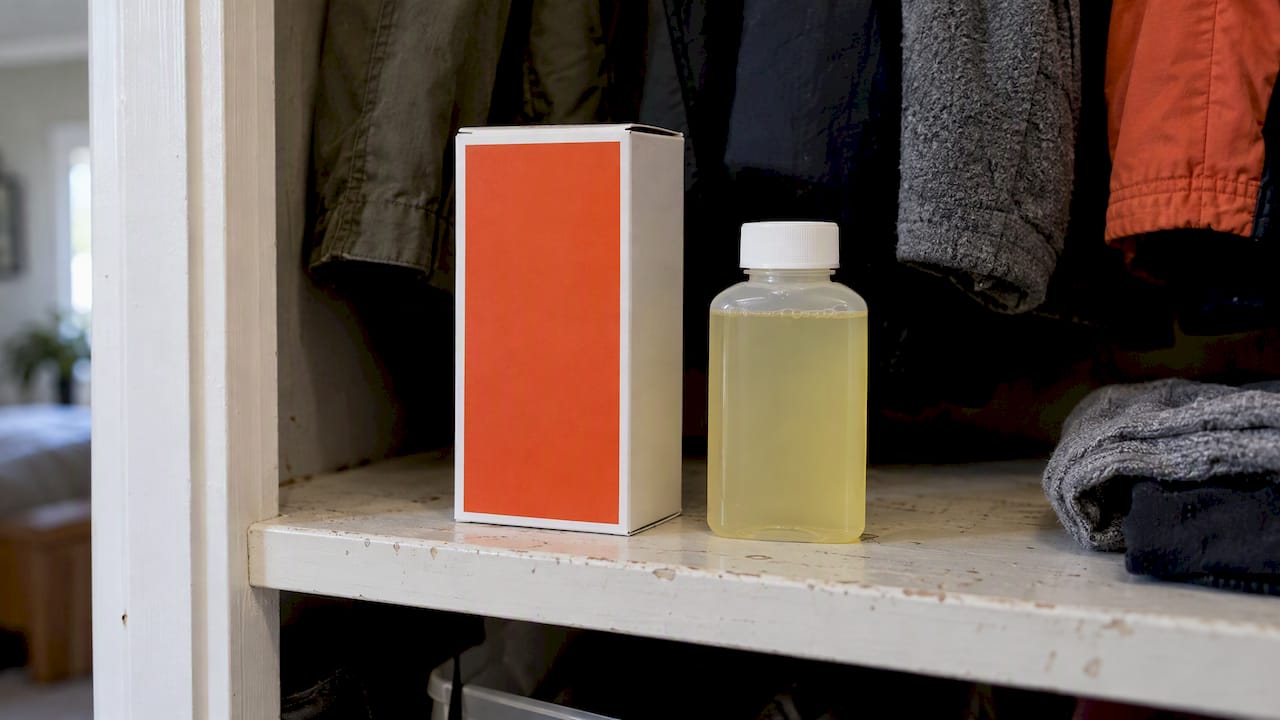
Synthetic Urine Shelf Life: How Long It Lasts and When It Fails
Sealed and stored well, most synthetic urine kits stay usable for about one to two years from manufacture. Some brands state up to three under ideal conditions. Once you open or mix it, the clock shrinks from years to hours. Heat, light and a long trip in a hot car can ruin a bottle long before the printed date.
This guide covers what the date means, what damages a kit, how to check a batch, and what a lab can do with a sample that has degraded. It also covers the legality question, because it affects whether you can buy one at all.
TL;DR
- Unopened, properly stored synthetic urine typically lasts 1 to 2 years. Two years is the common baseline, and a few brands claim up to three.
- Opened or mixed product is a different story. Plan to use it within hours, not days.
- Light and temperature swings matter more than most buyers expect. Research on clear packaging and thermal cycling found key validity markers can drop within 30 days.
- Store it in a cool, dark, dry place, and check the manufacture date and batch number the day it arrives, not the night before a test.
- Laws on selling and using synthetic urine vary by state. Check yours before you order.
Table of Contents
- What the shelf life on a kit really means
- Premixed versus powdered: which lasts longer
- What shortens the life of a sealed kit
- Signs a batch has gone bad
- How to read the date and batch number
- Opened or mixed: how long you have
- How to store a kit properly
- Why storage matters to a lab
- Is synthetic urine legal to ship and use?
- Our perspective
- Choosing a kit that suits your test
- Quick checklist before test day
- FAQ
- Sources
What the shelf life on a kit really means
A shelf life is the period the maker expects the product to stay within its formula while sealed and stored as directed. It is not a promise that the product works after you open it, and it does not cover a bottle that sat in a mailbox in July.
Real human urine starts changing minutes after it leaves the body, because bacteria convert urea to ammonia and the pH drifts upward. Synthetic urine is sterile and has no living microbes, which is why it can sit on a shelf for so long. That sterility is also why the shelf life depends on the packaging and the chemistry rather than on bacteria.
Two things are worth knowing about the numbers you see online:
- The range is wide. Sources commonly say six months to two years, and some brand pages claim three. Treat the date printed on your own box as the ceiling, not the guarantee.
- The date assumes sealed storage. Every figure quoted for years of life applies to original, unopened packaging.
Premixed versus powdered: which lasts longer
There are two main formats, and they age differently.
| Format | What it is | Typical storage life | Main weakness |
|---|---|---|---|
| Powdered | Dry components you mix with water on the day | Generally the longer-lasting format, because dry material is less reactive | Needs correct mixing and temperature on test day |
| Premixed | Ready-to-use liquid in a bottle | Commonly 1 to 2 years sealed, per brand | More exposed to heat, light and plastic permeability |
The general principle is simple: dry ingredients are more stable than a liquid solution. That is a reason many people who buy ahead of time pick powder. If you need a kit on short notice, premixed saves steps but makes storage conditions matter more.
Brand claims differ and we would not rank them on shelf life alone. The date on the specific box in your hand is what counts.
What shortens the life of a sealed kit
Heat and temperature swings
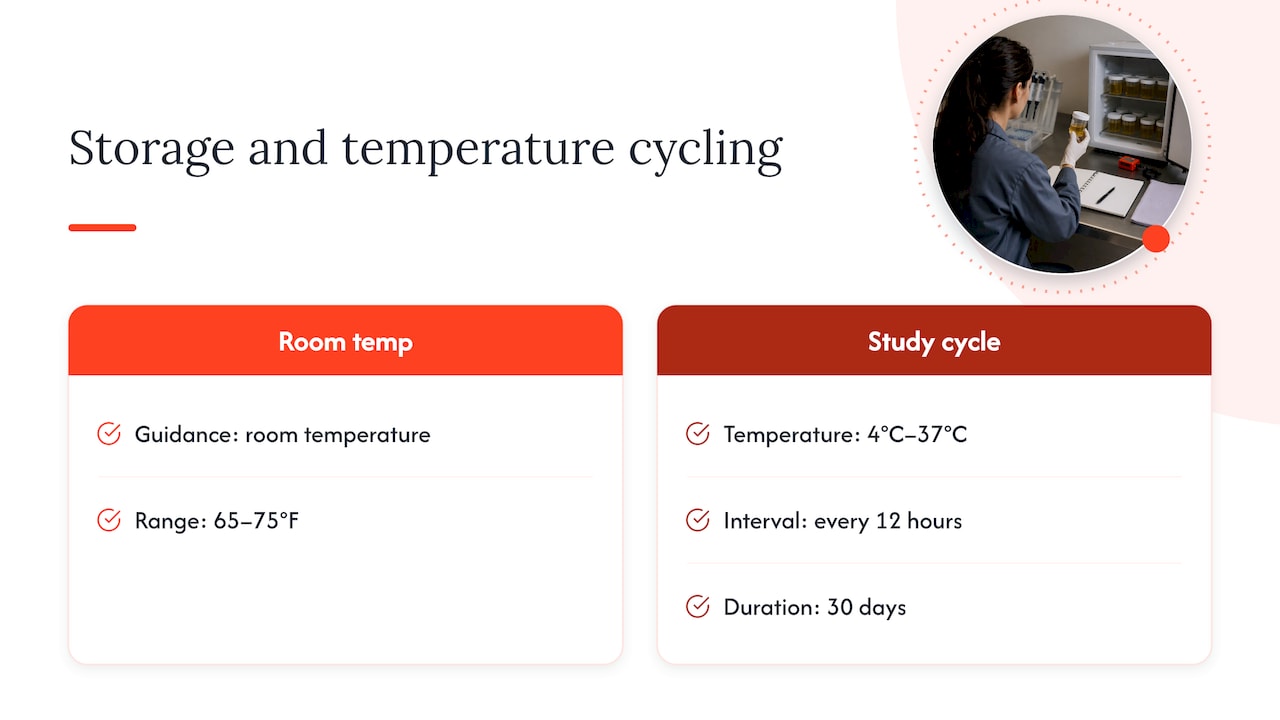
Common storage advice lands on room temperature, roughly 65 to 75°F. The bigger danger is not one warm day but repeated cycling. In a 30-day study, samples were alternated between 4°C and 37°C every 12 hours to imitate real handling. That is a refrigerator against a hot day, which is exactly what happens to a package left in a truck or on a porch.
Light
The same research reports that in clear packaging, analytes such as creatinine and uric acid can decline significantly within 30 days. Those are the markers a lab looks at to decide whether a sample looks like real urine. If your product came in a clear bottle, keep it in its box, in a drawer or closet.
Moisture and air
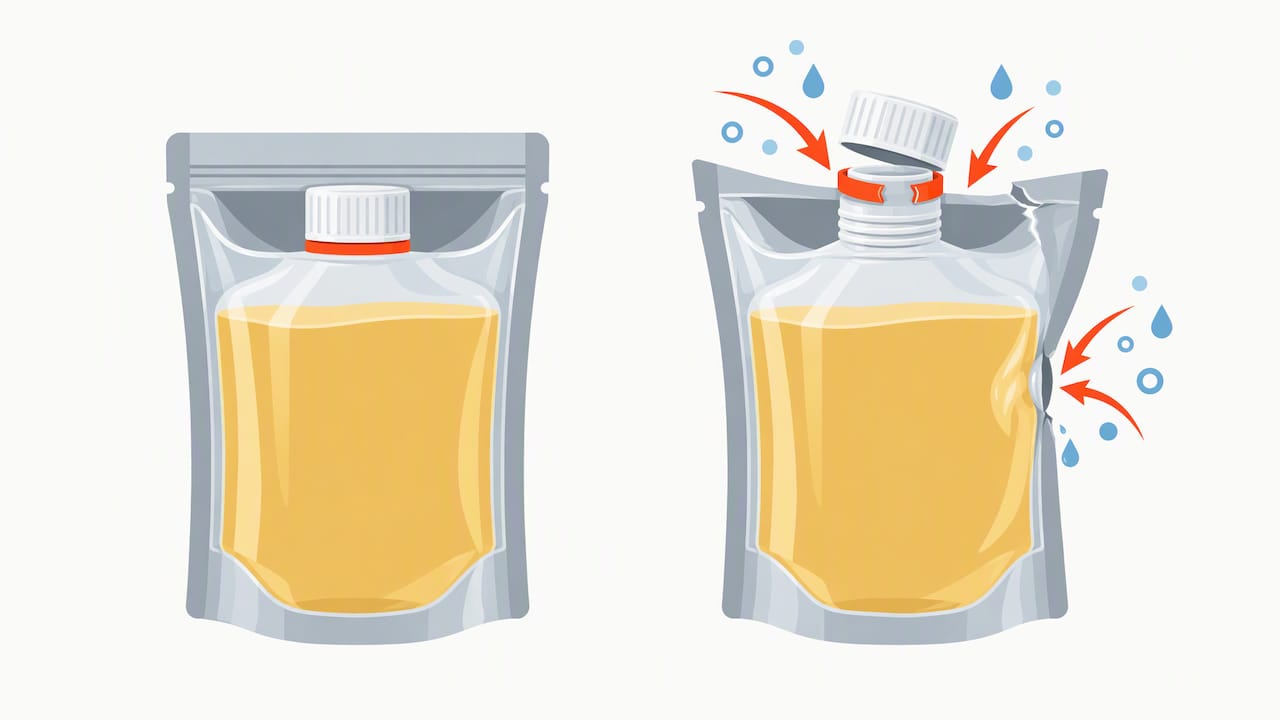
Once a seal is broken, oxygen and humidity get in. Treat any kit with a damaged seal, a bulging cap or a leaking pouch as unusable. Do not try to save it.
Time in transit
Shipping is the part you do not control. A kit that left the warehouse in good shape can bake in a delivery vehicle. That is one reason to order early enough that you can inspect it and, if necessary, replace it.
Signs a batch has gone bad
A kit that looks fine can still be off, but these are the warning signs worth checking:
- Cloudiness or particles in a liquid that should be clear and pale yellow.
- Strange smell, especially anything beyond a faint chemical odor.
- Color change, such as a darker or brownish shade.
- Foam that does not settle, or powder that clumps hard.
- A damaged, swollen or leaking container.
- A passed or unreadable date, or a batch number you cannot match.
None of these is lab-grade testing. A sample can look normal and still have drifted chemically, so the visual check only catches the obvious failures.
How to read the date and batch number
Most kits print an expiration date or a manufacture date on the box or bottle, plus a batch or lot number. Do three things when the package arrives:
- Find the date and note whether it is an expiration date or a manufacture date. If it is the manufacture date, add the stated shelf life yourself.
- Photograph the box, the date and the batch number. If something is wrong, you will want the record.
- Look at the seal, container and any included heat pad or temperature strip. A temperature strip that shows a reading far outside the stated range is your cue to replace the kit.
If the date is missing or looks tampered with, do not use it.
Opened or mixed: how long you have
Most sources agree that once opened, viability drops sharply, and experts commonly advise using it within hours rather than days. People often ask whether leftover product is fine after 24 hours. Treat it as a one-time-use product. Even if it looks the same, temperature and contamination are impossible to verify at home.
Mixed powder has the added problem of temperature. A fresh, correctly mixed sample that has cooled below the expected range is a problem on its own, whatever the shelf life of the unmixed powder.
How to store a kit properly
- Keep it sealed in its original packaging until you need it.
- Choose a cool, dark, dry spot, such as an interior closet. Avoid garages, cars, windowsills and bathrooms.
- Do not refrigerate and then warm it repeatedly. Stable room temperature beats a cycle of cold and hot.
- Keep it away from direct sunlight, even through a window.
- Do not open it to check. Opening is what starts the countdown.
- Order close enough to your test that the kit is fresh, but early enough that you can inspect it and replace it.
Why storage matters to a lab
A degraded sample is not just a less convincing sample. It can give a lab a reason to question validity.
Even real urine changes with time and temperature. A study of urine pH after collection notes that federal workplace guidelines set pH cutoffs for adulterated or invalid results, and that pH of stored urine can drift upward under warm conditions. Research on the topic also finds that pH above 9.0 can occur in natural urine through the breakdown of nitrogen compounds.
For federally regulated DOT testing, 49 CFR 40.159 describes what happens when a laboratory reports an invalid result: the MRO must handle it under a set procedure, and where the test is cancelled, a second collection under direct observation may follow. In some cases an alternate specimen such as oral fluid may be recommended.
There is also a trend in labs. A 2023 review of manipulation testing describes a focus on direct markers for synthetic urine. Labs are looking not only for additives but for what is missing, namely the natural compounds found in real urine. A SAMHSA presentation on urine biomarkers says targeted compounds show reasonable stability, though not perfect. In plain terms, a product that has been poorly stored is more likely to look wrong, and a product that is stored well can still be flagged for other reasons. We cover those in our post on what biomarkers can expose in synthetic urine and in our explainer on what the 20 mg/dL cutoff can miss.
What a lab does with samples afterward
Laboratories handling federal tests hold certain specimens in frozen storage. The SAMHSA MRO Manual says they must keep drug-positive, substituted, adulterated and invalid specimens for at least one year after reporting. So a questionable sample does not simply disappear.
Is synthetic urine legal to ship and use?
There is no single answer. Rules differ by state, and some states have passed laws that restrict selling, distributing or using synthetic urine to defeat a drug or alcohol test. Several others have bills pending. Because the details change, look up your state’s current statute or ask a licensed attorney in your state before you buy, and check whether the seller will ship to you.
A few practical points:
- A carrier shipping a product is not the same as the product being lawful where it lands. The law that matters is your state’s and, for certain testing, federal rules.
- Using a substitute sample on a federally regulated test or a court-ordered test carries consequences well beyond losing a job offer. Under DOT rules, a collection can be observed directly, which is part of why this is a high-stakes decision.
- If you are under probation, a treatment program or a safety-sensitive position, talk to your attorney or your program contact first.
Our perspective
People usually come to us at the last minute, and shelf life is almost never the question until something goes wrong. A kit that sat in a hot car for a weekend, or one a buyer opened to check and then kept for two weeks, are the stories we hear. Our advice is the same each time: treat the date as the outer limit, treat storage as the real variable, and do not leave the purchase until the night before.
The second thing we stress is realism. Synthetic urine is one of several routes people consider, and labs are getting better at spotting it. Matching your approach to the kind of test you face, whether urine, hair or saliva, matters more than any single product. That is why we pair what we sell with plain-language guides, and why our team is reachable by phone during published business hours when you are unsure which test applies to you.
— MIchael
Choosing a kit that suits your test
If you have decided to buy, look at our synthetic urine kit page and our guide to choosing a synthetic urine kit. We ship across the United States and can help you work out which product fits your situation. If you are facing a hair or saliva test instead, urine products will not help, and you can browse urine, hair and saliva options from our main store.
When it arrives, check the date, photograph the batch number and store it unopened in a cool, dark place.
Quick checklist before test day
- Date and batch number confirmed and recorded.
- Seal intact, container undamaged.
- Stored away from heat, light and moisture since delivery.
- Kit never opened ahead of time.
- You know your state’s law and the type of test you face.
- A backup plan exists in case the kit is damaged in transit.
FAQ
How long does synthetic urine last?
Unopened and stored properly, usually one to two years, with a few brands claiming up to three. Once opened or mixed, plan on hours. The date on your own box is the figure to follow.
Does synthetic urine expire?
Yes. Even sterile synthetic urine changes over time, and heat and light speed that up. Research on thermal cycling and clear packaging found validity markers can fall within 30 days under poor conditions.
Can I reuse synthetic urine after 24 hours?
We do not recommend it. Once opened or mixed, you cannot verify temperature, contamination or chemical stability. Treat each kit as single use.
Is synthetic urine legal to ship?
It depends on the state. Some states restrict selling or using it to beat a test, and the rules change, so check your state’s current law or ask an attorney before ordering.
Sources
- Synthetic Urine: How Long Does It Last? (MedShun)
- Assessment of Thermal and UV Stability of Synthetic Urine Under Chain-of-Custody Conditions (Scimetr)
- Urine pH: the Effects of Time and Temperature after Collection
- DOT 49 CFR Part 40 Section 40.159
- Advances in testing for sample manipulation in clinical and forensic toxicology, Part A: urine samples
- Use of Urine Biomarkers in Validity Testing (SAMHSA)
- Medical Review Officer Manual (SAMHSA)