

50 ng/mL Cutoff Means Secondhand Smoke Rarely Triggers a Positive Test
Short answer: under ordinary ventilated conditions, secondhand cannabis smoke is very unlikely to produce a reportable drug test positive. Extreme, unventilated “hotbox” exposure can rarely push a urine result over the line, and oral fluid tests are the most sensitive to brief mouth contamination. Federal-style urine screening uses a 50 ng/mL cutoff with a 15 ng/mL confirmation, so trace exposure rarely qualifies as “reportable.”
TL;DR:
- Secondhand cannabis smoke under ventilated conditions rarely produces a positive drug test, especially in urine tests at the standard 50 ng/mL cutoff.
- Oral fluid tests are more sensitive to mouth contamination shortly after exposure but generally clear within an hour.
- Sealed, unventilated rooms significantly increase the risk of a reportable positive, but such conditions rarely occur in everyday life.
- Confirmed positives indicate THC exposure but do not reveal the timing, source, or level of impairment.
- Practical steps include ventilating the area, timing sample collection carefully, and understanding the test type and cutoff used.
Table of Contents
- How drug tests detect cannabis and why cutoffs matter
- What peer-reviewed studies and occupational research say
- Which specimen types are most vulnerable to a passive positive
- Steps to lower your risk before a drug test
- How labs and Medical Review Officers handle a positive result
- Where this information comes from and what to read next
- A straight read on an uncertain situation
- Where to go if you need testing products or more detail
- FAQ
- Sources
How drug tests detect cannabis and why cutoffs matter
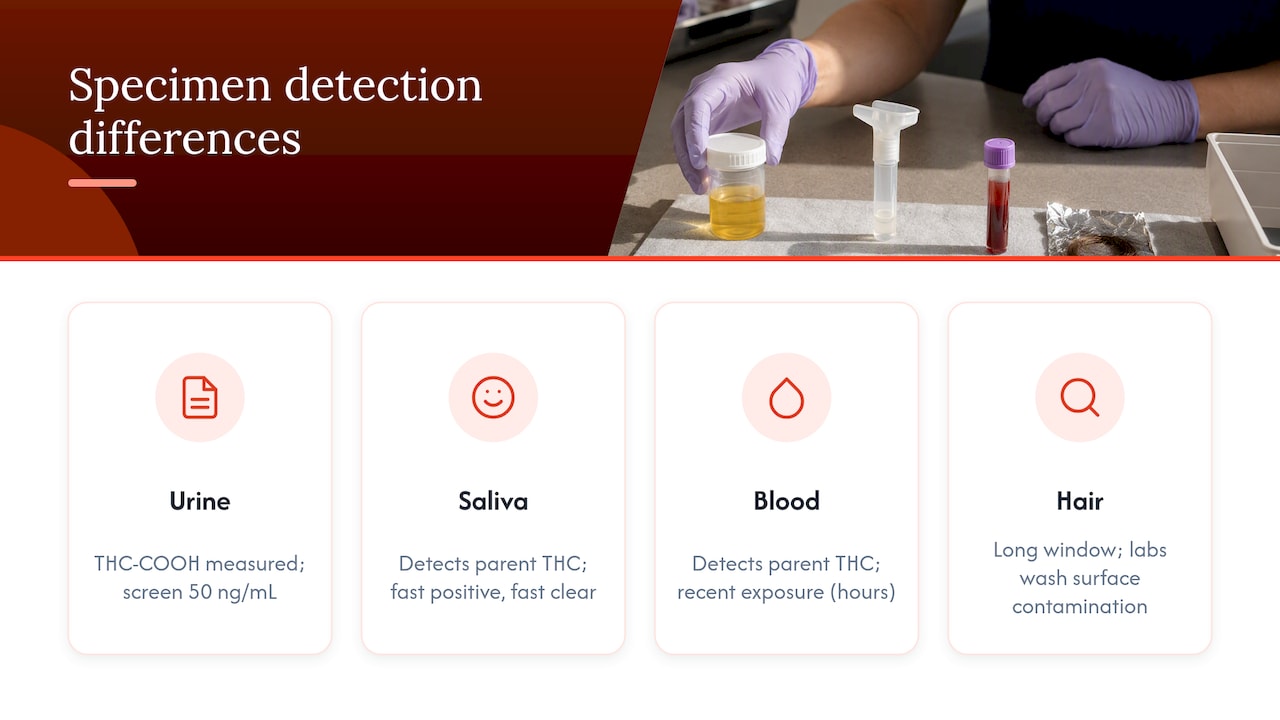
Urine tests measure THC-COOH, a metabolite your liver produces after THC enters the body, not THC itself. Federal-style workplace testing commonly screens at 50 ng/mL and confirms at 15 ng/mL, and those two numbers are the real gatekeepers. A sample has to clear both thresholds before a lab calls it positive, which is why trace passive exposure usually falls short.
Oral fluid tests work differently. They detect parent THC, often from direct mouth contamination with smoke particles rather than from anything absorbed into your bloodstream. That makes saliva testing fast to turn positive after exposure, but also fast to clear, since the contamination sits in the mouth rather than circulating through your system.
Blood tests also measure parent THC and reflect very recent exposure, typically within hours, with their own thresholds and a short detection window. They’re used more often for impairment cases than routine workplace screening.
Hair testing covers a much longer window, sometimes months, but it raises a different question: external contamination versus actual incorporation into the hair shaft. A single brief exposure to someone else’s smoke is unlikely to produce a reportable hair positive, since labs typically wash samples before testing to strip surface contamination.
Across every specimen type, remember that analytic detection and a reportable positive are not the same thing. A lab can detect trace cannabinoids far below its own cutoff and still report the sample as negative, because reporting requires both detection and confirmation at the defined threshold.
What peer-reviewed studies and occupational research say
The clearest evidence on secondhand exposure comes from controlled sealed-room experiments and real-world occupational monitoring, and the pattern is consistent: ventilation changes everything.
- A controlled study reported in the Journal of Analytical Toxicology found that nonsmoking participants in sealed, smoke-filled rooms sometimes produced urine positives, but only under heavy, unventilated conditions, and oral fluid positives (3.6 to 26.4 ng/mL) appeared briefly, 20 to 50 minutes after smoking began.
- Related findings summarized from Drug and Alcohol Dependence showed that ventilation sharply reduced or eliminated urine positives at common cutoffs, even when the same room held several active smokers.
- An occupational study of law enforcement officers working outdoor concerts, published via PMC, detected THC-COOH in some urine samples, but at trace levels below 1.0 ng/mL, far under the standard 50 ng/mL workplace threshold.
The gap between those two settings is the whole story. Sealed-chamber experiments use smoke concentrations far beyond what you’d encounter at a concert, a car ride, or a party with a window cracked open. That’s also why these findings deserve caution before you extrapolate them to your own situation: study conditions involved specific cannabis potency, room sizes, and exposure durations that rarely match everyday life. A brief walk through a cloud of smoke outdoors is not the same exposure as sitting in a closed car for an hour.
Which specimen types are most vulnerable to a passive positive
Not every test type responds to secondhand smoke the same way, and knowing which one you’re facing changes how worried you should be.
- Oral fluid carries the highest short-term risk because it picks up mouth contamination directly from smoke in the air, but those positives are transient and depend heavily on how soon the sample is collected after exposure.
- Urine reportable positives are unlikely under standard federal-style cutoffs, though extreme, unventilated exposure or a lab using a lower screening threshold (such as 20 ng/mL instead of 50 ng/mL) narrows that margin.
- Blood can show parent THC after intense exposure, but blood testing serves a different purpose than workplace urine screening and is used far less often for routine checks.
- Hair testing separates external contamination from true incorporation, and a single passive exposure rarely survives the wash step labs use before analysis.
If you know which specimen type you’re about to face, you can judge your actual risk level instead of guessing from general secondhand smoke concerns.
Steps to lower your risk before a drug test
If you’re worried about an upcoming test, a few practical moves matter more than others.
- Leave or ventilate immediately. Prolonged exposure in a closed room is the single biggest driver of measurable uptake in every study referenced above, so open a window or step outside rather than waiting it out.
- Identify the specimen type and cutoff in advance. A saliva test calls for different timing than a urine test, since mouth contamination clears faster than systemic metabolites.
- Delay oral fluid collection when possible. Mouth-level contamination from smoke typically clears within an hour, so even a short delay can matter for a saliva-based result.
- Use hydration realistically. Drinking water may dilute a urine sample’s concentration, but it will not eliminate metabolites your body has already produced from meaningful uptake, and overly dilute samples can trigger their own retest requirement.
- Document the exposure. Note the time, location, number of people smoking, and ventilation conditions, and get contact information for anyone who can confirm the setting if a Medical Review Officer needs context later.
Pro Tip: Ask the testing administrator ahead of time which cutoffs and confirmatory method they use. Knowing whether you’re facing a 50 ng/mL or 20 ng/mL urine screen, or an oral fluid versus urine collection, tells you how much caution the situation actually calls for.
How labs and Medical Review Officers handle a positive result
Workplace drug testing almost always runs in two stages: an initial immunoassay screen, followed by GC-MS or LC-MS confirmation for any sample that screens positive. Confirmation exists precisely because screening tests can be less specific, and a result only becomes official after it clears both steps.
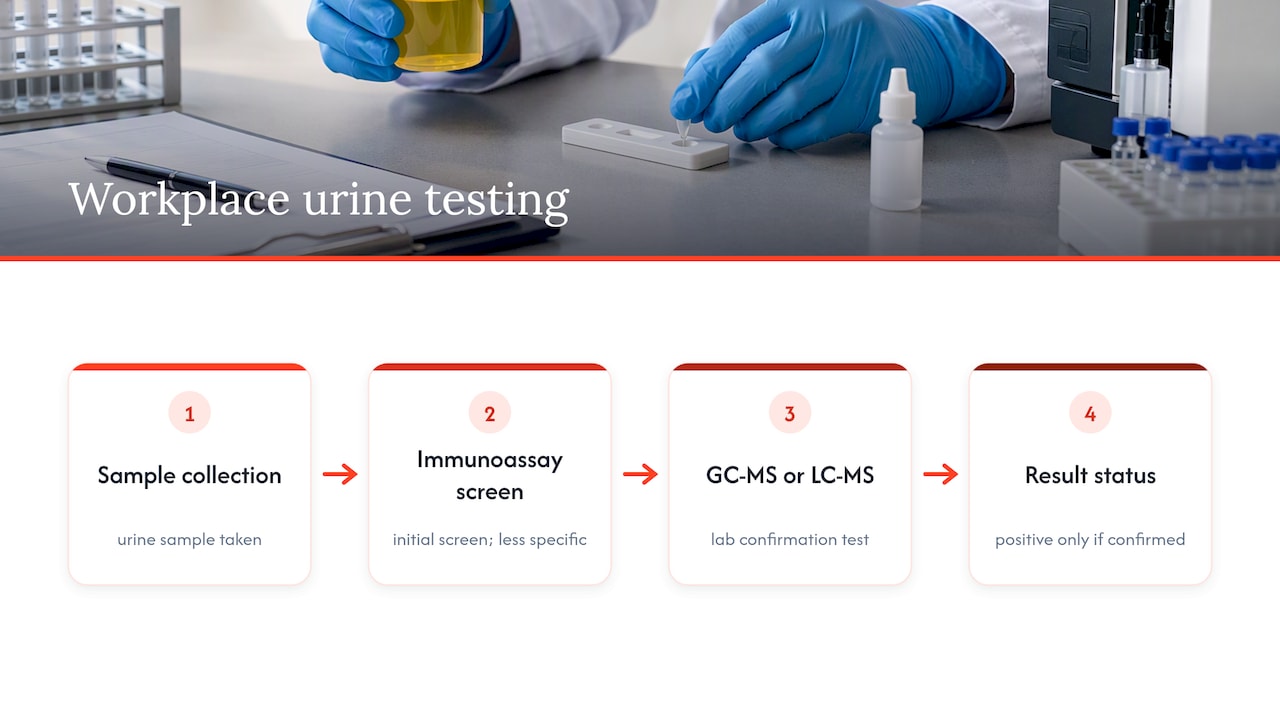
According to the ACMT’s position statement, a confirmed urine THC-COOH result indicates that THC entered the body at some point, but it cannot by itself establish timing, route of exposure, or impairment. If you test positive and believe secondhand exposure explains it, request the confirmatory report and cutoff values used, submit your documented exposure details to the MRO, and ask about split-sample retesting if your program allows it.
Where this information comes from and what to read next
We built our guides around the same cutoffs and study findings covered here. For deeper detail, see our pages on marijuana detection windows, saliva test timing, and hair testing.
A straight read on an uncertain situation
The data points one direction: ordinary, ventilated secondhand exposure almost never produces a reportable positive, and the exceptions require conditions most people never encounter. If you think exposure explains a result, document it and raise it with the testing program or MRO directly.
— MIchael
Where to go if you need testing products or more detail
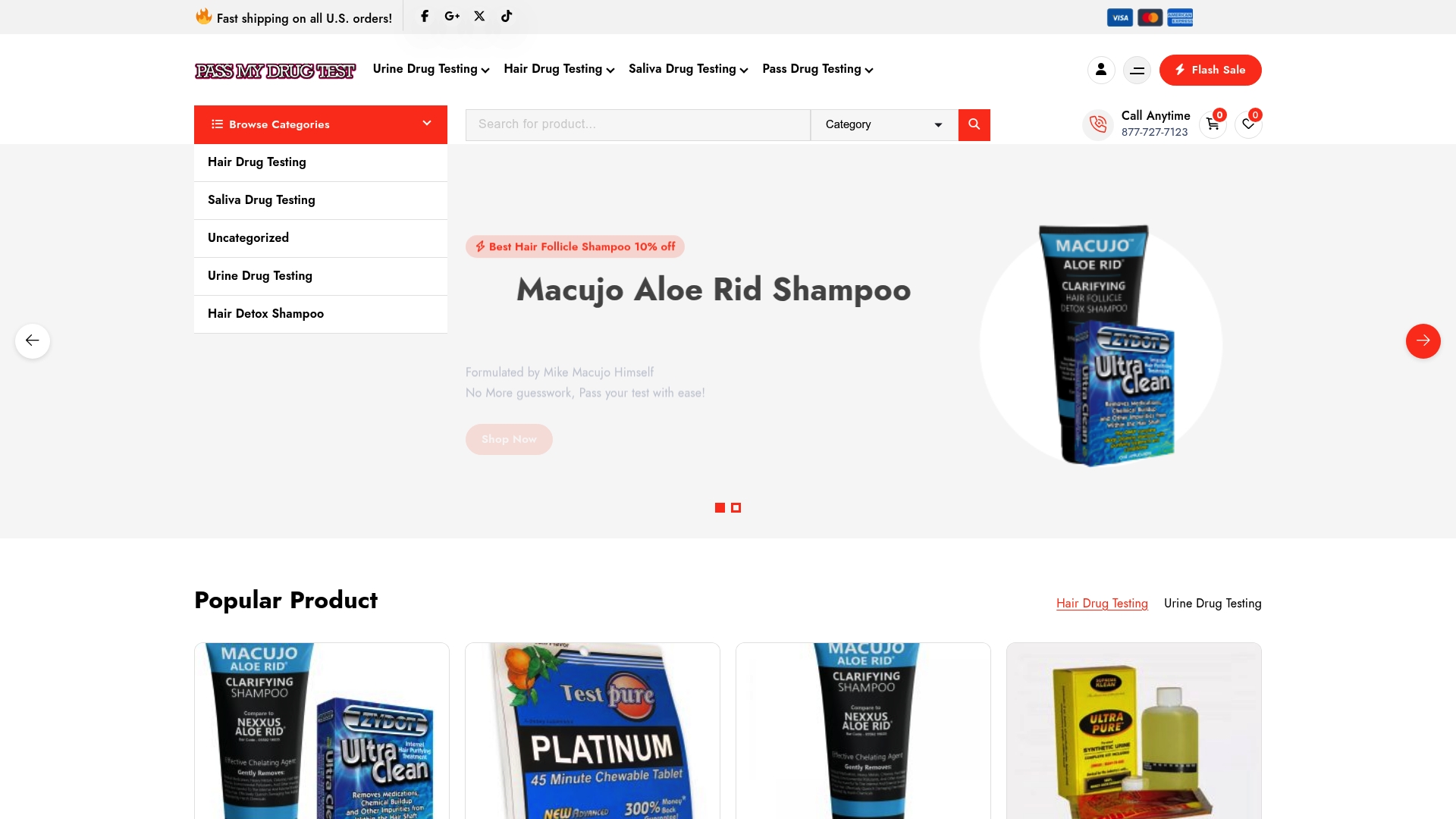
We stock urine, saliva, and hair test categories alongside our detox guides.
- Browse test-specific guides to match your exact situation before you worry.
- Check product categories if you want a private check ahead of a formal test.
- Call our support line during business hours with questions about which kit fits your scenario.
Our full catalog covers detox shampoos, at-home kits, and educational pages built around the same research cited above, with fast shipping on United States orders.
This article is general information, not a substitute for advice from a qualified doctor. Consult a qualified healthcare professional about your own circumstances before acting on anything here.
FAQ
Will you fail a drug test from secondhand smoke?
Under typical, ventilated conditions, it’s very unlikely. Controlled studies found reportable urine positives only in sealed, unventilated rooms with heavy smoke exposure, and even then only at the lower end of common screening cutoffs.
Why is my drug test positive if I haven’t smoked?
A confirmed positive means THC entered your body before the test, but it doesn’t identify the source or timing on its own, according to the ACMT. Possibilities include cross-reactivity issues, unreported exposure, or in rare cases, extreme unventilated secondhand smoke.
Can secondhand smoke make you fail a test?
Mostly no, but it depends on the specimen type and exposure intensity. Oral fluid tests are the most sensitive to brief mouth contamination from nearby smoke, while urine and hair tests require much more extreme, sustained exposure to produce a reportable result.
How long does secondhand smoke stay detectable on an oral fluid test?
Passive oral fluid positives from secondhand smoke tend to clear quickly. A controlled study found positives appeared 20 to 50 minutes after exposure began and faded within the same session once the air cleared.
Sources
- Passive oral‑fluid and urine detection study (Journal of Analytical Toxicology, 2004)
- Occupational exposure to secondhand cannabis smoke among LEOs (PMC8593821)
- ACMT position statement: Interpretation of urine for THC metabolites