
Refusing a Drug Test in the U.S. Can Cost You Your Job Same Day
Stopping use and confirming your status with a reliable at-home kit beats every shortcut on the market. Urine remains the specimen most employers request, and labs flag samples that fail temperature or creatinine checks within minutes. Some suppliers carry the kits and detox products people actually search for once they know their timeline. Picking the right one starts with knowing how much time you have left.
TL;DR:
- Drinking water normally and avoiding extreme dilution are crucial in the two-week window before testing, as overhydration triggers flags and invalid results.
- Lab detection methods include temperature and creatinine checks, making adulteration or substitution attempts unlikely to succeed with a properly flagged sample.
- Testing early in the morning with the first urine sample provides the most accurate indication of metabolite levels, especially on the test day.
- Refusing a test or leaving during collection is almost always treated as a positive or refusal, resulting in immediate disqualification or termination.
- Choosing the correct at-home test kit involves matching the cutoff level to the employer’s standard, typically 50 ng/mL for THC, and verifying results with a retest if necessary.
Table of Contents
- How Much Time Do You Have Before You Refuse a Drug Test?
- How Do Labs Catch a Tampered Drug Test?
- Timeline Checklist: What To Do Before Your Test
- Which At-Home Drug Test Should You Use?
- Myths and Shortcuts That Backfire
- Does Refusing a Drug Test Cost You the Job?
- Why We Focus on Preparation, Not Panic
- Get the Right Test Kit Before You Need It
- Sources
- FAQ
How Much Time Do You Have Before You Refuse a Drug Test?
Your options narrow fast as the test date approaches, so figure out your window first.
Weeks out gives you the most control. Stop use entirely, drink water at a normal pace (not gallons), add light cardio, and eat meals that support your metabolism instead of crash dieting, which can slow clearance.
Days out means damage control. Stop use immediately, run a multi-panel home test to see where you stand, and avoid chugging water right before your appointment since that tactic backfires more than it helps.
Same day is the tightest spot. Your realistic goal is avoiding an invalid or diluted sample, not chemically altering a valid one. Give yourself a first-morning urine test if you can, since morning urine carries the highest metabolite concentration and gives you the clearest read on where you stand.
Quick reference:
- 2+ weeks: abstain, hydrate normally, exercise, eat well.
- 3 to 7 days: abstain, test at home, skip extreme water loading.
- Same day: test first thing in the morning, avoid last-minute dilution attempts, know your specimen type ahead of time.
How Do Labs Catch a Tampered Drug Test?
Every certified lab runs a specimen validity check before it even looks for drugs. That means measuring temperature (a sample outside 90 to 100 degrees Fahrenheit within four minutes of collection raises an immediate red flag), checking creatinine levels, and testing pH. Specimen validity testing exists specifically to catch dilution, substitution, and adulteration, and it catches a lot more than people expect.
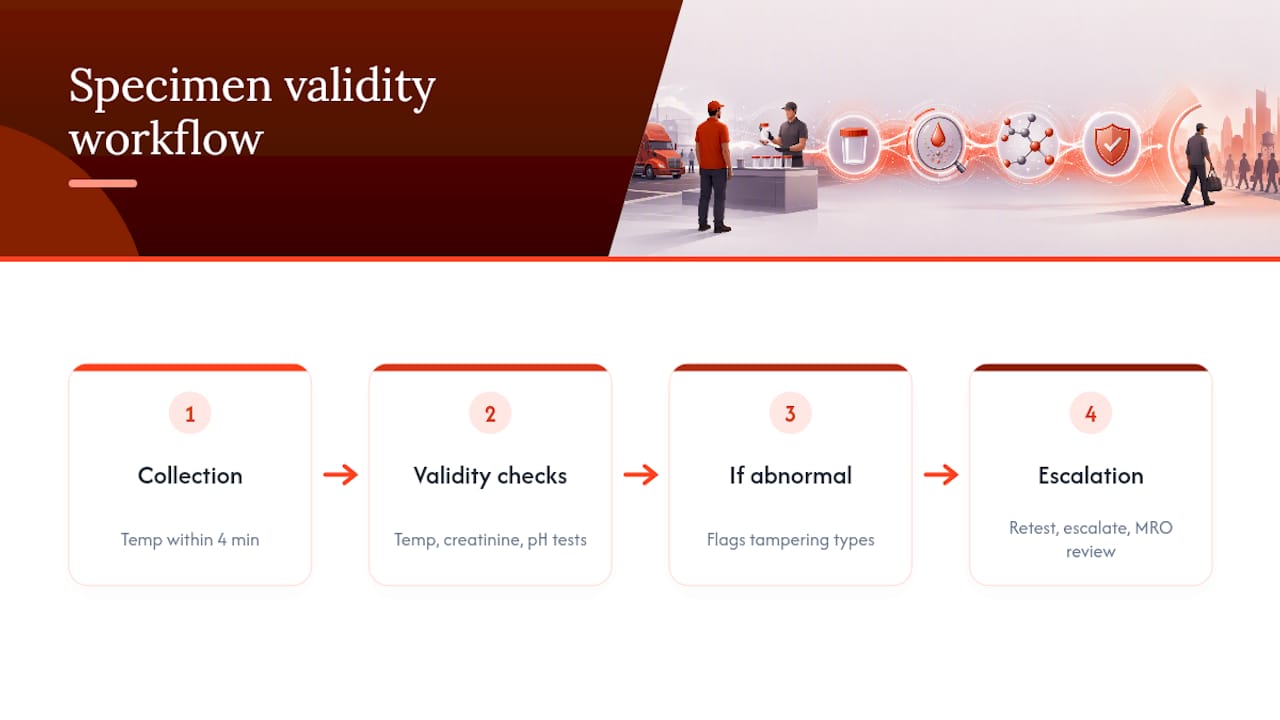
Adulterants like glutaraldehyde and nitrites had their moment years ago, but labs have since developed methods that identify most of these agents, including many synthetic urine formulas sold online. A sample that comes back abnormal doesn’t just get tossed out. It gets flagged, retested, or escalated.
In regulated U.S. workplace testing, HHS-certified laboratories and Medical Review Officers oversee the entire chain of custody, from collection through confirmatory testing with GC-MS or LC-MS/MS. An MRO reviews any nonnegative result before it reaches your employer, and federally regulated donors can request split-specimen testing if they dispute a result. That layered oversight is exactly why cheap tricks rarely survive contact with an accredited lab.
Timeline Checklist: What To Do Before Your Test
Break your prep into windows and work backward from test day.
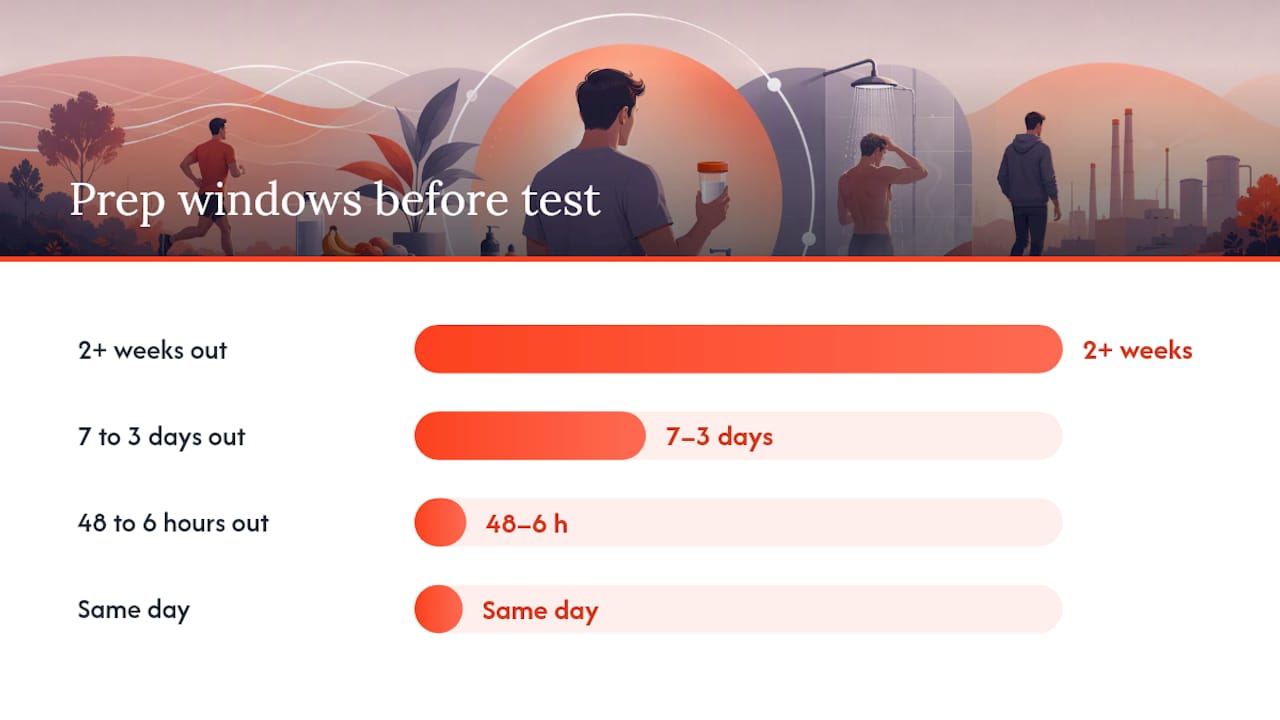
- 2+ weeks out: Stop all use now. Hydrate at a normal, steady pace rather than binging water. Add 20 to 30 minutes of moderate cardio most days, but taper off intense workouts in the final 48 hours since exercise can release stored THC into your bloodstream temporarily. Eat regular, balanced meals.
- 7 to 3 days out: Continue abstaining. Run a home multi-panel test using first-morning urine for your most concentrated, reliable reading. If it’s negative, don’t stop there.
- 48 to 6 hours out: Retest. A single clean result can be a fluke, so confirming with a second test a day or two later cuts down on false reassurance. Sleep normally. Skip alcohol and heavy exercise.
- Same day: Use a fresh, first-morning sample if your appointment timing allows it. Avoid drinking excessive water in the hours before, since dilution creates its own problems.
Pro Tip: If your home test comes back borderline or faint, treat it as a warning, not a pass. Faint lines near the cutoff threshold mean you’re close enough that lab equipment, which is more sensitive than home strips, could still flag you.
If your actual test gets flagged as dilute or invalid at the collection site, staying and cooperating with a recollection request produces a far better outcome than leaving. Walking out gets recorded as a refusal in most systems, which employers treat the same as a positive result. For readers heading into a scheduled screening, the pre-employment testing process and random testing protocols are worth reviewing so nothing at the collection site catches you off guard.
Which At-Home Drug Test Should You Use?
Most home kits mirror the panels labs use, and picking the right cutoff matters more than picking the priciest box.
- Cutoff levels: THC kits commonly come in 20, 50, and 100 ng/mL versions. Many pre-employment screens use a 50 ng/mL cutoff for THC, so a 50 ng/mL home test approximates what your actual screening will look for.
- Timing: Test first thing in the morning for your most concentrated, honest reading.
- Reading the strip: A faint line still counts as negative on most kits, but faint lines near the cutoff deserve a retest rather than blind trust.
- Check the expiration date. Expired strips give unreliable results more often than people assume.
Remember that a home kit is a screening tool, not a lab verdict. Any nonnegative screen gets confirmed with GC-MS or an equivalent method before it counts against you, and certain prescription medications can trigger a false positive on a screening test that a confirmatory test would clear. If you want a kit that matches the cutoff your employer likely uses, the marijuana test kit lineup breaks down THC-specific options by sensitivity.
Myths and Shortcuts That Backfire
Vinegar, bleach, and store-bought detox drinks circulate constantly in online forums, but most of it falls apart under lab scrutiny. Common household adulterants leave chemical signatures that validity testing is specifically designed to catch, and many detox drinks just dilute your sample instead of clearing anything.
Overhydrating is the shortcut that trips up the most people. Drinking excessive water before a test drops creatinine and specific gravity into abnormal ranges, which triggers a dilute flag and can mean an observed recollection instead of a clean pass. And if you’re tempted to walk out after a flagged sample, don’t. Leaving before a recollection or refusing to sign the paperwork is typically logged as a refusal, not a technicality, and employers treat a refusal exactly like a positive.
Does Refusing a Drug Test Cost You the Job?
In most cases, yes, and often faster than a positive result would. Employers who require pre-employment or random screening generally treat a refusal as an automatic disqualifier, since it removes their ability to document a clean result at all. For a conditional job offer, that usually means the offer gets pulled the same day HR is notified.
Current employees face similar exposure. Company drug policies typically classify refusal, including walking out during a shy bladder situation or declining a recollection request, as a policy violation equivalent to testing positive. That can trigger suspension or termination depending on the employer’s written policy, and it shows up in future background checks the same way a documented positive would.
The safer path when a sample gets flagged as dilute or invalid is staying put. Shy bladder protocols generally allow additional time and fluid intake under staff observation, and a medical evaluation is available if there’s a legitimate physiological reason you can’t produce a sample. Requesting a retest through proper channels protects you administratively in ways that leaving never will. If you’re unsure what your specific employer’s process looks like, reviewing how pre-employment screening actually unfolds before your appointment removes most of the guesswork.
Why We Focus on Preparation, Not Panic
Most of what circulates online about beating a drug test is either outdated science or wishful thinking dressed up as a home remedy. The forums pushing bleach or vinegar rarely mention that specimen validity testing has caught up with nearly all of it. What actually works is boring: know your timeline, verify your status honestly, and choose a product that matches your specific situation instead of grabbing whatever ad shows up first.
Some providers build their catalogs and educational content around that reality, pairing at-home kits with straightforward guides so people can make an informed choice instead of gambling on rumor. Fast U.S. shipping and phone support often exist because timelines are often tight and questions come up fast.
— MIchael
Get the Right Test Kit Before You Need It
Some providers work differently than the forums and secondhand advice floating around online: customers get direct sources for lab-style test kits, detox products, and instructions written for specific specimen types, not generic guesses.
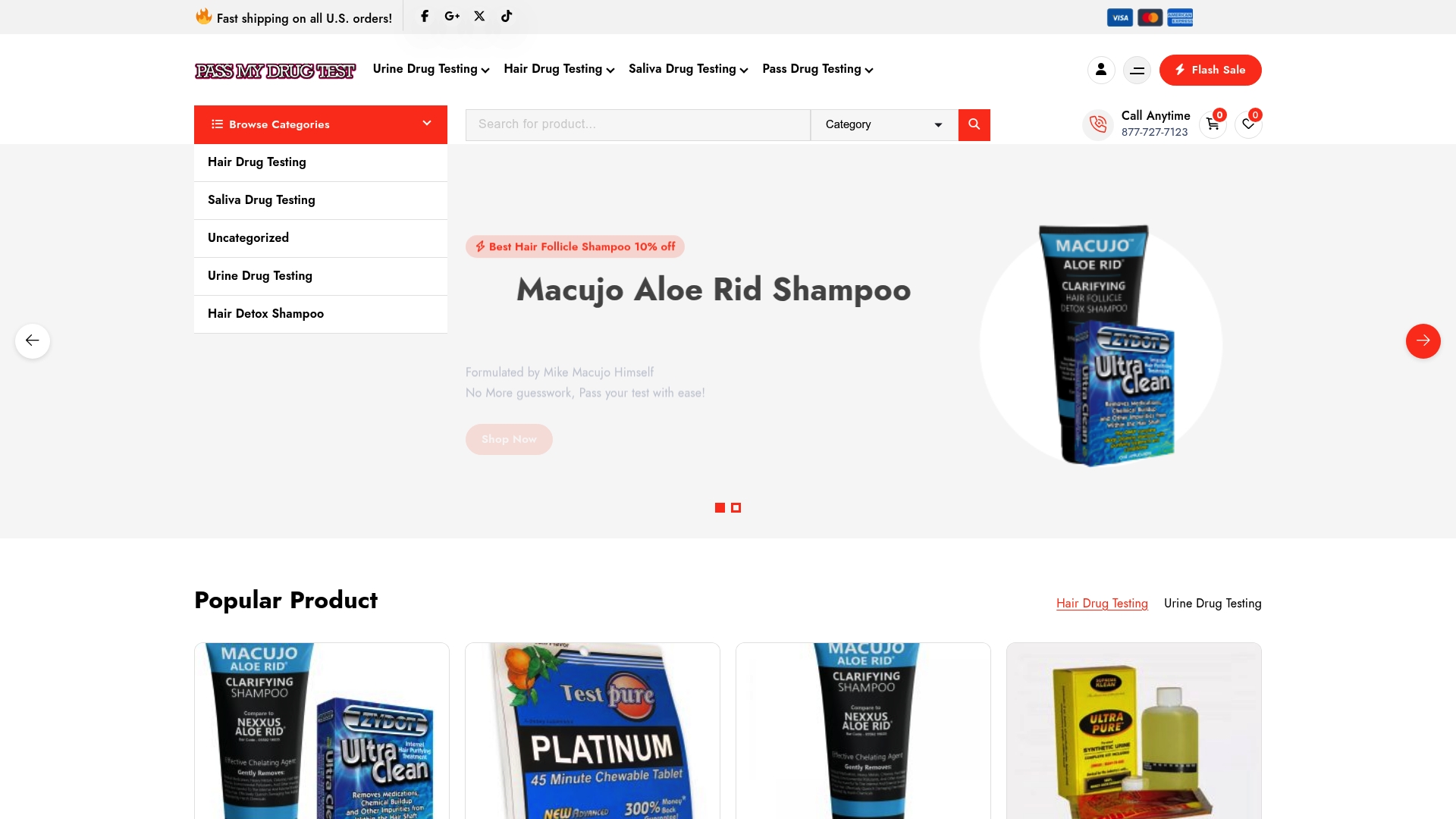
The catalog covers the categories people actually search for once they know their timeline: multi-panel at-home urine kits, THC-specific detox products, and educational pages that explain what each product does before you buy it. Picking the right one comes down to two things: match your kit’s cutoff to what your employer likely uses (50 ng/mL is common for THC), and test yourself before test day so you’re never walking in blind.
Every U.S. order ships fast, and if you’re not sure which product fits your situation, phone support is available during business hours to walk you through it. Start by browsing the drug testing products page to find the kit that matches your specimen type and timeline.
Sources
- StatPearls: Drug Testing
- SAMHSA: Drug testing resources
- HireRight: The life cycle of a U.S. drug test — part 1
FAQ
Can You Refuse a Drug Test as a Job Applicant?
You can decline, but most employers treat refusal as grounds to withdraw a conditional job offer immediately, the same as a positive result.
What Counts as Refusing a Drug Test at the Collection Site?
Leaving before providing a valid sample, refusing to sign required paperwork, or declining a requested recollection are typically documented as refusal rather than a neutral outcome.
Are There Legal Ways to Delay or Reschedule a Drug Test?
Some employers allow rescheduling for documented medical reasons or shy bladder situations, which usually permit extra time and fluids under observation before it’s treated as a refusal.
How Accurate Are At-Home Drug Tests Compared to Lab Tests?
Home kits give a reliable screening baseline when used correctly, but any nonnegative result still requires lab confirmation through GC-MS or LC-MS/MS before it’s considered final.
Can Diluted Urine Get Flagged the Same as Refusing a Test?
Yes. A sample with abnormally low creatinine or specific gravity gets flagged as dilute, and depending on your employer’s policy, it can lead to an observed recollection rather than an automatic pass.