
THC Users Facing Workplace Tests: Why Detox Drink Ingredients Fail
Detox drink ingredients do not reliably clear THC or other drug metabolites from your body, and no peer-reviewed evidence supports the claim that they do. Most formulas work by diluting urine and adding B vitamins plus creatine to disguise that dilution, not by breaking down stored drug compounds. If you’re facing a screening soon, the detection windows matter more than anything in a bottle, and product and testing resources can help you plan around them.
TL;DR:
- Detox drinks only temporarily dilute urine by increasing fluid intake and masking agents, not by removing THC stored in fat tissue.
- They rely on ingredients like B vitamins, creatine, and electrolytes to disguise dilution, which labs actively detect through validity testing.
- The short effective window of 3 to 5 hours makes timing critical; testing outside this window typically renders the drinks ineffective.
- Factors such as low creatinine levels and specific gravity in urine can trigger suspicion and lead to sample rejection or retesting.
- The safest strategy for passing a drug test remains abstinence for the necessary period, often 30 days or more for heavy THC users.
Table of Contents
- What’s Actually Inside a Detox Drink
- How Detox Drinks Actually Change a Urine Sample
- What Labs Measure to Catch Dilution and Tampering
- The Real Health and Legal Risks of Detox Tricks
- What Actually Works When You’re Facing a Test
- Why We Push Evidence Over Wishful Thinking
- Where Passmydrugtest Fits Into Your Plan
- Sources
- FAQ
What’s Actually Inside a Detox Drink
Read the label on any commercial detox drink and you’ll find a familiar cast of characters, each doing a specific, narrow job rather than anything resembling actual detoxification.
- B vitamins (riboflavin/B2, B12): restore the yellow color diluted urine loses, so a sample doesn’t look suspiciously clear to the naked eye.
- Creatine or creatine monohydrate: included because labs measure creatinine concentration to catch dilution, and this ingredient tries to push that number back toward a normal range.
- Electrolytes and salts (potassium, sodium): aimed at nudging specific gravity, the density measurement labs use alongside creatinine.
- Herbal extracts and mild diuretics (dandelion root, green tea extract): marketed as “cleansing” agents, but their real effect is increasing urine output, not extracting metabolites from fat tissue.
Products in this category are sold as dietary supplements, which means they face no premarket requirement to prove they actually work. That regulatory gap is worth sitting with for a second: a company can sell a 16 to 32 ounce bottle claiming a 3 to 5 hour effective window without ever demonstrating it clears anything.
Here’s the catch that undoes the whole strategy: THC is fat-soluble. It doesn’t float around in your bloodstream waiting to be flushed out with extra water. It gets stored in fatty tissue and released back into circulation gradually over days or weeks, which is exactly why no beverage, however loaded with vitamins, has been shown to eliminate it on demand.
How Detox Drinks Actually Change a Urine Sample
The mechanism is simpler than the marketing makes it sound. You drink a large volume of fluid, often with the bottle plus extra water the instructions tell you to add, and your body produces more dilute urine over the next few hours. Metabolite concentration drops at the moment you void, not because the drug is gone, but because it’s spread across more fluid. That’s dilution, and it’s the entire mechanism.
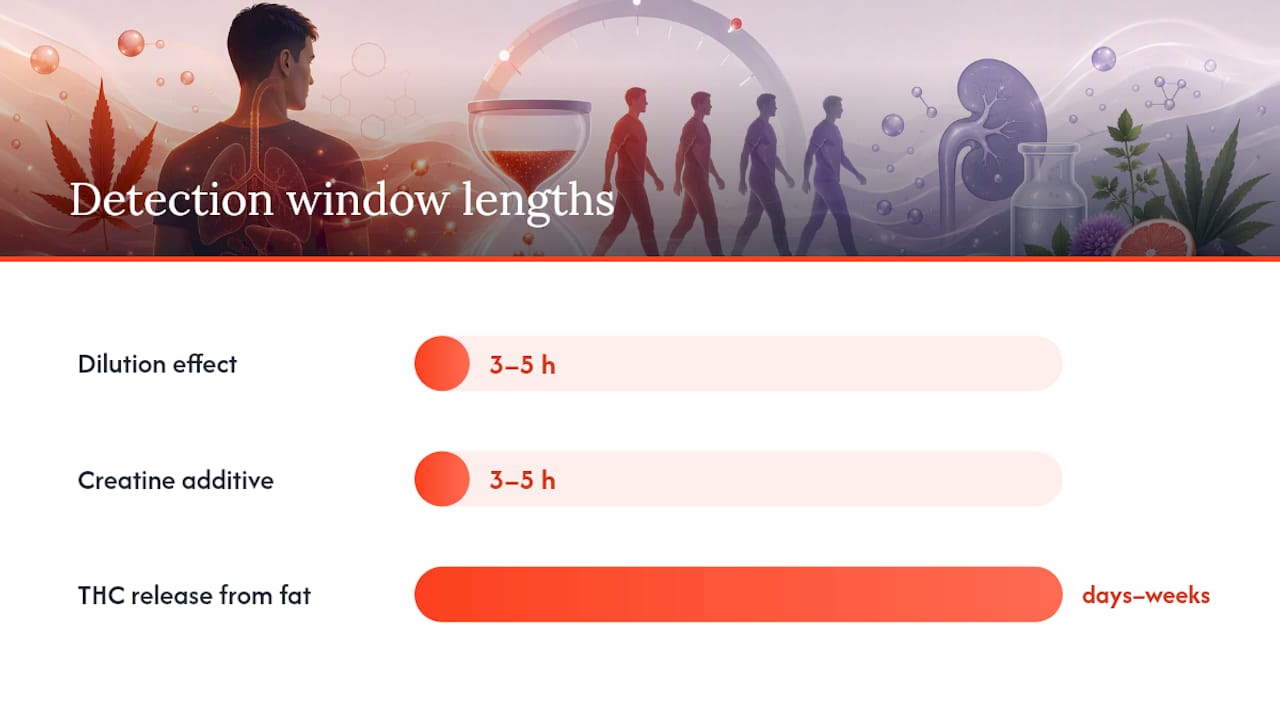
Creatine and B vitamins exist to cover for that dilution. Labs check creatinine levels and urine color specifically because a flood of water washes both out to abnormal levels, so these additives try to nudge the numbers and the appearance back toward normal before anyone notices.
Timing is where most people get burned. Products advertise a 3 to 5 hour window, meaning the dilution effect is temporary and narrow. Test too early or too late, and you’ve paid for a bottle of colored water with nothing to show for it.
| Factor | What it does | Duration/limit |
|---|---|---|
| Fluid dilution | Lowers metabolite concentration in voided urine | Effect claimed for 3 to 5 hours |
| Creatine additive | Attempts to normalize creatinine reading | Tied to same short window |
| B vitamins | Restores yellow urine color | Cosmetic only, no metabolite effect |
| THC in fat stores | Continues releasing into blood over time | Days to weeks, unaffected by drink |
What Labs Measure to Catch Dilution and Tampering
Laboratories don’t just run the drug panel. Every specimen goes through validity testing that checks creatinine, specific gravity, pH, and temperature before the actual drug screen even happens, and the thresholds are specific.
- A sample is classified dilute when creatinine falls within a low range alongside a specific gravity in a narrow low range.
- A sample is classified substituted, a far more serious finding, when creatinine drops below a very low threshold or specific gravity sits at or below a very low level.
- Labs also screen for oxidizing adulterants like nitrite and bleach residue, often using on-site test strips backed by confirmatory chromatography when a strip flags something unusual.
That low-creatinine, low-specific-gravity, normal-color combination is exactly the signature validity testing was designed to catch, according to American Screening Corp’s breakdown of what labs actually see. A dilute result on federal or DOT-regulated programs frequently triggers a mandatory recollection under direct observation, meaning the privacy you were trying to protect disappears entirely. Detection methods for manipulated samples keep improving; recent forensic toxicology reviews document better adulterant strip sensitivity and wider chromatographic confirmation, closing gaps that older detox strategies used to exploit. You can read more on how creatinine checks expose detox drinks if you want the lab side in more depth.
The Real Health and Legal Risks of Detox Tricks
Some people skip the bottled products and go straight to folk remedies, and this is where things get genuinely dangerous rather than just ineffective.
- Water loading (drinking excessive amounts of water in a short window) has caused hyponatremia, a dangerous drop in blood sodium that can trigger seizures.
- High-dose niacin, taken on the mistaken belief it burns off THC faster, has been linked to liver injury and hospitalization.
- Vinegar or other acidic ingestion “cleanses” can damage tooth enamel and irritate the digestive tract for no measurable testing benefit.
- Unregulated detox supplements carry contamination risk and can interact unpredictably with prescription medications.
- On the legal side, a dilute, substituted, or adulterated result often carries the same consequence as a positive or a refusal under many workplace and federal testing programs, which means recollection, observed collection, or disciplinary action.
What Actually Works When You’re Facing a Test
Abstinence with enough lead time is the only method with real reliability behind it. Heavy, daily THC users may need 30 days or more to clear metabolites, and detection windows vary widely by use pattern, so check your specific timeline rather than guessing.
If the test is coming up fast, here’s a realistic sequence:
- Test yourself first. A home test kit tells you where you actually stand instead of leaving you to guess.
- Skip the folk remedies. Water loading, niacin megadosing, and household adulterants carry real medical risk and rarely fool modern lab workflows.
- Understand what a dilute result triggers at your specific workplace or program before you do anything drastic to your fluid intake.
- Hydrate normally, not aggressively, in the days beforehand.
- If you have a legitimate medical explanation for a substance on the panel, have documentation ready.
Pro Tip: If you’re on a tight timeline and unsure where you stand, a home test kit the night before beats any bottled product. It gives you a real answer instead of a guess, and it costs less than most detox drinks anyway.
For a fuller look at what detox cleanses can and can’t realistically do, this breakdown of drug test detox cleanses covers the tradeoffs in more detail.
Why We Push Evidence Over Wishful Thinking
People want a shortcut, and the detox drink industry is built entirely on that want. Nobody sets out to research urine chemistry for fun. They’re staring down a test in 48 hours and a bottle promising a clean result feels like the only move on the board.
The problem is that wanting a shortcut to exist doesn’t make lab chemistry cooperate. Specimen validity testing wasn’t designed as an afterthought. It exists specifically because dilution and masking agents are common enough that labs had to build a system to catch them, and that system has only gotten sharper. Some marketplaces and information hubs exist because this space is full of confident marketing copy and thin science, and someone needs to say plainly what the ingredient list can and can’t do.
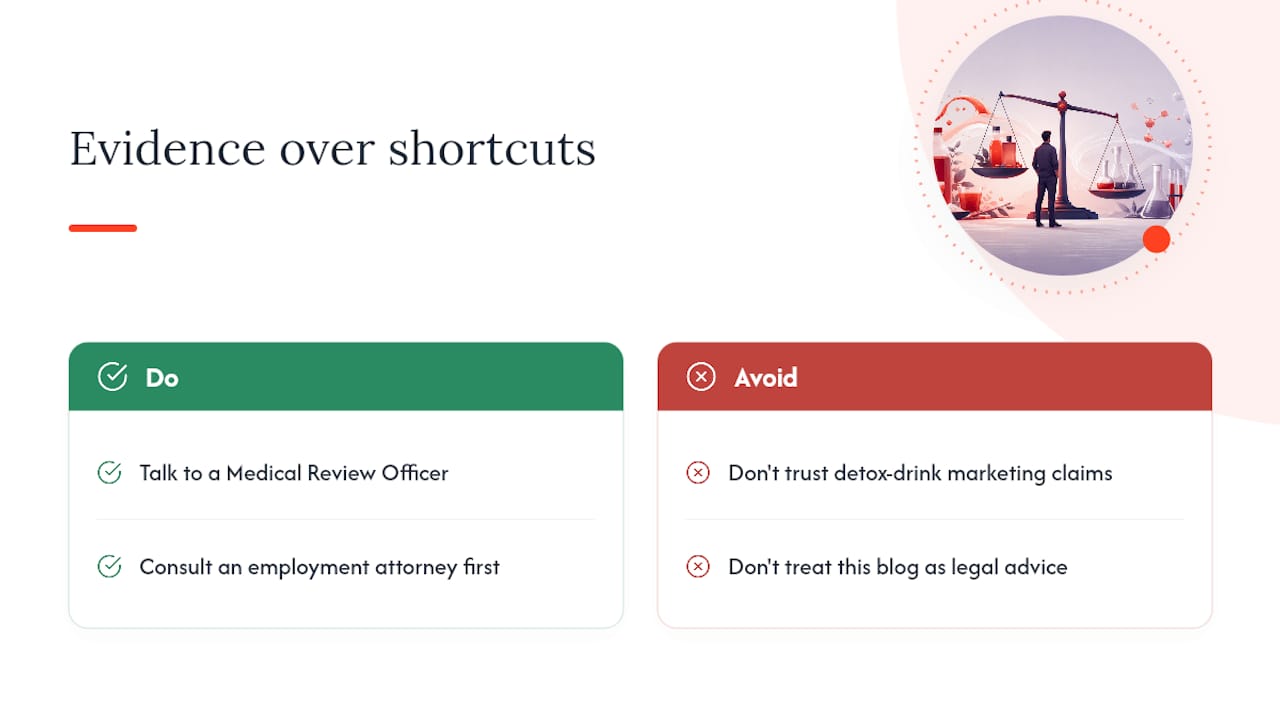
None of this is legal advice. If a flagged result threatens your job or a legal matter, talk to your Medical Review Officer or an attorney who handles employment law before you make any decision based on a blog post.
— MIchael
Where Passmydrugtest Fits Into Your Plan
If a bottled drink can’t reliably fix a dilution problem, the smarter move is knowing where you stand before test day, not scrambling after. Some companies sell home test kits, detox capsules, detox drinks, and synthetic urine kits side by side with straight information about what each option realistically does, so you’re not relying on a single product’s marketing claims to make your decision.
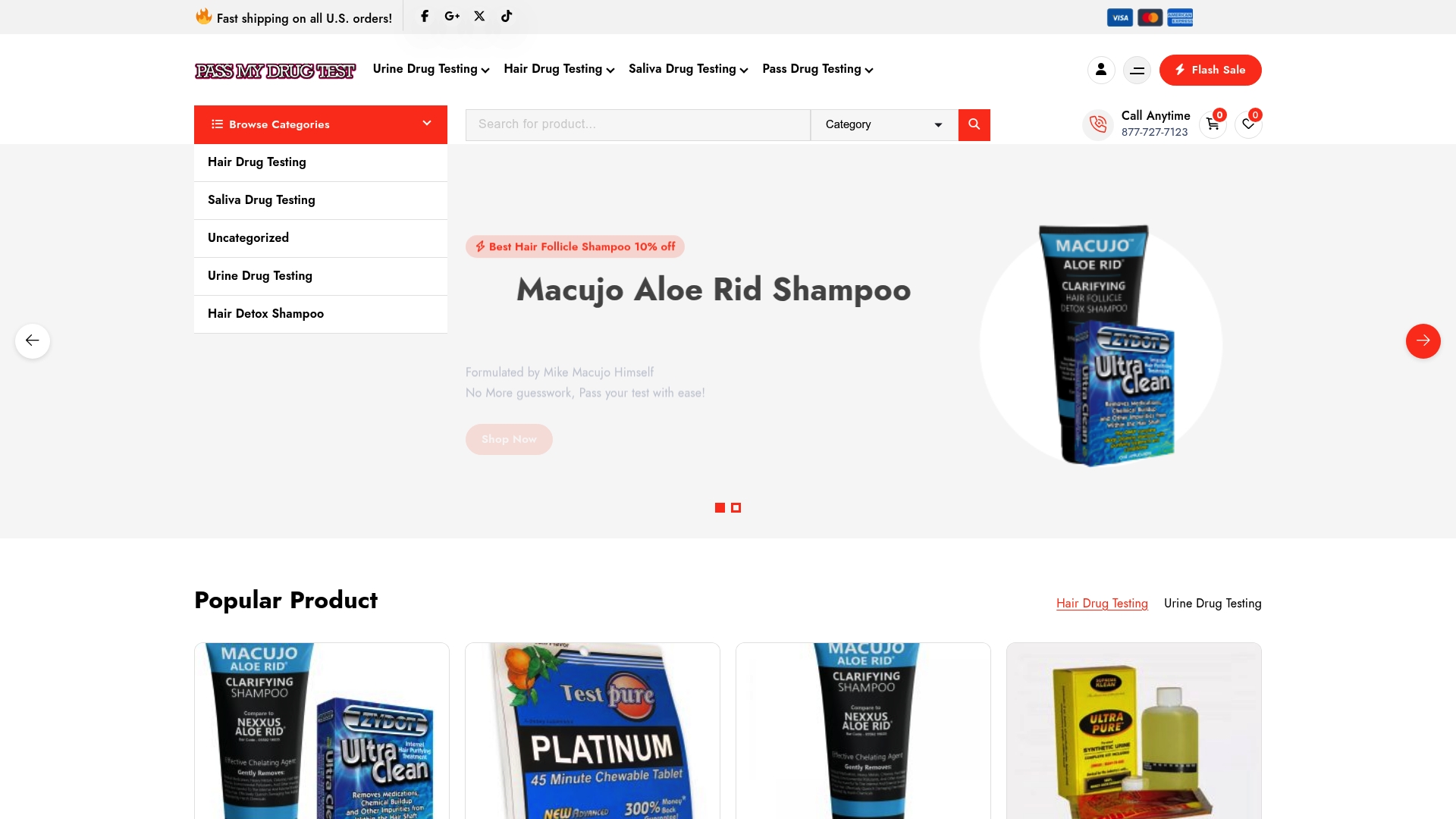
Start with a home drug test kit to find out your actual status before spending money on anything else. If you’re weighing whether a detox product fits your timeline, browse the detox products category for options and read the specifics before you buy, and reach out to customer support during business hours if you have questions about a specific product or scenario. These products are intended for lawful, informational use, and none of them replace the reliability of abstinence when time allows for it.
Sources
- Drug Detox Drinks and Kits: Risks, Facts and Safer Options
- Advances in testing for sample manipulation in clinical and forensic toxicology – Part A: urine samples
- What Can You Drink to Pass a Drug Test: Risks and Facts – LegalClarity
This article is general information, not a substitute for advice from a qualified lawyer. Consult a qualified legal professional about your own circumstances before acting on anything here.
FAQ
Do Detox Drinks Actually Remove THC From Your System?
No. They dilute urine temporarily and use B vitamins and creatine to mask that dilution, but they don’t remove THC stored in fat tissue.
What Creatinine Level Counts as Dilute on a Drug Test?
A specimen is classified dilute when creatinine falls between 2 and 20 mg/dL along with a specific gravity of 1.0010 to 1.0030.
Can a Dilute Drug Test Result Get You in Trouble?
Yes. Many workplace and federal programs treat a dilute or substituted result the same as a refusal, often requiring a directly observed recollection.
How Long Does a Detox Drink’s Effect Actually Last?
Most products claim a window of 3 to 5 hours, meaning timing your test outside that range defeats the purpose entirely.
Is Abstinence Really the Only Reliable Option?
Abstinence with adequate lead time remains the most reliable method, though the exact timeline depends heavily on frequency of use and body composition.