
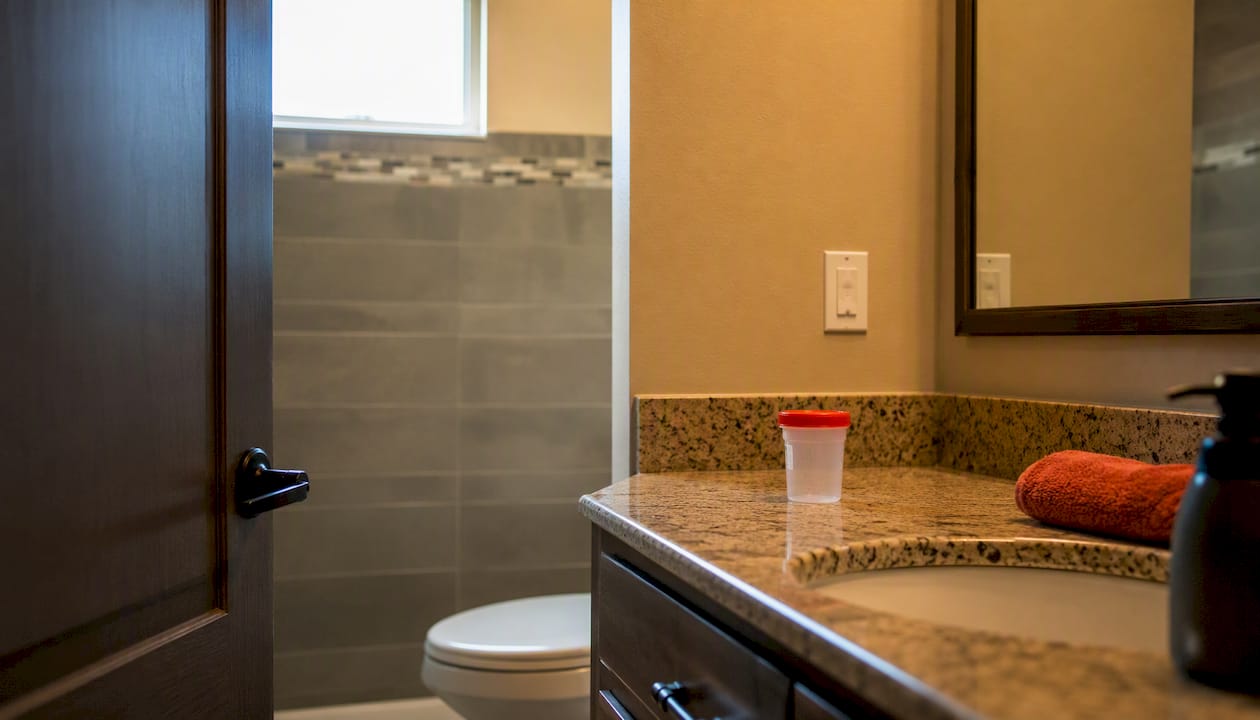
Observed Drug Test: What to Expect and How to Prepare
An observed drug test is a urine collection where a same-gender observer watches the specimen leave your body and enter the container, with no opportunity to substitute or adulterate the sample. The single best thing you can do is comply fully, document everything, and follow every instruction the collector gives you. Resistance or delay gets logged as a refusal, which carries the same consequences as a positive result.
Two things to do the moment you arrive:
- Present a valid government-issued photo ID.
- Disclose any prescription medications to the collector before the collection begins.
Pro Tip: Ask to see the collector’s credentials and calmly request the stated reason for observation before the procedure starts. This is your right, it takes thirty seconds, and it creates a record if anything goes wrong later.
Key Takeaways
A directly observed urine collection is designed to prevent tampering, and compliance combined with honest MRO engagement preserves more options than any substitution or adulterant attempt.
| Point | Details |
|---|---|
| Comply and document | Follow every collector instruction; a refusal carries the same consequences as a confirmed positive. |
| Bring ID and prescriptions | Government photo ID is required; prescription documentation protects you at MRO review. |
| Tampering is high-risk | Labs use creatinine, specific gravity, oxidant screens, and biomarker panels; direct observation blocks substitution. |
| Know your regulatory context | DOT rules govern safety-sensitive roles; non-DOT testing follows state law and employer policy. |
| Passmydrugtest | Offers at-home test kits, detox products, and educational guides to help U.S. test-takers prepare responsibly. |
Table of Contents
- What happens during an observed drug test, step by step
- What to bring and do before your observed urine drug test
- How collectors and labs detect tampering attempts
- What are your legal rights during an observed collection?
- What happens after a positive result or a refusal
- Safe and lawful preparation options before your test
- What I think most people get wrong about observed testing
- Passmydrugtest has the products and guides you need
- Sources
What happens during an observed drug test, step by step
The process is more structured than most people expect. Here is the sequence from check-in to leaving the facility, based on standardized collection requirements at major testing facilities:
- Check-in and ID verification. You present your photo ID. The collector confirms your identity and records it on the Federal Custody and Control Form (CCF).
- Instructions and site controls. The collector explains the procedure. Per SAMHSA collection guidelines, disinfectant dispensers are removed, toilet tanks are secured, and water access is blocked to reduce tampering opportunities.
- Same-gender observer enters. A same-gender observer accompanies you. Under DOT’s 49 CFR Part 40, the observer must directly watch urine leave your body and enter the container. No mirrors, no video feeds.
- Physical inspection. You empty your pockets, remove outer garments, and leave personal items outside the collection area.
- Observed urination. You provide the specimen while the observer watches. Minimum volume is typically sufficient to meet standard collection requirements.
- Handoff and temperature check. The collector checks temperature (90–100°F) within four minutes of collection.
- Sealing and CCF signatures. You watch the collector seal the specimen, apply the tamper-evident label, and sign the CCF. You sign as well. Keep your copy.
Refusal behaviors to avoid: Leaving the collection site before the process is complete, blocking the observer’s line of sight, refusing to remove outer garments, or failing to provide a specimen within the allotted time are all treated as refusals. A refusal is reported to your employer or the MRO exactly as a positive would be.
Most on-site collections take 20–40 minutes. If you cannot produce a specimen immediately, collectors typically allow up to three hours and may permit you to drink water (up to 40 oz) during that window. Beyond three hours, the event is usually reported as a refusal.
What to bring and do before your observed urine drug test
Preparation before you walk in reduces the chance of an avoidable complication. Quest Diagnostics and other major facilities have consistent requirements.
- Government-issued photo ID (driver’s license, passport, or state ID).
- Prescription documentation for any medication that could trigger a screen, including the pharmacy label or a letter from your prescribing physician.
- Appropriate clothing. Avoid baggy layers or items that could raise suspicion and prompt additional scrutiny.
- Appointment confirmation and employer contact info in case there is a scheduling discrepancy.
- Avoid excessive fluids in the two hours before your test. Drinking a normal amount of water is fine.
Logistics matter too. Arrive on time. A late arrival that delays the collection can be interpreted as avoidance. If you have childcare or transportation needs, arrange them in advance so you are not rushed.
Pro Tip: “Well hydrated” means you have had a normal amount of water that day. Creatinine below 2 mg/dL flags a specimen as substituted; creatinine between 2 and 20 mg/dL flags it as dilute. Either result can trigger a retest or a refusal. Drink normally, not aggressively.
How collectors and labs detect tampering attempts
People try four main approaches: in vivo dilution (drinking large amounts of water), in vitro dilution (adding water to the cup), chemical adulterants, and substitution with synthetic or someone else’s urine. Each has a detection pathway.
- Dilution is caught by creatinine and specific gravity. Low creatinine or specific gravity outside the 1.003–1.030 range flags the specimen.
- Chemical adulterants such as bleach, vinegar, or nitrite-based products alter pH or trigger oxidant screens. A peer-reviewed study found that an iodate-based adulterant reduced THC-COOH by roughly 65%, but the same adulterant triggered oxidant screens that labs routinely run.
- Substitution is the hardest to catch chemically, which is exactly why direct observation exists. Research on commercial synthetic urine found several products could pass immunoassay screening and specimen validity testing in controlled challenges. The authors specifically recommended direct observation as the primary deterrent.
- Biomarker panels are an emerging layer. Labs are developing multi-marker approaches to distinguish authentic urine from synthetic products, though these methods remain complex and are not standard in every facility. A dedicated automated assay for synthetic urine detection met performance targets but showed clinical limitations, reinforcing that no single test is definitive.
The legal and employment risk is separate from the detection risk. Attempting to tamper with a specimen, or admitting to it, is treated as a refusal under federal guidelines and most employer policies. The consequence is the same as a confirmed positive: immediate removal from safety-sensitive duties, MRO reporting, and potential termination.
What are your legal rights during an observed collection?
You have more rights than most people realize, and exercising them calmly is both lawful and smart.
- Ask the collector to state the reason observation is required before the procedure begins.
- Request to see the collector’s credentials.
- Sign the CCF and keep your copy.
- Disclose prescriptions or medical conditions to the MRO after the fact, even if you did not mention them at collection.
The same-gender observer requirement is firm. There are no exceptions during the actual collection, regardless of personal preference or religious objection. What you can expect is that the observer will not touch you and will maintain a professional distance while maintaining a direct line of sight.
DOT vs. non-DOT: Under DOT’s 49 CFR Part 40, observed collections are authorized only in specific circumstances (prior positive, return-to-duty, follow-up testing, or reasonable suspicion of tampering). Outside DOT-regulated roles, state law and employer policy govern when observation is permitted, and privacy protections vary significantly by state.
If you believe a procedure was improper:
- Stay calm and complete the collection. Leaving is a refusal.
- Note the collector’s name, the facility address, and the time.
- Keep your copy of the CCF.
- Contact the MRO or your employer’s Designated Employer Representative (DER) within 24 hours.
- Consult an employment attorney if you are in a non-DOT context and believe your privacy rights were violated.
What happens after a positive result or a refusal
Act quickly. The administrative clock starts the moment a result is reported.
- MRO review. A Medical Review Officer contacts you to ask about legitimate medical explanations. MedlinePlus confirms that positive immunoassay screens are commonly confirmed by GC-MS, and some positives are false positives from medications or foods. This is your opportunity to present prescription documentation.
- Split specimen request. If your specimen was split at collection, you can request the B specimen be tested at a second certified lab, typically within 72 hours of MRO notification.
- DOT pathway. For safety-sensitive roles, a confirmed positive or refusal triggers mandatory referral to a Substance Abuse Professional (SAP), a treatment or education program, and a return-to-duty test before you can resume covered duties. Follow-up testing continues for up to five years.
- Non-DOT options. Outside federal programs, your options depend on state law and your employer’s written policy. An employment attorney can advise on appeal rights, wrongful termination claims, or accommodation requests.
Keep a dated file: your CCF copy, any medical records supporting your explanation, the MRO’s contact information, and your employer’s DER contact. You may need all of it.
For false positive concerns specifically, Passmydrugtest has a detailed guide on which substances commonly trigger incorrect screens and what documentation to prepare.
Safe and lawful preparation options before your test
The most reliable preparation is time and abstinence. Detection windows vary by substance, frequency of use, and metabolism, but most common substances clear urine within days to a few weeks for infrequent users.
- Abstinence is the only method with no risk of backfiring.
- Normal hydration keeps creatinine in a valid range without triggering a dilute flag.
- Prescription documentation prepared in advance prevents a legitimate medication from becoming a problem at MRO review.
- At-home drug test kits let you check your own status before the collection date. A marijuana test kit from Passmydrugtest uses the same immunoassay cutoff as most workplace screens, so you get a realistic read on where you stand.
For readers considering detox products, Passmydrugtest carries detox drinks, cleanses, and chewable tablets. These are preparation aids, not guarantees. Results depend on the substance, frequency of use, body composition, and how closely you follow the product instructions. No product eliminates the risk of a positive result, and none changes the outcome of a directly observed collection where substitution is not possible.
Pro Tip: Use an at-home test kit the morning of your scheduled collection. If the line is faint or absent, you have information you can act on. A clear negative gives you confidence; a positive tells you to consult the MRO about your prescriptions or seek legal advice before the test.
What I think most people get wrong about observed testing
The stress of a directly observed collection is real, and it pushes people toward decisions that make things worse. Panic-buying adulterants, trying to conceal a substitution product, or simply refusing to comply because the situation feels invasive, all of these carry consequences that outlast the test itself. A refusal follows you through background checks, DOT records, and employment history in ways a single positive often does not.
The harder truth is that if substance use is a recurring concern, the observed test is not the problem to solve. The SAP and return-to-duty pathway exists precisely because treatment works and employers in safety-sensitive industries are legally required to offer it. Compliance, documentation, and honest engagement with the MRO process preserve more options than any workaround.
Passmydrugtest has the products and guides you need
When you need clear answers fast, Passmydrugtest combines a full product catalog with straightforward educational content built for U.S. test-takers. At-home drug test kits let you check your status before the collection date. The detox product range covers drinks, cleanses, and supplements for different timelines and substance types. Every product page includes usage guidance and realistic limitations, because an informed buyer makes better decisions.
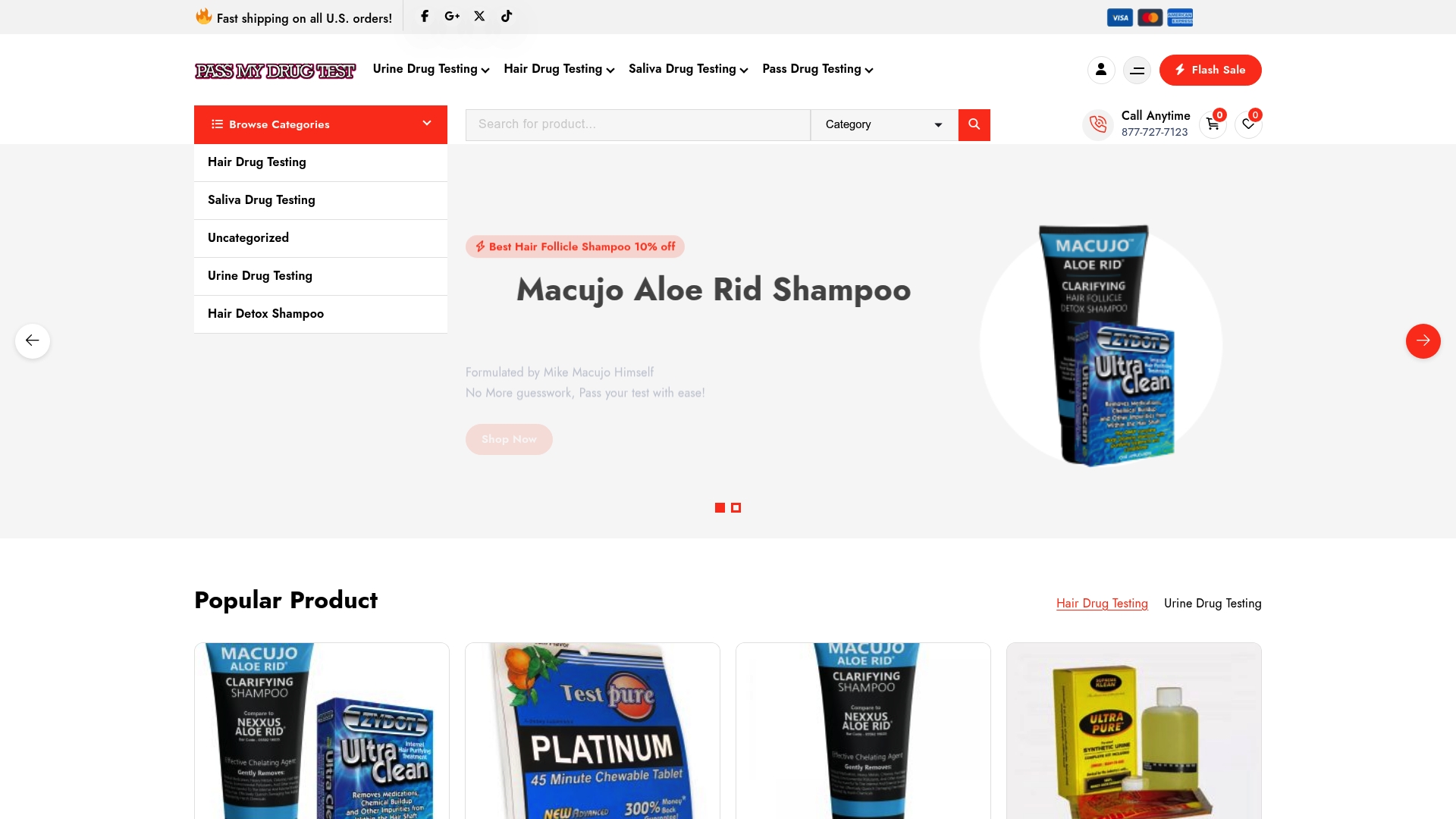
No product on the site is sold as a guaranteed pass, and none changes the physical reality of a directly observed collection. What Passmydrugtest offers is information, tools to check your own status, and preparation products used as directed. Fast shipping is available on U.S. orders. Browse the full range of testing methods and products or call during business hours to speak with someone directly.
Sources
- DOT’s Direct Observation Procedures | US Department of Transportation
- Update on Urine Adulterants and Synthetic Urine Samples to Subvert Urine Drug Testing
- Sample manipulation and specimen validity testing in urine drug analysis (review)
- Can synthetic urine replace authentic urine to “beat” workplace drug testing?
- Analytical evaluation of an automated assay to detect synthetic urine
- What to expect | Quest Diagnostics
- Urine drug screen – MedlinePlus
- Collection procedures | SAMHSA workplace drug testing resources
This article is general information, not a substitute for advice from a qualified lawyer. Consult a qualified legal professional about your own circumstances before acting on anything here.