
$5–$200+: What a Home Drug Test Really Costs in the U.S.
Expect to pay roughly $5 to $40 for a single instant at-home kit, $50 to $200 for a lab-processed mail-in urine panel, and $125 or more for a hair test. Home screens are preliminary tools, so a positive result usually means an added lab confirmation fee before anyone treats it as final. If you just need a private check, an instant kit is the cheapest starting point; if you need documented results for an employer or legal matter, order a lab-processed test from the start.
TL;DR:
- Home drug test kits are the cheapest option but offer only preliminary results, requiring lab confirmation for legal or employment purposes.
- The cost of tests varies: instant kits cost $5-$40, mail-in panels $50-$200+, and hair tests start at $125, depending on panel size and specimen type.
- Larger panel sizes and longer detection windows significantly increase costs, especially for lab-based and hair follicle tests.
- Buying from specialty vendors with clear panel and cutoff information is recommended when documentation or legal defensibility is needed.
- Confirmatory lab testing adds shipping, lab fees, and chain-of-custody costs that can make initial home tests more expensive in total if verification is required.
Table of Contents
- Price breakdown by test type
- Where to buy a home drug test in the U.S.
- What makes one test cost more than another
- What lab confirmation adds to your total cost
- Why PassMyDrugTest is a reliable source for this pricing guide
- Does insurance cover the cost of a home drug test?
- Is a home test actually cheaper than professional testing once you add it all up?
- The real cost question nobody asks first
- Ready to buy the right test the first time
- Sources
- FAQ
Price breakdown by test type
The price tag on a drug test tracks two things: how the sample gets read and how many substances it checks for. An instant kit you read yourself will always cost less than one that travels to a laboratory, and a test built to catch ten drugs will cost more than one built to catch three.
Instant OTC urine and saliva kits sit at the bottom of the price range, usually costing a low price per kit. A single-panel strip that checks for one substance costs less than a multi-panel cup or dipstick that screens for five to twelve drugs at once, since each added test line adds a small amount to manufacturing and packaging. These kits give a color-based result in minutes, with no lab involved.
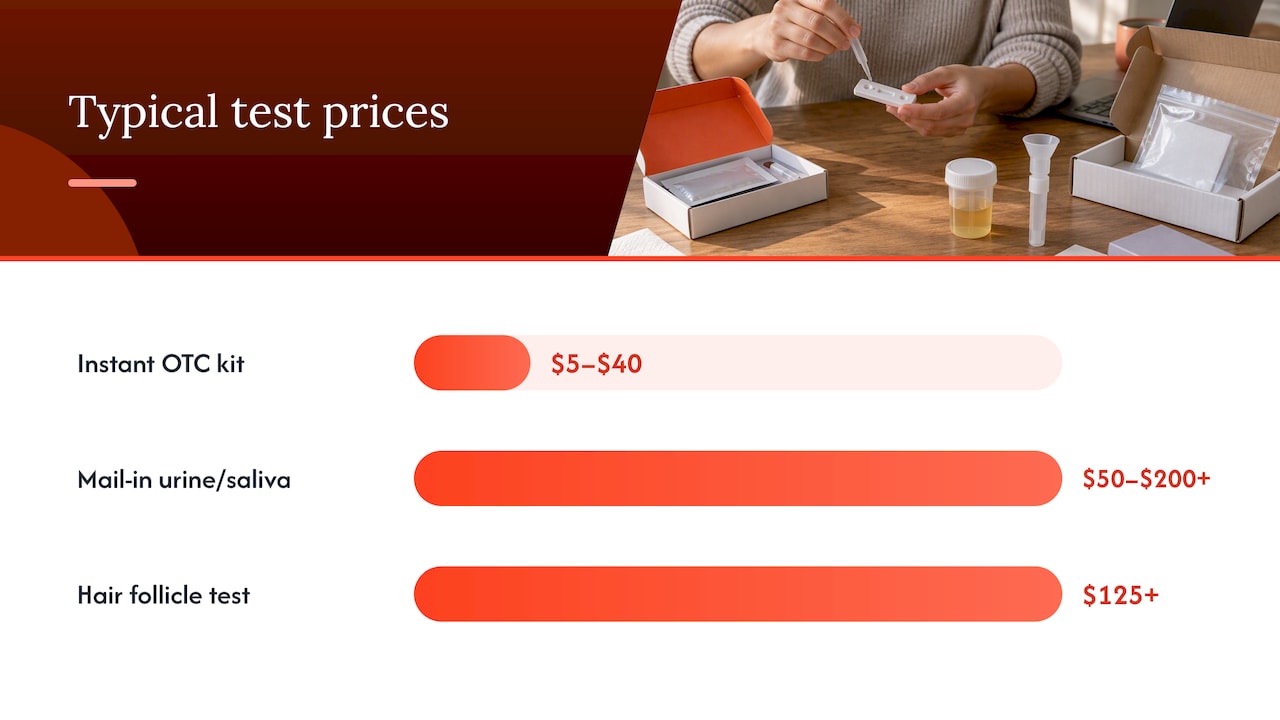
Mail-in urine and saliva panels cost more because the price covers laboratory processing rather than just a plastic cassette. A basic 5-panel lab test sits near the lower end; a 10-panel test, or one that includes chain-of-custody paperwork for legal or employment defensibility, pushes toward the higher end. Chain-of-custody testing adds cost because it requires a trained collector, sealed packaging, and a documented handoff at every step, a process SAMHSA’s workplace testing resources describe as standard for regulated employer programs.
Hair follicle tests usually start around $125 and can run higher depending on the lab and panel size. The premium reflects both the lab work and the detection window: hair testing can reveal drug use going back weeks rather than the few days that urine or saliva typically covers, a difference clinical reviews attribute to how substances get deposited in the hair shaft over time according to an NCBI review of detection windows.
- Instant OTC kits ($5 to $40): a test cassette, dipstick, or cup with printed instructions, read at home with no lab step.
- Mail-in urine or saliva panels ($50 to $200+): a collection kit plus prepaid lab processing, with chain-of-custody versions costing more.
- Hair tests ($125 and up): a collected hair sample sent to a lab, priced for both the collection method and the longer detection window.
| Test type | Typical price range | What drives the cost |
|---|---|---|
| Instant OTC urine or saliva kit | $5 to $40 | Panel size, single-substance versus multi-panel |
| Mail-in urine or saliva panel | $50 to $200+ | Lab processing, chain-of-custody requirements |
| Hair follicle test | $125+ | Lab analysis, extended detection window |
What you get at each price point matters as much as the number itself. A cheap instant kit gives you a quick yes-or-no read for personal peace of mind. A mail-in panel gives you a lab report with a specific cutoff level noted for each drug. A hair test gives you a longer look-back window that urine or saliva simply cannot match.
Where to buy a home drug test in the U.S.
Where you buy shapes both the price and what you actually get. Retail pharmacies, online marketplaces, and specialty vendors all sell home drug tests, but they behave differently on price, selection, and support.
Brick-and-mortar pharmacies keep pricing fairly steady since shelf space is limited to a handful of well-known brands, usually single-panel or small multi-panel instant kits. The advantage is immediate pickup with no shipping wait, though selection tends to be narrow and staff typically can’t answer detailed questions about panel makeup or cutoff levels.
Online marketplaces carry a much wider range of brands and panel sizes, often with discounts or multi-pack pricing that beats in-store shelf prices. The tradeoff is inconsistent seller reliability. Product listings sometimes lack clear expiration dates or complete panel information, so it’s worth checking seller ratings and return policies before ordering.
Specialty e-commerce vendors that focus specifically on drug testing tend to curate their catalog around specific use cases rather than stocking whatever is available. That focus, paired with educational content that walks through panel differences and testing scenarios, plus fast U.S. shipping and phone support during business hours, can be worth a modest premium over a bargain marketplace listing when you need the right product the first time rather than a second purchase after guessing wrong.
Before buying anywhere, check the product listing for:
- The full panel list, so you know exactly which substances the test screens for.
- Cutoff levels, since a lower cutoff catches lighter use that a higher cutoff might miss.
- An FDA clearance or OTC intended-use statement, confirming the device is regulated for over-the-counter use.
- The expiration date, since reagent-based tests degrade over time.
- Confirmatory mailing instructions, in case a positive result needs to go to a lab.
If your result needs to satisfy an employer, court, or probation officer, check our guide on preemployment drug testing requirements before assuming a home kit will be accepted as documentation.
What makes one test cost more than another
Panel size is the biggest lever. A test built to detect one substance is cheaper to manufacture and process than one covering ten, since each analyte adds its own reagent strip or lab assay.
Specimen type matters almost as much. Hair testing and lab-only panels cost more than instant urine or saliva strips because they require shipping, trained handling, and instrument-based analysis rather than a strip you read yourself in minutes.
Some kits include prepaid confirmatory materials or chain-of-custody options built into the upfront price. That raises the sticker price but can lower your total cost if a confirmation turns out to be necessary, since you’re not paying separately for shipping and lab fees later.
Turnaround time changes price too: standard mail-in processing costs less than expedited processing, and a bigger multi-pack usually brings the per-unit price down compared to buying single kits one at a time.
- Panel size: more substances screened means a higher price at both the kit and lab level.
- Specimen type: hair and lab-processed panels cost more than instant urine or saliva strips.
- Confirmatory inclusions: prepaid chain-of-custody or confirmation materials raise upfront cost but can reduce total spend.
- Turnaround speed: rush lab processing costs more than standard multi-day turnaround.
- Brand, pack size, and seller guarantees: multi-packs typically lower the per-test price versus single units.
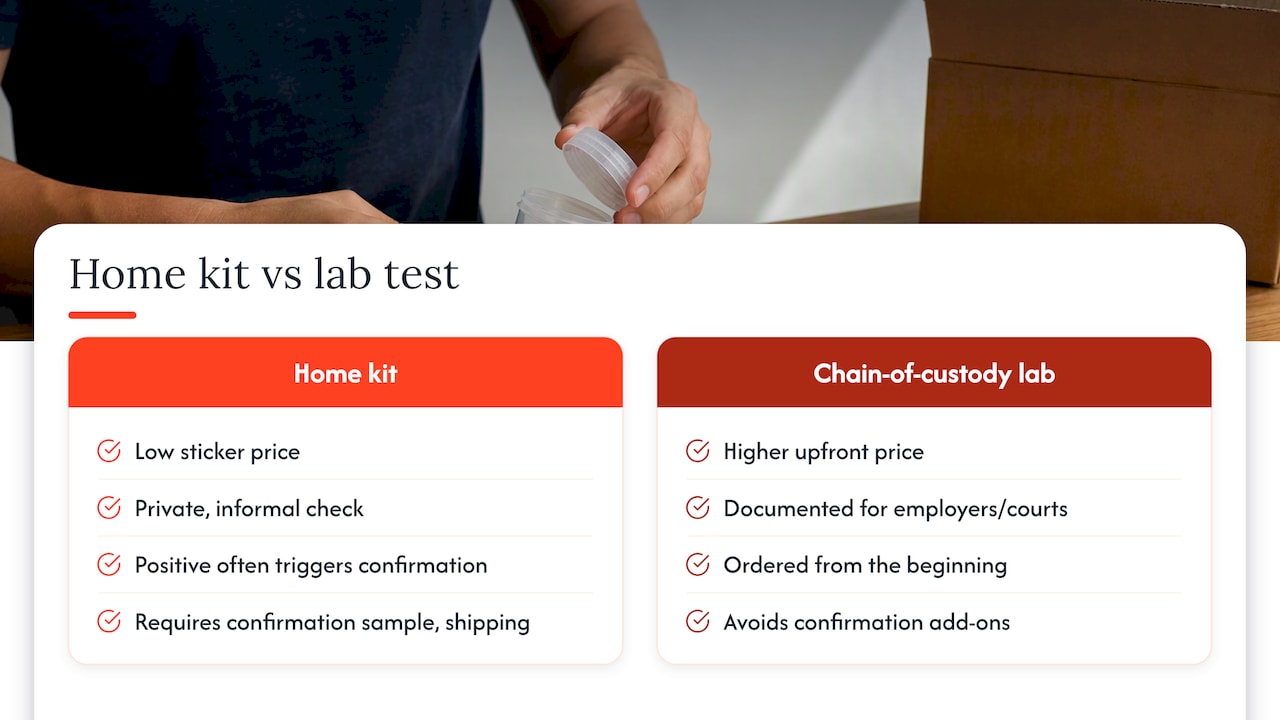
Pro Tip: If you’re buying for a one-time employment or legal need, price a chain-of-custody lab test up front rather than an instant kit plus a possible later confirmation. The combined cost is often close, and you avoid a second order under time pressure.
What lab confirmation adds to your total cost
Home tests are screening tools, not final verdicts. The FDA is explicit that over-the-counter home tests deliver preliminary results at a set cutoff level, and a positive reading should be confirmed by a more specific laboratory method before anyone treats it as conclusive.
That confirmation step adds cost in a few predictable places:
- Shipping the sample, which entails paying for sending a specimen to a confirmation lab.
- The confirmatory lab fee itself, which varies depending on how many substances the panel covers and which lab performs the work.
- Collector or chain-of-custody fees, if the situation requires a trained collector and documented handoff rather than a self-collected sample.
A positive home screen typically triggers a second, more specific test. Clinical and regulatory sources describe a two-step process where an immunoassay screen is followed by mass spectrometry confirmation for any result that needs to hold up. LabCorp’s own test listings show a similar structure for 10-drug panels: initial screening followed by confirmation, with turnaround times published on the individual test pages.
Once you add shipping and a possible confirmation fee to a cheap instant kit, the total can approach or exceed the cost of ordering a lab-processed panel with chain-of-custody built in from the start. If you already know your result needs to be defensible, a GC/MS-based test ordered up front is often the more economical path.
Why PassMyDrugTest is a reliable source for this pricing guide
An online vendor sells urine, saliva, and hair drug testing kits alongside detox products, and pairs that catalog with educational content built specifically to help buyers match a test to their situation, whether that’s a private screening or a scenario requiring documented results. The site ships fast within the United States and offers phone customer support during published business hours, so buyers researching prices can also get direct answers before ordering. This guide is written by Michael.
Does insurance cover the cost of a home drug test?
Home drug test kits bought for personal use, employment screening, or general peace of mind are almost always an out-of-pocket expense. Health insurance plans are built around medically necessary testing ordered by a provider, not consumer-purchased screening kits picked up at a pharmacy or ordered online.
There are narrow exceptions. If a physician orders a drug test as part of diagnosis, treatment monitoring, or a substance use program, that test may be billed through insurance the same way any other lab work would be, subject to your plan’s usual copay and deductible rules. A Health Savings Account or Flexible Spending Account may also reimburse a home test if it qualifies as an eligible medical expense under your specific plan, though rules vary by administrator, so it’s worth checking your plan documents before assuming coverage.
Employer-mandated pre-employment or workplace testing is typically paid by the employer, not billed to the candidate’s or employee’s insurance at all. For most individual buyers purchasing a kit for personal use or informal pre-screening, budgeting the full retail price without expecting reimbursement is the safer assumption.
Is a home test actually cheaper than professional testing once you add it all up?
On sticker price alone, an instant home kit wins easily against any lab-processed option. The real comparison depends on what you need the result to do.
For someone who wants a private, informal check with no legal or employment stakes attached, an instant kit is the more cost-effective choice by a wide margin. There’s no reason to pay for chain-of-custody documentation nobody will ever ask to see.
The calculation flips once documentation matters. An instant kit that comes back positive doesn’t end the process. It typically leads to a confirmation sample, shipping, and a lab fee, and that combined total can land close to or above the price of a chain-of-custody lab test ordered from the beginning. Professional testing services also close a gap that home kits can’t: a self-read instant test carries more room for user error in timing, reading, or interpretation than a controlled lab process. For anyone who suspects the result will need to satisfy someone else, whether an employer, a court, or a probation officer, paying more upfront for a documented lab-processed test is usually the cheaper path once every likely add-on cost is counted.
The real cost question nobody asks first
Most pricing guides on this topic treat the sticker price as the whole story, and that’s the part I’d push back on. The number on the box tells you almost nothing about what you’ll actually spend if the result matters to anyone but you. A $10 kit that turns positive and needs confirmation can cost more, and take longer, than a $150 lab panel ordered on day one.
The bigger mistake I see is people buying based on habit rather than purpose. They grab whatever instant kit is cheapest at the pharmacy without asking whether their situation calls for documentation at all. If the answer is no, that instant kit is genuinely the right call and spending more buys nothing. If the answer is yes, even a little, the math almost always favors paying for chain-of-custody or lab processing from the start rather than gambling on a screening test and hoping confirmation never comes up.
Decide what the result needs to prove before you decide what to buy.
— MIchael
Ready to buy the right test the first time
Specialty e-commerce vendors stock urine, saliva, and hair testing kits with fast U.S. shipping, so you can match the test to your situation instead of guessing at the pharmacy.
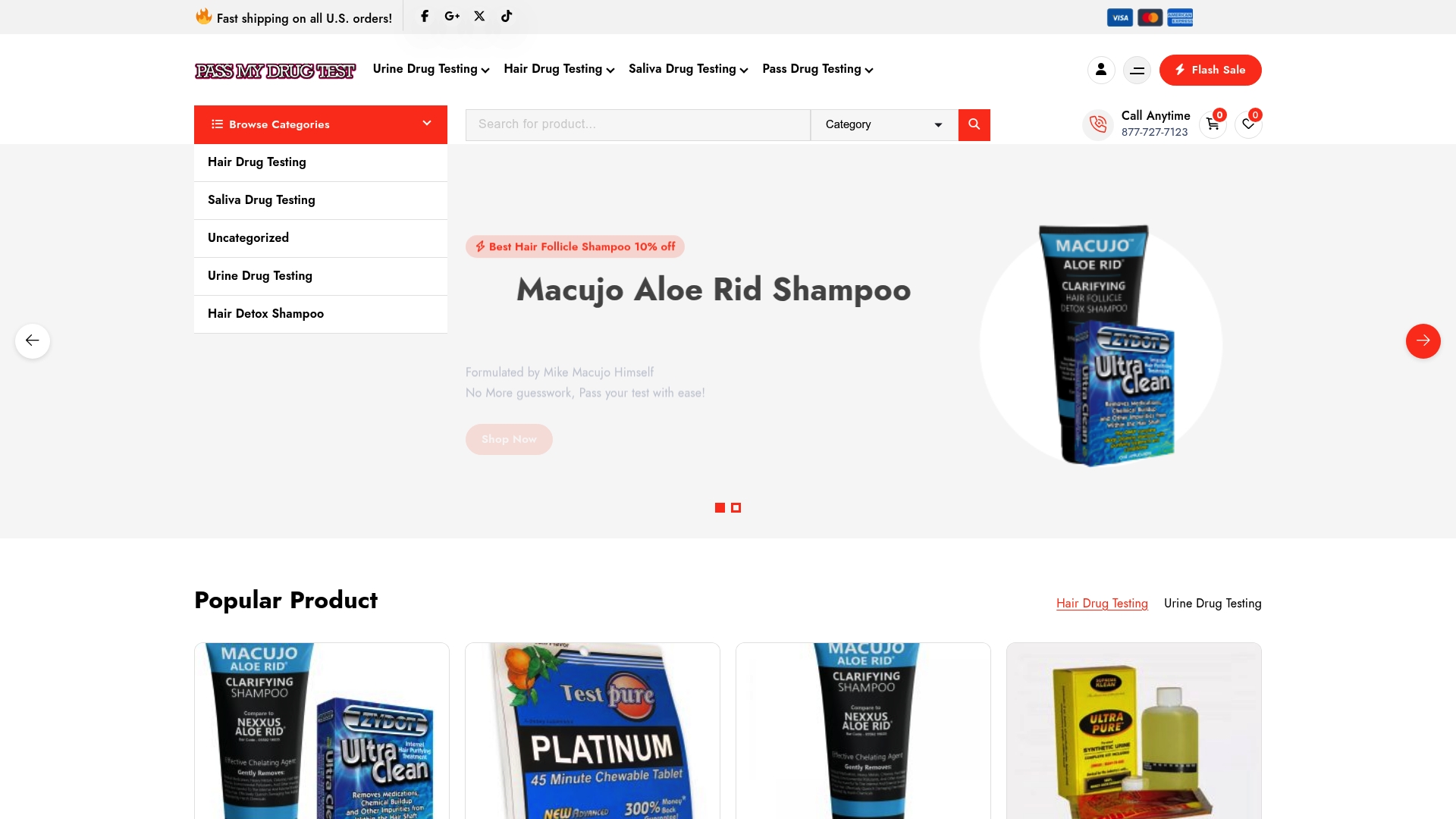
- Browse urine test kits for instant or lab-processed screening.
- Check saliva test kits for a shorter detection window option.
- Compare hair testing kits when a longer look-back period matters.
Visit the full product catalog to see current options and pricing before you order.
This article is general information, not a substitute for advice from a qualified doctor. Consult a qualified healthcare professional about your own circumstances before acting on anything here.
Sources
- Workplace drug testing resources | SAMHSA
- Drug testing: detection windows and specimen choice (example review) | NCBI PMC
FAQ
How much is an at-home drug test at a pharmacy?
Instant kits sold at U.S. pharmacies typically cost a modest amount depending on panel size and brand. Multi-panel kits that screen for several substances at once cost more than single-substance strips.
How much does a drug test typically cost in the U.S.?
Costs range widely based on type: instant OTC kits cost less, mail-in lab panels cost more, and hair tests are priced higher than both. The FDA notes that any positive home result should be confirmed by a lab method, which adds to the total.
How much does a 10-panel urine drug test cost at a lab?
Lab-processed 10-panel urine tests generally cost a moderate to higher amount, depending on the lab and whether chain-of-custody documentation is included. Turnaround time and confirmation method also affect the final cost.
Can I do my own drug test at home?
Yes, FDA-cleared over-the-counter kits are designed for self-administered screening at home and give a preliminary result within minutes. Keep in mind these are screening tools only, and a positive result typically needs lab confirmation before it’s treated as conclusive, according to FDA guidance.
Does a positive home drug test always need lab confirmation?
For personal or informal checks, confirmation is optional since no one else needs to see the result. For employment, legal, or regulated testing situations, confirmation by a method like GC/MS is standard practice before a result is considered final, a two-step process clinical reviews describe as the norm for defensible results.