
Delta 8 Drug Test Positive? 5 Steps to Get LC‑MS/MS Confirmation
Yes, delta 8 use can trigger a positive cannabinoid drug test, and it happens more often than most people expect. Most routine screening tests cannot distinguish delta 8 THC from delta 9 THC, so the test flags them the same way. If you test positive after using delta 8 products, ask for confirmatory LC-MS/MS testing before assuming the worst.
TL;DR:
- Routine drug tests often cannot differentiate delta 8 THC from delta 9 THC, leading to false positives on standard immunoassay screens.
- Confirmatory testing with LC-MS/MS or GC-MS is necessary to accurately identify whether delta 8 or delta 9 caused a positive result.
- Urine tests detect metabolites for several days up to a month, depending on usage frequency, while saliva and blood reflect recent use within a narrow window.
- Cross-reactivity varies by test brand and cutoff level, but many commercial immunoassays react to delta 8 at standard screening thresholds.
- Providing documentation of delta 8 product use and requesting chromatographic confirmation are crucial steps after a positive preliminary test.
Table of Contents
- How drug testing works: screening versus confirmatory analysis
- Detection windows by specimen: urine, saliva, blood, and hair
- Why delta 8 triggers a positive: cross-reactivity and lab separation
- What changes your detection time or gives surprising results
- What to do after a positive result: confirm, document, respond
- Where PassMyDrugTest fits into this picture
- The real lesson buried in the lab data
- If you need test kits or preparation products
- Where this information comes from
- Sources
- FAQ
How drug testing works: screening versus confirmatory analysis
Drug testing happens in two stages, and understanding the difference explains almost everything about why delta 8 causes confusion. The first stage is an immunoassay screen, a fast chemical test that looks for antibodies binding to cannabinoid compounds in a sample. These screens use a cutoff level, commonly 50 nanograms per milliliter for urine THC metabolite tests, to decide whether a result counts as positive.
Immunoassay antibodies detect THC metabolites in general and cannot reliably distinguish delta 8 from delta 9 due to their very similar molecular structures and metabolites.
A positive screening result is called a presumptive positive, not a confirmed one. It means the sample crossed the cutoff threshold, nothing more. Labs handle a presumptive positive in one of two ways:
- Run a confirmatory test automatically as part of the testing protocol.
- Hold the sample and confirm only if the person requests it or a program requires it.
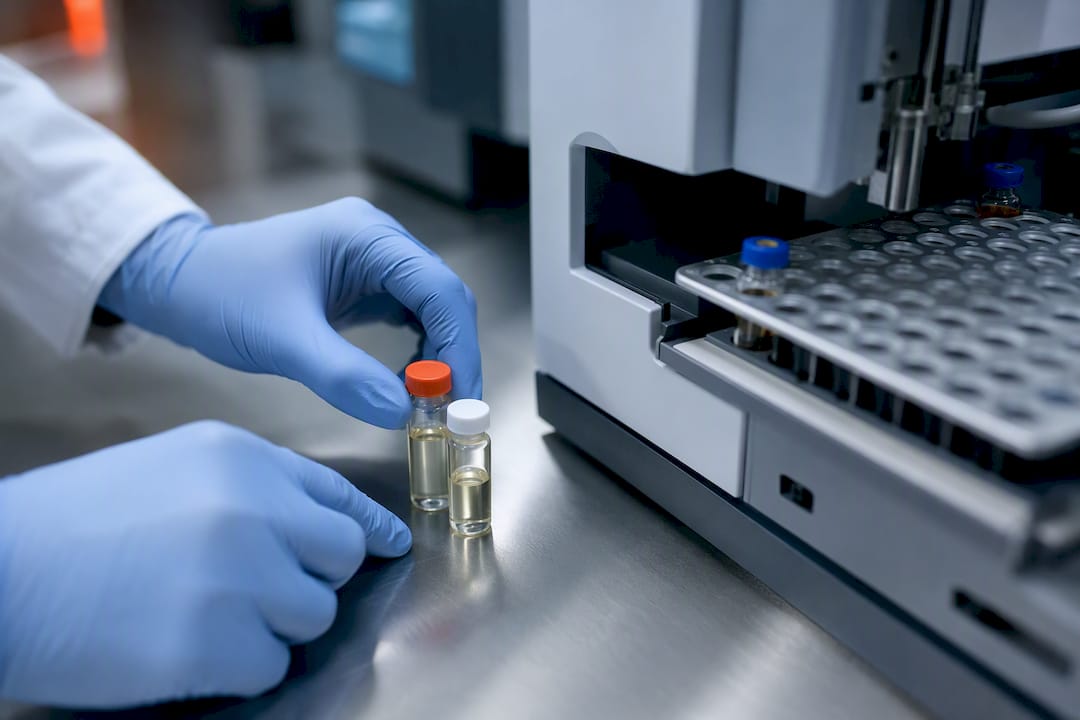
Confirmatory testing uses gas chromatography mass spectrometry (GC-MS) or liquid chromatography tandem mass spectrometry (LC-MS/MS). These methods physically separate compounds by their chemical properties before measuring them, which lets a lab identify the exact isomer present rather than just detecting “cannabinoid-like” activity.
Various commercial urine immunoassays are known to cross-react with delta 8 and its metabolites at standard screening cutoffs, according to a cross-reactivity study from the National Institute of Justice, which means a presumptive positive alone tells you almost nothing about which compound was actually present.
Detection windows by specimen: urine, saliva, blood, and hair
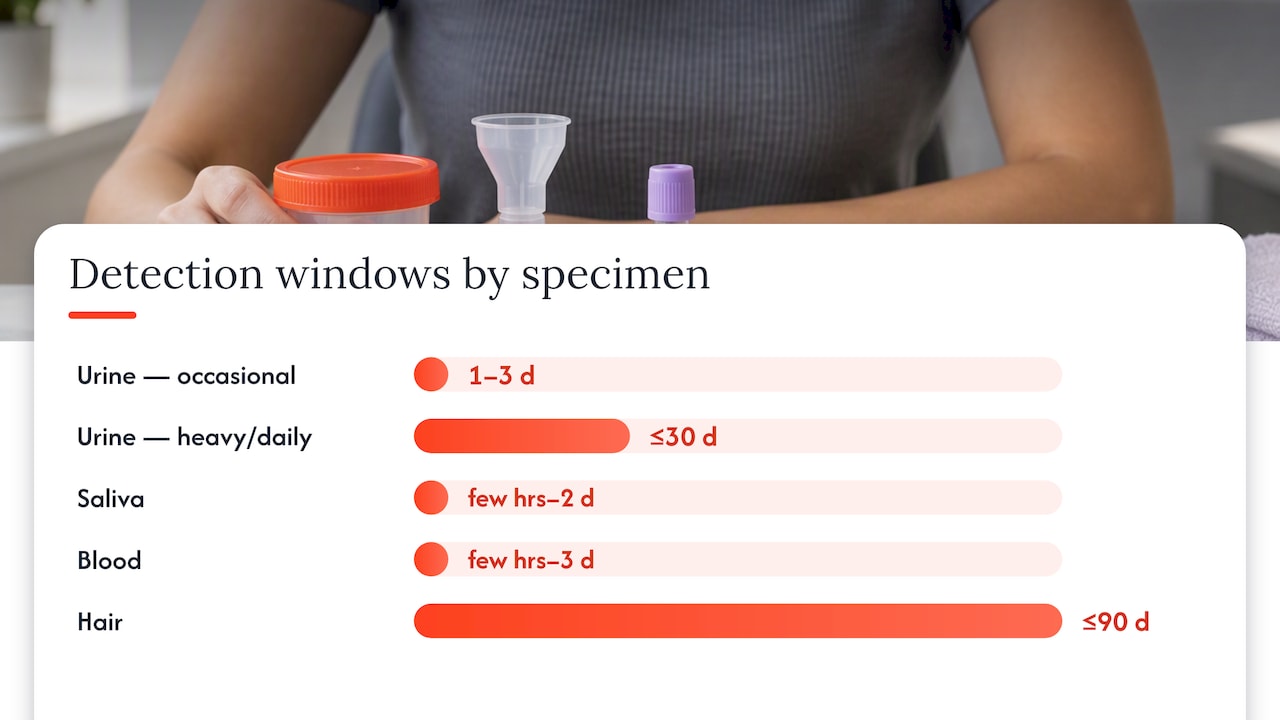
Detection windows vary by specimen type, usage frequency, and individual factors. Delta 8 and delta 9 share metabolic pathways, so general THC detection window estimates apply to both, with consideration of testing specificity.
Urine testing offers the longest practical window and the most data. Occasional users typically clear detectable metabolite levels within a few days, while daily or heavy users can test positive for close to a month after their last use, since THC metabolites store in fat tissue and release slowly. Saliva testing captures a much narrower window, useful mainly for confirming very recent use rather than historical patterns. Blood testing sits between the two, reflecting recent exposure but degrading quickly as the parent compound clears the bloodstream. Hair testing works differently altogether: it detects cannabinoid metabolites deposited into the hair shaft as it grows, giving a long historical record rather than a snapshot of recent use.
| Specimen | Typical detection window | Best for |
|---|---|---|
| Urine, occasional use | 1 to 3 days | Standard workplace screening |
| Urine, heavy or daily use | Up to 30 days | Long-term monitoring programs |
| Saliva | A few hours up to about 48 hours | Recent-use confirmation |
| Blood | A few hours up to 2 to 3 days in heavy users | Impairment-related testing |
| Hair | Up to about 90 days | Historical use patterns |
A few practical notes matter here:
- Urine detection length depends more on usage frequency and body fat than on the potency of a single dose.
- Saliva tests are the most sensitive to recent use but the least useful for detecting use from a week earlier.
- Hair testing cannot reflect use from the past week or so, since it takes time for hair to grow out from the follicle where metabolites deposit.
- Blood testing is rarely used for routine employment screening and appears more often in legal or medical contexts.
Anyone curious about how saliva testing mechanics work in practice, or how hair test detection windows are calculated, can find more detail in the specimen-specific guides linked here. None of these windows are fixed numbers. They are ranges built from population data, and any individual result can fall outside them.
Why delta 8 triggers a positive: cross-reactivity and lab separation
The core issue is chemical similarity. Delta 8 THC and delta 9 THC differ by the position of one double bond in their molecular structure, and the body metabolizes both into carboxy-THC compounds that look nearly identical to a screening antibody. That structural closeness is why a test built to catch delta 9 use often catches delta 8 use too.
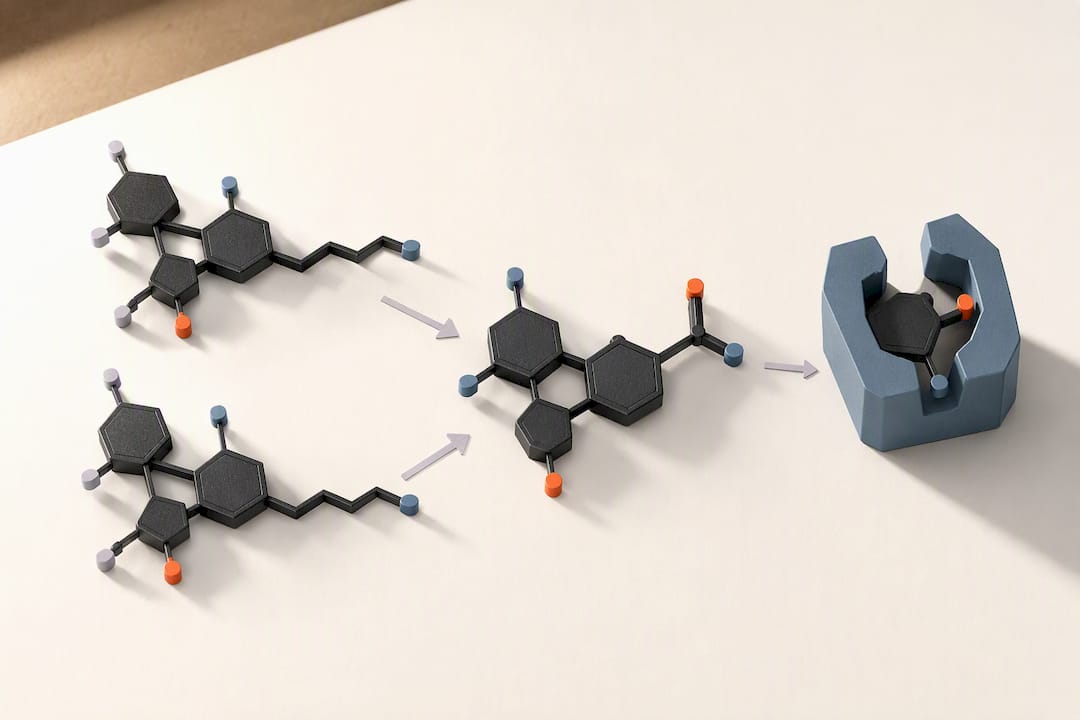
Clinical evidence backs this up directly. A case series published in a peer-reviewed pediatric journal documented children exposed to delta 8 products who tested positive on routine cannabinoid immunoassays. Confirmatory LC-MS testing in those cases identified 11-nor-9-carboxy-delta-8-THC specifically, not delta 9, proving the screen had reacted to the wrong compound entirely.
A few points sum up the mechanism:
- Delta 8 and delta 9 metabolites share enough structural similarity that most immunoassay antibodies cannot reliably tell them apart.
- Cross-reactivity varies by assay brand and cutoff level, but multiple commercial tests have shown meaningful reactivity to delta 8 in published testing.
- Only chromatographic separation, the physical splitting of compounds by retention time in LC-MS/MS or GC-MS, can reliably distinguish the two isomers.
- A positive screen could mean delta 8 use, delta 9 use, or exposure to a mislabeled product containing both. Confirmatory testing is the only way to know which.
A laboratory analysis published in an analytical science journal found that delta-8-THC-COOH produces a chromatographic peak close enough to delta-9-THC-COOH to interfere with standard identification, requiring adjusted LC-MS/MS methods to resolve the two compounds reliably. That single technical detail explains why some labs have had to change their confirmation protocols specifically because of delta 8’s rise in the consumer market.
What changes your detection time or gives surprising results
Detection windows are ranges, not guarantees, and several factors push someone toward the longer or shorter end.
- User factors: frequency of use, dose size, body fat percentage, metabolic rate, and age all affect how long metabolites stay detectable.
- Product factors: mislabeled delta 8 products contaminated with delta 9, inconsistent potency between batches, and possible chemical conversion during vaping can all skew results.
- Specimen handling: a stability study in the Journal of Analytical Toxicology found that parent cannabinoid compounds can degrade quickly in urine exposed to heat, while carboxy metabolites hold up better but still shift with pH and storage delays.
- Testing program factors: the assay cutoff used, which specimen is collected, and whether the lab specifically screens for delta 8 all change what shows up on paper.
Pro Tip: If you know you have used delta 8 recently, mention it before testing rather than after a positive result comes back, since it gives the lab or program a reason to request isomer-specific confirmation up front.
What to do after a positive result: confirm, document, respond
A presumptive positive is not the end of the story. Here is a practical sequence to follow.
- Ask directly whether the result you received is a screening result or a confirmed LC-MS/MS report, since the two carry very different weight.
- Request confirmatory testing that specifically separates delta 8 from delta 9 metabolites, since a clinical lab industry report notes that many labs now offer targeted panels built for exactly this distinction.
- Gather product labels, purchase receipts, and any notes on when and how much you used, since this documentation supports your case if you dispute a result.
- Contact HR, the testing program administrator, or the relevant compliance office calmly, and ask about chain of custody procedures and retesting timelines.
- If the consequences involve employment termination, legal proceedings, or licensing, consider getting professional legal or medical guidance before responding further.
Routine workplace urine screens are generally built around detecting the delta 9 metabolite, according to federal drug-free workplace guidance, which is exactly why delta 8 exposure so often produces a presumptive positive rather than a clean pass. Confirmatory testing exists precisely to sort out cases like this, and asking for it is a reasonable, low-risk step rather than an admission of anything.
Where PassMyDrugTest fits into this picture
PassMyDrugTest combines educational content on drug testing with product categories covering hair, saliva, and urine testing, along with test preparation products for people who want to understand their situation before a scheduled screening. Fast shipping and phone support matter when a test date is close and questions need quick answers. Michael, who covers testing topics for the site, focuses on translating laboratory science, cross-reactivity data, and confirmatory testing procedures into plain language for readers trying to make sense of an unexpected result.
The real lesson buried in the lab data
The most overlooked point in this whole topic is that a positive screen is a starting point for a conversation, not a verdict. Too much popular advice treats a presumptive positive as final, when the actual laboratory science says the opposite: screening antibodies were never built to distinguish delta 8 from delta 9, and multiple published sources confirm that gap.
What gets underrated is how cheap and available confirmatory testing has become relative to the stakes involved. Losing a job or facing legal exposure over an unconfirmed screening result is a bad trade when a chromatographic confirmation exists specifically to resolve that uncertainty.
If you take one thing from this, prioritize documentation and confirmation over panic. Keep your product labels, ask the right question of the lab, and let the chemistry, not the first number on a report, decide the outcome.
— Michael
If you need test kits or preparation products
If you are trying to understand where you stand before a scheduled screening, PassMyDrugTest carries urine, saliva, and hair testing categories built for exactly these situations, along with hair detox shampoo for people facing a longer detection window they want to address directly.
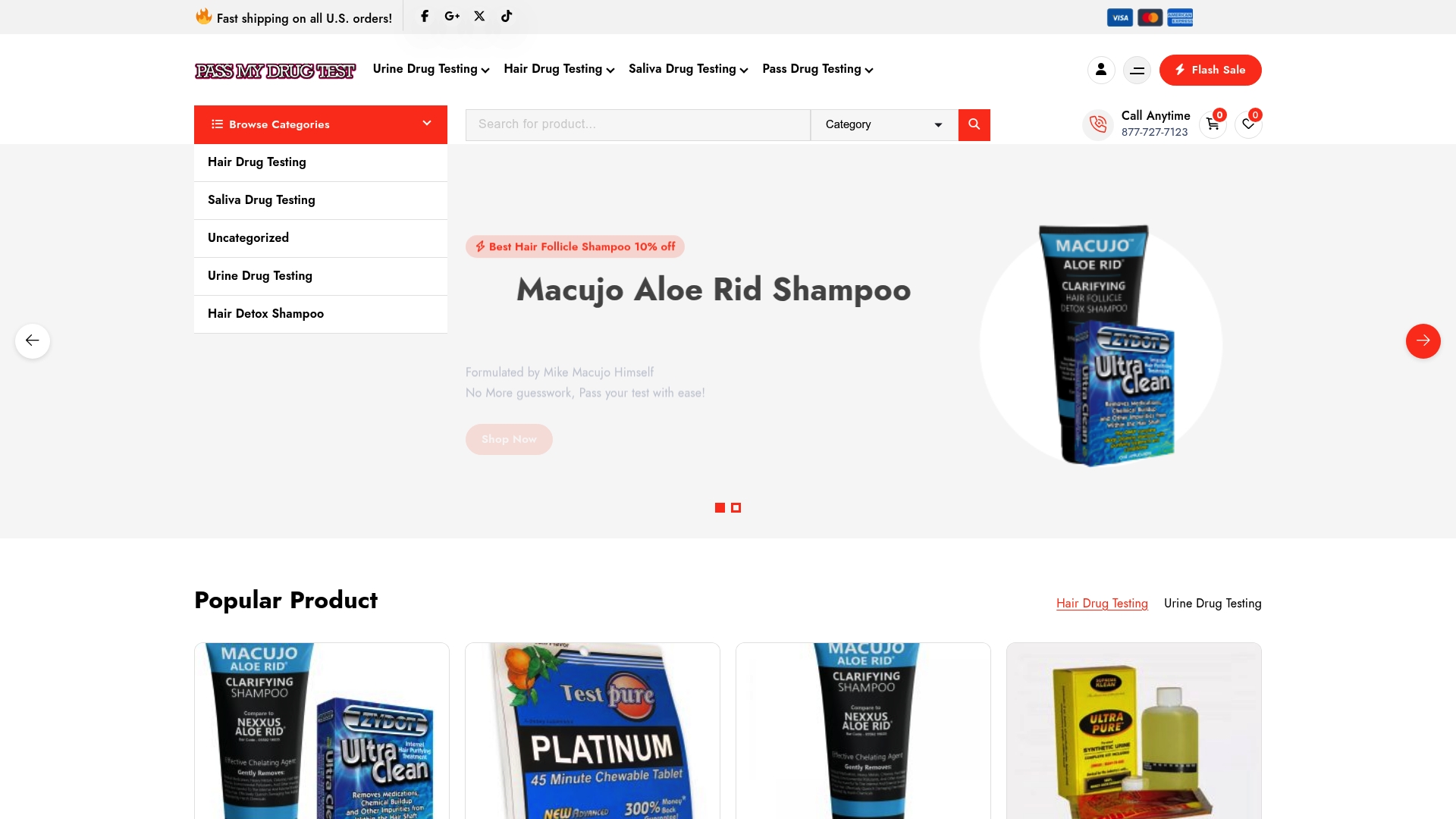
A home urine test kit helps someone gauge where they stand before a scheduled screening, while hair-focused products address the longer window that hair testing covers. None of these replace confirmatory lab testing or legal advice when a job or legal outcome is on the line, but they give you a clearer picture before that conversation happens. Our urine drug testing category and phone support team can help you figure out which option fits your timeline.
Where this information comes from
This article draws on FDA consumer guidance on delta 8, a peer-reviewed pediatric case series, an NIJ cross-reactivity study, a journal stability analysis, and clinical laboratory industry reporting on delta 8 versus delta 9 separation methods.
Sources
- 5 Things to Know about Delta‑8 Tetrahydrocannabinol – FDA
- Delta‑8‑Tetrahydrocannabinol exposure and confirmation in four pediatric patients – PMC
- The Cross‑Reactivity of the Cannabinoid Analogs and their metabolites in Urine of Six Commercially Available Homogeneous Immunoassays – OJP/NIJ
- Preanalytical stability of emerging cannabinoid analogs in urine – Journal of Analytical Toxicology
- Why thorough THC testing is critical – Clinical Lab Products (CLP)
FAQ
Does delta 8 show up on a standard drug test?
Yes, delta 8 use commonly produces a positive result on standard cannabinoid immunoassay screens, since most of these tests were not designed to distinguish it from delta 9. Confirmatory testing by LC-MS/MS is the only reliable way to identify which compound triggered the result.
How is a delta 8 versus delta 9 drug test different?
A standard screening test cannot reliably tell delta 8 and delta 9 apart because their metabolites are chemically similar enough to react with the same antibodies. Only chromatographic confirmatory methods like LC-MS/MS separate the two compounds by their distinct retention times.
How long does delta 8 stay in your system?
Detection time depends on the specimen tested and how often someone uses it: urine can show metabolites from a few days after occasional use up to around a month after heavy daily use, saliva windows run from a few hours to about two days, and hair testing can reflect use up to roughly three months back. Individual metabolism, body fat, and dose all shift these ranges.
Can you fail a drug test from delta 8 alone?
Yes, exposure to delta 8 alone can cause a positive screening result, as documented in a pediatric clinical case series where confirmatory testing identified delta 8 specific metabolites rather than delta 9. This confirms the presumptive positive was not the result of delta 9 use.
What should you do if delta 8 causes a false positive at work?
Ask whether your result is a presumptive screen or a confirmed report, then request LC-MS/MS confirmatory testing that specifically separates delta 8 from delta 9 metabolites. Document your product use and communicate with your employer or testing program about retesting or appeal procedures before assuming the result is final.