

Drug Test Detox Cleanse: What Actually Works and What’s Risky
Commercial detox drinks and rapid cleanse kits rarely do what their labels promise. Most work by temporarily diluting your urine or masking metabolite concentrations, not by pulling stored compounds out of your fat cells. Labs running standard urine screens use a 50 ng/mL cutoff for THC metabolites, and they also test for the signs of dilution itself, including creatinine levels, specific gravity, and pH. A sample that trips those flags gets flagged as invalid or adulterated, which is often treated the same as a positive result.
The three things that actually matter:
- Masking vs. elimination: Detox drinks lower the concentration of metabolites in urine for a few hours. They do not remove metabolites stored in fat tissue. Once the window closes, levels rebound.
- Lab cutoffs are a moving target: A product that pushes your THC concentration just below 50 ng/mL works until the lab checks creatinine and finds it at 15 mg/dL instead of the normal 40–300 mg/dL range, at which point the sample is flagged as dilute.
- The only reliable path: Abstain as early as possible, use home urine test kits to track your actual progress every two to three days, and skip the dangerous shortcuts like high-dose niacin or extreme water loading.
Key Takeaways
Abstinence combined with consistent home testing is the only strategy with reliable evidence behind it. Commercial detox drinks can temporarily mask urine metabolite concentrations, but labs screen specifically for dilution and adulteration.
| Point | Details |
|---|---|
| Abstinence is the only reliable method | Only time and stopping use reduce stored metabolites; no product removes them from fat tissue. |
| Heavy users need more time than most guides say | Chronic daily users often need 45–60+ days for urine clearance, not the commonly cited 30 days. |
| Labs detect dilution and masking | Creatinine, specific gravity, pH, and adulterant panels flag tampered or diluted samples. |
| Home testing tracks real progress | Test first-morning urine every 2–3 days for a reliable trend; a single negative is not conclusive. |
| Passmydrugtest offers kits and products | At-home test kits and detox products are available with fast U.S. shipping and honest product descriptions. |
Table of Contents
- What detox drinks, kits, and masking products actually do
- How long drugs actually stay in your system
- Do detox products actually work? What the evidence shows
- Common detox myths and the real risks behind them
- What actually helps: safer approaches grounded in evidence
- Test-day preparation: what to do in the 72 hours before
- What the research actually shows
- An honest take on what these products can and cannot do
- Passmydrugtest has the tools to track your real progress
- Sources
What detox drinks, kits, and masking products actually do
The drug test detox cleanse market breaks down into a handful of product categories, each claiming a different mechanism.
The main product types:
- Detox drinks: Liquid formulas consumed hours before a test. They flood the body with fluids, B vitamins, and creatine to temporarily lower metabolite concentration while making urine look chemically normal.
- Detox pills and capsules: Taken over several days, these typically combine herbal diuretics (dandelion root, milk thistle) with fiber and vitamins. Marketed as “permanent” cleanses, though no clinical evidence supports that claim.
- Detox teas: Mild diuretics in tea form. The mechanism is the same as detox drinks, just slower and less concentrated.
- Urine additives: Chemicals added directly to a sample to destroy or mask metabolites. Labs test specifically for the most common ones, including bleach, nitrites, and glutaraldehyde.
- Synthetic urine: Pre-mixed or powdered urine substitute. Requires temperature control (labs check for 90–100°F) and carries significant legal risk depending on jurisdiction.
- Hair follicle shampoos: Claim to strip metabolites from the hair shaft. Evidence for effectiveness is limited, and hair tests look at the cortex, not just the surface.
What labs actually screen for is the tell. Standard urine panels check creatinine, specific gravity, pH, and adulterant panels to catch dilution and tampering. A creatinine below 20 mg/dL flags the sample as dilute. Specific gravity outside the 1.003–1.030 range does the same. When a sample fails validity testing, the collector typically requests an observed recollection, which eliminates most product strategies entirely.
Pro Tip: The reason detox drinks include creatine and B vitamins is specifically to counter these lab checks. Creatine metabolizes into creatinine, restoring that marker. B2 (riboflavin) restores the yellow color that heavy dilution washes out. If you see those ingredients on a label, that is the product acknowledging that labs look for dilution.
You can review how detox products for passing a drug test are categorized and what each type is designed to do before deciding what fits your situation.
How long drugs actually stay in your system
Detection windows vary more than most guides admit. The table below uses conservative ranges based on standard urine cutoffs and published pharmacokinetic data. Hair testing is a separate category entirely: it captures a roughly 90-day window regardless of substance, because metabolites deposit in the hair shaft as it grows.
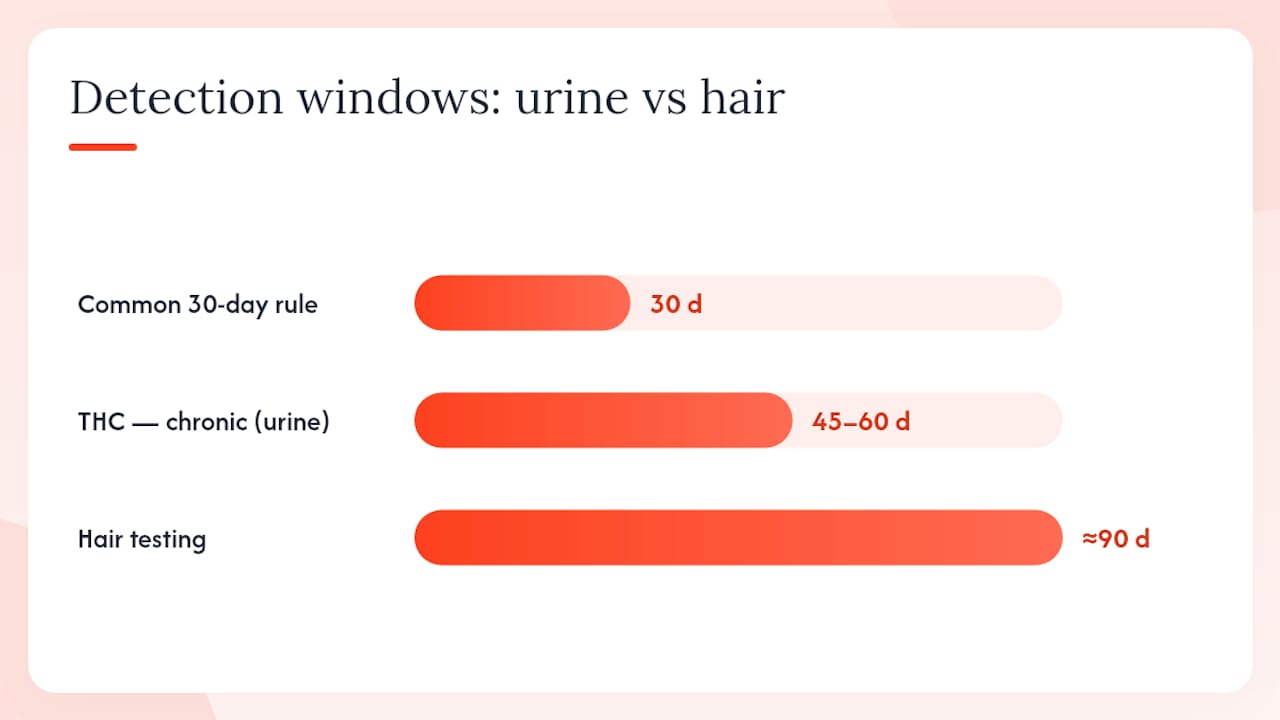
The common “30-day” rule for THC dramatically underestimates chronic daily users, who often need 45–60 or more days for urine clearance at standard cutoffs. Body fat percentage is the single largest variable because THC-COOH (the primary metabolite) is lipophilic and stores in adipose tissue. Two people with identical use histories can have clearance timelines that differ by weeks if their body composition differs significantly.
The variables that shift your window most:
- Total accumulated metabolite load (how long and how heavily you used)
- Body fat percentage (higher fat = longer storage and slower release)
- Individual metabolism rate
- The specific cutoff threshold used by the testing lab (50 ng/mL is standard; some labs use 20 ng/mL for more sensitive screening)
- Hydration and kidney function
Because metabolite release from fat is pulsatile rather than linear, a single negative home test does not confirm you are clear. Testing first-morning urine every two to three days gives you a trend, not just a snapshot. More detail on cannabis drug testing detection windows is available for those planning around a specific test type.
Do detox products actually work? What the evidence shows
The honest answer: no robust clinical trials demonstrate that any commercial detox drink or cleanse accelerates the elimination of THC or other drug metabolites from fat stores. NCCIH notes that popular detox and cleanse regimens generally lack reliable evidence, and some aggressive approaches carry real health risks.
The distinction that matters most is temporary concentration reduction versus permanent metabolite removal. A detox drink can push your urine THC concentration below 50 ng/mL for two to four hours by flooding your system with fluid and restoring urine markers. Your fat stores still contain the same amount of THC-COOH. When urination slows and concentration rebounds, you are back above the cutoff.
What labs do when they suspect masking:
- Flag samples with creatinine below 20 mg/dL as dilute and request recollection
- Run adulterant panels for nitrites, bleach, glutaraldehyde, and oxidants
- Confirm positive immunoassay screens with GC-MS or LC-MS/MS, which is far more sensitive and specific
- Check pH outside the 4.5–8.5 range as an adulteration indicator
The pharmacokinetics of cannabinoids explain why elimination cannot be rushed: THC-COOH has multi-day terminal half-lives in chronic users, and clearance is governed by fat metabolism, not by how much water or herbal extract you consume. The liver and kidneys process what fat releases; they cannot be forced to release it faster by drinking a commercial product.
Detox kits are also largely unregulated. The FDA does not evaluate these products for efficacy before they reach shelves, which means label claims are not independently verified. Some products have been associated with adverse events, and ingredient quality varies widely between brands.
Common detox myths and the real risks behind them
The internet is full of shortcuts that sound plausible and range from ineffective to genuinely dangerous. Here is what the evidence actually shows on the most popular ones.
Niacin (vitamin B3) megadosing: Promoted in forums as a fat-burning detox agent. There is no clinical evidence it accelerates THC clearance. What it does do at high doses is cause serious harm. Mayo Clinic documents liver toxicity, severe flushing, and other adverse effects from large niacin doses, and medical guidance explicitly warns against using it as a detox shortcut. Several emergency room cases have been linked to niacin misuse for this purpose.
Extreme water loading: Drinking several liters of water in the hours before a test can temporarily dilute urine below the 50 ng/mL cutoff. The problem is twofold. Labs flag dilute samples and require recollection. And drinking excessive water in a short window risks hyponatremia, a dangerous drop in blood sodium that causes nausea, seizures, and in severe cases, death. This is not a theoretical risk.
Cranberry juice: A mild diuretic at best. It increases urine output slightly, which has the same dilution effect as drinking extra water, with the same lab-detection consequences. It does nothing to metabolite stores.
Saunas and sweating: Sweating does not meaningfully excrete THC-COOH. The metabolite is excreted primarily through urine and feces, not sweat. Sauna sessions may temporarily increase metabolite release from fat, which could actually spike urinary concentrations briefly rather than lower them.
Vinegar and acidic drinks: The theory is that acidifying urine changes metabolite solubility. In practice, the pH shift needed to affect THC-COOH excretion would require drinking amounts of acid that would cause serious gastrointestinal damage, and labs check urine pH anyway.
Pro Tip: If you are researching home remedies, the home remedies to pass a drug test page covers the most common ones and explains specifically why each fails under lab conditions.
Legal and ethical note: Submitting adulterated, substituted, or synthetic urine is considered fraud in many employment and legal contexts. Depending on the testing context (federal employment, probation, DOT-regulated positions), consequences can include termination, loss of professional licensure, or criminal charges. Understand the stakes before attempting any substitution strategy.
What actually helps: safer approaches grounded in evidence
Abstinence is the only method with genuine evidence behind it. Every other approach either supports the body’s natural elimination process or reduces the risk of a false flag. None of them replace time.
Why abstinence works and nothing else fully does: THC-COOH accumulates in fat cells over time. The body releases it gradually as fat is metabolized, and the liver converts it for urinary excretion. That process has a biological rate limit. No drink, pill, or supplement overrides it. Recovery resources consistently reinforce that time and abstinence are the only reliable path, with supportive care helping manage withdrawal and overall wellbeing during that period.
Practical steps that support natural elimination:
- Stop use as early as possible. Every day of abstinence reduces your total metabolite load.
- Maintain steady, normal hydration (roughly 8 glasses of water daily). This supports kidney function without triggering dilution flags.
- Eat a fiber-rich diet. A portion of THC metabolites is excreted through feces, and adequate fiber supports that pathway.
- Exercise moderately over weeks, not days. Aerobic exercise burns fat and accelerates long-term clearance. However, stop vigorous workouts 48–72 hours before your test, because exercise can temporarily mobilize stored metabolites and spike urinary concentrations right before the test.
- Avoid new supplements, herbal products, or diuretics in the week before your test. Unknown interactions can affect urine chemistry in ways that flag validity testing.
When to get professional help:
Heavy daily users stopping abruptly can experience withdrawal symptoms including anxiety, insomnia, irritability, and appetite changes. These are real and manageable with support. If you are a heavy user, have co-occurring mental health conditions, or are struggling to stop, contact SAMHSA’s National Helpline at 1-800-662-4357 (free, confidential, 24/7) or speak with a healthcare provider. A drug test deadline is not a reason to white-knuckle a difficult withdrawal alone.
Test-day preparation: what to do in the 72 hours before
This is where small decisions make a real difference, not in whether you pass, but in whether your sample is valid and uncontested.
72–48 hours out:
- Stop all vigorous exercise. Fat mobilization from intense workouts can temporarily elevate urinary metabolite levels.
- Continue normal hydration. Do not start water-loading yet.
- Stop any herbal supplements, diuretics, or new vitamins you have been taking.
- Run a home urine test on first-morning urine to get a baseline reading for this window.
24 hours out and test day:
- Do not use your first-morning urine for the official test if you have a choice. First-morning urine is the most concentrated and most likely to read positive. Mid-stream from a mid-day void is typically less concentrated.
- Drink a normal amount of water the morning of the test, roughly 16–24 oz in the two hours before. More than that risks a dilute flag.
- If you are taking a B-vitamin supplement to restore urine color, use it as directed and only if you have tested it previously. Do not experiment with new supplements on test day.
- Bring documentation for any prescription medications. Some legal prescriptions trigger positive immunoassay screens. Knowing how to handle a false positive drug test before it happens saves significant stress.
- If you purchased a commercial detox product, follow its instructions exactly and do not improvise additional steps.
Do not:
- Submit a sample that is visually clear (labs note color)
- Add anything to the sample cup
- Attempt to substitute synthetic urine without understanding the legal risk in your state
- Drink more than 1–1.5 liters of water in the two hours before the test
Pro Tip: Run at least three home tests in the week before your official test, using first-morning urine each time. A consistent negative trend across three tests is far more reliable than a single negative the night before.
What the research actually shows
The scientific literature on drug test detox cleanse products is thin, and what exists is not encouraging for product manufacturers.
Key findings from peer-reviewed sources:
- Pharmacokinetic reviews of cannabinoids confirm that THC-COOH is lipophilic with multi-day terminal half-lives in chronic users. Clearance is governed by fat metabolism, not by any commercially available supplement.
- No randomized controlled trials demonstrate that any detox drink or cleanse product accelerates THC elimination from adipose tissue.
- Standard urine immunoassay screens use a 50 ng/mL cutoff, but confirmation testing via GC-MS or LC-MS/MS is far more sensitive and is used when initial screens are contested.
- Chronic daily users routinely need 45–60+ days for urine clearance at standard cutoffs, not the 30 days most guides cite.
- Body fat percentage and total accumulated metabolite load are the two strongest predictors of clearance time, explaining why identical use patterns produce very different timelines in different people.
What researchers consistently find: Commercial detox products have not been shown in clinical studies to permanently remove THC or other drug metabolites from the body. The liver and kidneys clear what fat tissue releases, and that release follows biological half-life kinetics that no marketed product has been shown to override. The most defensible preparation strategy remains early abstinence combined with home testing to track real progress.
The practical takeaway for anyone planning around a test: budget conservatively, test frequently, and treat any single negative result as a data point rather than a conclusion. Metabolite release is not linear, and a negative on Tuesday does not guarantee a negative on Friday.
Consulting a healthcare provider is the right move for heavy users, anyone with underlying health conditions, or anyone considering supplements that interact with medications. General information is not a substitute for personalized medical advice.
An honest take on what these products can and cannot do
The detox product category occupies a strange space. The products are legal to sell, legal to buy, and widely used. They are also largely unregulated, frequently overpromised, and built around a mechanism (temporary dilution) that labs are specifically designed to detect.
What frustrates me about most coverage of this topic is the false binary: either “detox drinks work great” (product marketing) or “nothing works, just don’t use drugs” (unhelpfully moralistic). The real picture is more specific. Some products, used correctly under the right conditions, can push a borderline result below a cutoff for a few hours. That is a real, if narrow, utility. The problem is that “borderline” is doing a lot of work in that sentence. A heavy daily user with high body fat who stopped three days ago is not borderline. No drink changes that.
The more honest framing is this: a drug test detox cleanse product is a risk-management tool with a narrow window of potential utility, not a reliable solution. Home test kits are the actual useful tool because they tell you where you actually stand. If you are consistently negative on first-morning urine over several days, a detox drink on test day is probably unnecessary. If you are still positive at 30 days, no drink is going to fix that.
The other thing worth saying plainly: the dangerous hacks (niacin megadosing, extreme water loading) are not just ineffective. They have sent people to emergency rooms. The risk-reward calculation there is genuinely bad, and the people promoting those approaches online are not the ones dealing with the consequences.
Passmydrugtest has the tools to track your real progress
The most useful thing you can do before an official test is know where you actually stand, and that requires testing yourself at home with a reliable kit. Passmydrugtest carries at-home marijuana urine test kits calibrated to the same 50 ng/mL cutoff used by most workplace screening labs, so you are testing against the same standard that matters.
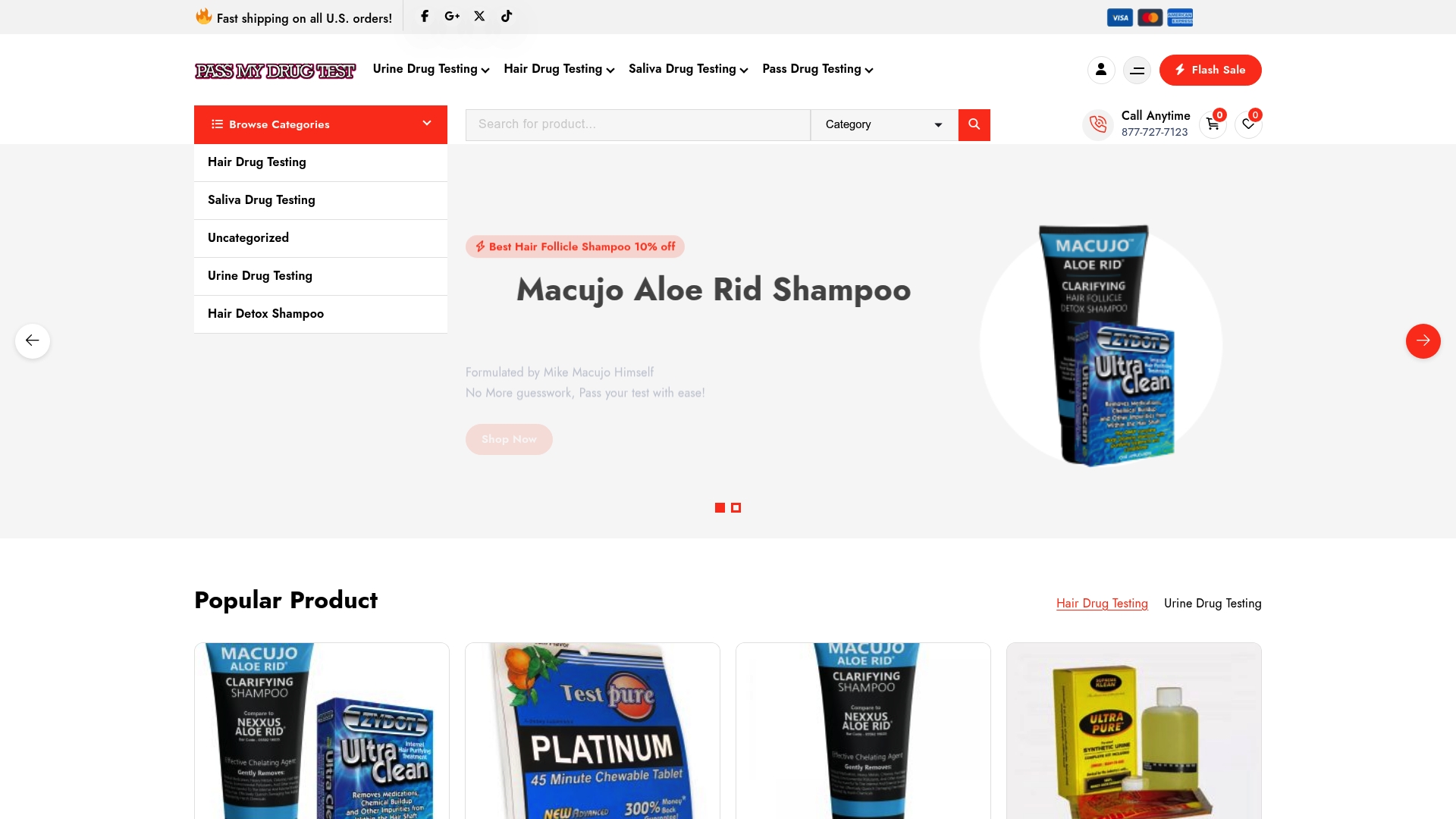
Beyond test kits, the site stocks a full range of detox products for passing a drug test, with clear descriptions of what each product does and does not do. No outcome guarantees, no inflated claims. Fast shipping is available across the United States, and phone support is available during business hours if you need help choosing the right product for your timeline and test type. Start with a home test kit, know your actual numbers, and make decisions from there.
Sources
The sources below are the primary references behind this article’s recommendations. Each is labeled by what it covers.
- NCCIH — Detoxes and cleanses: What you need to know
- PMC article (pharmacokinetics of cannabinoids) — PMC7508170
- Healthline — How long does weed stay in your system?
- Mayo Clinic — Niacin (vitamin B3)
This article provides general information only and is not a substitute for professional medical or legal advice. Consult a healthcare provider for personalized guidance, and verify current testing rules with the relevant authority for your specific situation.