
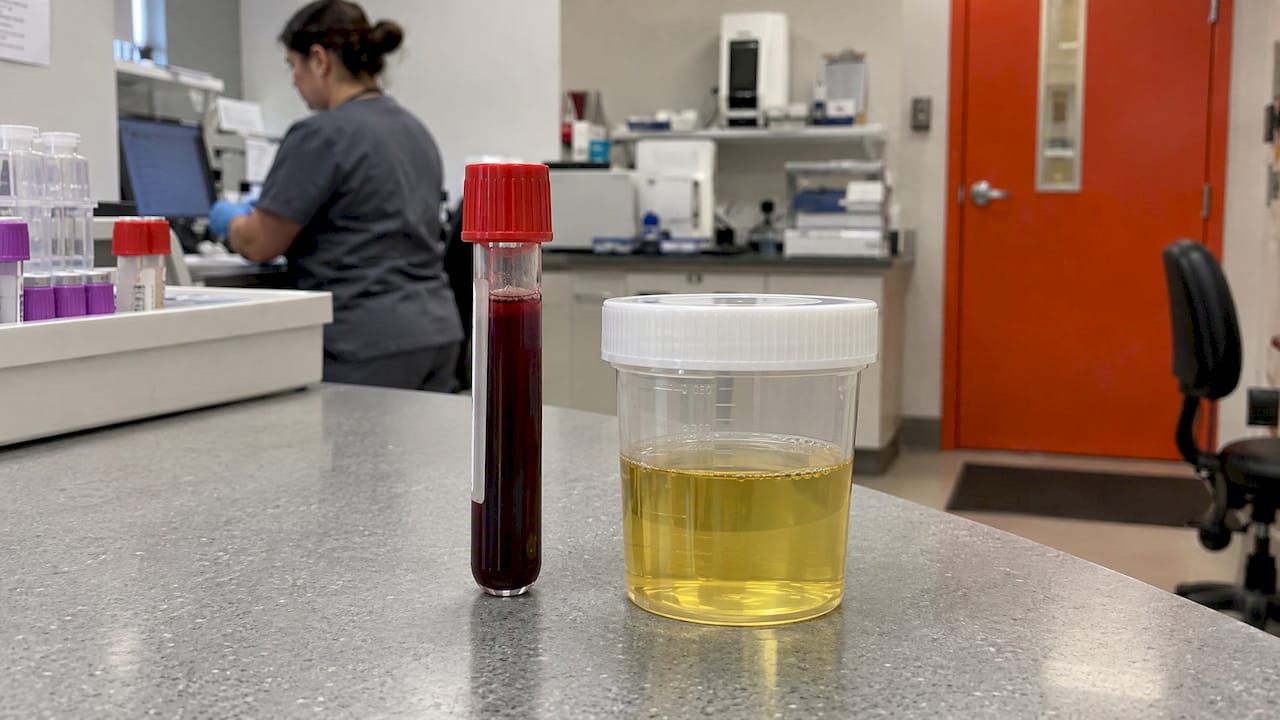
Blood vs. Urine Drug Test: Differences, Detection Times, Accuracy
A urine test looks back further and is far more common. A blood test looks at the present moment and is mostly used in medical settings. For THC, that gap is the whole story: urine can pick up cannabis metabolites for days or even weeks after use, while blood usually points to recent use. Below, we explain how each test is collected, what each can detect, when it is used, and what to do if you are facing one.
TL;DR
- Urine is the standard sample for workplace, legal and probation testing. It is noninvasive, fast and detects many drugs and their metabolites.
- Blood is used mainly in emergency rooms and hospitals, and for questions about very recent use or exact concentrations.
- For THC, urine has the longer window (days to weeks, depending on use pattern). Blood THC is usually a matter of hours, with exceptions for heavy daily users.
- Both tests use cutoffs. A result below the cutoff is reported negative, and a positive screen normally goes to lab confirmation.
- Know which test you will take before you plan anything. The sample type decides what matters.
Table of Contents
- The core difference between blood and urine drug tests
- How each test is collected
- Which test will you actually take?
- THC detection windows: blood vs. urine
- Cutoffs, screens and confirmation
- If you think a result is wrong
- Which test is better for you to understand?
- Get ready for the test you will actually take
- FAQ
- Sources
The core difference between blood and urine drug tests
Blood and urine answer different questions. Blood shows what is circulating in your body right now. Urine shows what your body has processed and is excreting, which is why it reflects a longer stretch of time.
The National Institute on Drug Abuse (NIDA) says urine is the preferred and most-used sample for drug testing. It is available in large amounts, contains higher concentrations of drugs and metabolites than blood, and does not need a needle. NIDA adds that blood or serum is used less often, alongside alternatives such as oral fluid, breath, sweat, hair and fingernails.
Here is the side-by-side view:
| Factor | Urine test | Blood test |
|---|---|---|
| How it is collected | You urinate into a clean container, sometimes with a nurse or technician present | A phlebotomist draws blood from a vein in your arm or hand |
| Typical settings | Employment, probation, treatment programs, pre-employment screening | Emergency departments, hospitals, some legal investigations |
| What it detects | Drugs and metabolites that have been excreted | Drug present in circulation at the time of the draw |
| Window for most drugs | Roughly 1 to 4 days | Often only hours |
| THC window | Can exceed a month in heavy, frequent use | Usually hours, longer in chronic daily users |
| Invasiveness | Noninvasive | Needle required |
| Best at showing | Past use over days | Recent use and exact concentration |
How each test is collected
Urine collection
Cleveland Clinic describes the process simply: you provide urine in a clean container, sometimes in the presence of a nurse or technician. The sample goes to a laboratory, and an initial positive usually needs confirmation with additional testing.
In federally regulated testing, collection can be tighter. DOT rules require observed urine collection in specified situations, including return-to-duty or follow-up testing, an out-of-range specimen temperature, apparent tampering, certain invalid or cancelled specimens, and some dilute results.
Labs also check that the sample is a real, normal urine specimen. A Labcorp specimen summary notes that validity checks can include creatinine, specific gravity, pH and nitrites.
Blood collection
Blood is drawn from a vein with a small needle. MedlinePlus says this generally takes less than five minutes. Because it needs trained medical staff, blood testing is rarely part of routine employment screening.
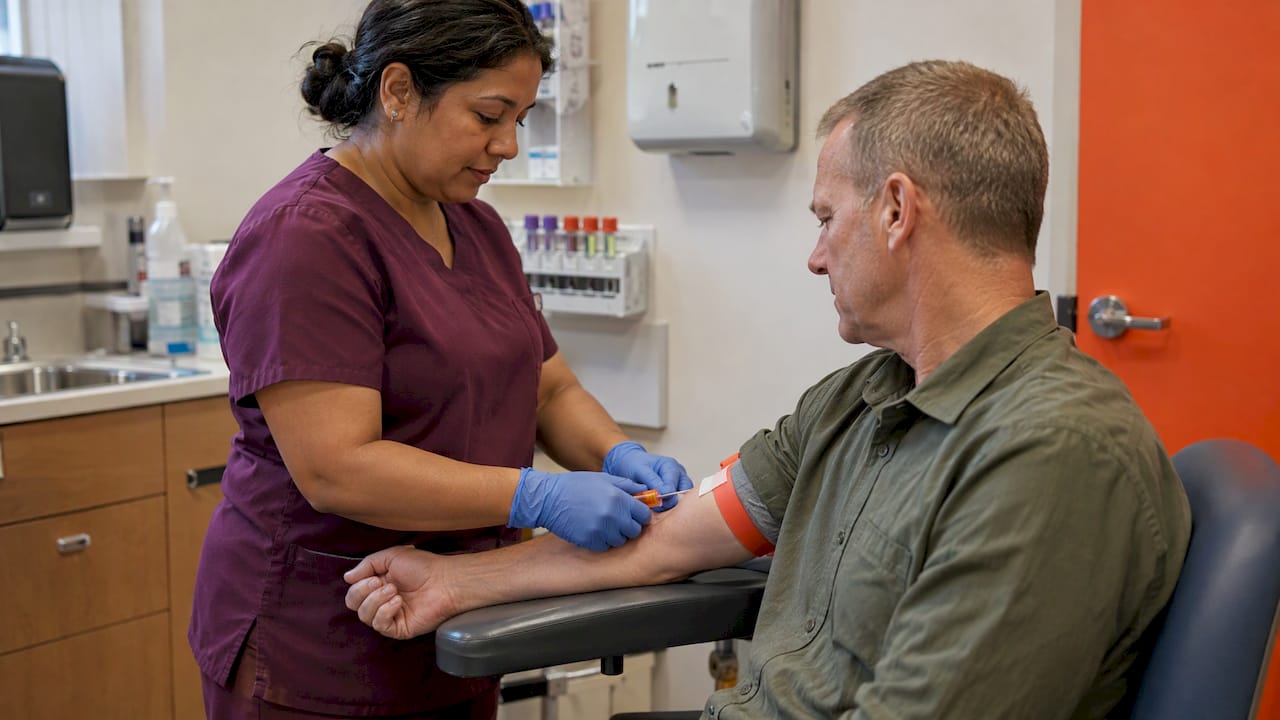
Cleveland Clinic says healthcare providers mainly use blood testing in emergencies, and commonly for ethanol, because blood can give a precise concentration.
Which test will you actually take?
In the United States, the answer is almost always urine. Cleveland Clinic calls urine testing the most common type, commonly targeting alcohol, amphetamines, benzodiazepines, opioids, cocaine and marijuana/THC.
NIDA lists many situations where testing happens: treatment programs, emergency medical assessment, prescription monitoring, employment programs, legal investigations, athletics and recovery residences. Within that list:
- Pre-employment and random workplace screens: usually urine, sometimes saliva or hair depending on the employer.
- Probation and court-ordered testing: usually urine.
- Hospital or accident situations: blood is more likely, because clinicians need to know what is in your system now.
- Federally regulated jobs (DOT): urine under a defined federal process.
If you are unsure, ask the employer, the testing program or the collection site which sample they use. They will tell you. If saliva is on the table, our comparison of urine and saliva testing covers how the two differ.
THC detection windows: blood vs. urine
This is where most readers of this topic are focused, so it gets the most detail.
Urine
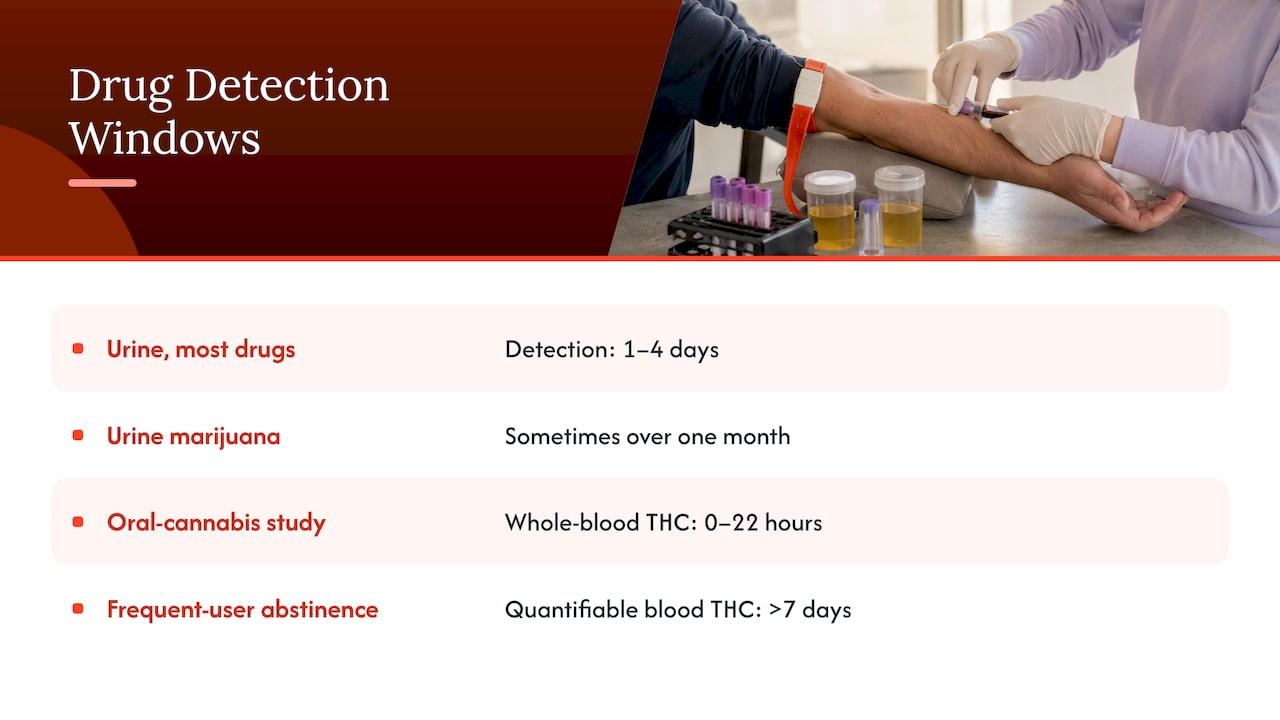
The Merck Manual gives an approximate 1-to-4-day window for most drugs in urine. Marijuana is the outlier: it says urine detection can exceed one month because cannabinoid metabolites persist.
The reason is chemistry. Urine tests do not look for THC itself. They look for metabolites, mainly THCCOH. A toxicology review estimates the urinary excretion half-life of THCCOH at roughly 3 to 4 days, which is slow. That slow clearance is why a single use and a daily habit produce very different timelines. Our guide to marijuana urinalysis detection times breaks the ranges down by use pattern.
Blood
Blood is the opposite: a short window, mostly. In a controlled study of 18 healthy adults who took oral cannabis, whole-blood THC was detectable for 0 to 22 hours at a limit of quantitation of 0.5 ng/mL. The authors note that the route of administration matters when interpreting cannabinoid results.
There is a notable exception. The same toxicology review reports quantifiable blood THC for more than 7 days during abstinence in chronic, frequent users. THC is fat-soluble, so heavy users can keep a low level in circulation longer than occasional users. For a closer look, read our piece on blood THC detection.
What changes your own window
No single number fits everyone. The factors that move the timeline are consistent across the literature on cannabis testing:
- How often you use. This is the biggest one. Occasional use clears sooner; daily use builds up in the body and extends the window, as the long-window findings above for chronic users show.
- How the sample is measured. The cutoff the lab applies decides whether a trace counts. A lower cutoff catches use for longer.
- Route and amount. The oral-cannabis study above stresses that route changes how you interpret results.
- Sample type. Blood and urine measure different things (parent drug versus metabolite), so the same person can look very different on each.
- Dilution and specimen validity. Labs check creatinine and specific gravity, so a very dilute sample can be flagged rather than simply read as negative.
Because individual bodies differ, treat every published window as a range and not a promise.
Cutoffs, screens and confirmation
Both tests work with cutoffs. NIDA explains that a drug test detects only the targeted drugs or classes at or above a predetermined cutoff, and that it cannot diagnose a substance use disorder.
For federally regulated urine testing, DOT sets the marijuana-metabolite cutoffs at 50 ng/mL for the initial test and 15 ng/mL for confirmation. Results below the applicable cutoff are reported negative, and a confirmed positive has to meet the confirmation cutoff. Many private employers use similar numbers. We explain what these numbers mean in our guides to THC cutoff levels and federal drug test cutoff levels.
The two-step process
NIDA describes the usual sequence: an initial presumptive screen, commonly a urine immunoassay, followed by laboratory confirmation using gas or liquid chromatography with mass spectrometry. Labcorp’s summary says the same about urine positives being confirmed by chromatography and mass spectrometry.
That matters in practice. The screen is a first pass. The confirmation is the result that counts, and it is far more specific.
Accuracy and what can go wrong
Immunoassay screens use antibodies, so assay design matters. Clinical urine-testing guidance notes that class immunoassays may miss some semisynthetic or synthetic drugs unless those are specifically included. The practical lesson: the panel your test uses determines what it can see. A standard THC panel looks for cannabis metabolites, not every substance.
If you want to learn to read the actual report or strip, see our guide on how to read drug test results. On exposure questions, the secondhand smoke article explains how the 50 ng/mL cutoff applies.
If you think a result is wrong
NIDA’s advice is to contact the drug-testing program or a qualified health care professional. Confirmatory testing and review by a medical review officer can help resolve discrepancies. Mention any prescription or over-the-counter medicine you take at that point, since the reviewing officer is there to weigh exactly that.
Which test is better for you to understand?
There is no better test in the abstract. There is the test your situation uses.
- You have a job screening or a probation requirement: plan for urine. That is the sample to understand in depth: cutoffs, timelines and validity checks.
- You are in a medical emergency: blood is likely, and the clinicians decide.
- You are not sure: ask the testing program, in writing if you can, which sample and which panel they use.
Our perspective
We see the same pattern every day: people search “blood vs urine” when what they really need is a clear picture of the test in front of them. In the United States, for work, legal and probation settings, that test is urine nearly every time, and THC is the substance that trips people up because its metabolites linger.
That is why we built Pass My Drug Test as both a guide and a store. We want you to read the detection times, understand the cutoffs and match your situation to the right sample type before you buy anything. Our urine, saliva and hair testing categories exist so you can pick a product built for the test you will actually face, with fast shipping across the United States and phone support during published business hours.
Knowing the test is half the work. We are here for the other half.
MIchael
Get ready for the test you will actually take
If your screen is urine, start with our urine drug testing category for at-home test kits and related products. If you are not sure what sample you will be asked for, browse everything on Pass My Drug Test or call us during our published business hours. We ship fast within the United States.
Whatever you choose, match the product to the sample type and the panel. That is what makes preparation useful instead of guesswork.
FAQ
Are drug tests usually urine or blood?
Urine, by a wide margin. NIDA calls it the preferred and most-used sample, and Cleveland Clinic calls it the most common test. Blood is used less often, mostly in emergency and hospital settings.
Does a blood test or a urine test detect THC longer?
Urine does for most people. Metabolites persist, and the Merck Manual says marijuana detection in urine can exceed a month. Blood THC is often only hours, though a toxicology review reports detectable levels beyond 7 days in chronic, frequent users.
Is a urine drug test result final after the first screen?
No. A positive immunoassay screen is normally followed by laboratory confirmation using chromatography and mass spectrometry. Under DOT rules, results below the cutoff are reported negative, and a positive must meet the confirmation cutoff.
What should I do if I think my result is wrong?
Contact the testing program or a qualified health care professional, as NIDA advises. Ask about confirmatory testing and review by a medical review officer, and bring a list of any medications you take.
Can an employer require a blood test instead of urine?
It is uncommon for routine screening, because blood needs a trained person to draw it. Employers and programs set their own sample type, so ask which one applies to you. Federally regulated roles follow DOT’s urine-based process.
Sources
- Drug Testing | National Institute on Drug Abuse (NIDA)
- Drug Test: What It Is, Purpose, Procedure & Types | Cleveland Clinic
- Drug Testing | Merck Manual Professional
- Drug Testing: MedlinePlus Medical Test
- DOT Rule 49 CFR Part 40 Section 40.67
- DOT Rule 49 CFR Part 40 Section 40.85
- Pharmacokinetic profile of oral cannabis in humans | RTI
- THC And Cannabinoids: Chemistry, Methods Of Detection And Interpretation
- Drug Testing Options Summary | Labcorp
- Urine Drug Testing: Current Recommendations and Best Practices