
The Drug Test Process: What Happens, Step by Step
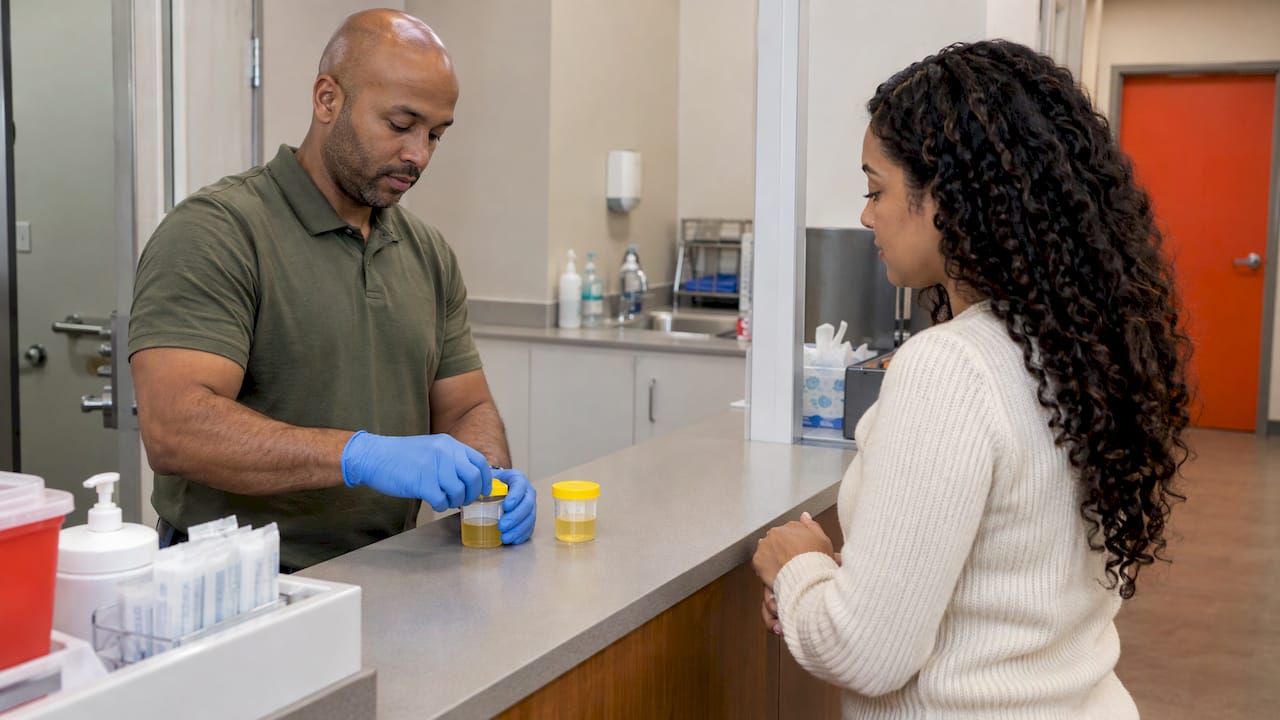
A drug test follows the same basic path almost everywhere in the U.S.: you are told to report, you show ID, you give a sample (usually urine), the sample is screened, and any positive screen is confirmed by a second, more precise lab test before a result is final. Knowing each step ahead of time takes most of the stress out of it. This guide walks through the process from the notice you receive to the result you get back.
TL;DR
- Most tests start with a quick screen. A positive screen is then confirmed with a more specific laboratory method before it counts as final.
- Urine is the most common sample. Hair, saliva, blood, sweat, and breath are also used, depending on the test.
- In a federal-style urine collection, you show ID, give at least 45 mL in private, and watch the collector check and seal the sample in two bottles.
- Tell the collector about every prescription, over-the-counter medicine, and supplement you take, and skip poppy seed foods beforehand.
- A positive result is usually reviewed before it reaches your employer, and you can ask for a retest of the split sample within a set window.
Table of Contents
- What a drug test looks for
- Sample types: urine, hair, saliva, and others
- Step by step: a urine drug test
- Hair and saliva collections
- What happens to the sample in the lab
- How long results take
- How to read your results
- Preparing the right way
- Using an at-home test first
- Where we fit in
- Our perspective
- FAQ
- Sources
What a drug test looks for
A drug test does not look for “drugs” in general. It looks for specific substances or drug classes. According to the National Institute on Drug Abuse, tests can screen for alcohol, amphetamines, barbiturates, benzodiazepines, cocaine, marijuana, opioids, and phencyclidine (PCP). NIDA also notes that the target list can change as new drugs enter the drug supply.
That is why two tests can give different answers about the same person. A basic panel and an expanded panel check for different things. Panels are named by how many drug groups they cover, such as a 5-panel or 10-panel test. A 6-panel test is simply a panel with six drug groups, and which six depends on the employer or program that ordered it. Before test day, ask the person who scheduled the test for the exact list. If it is a workplace test, the HR contact or the written testing policy is the place to find it.
Sample types: urine, hair, saliva, and others
Urine is the most common sample. NIDA lists blood, hair, saliva, sweat, and breath as other options, and the Cleveland Clinic describes the same set of biological samples.
Here is how the three samples people ask about most compare in practice.
| Sample | How it is collected | What the reader should know |
|---|---|---|
| Urine | You urinate into a collection cup in a private restroom or stall | The most common type, so the steps below apply most often |
| Hair | A small sample is cut close to the scalp | Collected by a staff member, with no restroom step |
| Saliva (oral fluid) | A swab or collector is placed inside your mouth | Quick to collect, and the collector watches the whole time |
Which one you get is decided by whoever orders the test, not by you. If you are not sure which one to expect, ask when you are scheduled.
Step by step: a urine drug test
The most detailed public description of a collection comes from federal workplace testing. The U.S. Department of Transportation’s employee handbook lays it out. Not every private employer follows the federal procedure exactly, but many collection sites use a similar flow, so it is a good model of what to expect.
1. You get notified and report to the site
You are told when and where to go. For pre-employment testing, this usually comes with a job offer. Go on time, and bring a valid photo ID. The collector will ask you to identify yourself before anything else happens.
2. Check-in and paperwork
The collector verifies your identity and explains the procedure. You empty your pockets, and you may be asked to leave bulky outer clothing and bags outside the collection area. The collector fills in a custody form that follows your sample from this point on. That form is the chain of custody, and it is what lets the lab and your employer trust that the sample in the bottle is yours.
3. You provide the sample
In the federal procedure, you provide at least 45 mL of urine in a private area, according to the DOT handbook. In some cases, someone may need to be present while you provide the sample, to make sure it is yours and has not been contaminated with anything that could affect the results, as MedlinePlus explains.
4. The collector checks and seals the sample
You hand over the cup. The collector checks the temperature of the sample and then pours it into two bottles, which you watch being sealed. These are the A bottle (the primary sample) and the B bottle (the split sample). The split exists so that a second certified lab can test the same specimen later if you dispute a result. You may be asked to initial the seals and sign the form.
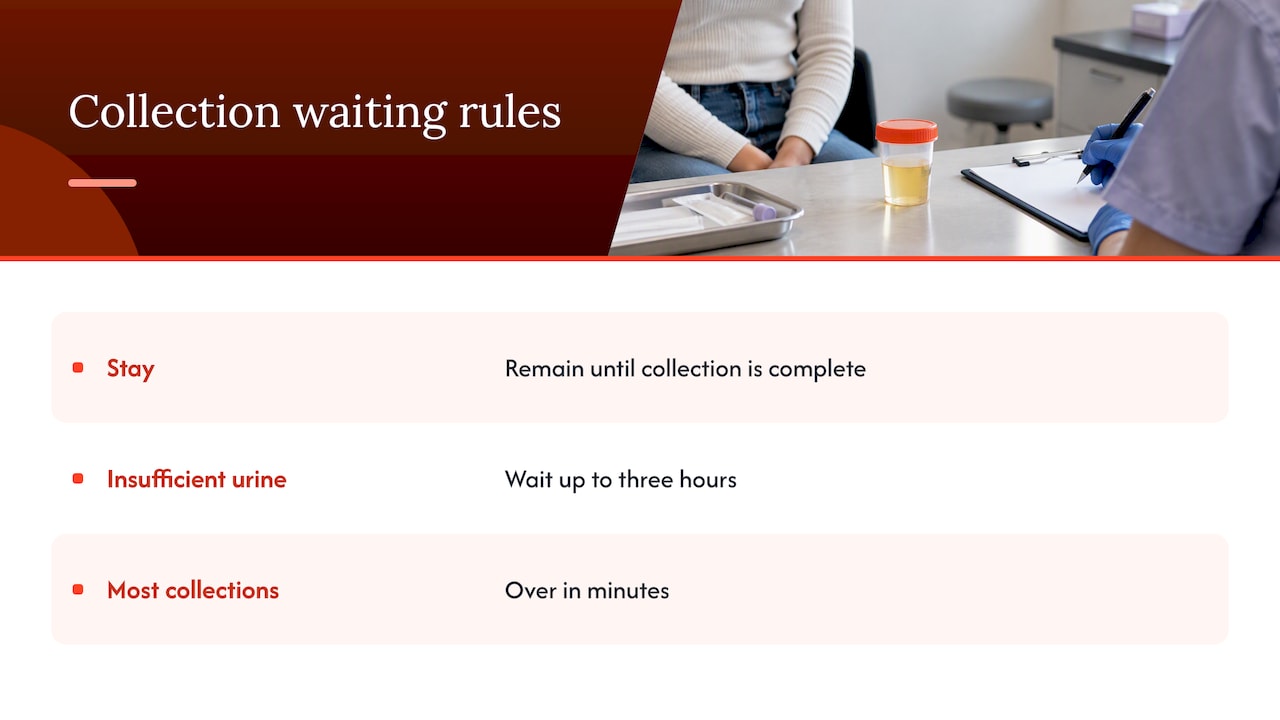
5. You stay until the collection is complete
The DOT handbook says you must remain at the site until the collection is complete. If you cannot produce enough urine, that can mean waiting. SAMHSA’s Medical Review Officer guidance says the waiting period can be up to three hours when a donor needs more time to provide a sufficient specimen. Drinking a moderate amount of water while you wait is usually how people handle it, and the collector will explain what is allowed at their site.
Most collections are over in minutes. The waiting period is the exception, not the norm.
Hair and saliva collections
A hair test takes a small sample cut close to the scalp, so there is no restroom step and nothing to wait for. A saliva test uses a swab or collector in your mouth. The collector usually asks you not to eat, drink, or put anything in your mouth for a short time beforehand, and the exact instructions come from the specific kit or site.
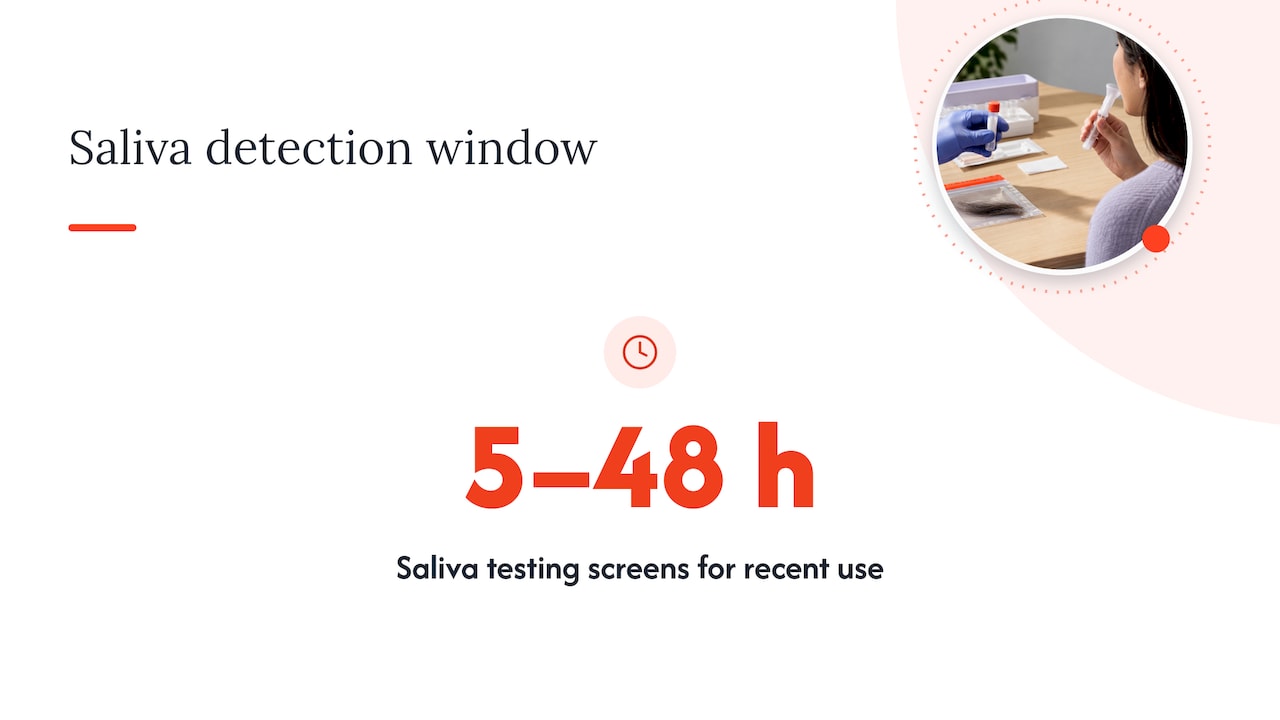
One published figure is worth knowing: one clinical guide describes saliva testing as a screening method for recent use, typically within the last five to 48 hours. Detection windows differ by drug and by test, so treat any window as a rough guide and ask the program for its own details. The point for the process is simple: a saliva test is quick to give, and the result reflects a short, recent period.
What happens to the sample in the lab
The lab does not make a final call on the first pass. According to NIDA, drug testing typically involves two steps:
- A presumptive screen. This is usually an immunoassay, a fast method that flags whether a drug or drug class may be present.
- A confirmatory test. If the screen is positive, a more specific and sensitive method such as GC/MS verifies the result.
This matters because a screen alone can be wrong. Merck Manuals notes that tox screens have limits and that false positives can occur. Confirmation exists to catch exactly that.
A negative screen usually ends the process. Only positives go on to confirmation.
How long results take
Initial urine screens can return results quickly, while confirmatory tests take longer because the sample goes to a laboratory, according to NIDA. So a negative can come back fast, and a result that needs confirmation can take extra days. The exact turnaround depends on the lab, the employer, and whether anything needs review.
If you are waiting on a job start date, ask the employer or collection site how they deliver results and how long their process usually runs. That is more reliable than any general number.
How to read your results
Results generally fall into a few buckets.
- Negative. The tested drugs were not found, or were below the cutoff level for a positive, per MedlinePlus.
- Positive. One or more drugs were found in amounts that suggest use or misuse. This is typically followed by a confirmatory test.
- Invalid or inconclusive. The sample could not be properly interpreted. In practice this often means a recollection is requested. Ask the collection site or employer what their policy is.
The review step after a positive
In federal workplace testing, a positive specimen goes to a Medical Review Officer (MRO) before the employer hears anything. According to the DOT handbook, the MRO interviews you to find out whether there is a legitimate medical explanation, such as a prescription, before verifying the final result to the employer.
This is the reason to be open about your medications. If you take a prescription, have the prescriber’s name and the medication ready.
Asking for the split sample to be tested
Under the same handbook, employees have 72 hours after the MRO notifies them of a verified positive to request that the split (B) specimen be tested at a different certified laboratory. That window is short, so if you ever receive a verified positive in a federal-style program, act on it right away and ask the MRO how to submit the request.
Preparing the right way
The Cleveland Clinic notes there is nothing special you need to do to prepare for a drug test. What helps is being organized about the practical things.
- Tell the collector about everything you take. MedlinePlus recommends telling the testing professional about prescriptions, over-the-counter medicines, and supplements, because they can affect results.
- Avoid poppy seed foods. MedlinePlus lists them as something to skip beforehand.
- Bring photo ID and the instructions you were given. The site can turn you away without ID.
- Do not take someone else’s prescription. It can cause a result you cannot explain to a reviewer.
- Know your hydration and timing. Urine concentration is influenced by hydration status and metabolic rate, according to the American Family Physician journal. Arrive reasonably hydrated so you can provide a sample without a long wait.
If you use THC and know a test is coming, the single most useful thing is to find out which sample type and which panel you will face. Everything else, including what products might fit, follows from that.
Using an at-home test first
Many people run an at-home screen before the real one, to know where they stand. The FDA explains that these tests work in two steps: a quick test at home, and, if it suggests a drug may be present, sending the sample to a lab. The agency also says laboratory confirmation is the most reliable way to establish the presence of drugs, and that certain foods, supplements, and medicines can cause false positives.
So treat a home result as a preview. It tells you what a screen might show. It does not predict what an employer’s lab will conclude.
Where we fit in
If you want to know which sample type applies to you, our site covers urine, hair, and saliva drug testing in one place. We also carry hair detox shampoo for people preparing for hair tests, and our guides explain the workplace, legal, and personal testing scenarios in the U.S. Our customer support team is reachable by phone during published business hours, and orders within the United States ship fast.
Browse the urine, hair, and saliva testing categories to find what matches the test you have been told to expect.
Our perspective
Most people we hear from are not worried about the test itself. They are worried about not knowing what the test will be. The process is more predictable than it feels: a check-in, a sample, a screen, and a confirmation if needed. The unknown is which sample type and which panel the employer or court has chosen.
That is why we built our site around the scenario first and the product second. A person facing a urine test and a person facing a hair test need different information, and different preparation. We designed our selection of urine, hair, and saliva testing options and our hair detox shampoo so that you can match what you buy to the test you actually have.
We also think a home test is a smart first step. It lets you see a screen result in private before the one that counts, and it gives you time to plan. And when you are not sure, our team can talk it through with you by phone during business hours.
MIchael
FAQ
What happens during a drug test?
You show ID, complete paperwork, and give a sample, most often urine. In a federal-style collection, you provide at least 45 mL in a private area, and the collector checks the temperature and seals the sample in two bottles while you watch. The sample is then screened, and any positive is confirmed by a second lab method.
How long does a drug test take?
The collection itself is usually short. If you cannot provide enough urine, federal procedure allows a wait of up to three hours. Results depend on the lab: initial screens can be fast, while confirmatory tests take longer.
Can someone watch me give the sample?
Sometimes. MedlinePlus says that in certain cases someone may need to be present to make sure the urine is yours and has not been contaminated. The collection site or employer can tell you when that applies.
What is the difference between a screen and a confirmation test?
A screen is a fast first pass that flags whether a drug may be present. A confirmation, such as GC/MS, is a more specific method used to verify a positive screen. Only a confirmed result is treated as final.
Can I dispute a positive result?
In federal workplace testing, you can speak with the Medical Review Officer about a medical explanation, and you have 72 hours after a verified positive to request testing of the split sample at a different certified lab. Other programs have their own rules, so ask for the written policy.
Sources
- Drug Testing, National Institute on Drug Abuse
- What Employees Need to Know About DOT Drug & Alcohol Testing
- Medical Review Officer Guidance Manual for Federal Workplace Drug Testing, SAMHSA
- Drug Testing, MedlinePlus
- Drug Test: What It Is, Purpose, Procedure & Types, Cleveland Clinic
- Drugs of Abuse Home Use Test, FDA
- Drug Testing, Merck Manual Professional Edition
- Urine Drug Tests: Ordering and Interpretation, American Family Physician