
Zinc and a Saliva Drug Test: What It Does and Doesn’t Do
Zinc will not change the result of a saliva drug test. The idea comes from old claims about urine testing, and oral fluid works differently: the sample is collected from your mouth, usually while someone watches, and any non-negative screen goes to a laboratory for confirmation. Taking extra zinc adds a health risk and gives you nothing in return. Below we cover why the myth exists, what a mouth swab actually checks, what affects your detection window, and what to do if you have a test coming up.
TL;DR
- Current evidence does not support oral zinc as a way to change a drug test, and lab confirmation methods are built to catch what a screen might miss.
- The zinc stories mostly concern urine, not saliva. Our own write-up explains why zinc pills can’t fool drug tests.
- Adults should stay under 40 mg of zinc a day from food and supplements unless a health care provider says otherwise.
- Your saliva detection window depends on how much and how often you use, plus the test’s sensitivity. Time and knowing your test type matter far more than any supplement.
- CBD itself is not what a workplace test looks for, but products with trace THC can still matter.
Table of Contents
- Where the zinc idea comes from
- What a saliva drug test actually checks
- What really affects your detection window
- Does CBD show up on a mouth swab?
- The health side: too much zinc is a real problem
- What to do instead if you have a saliva test coming up
- Our perspective
- Find the right saliva testing option
- FAQ
- Sources
Where the zinc idea comes from
Search for zinc and drug tests and you will find forum threads, short videos and old articles saying zinc “masks” marijuana. Almost all of them trace back to a single idea: that zinc, usually zinc sulfate, interferes with the chemistry of a urine screening test. Even in that story, the claims involve putting zinc directly into a urine sample, which is a different thing from swallowing a supplement. We break that distinction down in our zinc myth article.
The myth then gets recycled for every test type. People who learn they will face a mouth swab search “zinc saliva drug test” hoping the same trick carries over. It does not, for a few reasons:
- Swallowed zinc does not reach the concentrations needed. A review of the topic concludes that oral zinc does not reach levels in the body that could interfere with properly conducted testing.
- A saliva sample is not a urine sample. There is no cup you can tamper with. The collector typically handles the swab and watches the process.
- The screen is only the first step. Anything non-negative is confirmed by a second, more specific method.
If you take zinc for a cold or because your doctor suggested it, that is fine. Just don’t expect it to do anything on test day.
What a saliva drug test actually checks
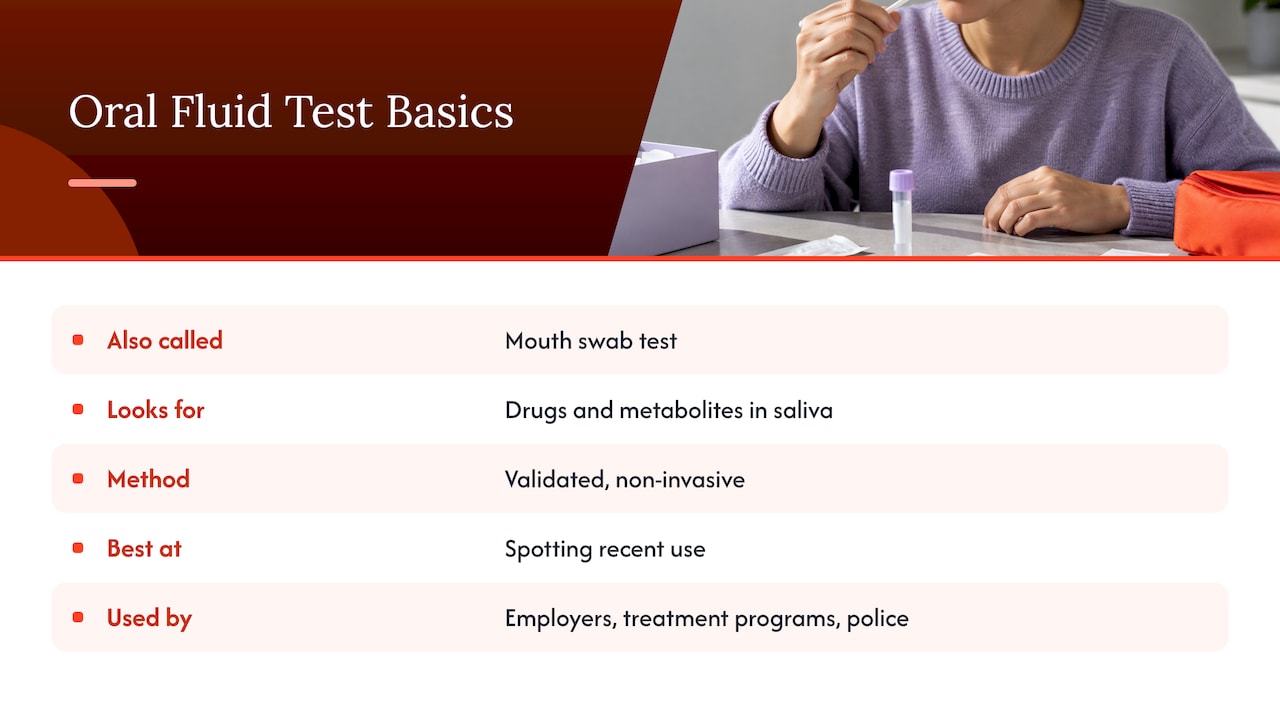
An oral fluid test, also called a mouth swab test, looks for drugs and their metabolites in saliva. According to Cleveland Clinic, these tests commonly detect alcohol, amphetamines, cocaine, ecstasy, marijuana (THC), methamphetamine, opioids and Rohypnol. Employers use them, treatment programs use them for monitoring, and police use them at the roadside.
SAMHSA describes oral fluid testing as a validated, non-invasive method that is particularly good at spotting recent use, for example after an accident or a traffic stop. That is the key point for anyone who uses THC: a mouth swab is a snapshot of the recent past, not a long history like a hair test.
For a deeper walk-through of the process, see how a saliva drug test works.
How the sample is collected
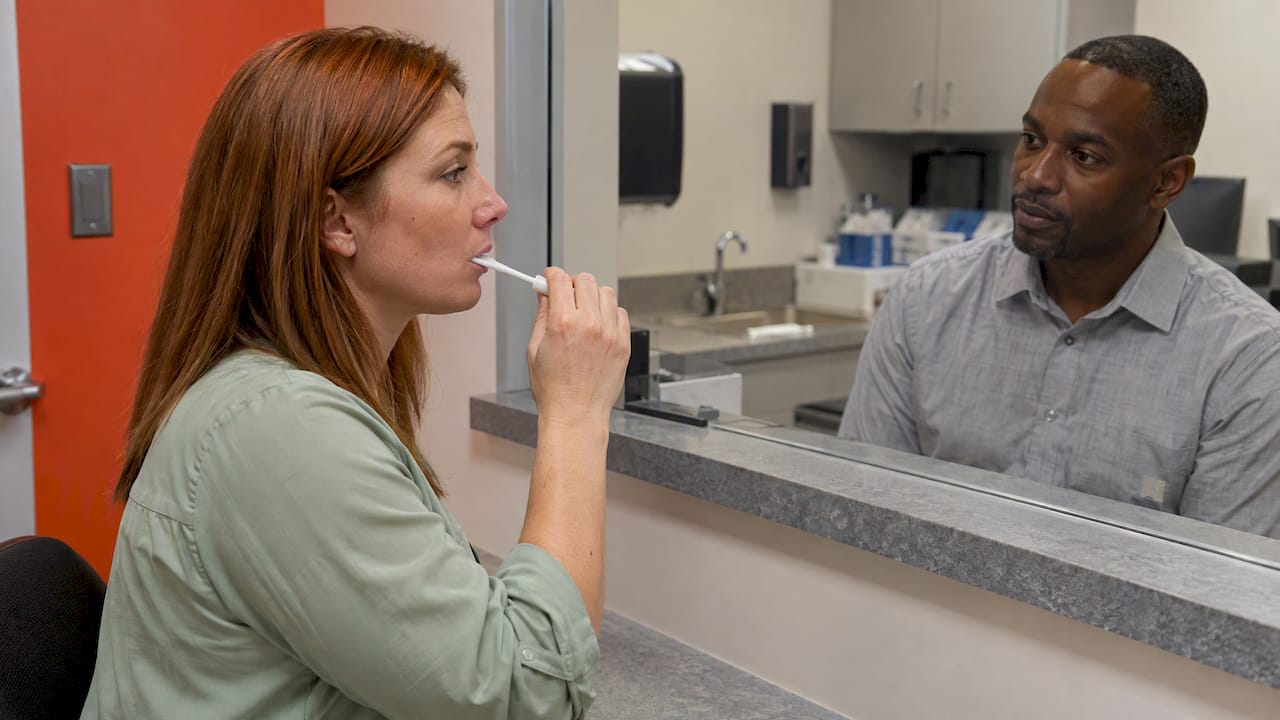
A collector uses a cotton swab, absorbent pad or sponge to take saliva from inside your cheek. The sample can be read on-site within minutes or sent to a lab. Two practical details from SAMHSA’s clinical guidance:
- Avoid food, drink or smoking for 10 to 30 minutes before collection so the sample stays reliable.
- Stimulant and opioid use can cause dry mouth, which can make it harder to provide enough oral fluid.
The same guidance notes that validated oral fluid assays are not typically thrown off by common foods or mouthwash used more than 30 minutes before collection. An FDA review of one oral fluid test found no discrepant results when it was tested with food items. If everyday food and rinse don’t move the result, a zinc capsule is not going to.
Why direct observation matters
Federal guidance for medical review officers points out that oral fluid tests are less prone to adulteration than urine tests because a collector typically observes the collection. That is one reason employers who worry about tampering choose saliva. It also explains why the supplement tricks that circulate online have so little to work with.
Screening and confirmation
Most on-site tests are screens. When a screen comes back non-negative, the sample goes for confirmation using gas chromatography–mass spectrometry or liquid chromatography–tandem mass spectrometry. These methods identify the specific substance rather than reacting to a broad chemical signal, which is why zinc claims built around screening chemistry fall apart at the lab stage.
What really affects your detection window
Saliva detection can last from a few hours to a few days, depending on the drug and how much you took. Forensic toxicologists list the factors that shape it: the substance’s chemistry, dose, route of administration, frequency of use, and the test’s sensitivity and cutoff concentrations.
In plain terms:
| Factor | What it means for you |
|---|---|
| How much you used | Larger amounts generally leave more to detect |
| How often you use | Regular use makes a longer window more likely than a single occasion |
| How you used it | Smoking, vaping and edibles are handled differently by the body |
| Test sensitivity | A test with a lower cutoff can detect smaller amounts |
| Time since last use | Oral fluid is about recent use, so time is the biggest lever |
None of those rows says “zinc.” If you want a realistic read on timing, our guide to saliva drug test detection time walks through what to expect.
Does CBD show up on a mouth swab?
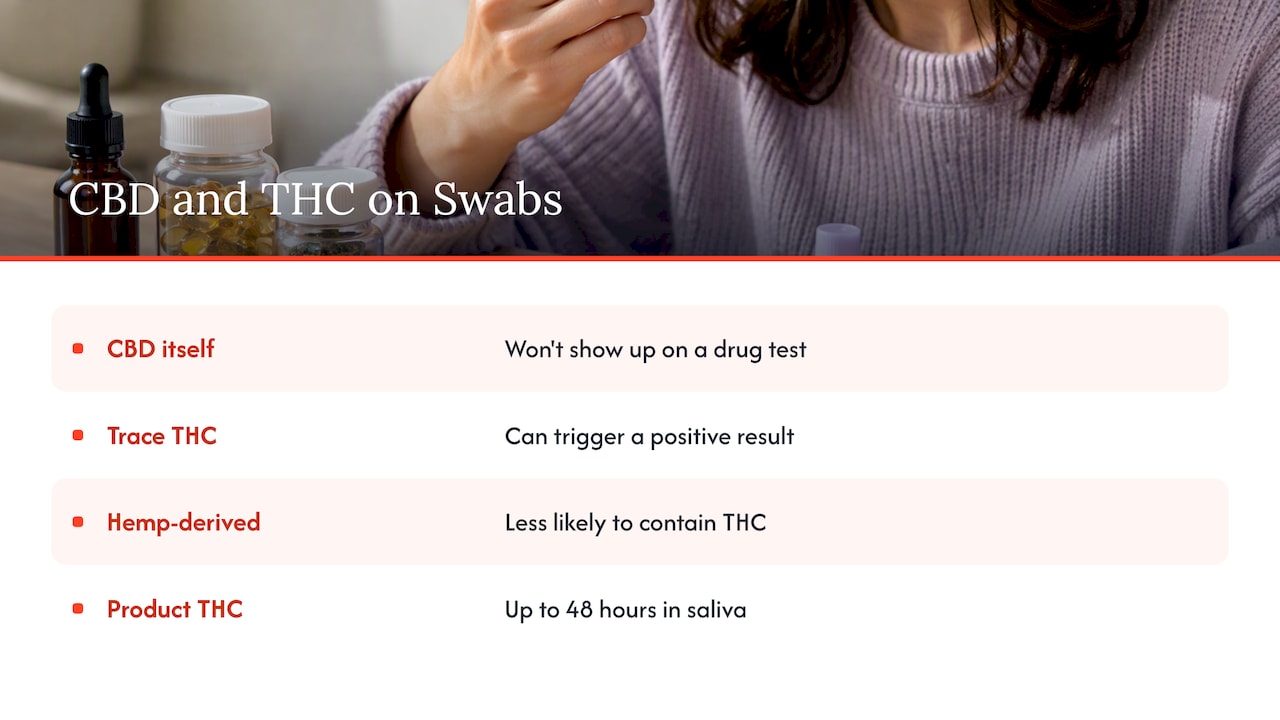
Workplace tests screen for THC, not CBD. Background-check company Checkr notes that CBD itself won’t show up on a drug test, but many CBD products contain trace amounts of THC that can trigger a positive result. The same source says hemp-derived products are less likely to contain THC than marijuana-derived ones, and that THC from such products can be found in saliva for up to 48 hours.
If you have a test coming up and use CBD, check the label for THC content and be ready to tell the collector or medical review officer what you take. Products with no stated THC content are the ones to be most careful with.
The health side: too much zinc is a real problem
Zinc is an essential mineral, and normal amounts are healthy. The trouble starts when people take large doses chasing a test result. The National Institutes of Health sets the adult upper limit at 40 mg per day. Going above it can lead to:
- nausea, dizziness, headaches and vomiting
- loss of appetite
- suppressed immune function
- lower HDL (“good”) cholesterol
- copper deficiency, which may cause anemia and loss of coordination
That limit does not apply to people receiving zinc for medical treatment under a provider’s supervision. For everyone else, the NIH advises adults not to exceed 40 mg a day from food and supplements unless a health care provider recommends it. If you have already taken a lot of zinc and feel unwell, call your doctor or Poison Control at 1-800-222-1222.
Taking a risky dose of a mineral for a result it cannot deliver is the worst trade you can make before a screening.
What to do instead if you have a saliva test coming up
The useful moves are the boring ones, and they work in your favor:
- Find out which test you are getting. Saliva, urine and hair tests look at different windows. Ask the employer, probation office or program which one applies. If it is saliva, you are dealing with recent use.
- Count the time honestly. Since oral fluid reflects recent use, the days between your last use and the collection matter more than anything else.
- Follow the collection rules. Skip food, drink and smoking for the 10 to 30 minutes before the swab, so your sample is not questioned.
- Disclose medications and supplements. Tell the collector or medical review officer about prescriptions, CBD and supplements. A legitimate prescription can be verified.
- Know what a result means. A non-negative screen is not the end: it goes to a lab, and you may be able to discuss it with the medical review officer.
- Compare test types. If you can choose or are curious why saliva is used, our breakdown of saliva versus urine testing shows how they differ in what they catch.
If you are preparing for a mouth swab and want the full set of options we cover, start with our guide to passing a mouth swab drug test.
Our perspective
We hear from a lot of people who have already tried zinc, or are about to, because a thread told them it works. We would rather you hear the plain version from us before you spend money or take a risk with your health.
Our approach at Passmydrugtest is to match the answer to the test. A mouth swab, a urine screen and a hair test are three different problems, and each has its own timeline and its own handling. That is why we pair educational guides with a curated selection of products, and why we offer live phone support during published business hours: so you can talk through your specific situation before you order.
If you are facing a saliva test, the most useful first step is to understand the test itself. Our saliva testing category and guides are built for exactly that, and our US shipping is fast, so you are not left waiting when your timeline is tight.
MIchael
Find the right saliva testing option
If you want to know where you stand before an oral fluid screening, our saliva drug testing category is the place to start. We also carry urine and hair testing products, and hair detox shampoo, so you can match what you buy to the test you actually face. Orders ship fast within the United States, and you can call us during published business hours if you are unsure which fits.
You can browse everything on our home page, or go straight to the saliva testing products.
FAQ
Can zinc make you pass a saliva drug test?
No. Reviews of the science find that oral zinc does not reach concentrations that interfere with properly conducted testing, and saliva samples that screen non-negative are confirmed in a lab. Zinc claims mostly relate to urine tests anyway, as we explain in our zinc myth article.
What does a saliva drug test test for?
Common targets include alcohol, amphetamines, cocaine, ecstasy, marijuana (THC), methamphetamine, opioids and Rohypnol, according to Cleveland Clinic. The exact panel depends on the test your employer or program orders, so ask which one applies.
How long can THC be detected in saliva?
Saliva detection can last from a few hours to a few days, depending on the drug and the amount, per SAMHSA’s clinical guidance. Frequency of use and test sensitivity also change the window. Our detection time guide goes into more detail.
Does CBD show up on a mouth swab test?
CBD itself is not what workplace tests look for; they screen for THC. Some CBD products contain trace THC, though, and that can lead to a positive result, according to Checkr. Check labels and disclose what you use.
How much zinc is too much?
The adult upper limit is 40 mg per day from food and supplements, per the NIH Office of Dietary Supplements. Exceeding it can cause nausea, headaches, copper deficiency and more. Ask your health care provider before taking more.
Sources
- Oral Drug Test (Mouth Swab), Cleveland Clinic
- Clinical Drug Testing in Primary Care, SAMHSA
- Medical Review Officer Guidance Manual, SAMHSA
- 510(k) Substantial Equivalence Determination, FDA
- SOFT-AAFS Oral Fluid FAQ 2026
- Zinc Health Professional Fact Sheet, NIH Office of Dietary Supplements
- Questions and Answers About Dietary Supplements, NIH Office of Dietary Supplements
- Do Zinc Supplements Affect Drug Tests?, Talcada
- Guide to Mouth Swab Drug Tests, Prometheus Bio
- Does CBD Show Up On a Drug Test?, Checkr