
Nail Drug Test Timelines: 3–6 Months for Fingers, Up to 12 for Toes
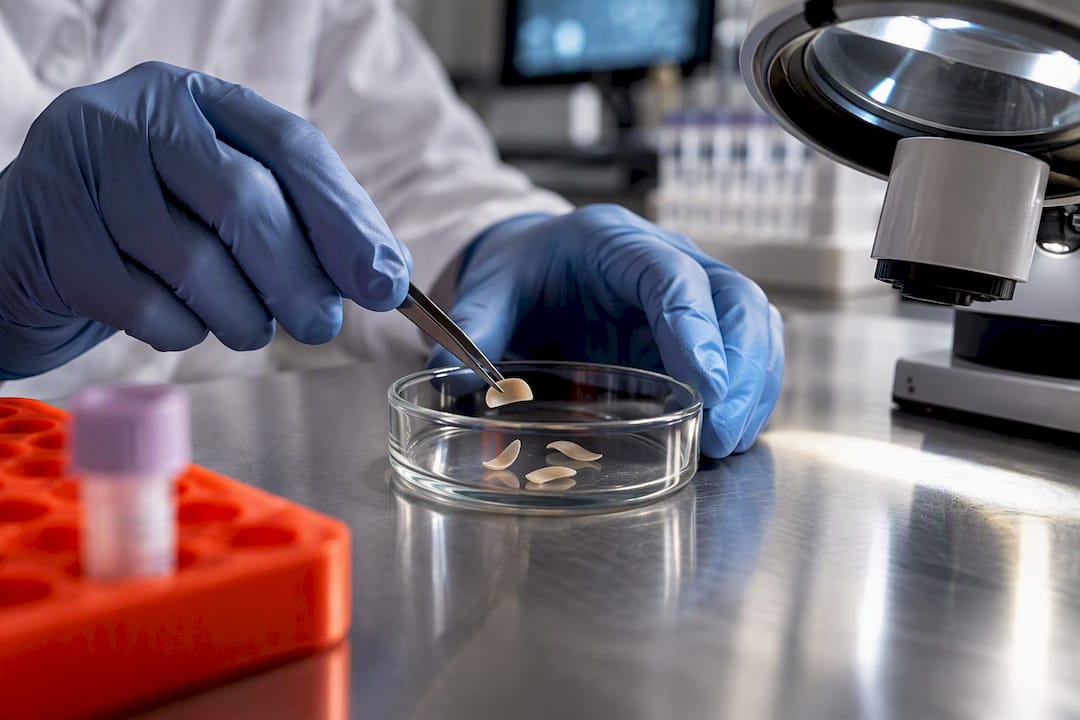
A nail drug test analyzes clippings from fingernails or toenails to detect drug metabolites trapped in the keratin as the nail grows, giving a window into use over the past several months rather than days. Fingernails typically cover a window of several months, and toenails can provide a longer detection period due to slower growth. Confirmed results rely on LC-MS/MS testing, which makes the method reliable for chronic use, though it’s less suited to catching a single, isolated incident.
TL;DR:
- Fingernail tests typically detect drug use from three to six months, while toenail tests can extend the detection window to approximately twelve months due to slower growth.
- A positive result relies on confirmatory LC-MS/MS testing, which accurately identifies metabolites and rules out external contamination or false positives.
- Detecting single-use drug exposure is unreliable, as nails are better suited to revealing chronic or repeated use patterns rather than isolated incidents.
- Variability in cutoff levels across labs and lack of standardization mean that results should be interpreted with caution, especially regarding thresholds.
- Nail testing collection is simple, involves minimal privacy concerns, and requires careful sample handling to avoid interference from polish or cosmetic treatments.
Table of Contents
- How a Nail Drug Test Works: The Biology Behind It
- What Drugs Show Up on a Nail Drug Test?
- How Far Back Does a Nail Drug Test Go?
- How Nail Samples Are Collected and Tested
- How Accurate Is a Nail Drug Test, Really?
- Can You Prepare for a Nail Drug Test?
- What Testers and Test-Takers Both Get Wrong
- Where Passmydrugtest Fits Into Your Testing Plan
- Sources
- FAQ
How a Nail Drug Test Works: The Biology Behind It
Nails grow from a bed of living cells that gradually hardens into keratin, and whatever is circulating in your blood at that time can end up locked inside. Researchers point to three plausible ways drugs get incorporated into the nail plate, and the exact split between them still isn’t fully settled, which is part of why interpreting nail results requires caution.
- Blood and germinal matrix uptake — drugs circulating in the bloodstream get absorbed in the nail’s growth root.
- Diffusion from the nail bed — the tissue underneath the nail plate contributes metabolites as the nail forms above it.
- Surface contamination from sweat — external exposure can settle onto the nail without reflecting actual ingestion.
Fingernails grow at a few millimeters per month, which creates the multi-month retrospective window. Toenails grow more slowly, which is why they can hold a longer record. This growth-rate difference, along with how nails absorb differently than hair follicles, means the two matrices don’t always line up cleanly when compared directly.
What Drugs Show Up on a Nail Drug Test?
Standard nail drug testing screens for the same drug classes labs check in urine or hair, just over a much longer timeframe. Panel size depends on what’s ordered, from a basic 5-panel to expanded 10 or 12-panel versions.
- Cannabinoids — THC metabolites from marijuana use.
- Cocaine — detected as benzoylecgonine (BE), cocaine’s primary metabolite.
- Opiates — including codeine, morphine, and related compounds.
- Amphetamines — covering both amphetamine and methamphetamine.
- Benzodiazepines — common anti-anxiety and sedative medications.
Beyond the standard panel, labs can run specialized add-ons like EtG testing for alcohol use, fentanyl-specific screens, or panels built for newer synthetic and designer drugs. Every sample goes through two stages: an initial screen that flags anything above a preliminary threshold, then a confirmatory test using LC-MS/MS that pinpoints the exact compound and rules out cross-reactivity. That second step is what separates a defensible result from a preliminary guess, especially in employment or legal contexts where a false positive carries real consequences.
How Far Back Does a Nail Drug Test Go?
Detection range depends heavily on which nail gets sampled and how often the person used the substance in question. Here’s what generally holds true, though individual variation is wide.
- Fingernails detect drug use going back roughly three to six months, based on typical growth rates.
- Toenails grow more slowly and can extend that retrospective window to around twelve months.
- Chronic or repeated use builds up higher, more detectable concentrations than a single incident.
- One-time use may fall below a lab’s cutoff entirely or show up only faintly, since nails are better suited to picking up sustained patterns than isolated events.
- Nail growth rate varies by age, health, and even the specific finger or toe sampled, shifting the exact window.
- Cosmetic treatments like acrylics, gel polish, or heavy filing can alter or remove testable material.
- Environmental contamination from handling drugs without ingesting them is a real, if manageable, variable labs account for.
None of these ranges are exact science for any one person. They’re population-level estimates, and a lab report should be read as a strong signal, not a precise calendar.
How Nail Samples Are Collected and Tested
Collection is straightforward and far less invasive than it sounds. Most labs request around 100 milligrams of nail clippings, usually pulled from multiple fingers or toes to get enough material, though some protocols ask for a single longer nail if one is available.
- Nail polish and artificial enhancements must be removed before clipping, since they can interfere with analysis.
- Clippings are typically taken close to the free edge but may include material further back depending on the requested window.
- Samples are stable at room temperature, which makes shipping simple compared to blood or saliva.
- Collectors document the process, including polish removal and sample source, to preserve chain-of-custody integrity.
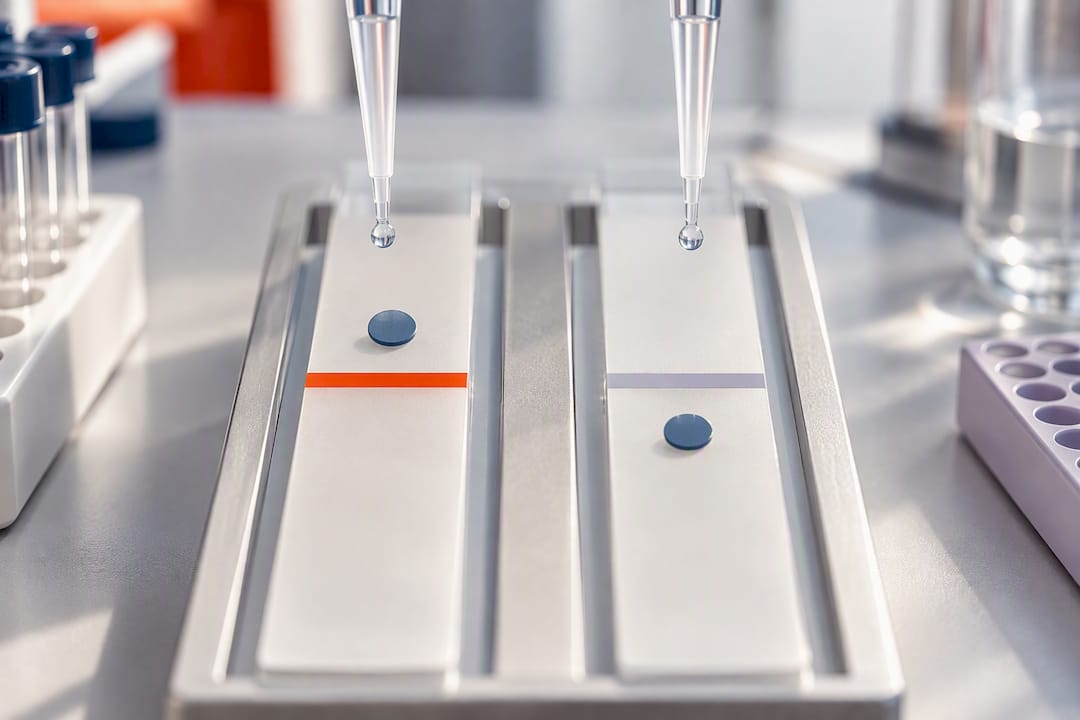
Turnaround runs a few days to about a week once the sample reaches the lab, similar to standard hair testing timelines. Screening methods vary by provider, but confirmation of any positive result comes from LC-MS/MS or the more sensitive LC-MS/MS/MS, the gold standard for distinguishing an actual drug metabolite from a chemically similar compound. Labs that hold accreditation to standards like ISO 17025 follow stricter documented procedures, which matters if a result might end up in a legal or employment dispute.
How Accurate Is a Nail Drug Test, Really?
When a positive result is confirmed through LC-MS/MS, nail testing is both sensitive and specific. The bigger limitation isn’t the chemistry. It’s the lack of universally agreed cutoff levels across every drug class, since standardization across the field is still catching up to what hair testing has established.
- Washing protocols before analysis help strip away surface residue that could otherwise cause a false positive from incidental contact.
- Labs look at metabolite ratios and patterns, not just presence, to distinguish ingestion from external exposure.
- Because nails behave differently than hair or blood, results often get interpreted alongside a person’s history and, when available, a second testing matrix.
Pro Tip: If you’re facing a nail drug test for a legal or custody matter, ask whether the lab reports quantitative results rather than a simple positive/negative. A concentration figure gives an attorney or reviewing physician far more to work with than a binary outcome.
Only a handful of studies have proposed preliminary cutoffs for specific analytes, which means two labs might flag the same sample differently depending on their internal thresholds. That’s not a flaw exactly, but it is a reason to ask any testing provider what standard they’re using before you rely on the result.
Can You Prepare for a Nail Drug Test?
Time is the only variable that reliably changes an outcome. Because nails record exposure as they grow, a longer stretch of abstinence means more of the drug-containing material eventually gets clipped away or grown past the testable zone. Guidance commonly used in preparation circles treats 90 days as a conservative planning baseline, though toenail tests may call for longer given their slower growth.
- Cutting nails short or applying polish does not erase what’s already embedded in the plate, since proximal segments still carry metabolites even after the visible tip is trimmed.
- Aggressive filing, soaking, or chemical tampering risks damaging the sample enough that a lab rejects it outright, which usually creates more suspicion than a clean result would have avoided.
- Skip unproven home remedies circulating online. Most have no real backing, and some carry their own safety risks.
- If a testing authority requires disclosure of prescribed medications, providing that information honestly upfront avoids confusion during result review.
Nail drug testing also raises fewer real-time privacy concerns than urine collection, since there’s no observed voiding involved, though the multi-month lookback period means it can surface use an employer or court might not otherwise learn about.
What Testers and Test-Takers Both Get Wrong
Most people underestimate how far back a nail drug test looks and overestimate how much a quick trim or polish job can change. The pattern we see most: someone assumes recent abstinence is enough, when the nail already grown past the cuticle has been recording for months. Time and honest abstinence remain the only dependable path. Treat any product as support, not a substitute.
— MIchael
Where Passmydrugtest Fits Into Your Testing Plan
If you’re facing a nail, hair, urine, or saliva screening and need information quickly, there are websites that offer a place to research the methods, compare products, and order what fits your timeline instead of piecing information together across multiple sites.
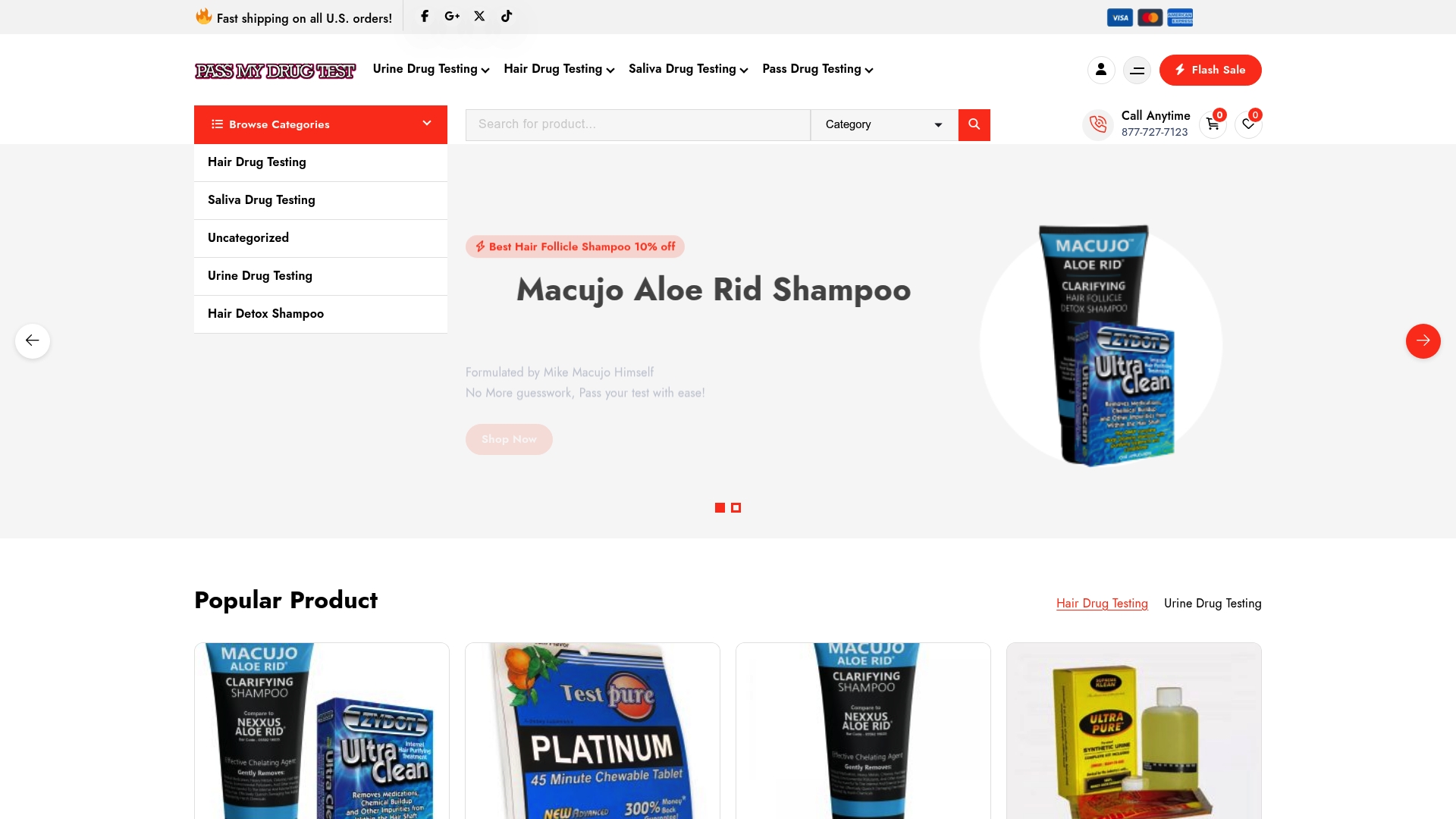
Because nail testing covers such a long lookback period, most readers researching it are actually trying to understand a hair follicle screening too, since employers sometimes order either matrix interchangeably. Passmydrugtest carries hair detox shampoo and testing supplies for exactly that situation, along with urine and saliva options if your specific screening calls for a different matrix. Fast United States shipping and phone support mean you’re not guessing alone at 11 PM the night before a scheduled test.
Being straight about what’s realistic matters here. No product on the market guarantees a negative result on a long-window test like a nail or hair screen. Abstinence and time are still what actually changes the underlying result. What a product like hair detox shampoo can do is support your preparation alongside that timeline, not replace it. Browse the full product lineup to see what fits your situation, or call during business hours if you need help figuring out which test type you’re actually facing.
Sources
- Nails in Forensic Toxicology: An Update
- Current status of keratinized matrices in Toxicology: Comparison of hair and nails
- Recovered
- Nail analysis for the detection of drugs of abuse and pharmaceuticals: a review – University of Antwerp repository
FAQ
How far does a fingernail drug test go back?
A fingernail drug test typically detects drug use from the past three to six months, based on average nail growth rates. Toenail testing can extend that window to around twelve months since toenails grow more slowly.
Is a hair or nail drug test more accurate?
Neither is universally “more accurate.” They measure different things: hair testing has more established cutoffs for many drugs, while nail testing offers a longer detection window but less standardized interpretation across labs.
Can a nail drug test detect one-time use?
Detecting a single use is inconsistent and often unsuccessful, since nail testing is generally better at picking up repeated or chronic exposure. A one-time dose may fall below a lab’s cutoff or show up too faintly to confirm.
What are the cutoff levels for nail drug tests?
Cutoff levels vary by lab and drug class, and standardized thresholds across the industry are still limited for many analytes. Only a small number of studies have proposed preliminary cutoffs for specific substances, so two labs may report the same sample differently.
How much does a nail drug test cost?
Pricing varies by lab, panel size, and whether expanded or specialty testing is included. Current product and testing pricing is available directly on the Passmydrugtest site.