
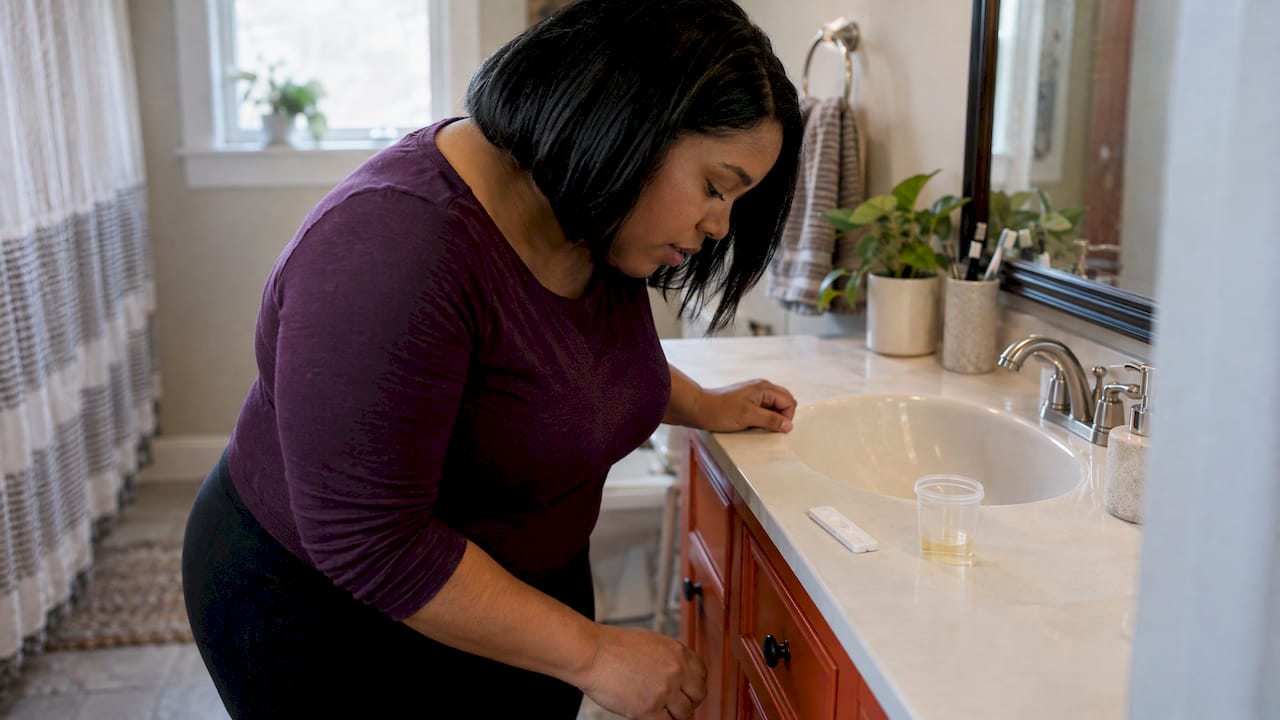
How to Use a Home Drug Test: Step-by-Step Guide
To use a home drug test, read the full instructions before you start, collect a fresh sample in the cup or with the swab, run the test exactly as the leaflet says, and read the result inside the stated time window. For a THC user in the US, the test works best as a private check before a workplace, legal or pre-employment screening, so you know where you stand while there is still time to act. Everything below is written for that situation.
We sell urine, saliva and hair drug tests at Passmydrugtest, and the steps here apply to all three types. Check your own kit’s leaflet for the exact timings, because they differ by brand.
TL;DR
- Read the whole leaflet first. With most kits the result must be read within a set number of minutes after you start, so you cannot learn the steps as you go (FDA).
- Check the expiration date and storage conditions before you open the kit, and use a fresh sample every time.
- A home test is a screen: it shows presence, not amount. A positive is normally confirmed by a lab, so treat a home result as an early signal.
- THC can show in urine for 1 to 7 days after use, and the window depends on how often and how much you use (FDA).
- Pick the sample type that matches the test you will face: urine, saliva or hair.
Table of Contents
- What a home drug test tells you
- Choose the right sample type first
- Before you open the kit
- How to use a urine home drug test
- How to use a saliva home drug test
- How to use a hair home drug test
- How long THC stays detectable
- Reading your result
- A home test and the lab test you are preparing for
- Common mistakes that skew a result
- Our view on testing before your test
- Get the right kit for your test
- FAQ
- Sources
What a home drug test tells you
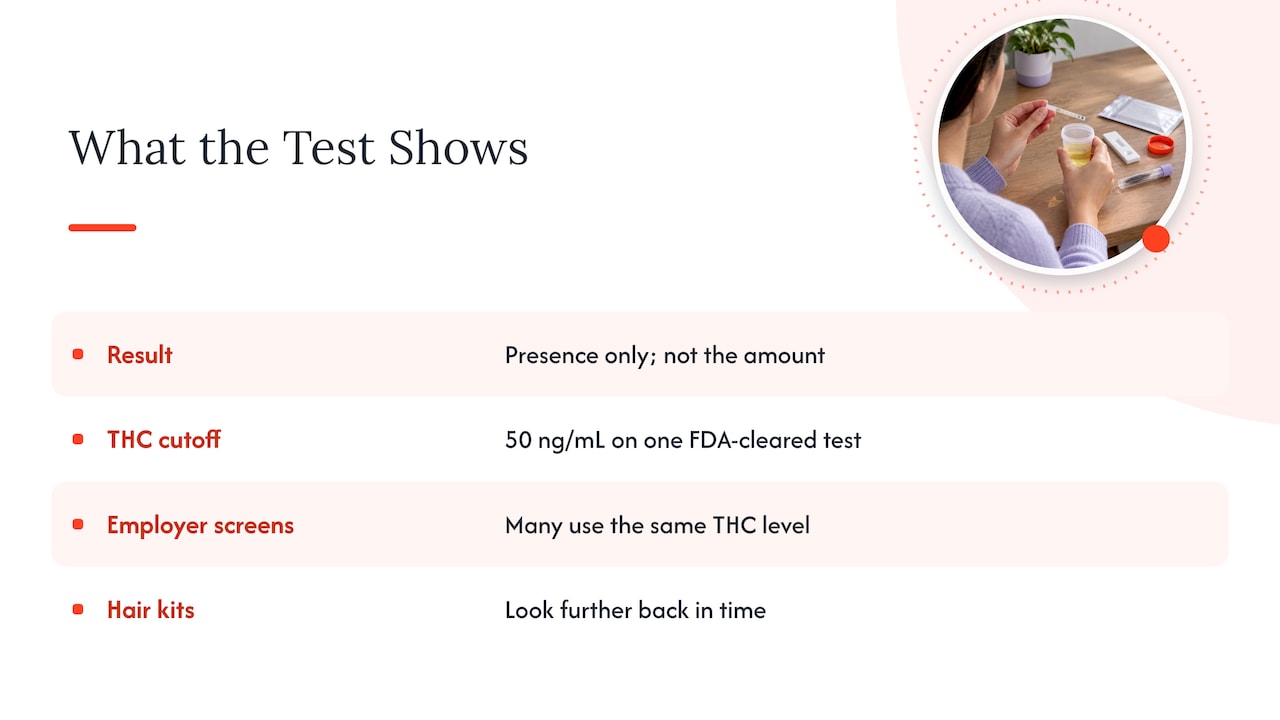
At-home drug tests are typically urine or saliva tests. They look for drugs such as marijuana, cocaine, opiates, amphetamines, benzodiazepines and others (Healthline). Hair kits exist too, and they look much further back in time.
The result is qualitative. According to the FDA, the test indicates whether a drug is present in the urine, but it does not tell you how much (FDA).
For THC, the cutoff is what matters. A test reads positive when the THC metabolite (the substance your body makes as it breaks THC down) is above a set concentration. One FDA-cleared multi-drug home test lists a marijuana cutoff of 50 ng/mL (FDA 510(k) record). That is the same level many employer urine screens use. We go deeper on this in Will a Weekend’s Use Trigger a 50 ng/mL Urine Drug Test?.
Choose the right sample type first
Urine is the most common sample overall (MedlinePlus), and it is what most pre-employment screens use. If your employer or probation officer tests another way, test the same way.
| Sample | How you collect it | What it reflects |
|---|---|---|
| Urine | Collection cup, then a strip, card or cassette | Use over roughly the past several days |
| Saliva | Swab inside the mouth | Very recent use |
| Hair | Small hair sample cut near the scalp | A much longer history |
Substances are generally present in saliva for up to about 2 days, in urine for about a week and in hair for up to about 3 months, according to one clinical review. Those are ranges, not guarantees. For the hair timeline, see Hair Drug Test Window: What to Expect and How Long It Lasts.
We stock all three types: urine drug testing, saliva drug testing and hair drug testing.
Before you open the kit
Most mistakes happen before the sample is collected. Do these five things first:
- Read the instructions all the way through. The FDA’s advice is to read and understand them before you collect the sample (FDA).
- Check the expiration date and how the kit was stored. The FDA tells users to check both before testing (FDA). A kit left in a hot car or a humid bathroom can give a bad reading.
- Lay out everything you need. A typical kit has a collection cup, the test (strip, card or cassette) and an instruction leaflet.
- Set a timer. Most kits are read visually within a few minutes of starting, so have a phone timer ready.
- Keep notes. The FDA recommends keeping good records. Write down the date, the time and what you read.
If you have a question about a specific kit, the leaflet lists a phone number to call. You can also call us during our published business hours, and we will help you match a kit to the test you are facing.
How to use a urine home drug test
1. Wash your hands and prepare the cup
Start with clean, dry hands and an unopened cup. Do not touch the inside of the cup or the test area of the strip.
2. Collect the sample
Urinate into the collection cup. Healthline describes the next step: you insert a test strip or cassette, and it changes color to indicate particular drugs (Healthline). Use the amount of urine your leaflet specifies. The FDA lists sample amounts and timing among the instructions you must follow exactly (FDA).
If you plan to compare results over several days, test at the same time of day each time. Your first-morning urine is usually the most concentrated, and this keeps your readings consistent.
3. Run the test
For a dip strip, you hold the strip in the urine for the time your leaflet states. For a cassette, you place the stated number of drops in the sample well. Start your timer the moment you begin.
4. Read the result in the window
This is where people go wrong. Results are meant to be read inside a specific window, often a few minutes. One review notes that a 3 to 5 minute window is common and that reading late can lead to inaccurate results (Researchwebshelf). Faint lines can appear or change after the window, so do not go back and re-read an hour later.
Your leaflet explains how to read the lines or display for each drug on the panel, including the control line that shows the test worked. If the control area does not show as the leaflet describes, the test is invalid. Start over with a new kit and a new sample.
5. Dispose of the kit
Follow the leaflet. Keep the result written down if you want a record.
How to use a saliva home drug test
Saliva tests cover a shorter window, so they suit people who want to check recent use or who face an oral-fluid screen.
- Do not eat, drink, smoke or vape for the period your leaflet specifies before testing. Food and drink in the mouth can affect the sample.
- Remove the swab from its package without touching the collection tip.
- Swab the inside of your cheek and mouth, as Healthline describes, then insert the swab into the collection device or place saliva on the test strip (Healthline).
- With a handheld device, the swab is generally held in the mouth or under the tongue until it is soaked. MedlinePlus puts this at about 2 minutes for a provider-collected swab (MedlinePlus). Follow your kit’s timing.
- Wait the stated time and read the result inside the window.
If an oral-fluid test is the one you will face, read Pass Your Mouth Swab Drug Test Fast With Proven Methods for how long THC lingers and how the test works.
How to use a hair home drug test
Hair tests look back far longer than urine or saliva, which is why they matter for some employers. Collection is different: you cut a small sample from near the scalp, following the kit’s directions on amount and location, then seal it as instructed. Because the process varies by kit, follow the leaflet closely.
If hair testing is in your future, Hair Drug Test Window: What to Expect and How Long It Lasts covers what the window looks like. Our hair follicle drug test page lists the kit we carry.
How long THC stays detectable
The FDA’s clearance table lists marijuana as positive in urine about 1 to 3 hours after use and detectable for 1 to 7 days. It also states that times vary with how long a person has used the drug, the amount and individual metabolism (FDA).
What that means in practice:
- Occasional use tends to sit at the short end of the range.
- Frequent or heavy use stretches toward the long end, and for chronic use detection can run to several weeks (Researchwebshelf).
- Diluted urine from drinking a lot of water can push concentrations below the cutoff and give a reading that does not reflect your real level.
We break the numbers down in Marijuana Urinalysis Detection Times. If you used only once, Smoked Once? One Study Found 21% Positive on Urine Drug Tests is the one to read.
Reading your result
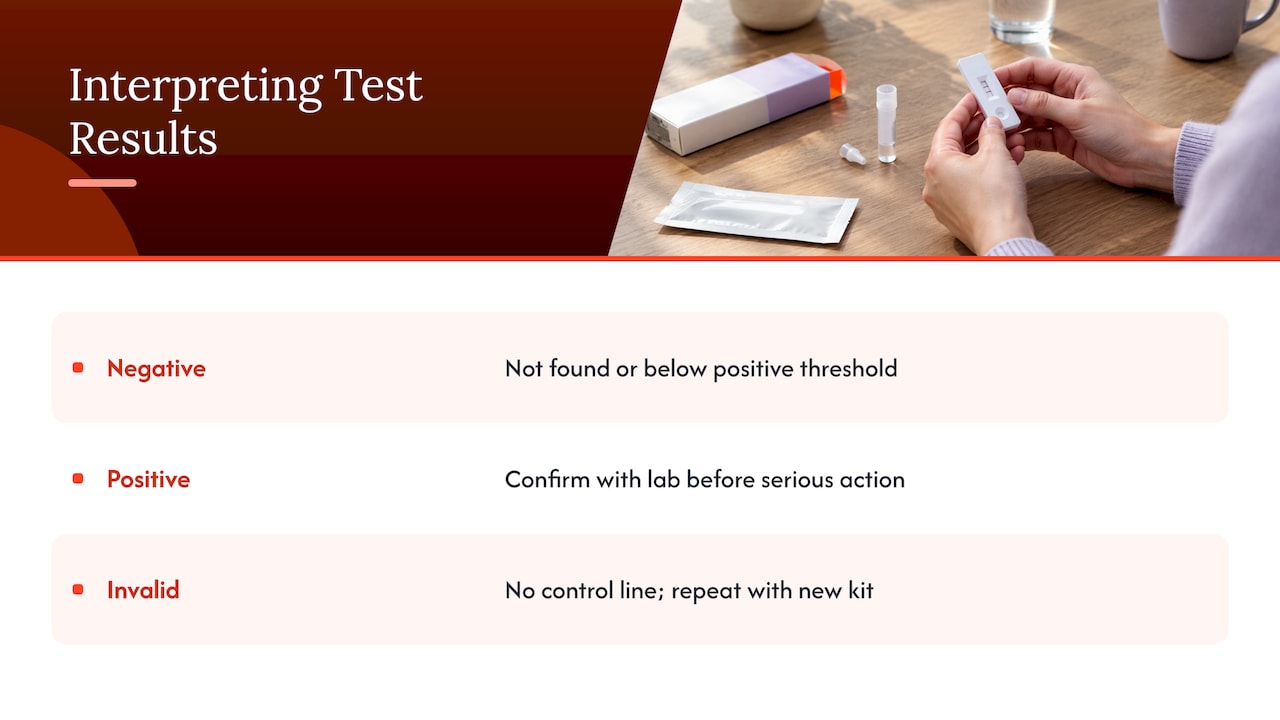
Negative. The drug was not found, or only a very small amount below the positive threshold was found (MedlinePlus). Cutoffs differ between a home kit and the test you will face, so check that your kit’s THC cutoff matches the one used in your screening. That is a good question to ask us by phone before you buy.
Positive. One or more drugs were found in amounts suggesting use. MedlinePlus says a positive usually calls for a confirmatory lab test, because initial urine tests can react to some over-the-counter medicines, prescriptions and foods (MedlinePlus). The FDA’s own guidance is to take no serious action until the laboratory result arrives (FDA).
Invalid. The control line did not appear or the test did not run properly. Discard it and repeat with a new kit.
Two safety points apply to everyone. If you take a prescription medicine such as Adderall, a home test cannot tell prescribed amphetamines from illicit ones, so it will read positive for amphetamines (Healthline). And never change a prescribed medicine or dose because of a home result. The FDA says to talk to your doctor first (FDA).
A home test and the lab test you are preparing for
A home test is the first step in a two-step process: a quick screen at home, then, if it suggests drugs may be present, a more specific lab test on the sample (FDA). Employer and legal screens follow the same pattern, with a lab running the confirmation. The most specific confirmatory method is GC-MS, which separates and identifies the exact substances in a sample (Cambridge Core).
So the home test gives you a timely read on your situation. It is most useful when you use it the way a screening would be run: same sample type, a similar cutoff, and the same timing. We cover that in Home Drug Pretest Before a Lab Test: How to Use It and Home Drug Test vs. Lab Test: What Really Differs. For the numbers, see Home Drug Test Accuracy: What the Numbers Actually Show.
Common mistakes that skew a result
- Skipping the leaflet. Instructions differ between kits, so what worked last time may not apply.
- Reading late. Results are valid only inside the stated window.
- Using an expired or poorly stored kit. Heat and humidity degrade tests (Researchwebshelf).
- Using the wrong amount of sample. Too little or too much can disrupt the test.
- Not accounting for medications and foods. The FDA notes that what you ate or drank and any prescription or over-the-counter drugs can affect accuracy (FDA).
- Testing a different sample type than the real test. A negative saliva result says little about a urine screen.
Our view on testing before your test
Most people who write to us are in the same spot: a screening is coming, they use THC, and they want facts before it happens. A home test gives you those facts in a few minutes, in private.
What we see missing is the fit. People buy whatever kit is cheapest, then find out it measures a different sample than the one they will face. We built our catalog around the three sample types, urine, saliva and hair, so you can pick the one that matches your situation.
Our site pairs the products with guides on detection windows, accuracy and pretesting. We offer fast shipping on United States orders and phone support during our published business hours, so you can talk through which kit fits your test before you order.
Use the test the way the leaflet says, read it on time, and write the result down. That habit alone removes most of the mistakes.
MIchael
Get the right kit for your test
If you know which screening you are facing, start with the matching sample type. We carry urine, saliva and hair drug tests, with fast shipping on United States orders. If you are unsure which one fits, call us during our published business hours.
You can browse everything on Passmydrugtest.com.
FAQ
How long should I wait before reading a home drug test?
Follow your leaflet. The FDA notes that with most kits the result must be read visually within a certain number of minutes after the test starts (FDA). Set a timer and do not re-read the test after the window ends.
Can I test myself more than once?
Yes, with a new kit and a fresh sample each time. Never reuse a strip or cassette. Test at a similar time of day and note the time of your last use, so your results are comparable.
What should I do if my result is positive?
Treat it as a screening result. The FDA says a positive home result does not by itself mean drugs of abuse were found, and advises taking no serious action until the lab result arrives (FDA). If you take prescription medicine, or have questions about the result, talk to your doctor.
Does a home test show how much THC I have in my system?
No. These tests are qualitative: they show whether a drug is present above the cutoff, not the amount (FDA).
Which sample type should I use?
Match the test you will face. Urine is the most common sample (MedlinePlus), saliva reflects more recent use, and hair covers a longer history. If you are not sure which one your employer uses, ask them, then call us to choose a kit.
Sources
- Drugs of Abuse Home Use Test | FDA
- How You Can Get the Best Results With Home Use Tests | FDA
- Drug Testing: MedlinePlus Medical Test
- At-Home Drug Tests: What They Are and How They Work | Healthline
- ON CALL MULTI-DRUG HOME TEST (K050050) | FDA 510(k)
- How Accurate Is a Home Urine Drug Test Kit for Detecting Recent Use
- Testing for illicit drug use in mental health services | Cambridge Core