

90 Days of Detection: Why Hair Detox Shampoos Can’t Beat Lab Tests
Hair detox shampoos do not reliably beat a hair follicle drug test, and no peer-reviewed study has shown one working consistently. Abstinence is the only method with real evidence behind it. Forensic toxicologists have tested shampoos like Ultra Clean directly, and their labs use decontamination washes specifically designed to catch surface tampering while leaving incorporated drug residue intact. The research on exactly why is below.
TL;DR:
- Hair detox shampoos show only partial drug reductions in lab tests, but drug residues remain detectable beyond the reach of home washing or chemical treatments.
- Decontamination protocols used in labs target surface contamination, meaning external washes and shampoos cannot remove drugs incorporated inside the hair cortex.
- Aggressive treatments like bleaching may lower drug levels temporarily but risk damage, visible tampering signs, and sample rejection by laboratories.
- Abstinence and natural hair growth are the only proven methods to pass a hair drug test reliably, with a typical detection window of about three months.
- Most marketing claims about shampoo effectiveness lack peer-reviewed research validation, and in vitro lab results do not translate into guaranteed in-head or at-home success.
Table of Contents
- How Hair Follicle Drug Tests Actually Detect Drug Use
- What Peer-Reviewed Studies Found When They Actually Tested Detox Shampoos
- Why Bleaching And Aggressive Washing Aren’t the Workaround Either
- What Actually Works Before a Hair Test
- What People Consistently Get Wrong About Hair Detox
- Where PassMyDrugTest.com Fits Into Your Research
- Sources
- FAQ
How Hair Follicle Drug Tests Actually Detect Drug Use
Drugs can enter hair through internal incorporation during hair growth at the follicle, or through external contamination; only incorporation reflects drug use. External contamination, by contrast, sits on the outer cuticle layer from smoke exposure or handling drug residue. Labs care about this distinction since incorporated drug resides within the hair cortex, not merely on the surface.

A standard head hair sample covers about three months of history, using the segment closest to the scalp. That segment corresponds to the most recent growth, which is why labs often run segmental analysis instead of testing the whole strand at once.
Before any hair sample gets tested, labs run it through a decontamination protocol: washes with isopropanol followed by a phosphate buffer, at set wash ratios, to strip away anything sitting on the surface. This step exists so a person who merely stood near marijuana smoke isn’t flagged the same as someone who used it. Cutoff thresholds then determine what counts as a positive.
That protocol creates the real problem for detox shampoos:
- Surface washes target contamination on the cuticle, not drug metabolites bonded inside the cortex.
- A shampoo applied at home affects only the surface layer, which is removed by lab decontamination before testing.
- Whatever drug got incorporated during hair growth stays put regardless of what touches the hair afterward.
The NIJ’s overview of hair testing lays out exactly why labs built these wash-and-cutoff systems: to separate drug use from environmental exposure, not to give home products a loophole.
What Peer-Reviewed Studies Found When They Actually Tested Detox Shampoos
The strongest evidence against detox shampoos doesn’t come from anecdote. It comes from researchers who applied these products to hair samples under lab conditions and measured what happened.
A study on Ultra Clean, marketed by Zydot, tested treated versus untreated hair strands from the same subjects. Every drug tested remained detectable after a single application. Some THC reductions reached about one-third in smaller sample subsets, but that’s a partial dip, not removal, and concentrations stayed well above the point where a lab would call the sample clean.
A separate experiment looked at everyday products and commercial shampoos, including vodka and hair tonics, under intensive in vitro washing protocols. That study found mean THC reductions of roughly 50 to 65 percent. That sounds dramatic until you account for the method: in vitro conditions run longer, harsher exposure than anyone would tolerate on their own scalp, and even at those extremes, drug analytes were still present.
| Study focus | Product/method tested | Reported effect | Real-world caveat |
|---|---|---|---|
| Ultra Clean shampoo | Single topical application | THC reductions reached about one-third in a subset; all drugs stayed detectable | One use rarely drops levels below cutoff |
| Household and commercial products | Vodka, hair tonic, shampoos (in vitro) | Mean THC reduction ~50 to 65% | Lab conditions exceed normal home use |
| EtG/FAEE detox shampoos | Extended in vitro incubation | Large washout in some samples | In vivo effects remain uncertain |
| Aggressive treatments | Bleach, oxidative, alkaline washes | Substantial concentration drops in some cases | Variable by drug; may register as tampering |
Small sample sizes limit all of this work; some studies test 14 samples, others rely on in vitro conditions that don’t map cleanly onto a person washing their own hair in a shower. Drug type and hair characteristics also shift the numbers around, so a result for THC doesn’t necessarily hold for opiates or methamphetamine.
That leaves an important gap between what a study measures and what a shampoo bottle promises. When in vitro experiments on EtG and FAEE show large washout under extended incubation, that’s a controlled lab result, not proof the same shampoo works the same way on your head over a normal washing routine. Anecdotal “it worked for me” stories usually trace back to something else entirely: a naturally low baseline concentration, a lab’s cutoff threshold happening to sit above that person’s level, or an insufficient sample that got flagged rather than cleared. None of that is the shampoo doing what the marketing claims.
Why Bleaching And Aggressive Washing Aren’t the Workaround Either
If surface shampoos barely touch incorporated drug, the next idea people reach for is destroying more of the hair structure itself, hoping the drug leaches out along the way. Bleaching, perming, and prolonged alkaline exposure do change hair chemistry through oxidation and alkaline hydrolysis, both of which can break down the cortex enough to release some bound analytes.
Recent forensic literature backs this up: some aggressive treatments produced substantial concentration drops, in certain cases larger than what mild shampoos achieved. But “substantial” doesn’t mean “reliable,” and it doesn’t mean “safe” for the person doing it.
- Results vary widely by drug class and by how much damage the treatment actually causes.
- Heavily bleached or chemically stripped hair is often visibly obvious to a collector, prompting scrutiny before the sample even reaches the lab.
- Labs may reject a damaged sample outright, calling it insufficient rather than negative, which can trigger the same consequences as a positive result in many workplace policies.
- Repeated chemical damage risks breakage and hair loss, independent of any testing outcome.
Pro Tip: Visible bleach damage practically announces itself to a collector, but labs also run quality control checks that can flag chemically altered hair even when it looks normal to the eye. Tampering doesn’t have to be visible to be detectable.
The consequence structure matters here. A “refused” or “insufficient” sample designation isn’t a neutral outcome. Employers and testing programs frequently treat it the same as a confirmed positive, since the assumption is that someone tampered with the sample on purpose.
What Actually Works Before a Hair Test
Abstinence remains the only approach with consistent evidence behind it, and the timeline is straightforward: stop use long enough for untainted hair to grow past the segment that gets tested, generally requiring the detection window to clear naturally rather than being scrubbed out.
- Understand your real timeline. A standard 1.5 inch segment reflects roughly 90 days, so recent use shows up regardless of washing habits.
- Don’t assume shaving solves it. Switching to a body hair sample when head hair isn’t available is a documented substitution employers and collectors are trained to notice, and it can itself be treated as a refusal.
- Ask about test type before assuming hair is final. Some programs allow urine as an alternative or use combined panels; understanding your specific policy changes what options make sense.
- Skip the DIY chemistry. Normal washing and avoiding secondhand smoke exposure reduces environmental contamination risk without triggering a tampering flag.
- Know your notice period. If you have advance warning of a test date, that information matters more for planning realistic timelines than any product claim does.
What People Consistently Get Wrong About Hair Detox
The biggest misconception is treating “detox” as a literal internal cleanse, as if a shampoo can travel into the cortex and dissolve drug bonded there during hair growth. It can’t. Shampoos work on the surface; incorporation happens at the root, weeks or months before you ever pick up a bottle.
The forensic research is consistent on this point even when individual numbers vary study to study. If you’re evaluating any product claim, check whether it’s backed by an actual published study or just marketing copy, and treat vendor promises with the same skepticism independent reviews apply to this entire market. Read product pages carefully and reach out to customer support with specifics about your situation rather than guessing.
— MIchael
Where PassMyDrugTest.com Fits Into Your Research
Passmydrugtest.com works as both a marketplace and an education hub, built for the exact moment you’re staring down a test date and trying to separate real research from forum hearsay.
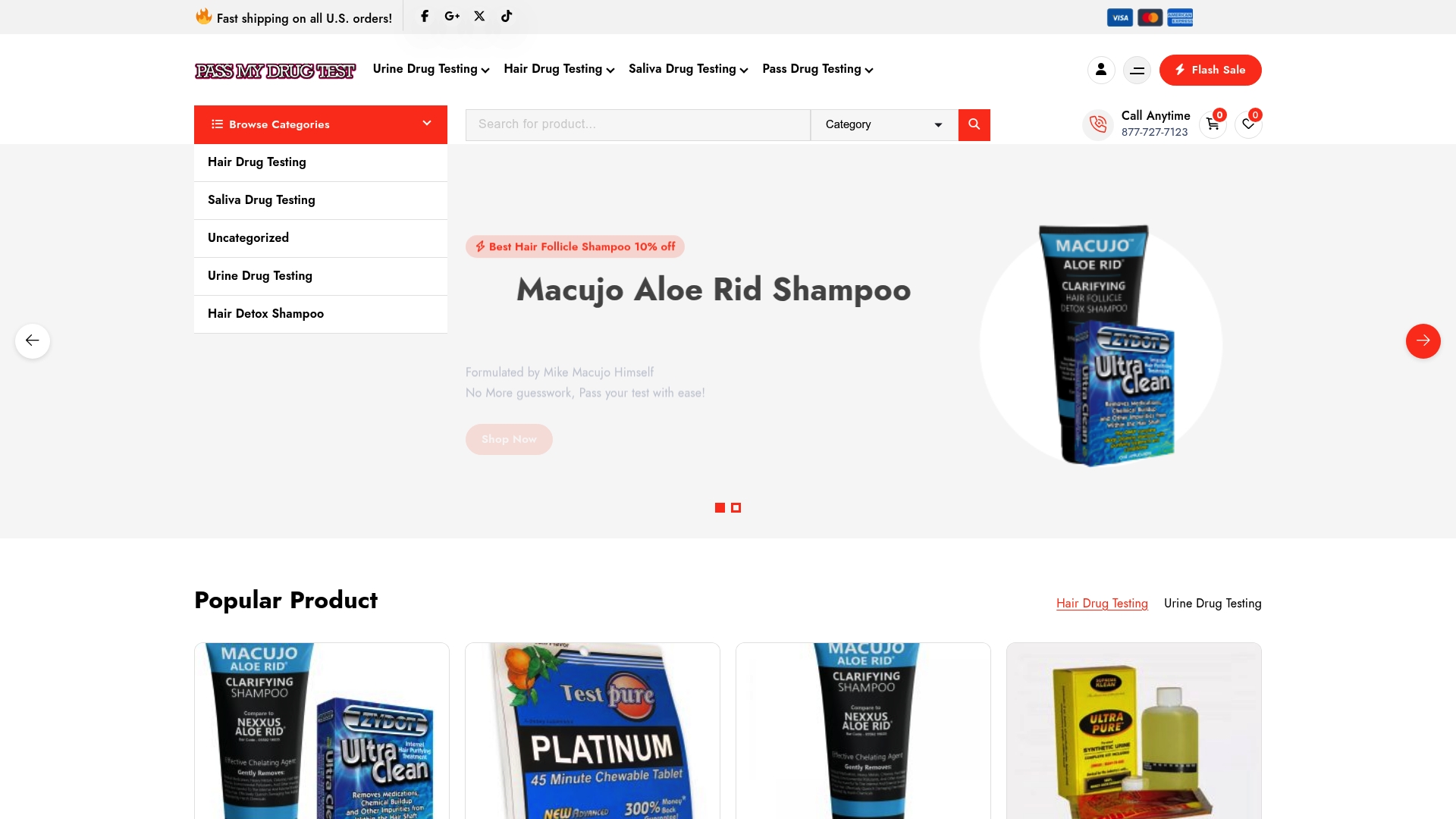
You’ve just seen why shampoos and aggressive hair treatments carry real risk without reliable payoff. That’s exactly the gap Passmydrugtest’s educational library exists to close: straightforward explanations of detection windows, specimen types, and what forensic studies actually found, sitting right next to the drug testing products people research before a screening. No product on the market is guaranteed to alter a lab result. If you’re facing a specific test type, from a pre-employment screen to a THC-focused panel, browse the relevant marijuana testing kit page and call customer support during business hours to talk through your particular timeline before you decide anything.
Sources
- Detecting drugs in hair: Is it drug use or environmental contamination? — NIJ
- Effect of the shampoo Ultra Clean on drug concentrations in human hair – PubMed
- Manipulation of THC hair concentrations by commercially available products – PMC
- Manipulation of hair drug concentrations by treatments (2023) – PubMed
FAQ
Do Detox Shampoos Work For Hair Drug Tests?
No. Studies on products like Ultra Clean found drugs remained detectable after treatment, with only modest reductions that didn’t reliably drop below lab cutoffs.
How Long Does THC Stay Detectable In Hair?
A standard test covers roughly the past 90 days, using the 1.5 inch segment of hair closest to the scalp where the most recent growth sits.
Can Bleaching Or Dyeing Hair Beat A Drug Test?
Aggressive treatments can lower measured concentrations in some studies, but results vary widely, hair damage is often visible, and labs may flag samples as tampered or insufficient.
What Happens If A Hair Sample Is Ruled Insufficient?
Many employers and testing programs treat an insufficient or refused sample the same as a positive result, since it’s typically read as an attempt to avoid detection.
Is Abstinence Really The Only Reliable Method?
Yes. No peer-reviewed study has shown a topical product consistently removing incorporated drug from hair, which leaves time and abstinence as the only evidence-backed approach.