
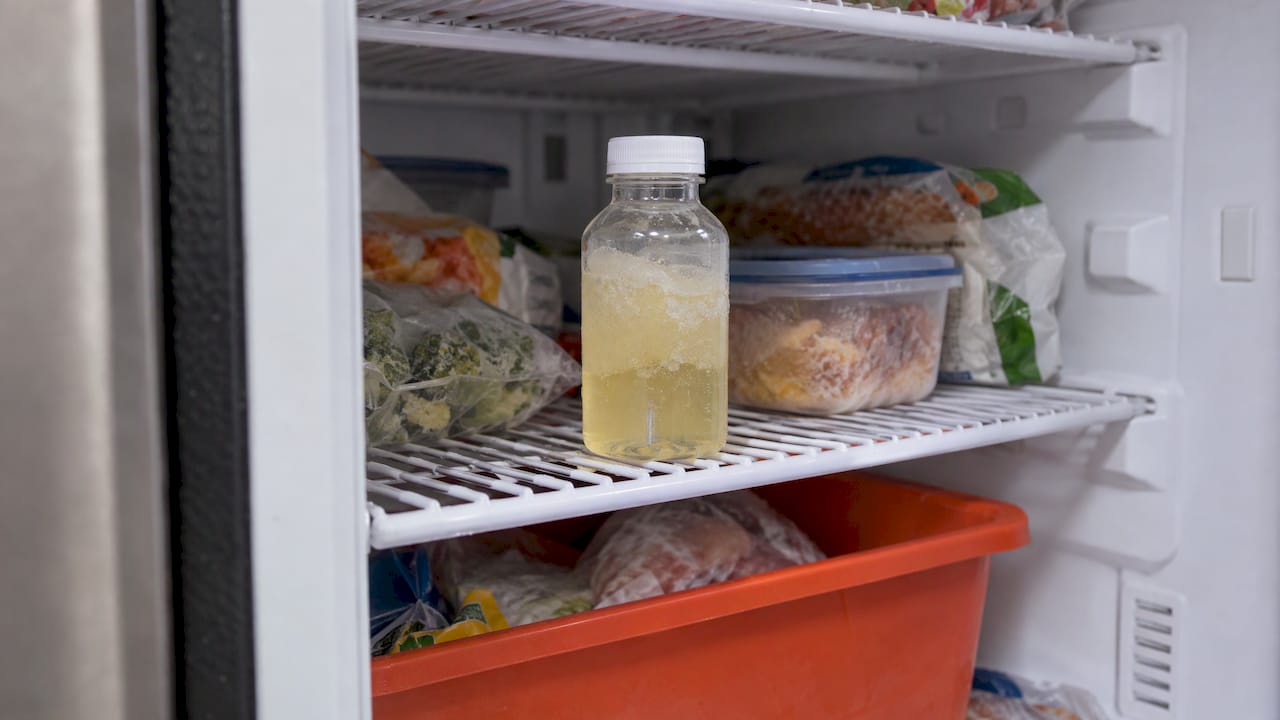
Freeze Synthetic Urine? What Freezing Does and What to Do Instead
Don’t freeze synthetic urine. Freezing is a poor way to store it: dissolved salts can come out of solution as it freezes, and the mix may not return to its original balance when it thaws. A sealed, unopened kit kept cool, dark and dry is the better way to protect it, and the heat step comes right before the test, not weeks earlier. This guide covers why, how long a kit lasts, the temperature window a collector checks, and the legal points that matter in the US.
TL;DR
- Freezing is not a storage method for synthetic urine. Salts can precipitate (crystallize out) in the freezer, and the thawed liquid may no longer be uniform.
- Keep an unopened kit in a cool, dark, dry place, tightly closed, and follow the label on your product. Heat and light are the bigger enemies of shelf life.
- A collector checks that a specimen reads 90°F to 100°F within 4 minutes, and the specimen must be at least 45 mL.
- Several states make it a crime to use or sell synthetic urine to beat a test, and under DOT rules a substituted specimen counts as a refusal to test.
- Real urine is the opposite case: labs freeze genuine specimens routinely because most drugs stay stable that way.
Table of Contents
- Why people ask about freezing it
- What freezing does to synthetic urine
- Storing a kit the right way
- The temperature window that matters on test day
- Know the law before you rely on any kit
- When a real specimen is the one that gets frozen
- Your options if a test is coming up
- Perspective: our view on storing and using it well
- Find the right product for your test
- FAQ
- Sources
Why people ask about freezing it
The question usually comes from one of three situations. You bought a kit early and want it to last until a test date that keeps moving. You opened a bottle, used part of it and want to save the rest. Or you read a forum post claiming that a freezer stops anything from going bad.
For real biological samples, that last idea has some truth, which is where the confusion starts. Synthetic urine is a different product: a water-based mix of urea, creatinine, uric acid, salts and pH buffers. It is built to sit on a shelf, not in a freezer. Cold does not behave the same way with a mixture of dissolved minerals as with a clinical specimen.
What freezing does to synthetic urine
When a water solution freezes, the ice forms first and pushes the dissolved solids into the shrinking pocket of liquid that remains. Mineral salts in that pocket can reach the point where they leave the solution as crystals. Once thawed, some of them may not dissolve back evenly. You can end up with a liquid that looks the same but has a different concentration and specific gravity (how dense the liquid is compared with water) than the one that went in.
That matters because a lab does not just look at color. A specimen is expected to resemble normal human urine on several measures at once. A formula that has drifted on one of them is no longer the formula the maker designed.
The second problem is repeated handling. Every time a bottle is opened, thawed, warmed and refrozen, you introduce air, moisture and temperature swings. A stability study on synthetic urine found that creatinine and uric acid fell measurably over 30 days under combined heat and ultraviolet light in clear vials, and that amber vials cut those losses substantially. The lesson from that kind of work is that light and heat are the main threats, and that handling beats cleverness. A freezer adds a third stress without removing the other two once the bottle comes out.
We do not recommend freezing, and no instruction we know of from a kit label asks you to. Read the instructions printed on your own product and follow them.
Storing a kit the right way
The goal is simple: keep the product as close as possible to the way it left the factory.
- Leave it sealed until you need it. An unopened container is protected from air and contamination. Opening it early starts the clock for no benefit.
- Pick a cool, dark, dry spot. A closet shelf or drawer inside your home works. A common storage guideline for synthetic urine puts the range at roughly 36°F to 86°F, so avoid a hot car, a window sill and a bathroom that steams up.
- Keep the cap tight. Urea slowly breaks down into ammonia in the presence of heat, light and air, which raises pH and gives off a stronger smell. A closed container slows that process.
- Skip the freezer and the repeated warm-cool cycle. One planned heating on the morning of the test is enough.
- Check the date and the look of the liquid. If the bottle is past its stated life, cloudy, or has settled material you do not recognize, do not use it. Our guide to synthetic urine shelf life explains how long a kit lasts and what failure looks like. Our page on what synthetic urine smells like covers the odor changes that come with age.
If the question is what to do with a half-used bottle, the honest answer is to treat it as used up. A new, sealed kit costs far less than a failed test.
The temperature window that matters on test day
Cold storage is not what trips most people up. The test-day number is the one that does. Under US collection guidelines, the collector reads the specimen’s temperature within 4 minutes of you leaving the restroom, and the acceptable range is 90°F to 100°F (32°C to 38°C). The same guidelines require at least 45 mL in a single void, and an out-of-range temperature leads to a second collection under direct observation. You can read the details in the urine specimen collection guidelines.
That window is narrow, which is another reason a sample that has been through a freezer is harder to manage. A bottle straight from the freezer or even the refrigerator needs far more warming than one at room temperature, and the more you push heat into it, the easier it is to overshoot.
A few practical points about the range:
- It is a 10-degree window, and it applies for only a few minutes after collection.
- Room-temperature product will read well below 90°F.
- Overheating is as much of a problem as underheating. A sample that reads above 100°F is also out of range.
- Many kits include a heat source or temperature strip, so read your instructions to see what yours uses.
If you want to compare kits for what they include, our page on the best synthetic urine kit for a drug test walks through the options, and the synthetic urine kit page lists what we carry.
Know the law before you rely on any kit
This part is not optional reading. Rules differ by state, and the risk is real.
As of November 2026, one state-by-state legal summary counts at least 14 states that make it a crime, or in Utah an infraction, to sell, possess or use synthetic urine or similar products to beat a drug test. Most of those laws turn on intent to defraud a test, and New Hampshire is reported to ban making, selling or possessing it outright. Penalties range from a fine to a felony. Laws change, so confirm your own state’s current statute before you buy or use anything, and ask a licensed attorney if you are unsure how it applies to you.
Federal rules add another layer for some jobs. Under DOT rule 49 CFR 40.23, a verified adulterated or substituted result is treated as a refusal to test. That means immediate removal from safety-sensitive duties, and you cannot return until the return-to-duty process is finished. This applies to commercial drivers, pilots, rail workers and others covered by DOT testing, and many private employers write similar consequences into their own policies. Our explainer on the meaning of an adulterated drug test goes through how that refusal rule works.
If your test is a DOT test, a court-ordered test or a probation test, think carefully about the stakes before you choose any approach. The cost of a mistake in those settings is much higher than a delayed job offer.
When a real specimen is the one that gets frozen
Part of the confusion comes from the fact that labs do freeze urine. They freeze genuine specimens, collected and sealed under a chain of custody, because it preserves them.
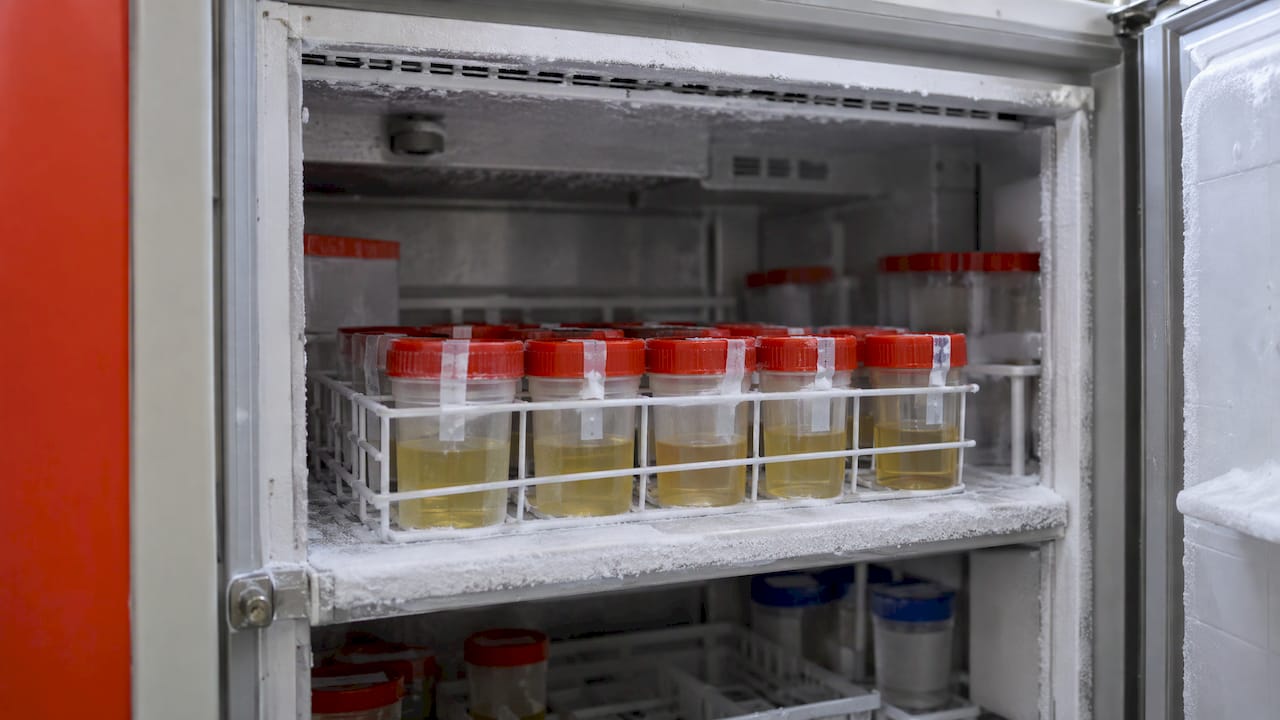
A 2025 systematic review of 71 studies found that most drugs of abuse stay stable in urine for months when it is refrigerated or frozen, and that deep freezing and freeze-thaw cycles had minimal effect. Room-temperature storage, by contrast, showed limited stability for cannabis, cocaine, morphine, codeine and cathinone. That is about how a lab handles a sealed biological sample. It says nothing about a manufactured solution made of dissolved salts, which responds to cold differently.
At collection, the real process is also tightly controlled. The employee gives the specimen directly to the collector, who checks temperature and volume, splits it into a primary and a secondary bottle, and seals both with tamper-evident tape that the employee initials. Nothing in that chain leaves room for a sample that has been sitting in someone’s freezer.
Your options if a test is coming up
The right plan depends on the type of test, and the type decides what is even relevant.
Urine tests. These look for THC metabolites, the byproducts your body makes after cannabis use. How long they last depends on how often you use, your body, and the cutoff the lab applies. Our urine drug testing category and our clean urine drug test page are the places to start if you are researching this kind of screen.
Hair tests. Hair reflects a much longer window than urine, and no storage trick for a urine product helps with it. If your employer uses hair, see our hair follicle drug test guide and our hair detox shampoo range.
Saliva tests. These cover a short, recent window, usually a day or two. Our guide on how to pass a saliva drug test explains the timing.
Time itself. Stopping use as early as you can is the factor that works across every test type. If you have a date, count back from it and plan around it.
If you are not sure which test your employer or the court will use, ask for it in writing, or call the HR contact or testing program. Knowing the test type first saves you from buying the wrong product.
Perspective: our view on storing and using it well
We get this question because people are trying to be careful, and that instinct is right. Where we part ways with the freezer idea is simple: it adds a variable. The best protection for a kit is the one the maker designed for it, a sealed container in a cool, dark, dry place, used before its date.
The second thing we tell people is to match the plan to the test. A urine product does nothing for a hair test, and a hair product does nothing for a saliva test. That is why our site puts the education next to the products: you read about your test type first, then choose.
The third is to know the rules where you live. Some states restrict these products, and DOT-covered jobs treat a substituted specimen as a refusal. We would rather you read that here than find out at the collection site.
If you want help sorting out which product fits your situation, our team is available by phone during published business hours, and we ship fast across the United States.
MIchael
Find the right product for your test
Whether you need a urine kit, a hair shampoo or an at-home test to check where you stand, our catalog is built around the kind of screen you face. We carry urine, saliva and hair drug testing products and hair detox shampoo, with fast shipping on US orders and phone support during published business hours. Start with the synthetic urine kit page or browse everything at Pass My Drug Test.
If you want to read before you buy, our guides cover each test type and the preparation that goes with it, so you can choose based on your own date and your own screen.
FAQ
Can you freeze synthetic urine?
We advise against it. Freezing can cause dissolved salts to crystallize, so the thawed liquid may differ from the original mix. Keep a sealed kit in a cool, dark, dry place and follow your product’s label instead.
How should I store synthetic urine until test day?
Leave it sealed, tightly closed and out of heat and light. A range of about 36°F to 86°F is a common storage guideline. Check the date on the bottle and the look of the liquid before using it, and read our shelf life guide for what to watch for.
What temperature does a urine sample need to be?
US collection guidelines call for a reading between 90°F and 100°F (32°C to 38°C) within 4 minutes of collection, with at least 45 mL provided. A reading outside that range leads to a second collection under direct observation.
Is using synthetic urine illegal?
In at least 14 states it is a crime or infraction to use or sell it to defeat a drug test, and the rules and penalties vary. For DOT-regulated jobs, a substituted specimen counts as a refusal to test. Check your own state’s current law, and speak with an attorney if you have questions about your situation.
Can a real urine sample be frozen?
Yes, in a lab setting. Research on genuine specimens shows most drugs of abuse stay stable for months when urine is refrigerated or frozen. That applies to samples collected and sealed under a formal process, not to manufactured products.
Sources
- Urine specimen collection guidelines (January 2018)
- DOT rule 49 CFR 40.23
- Pre-analytical stability of drugs of abuse in urine (2025 systematic review)
- Synthetic urine laws by state (2026)