
eCup Drug Test: How It Works and How to Pass It
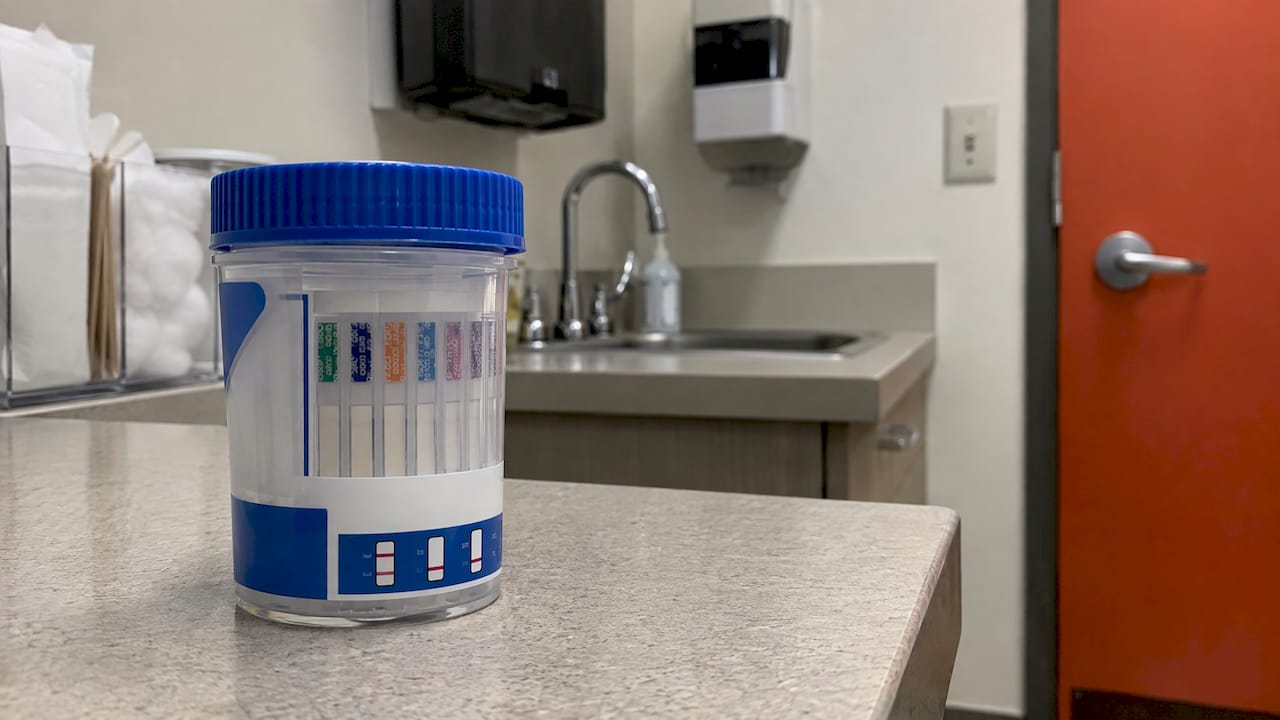
The eCup is a sealed urine cup with test strips built into the lid. It reads your sample on the spot, and a negative result can come back in minutes. The best way to pass is to know what it screens for, give your body enough time, keep your hydration normal, and tell the collector about any medication you take. This guide covers each of those steps for THC users in the United States.
TL;DR
- The eCup+ is a rapid 5-panel urine device used mostly for non-federal, non-DOT workplace and pre-employment testing. Negative results can arrive in minutes.
- The panel covers cannabinoids, cocaine, methamphetamines, opiates and phencyclidine (PCP). The THC target is an inactive metabolite called THC-COOH.
- THC detection time depends on how often you use, your body and the cutoff. A single use and daily use are very different situations.
- Drinking large amounts of water right before the test can produce a dilute sample. That can lead to a retest, so keep fluids normal.
- A non-negative screen is not a final verdict. It goes to a lab and then to a Medical Review Officer (MRO), and that is where you disclose prescriptions.
Table of Contents
- What type of drug test is an eCup?
- How the eCup test works, step by step
- What the eCup screens for
- How long THC can show up in urine
- How to prepare for an eCup test the right way
- Are eCup results accurate? False positives and what to do
- eCup versus other test types
- Our perspective
- Find the right urine testing resources
- FAQ
- Sources
What type of drug test is an eCup?
The eCup is a urine drug test. The eCup+ is described by its maker, eScreen, as a patented 5-panel rapid urine cup device built for non-federal, non-DOT testing. It reduces the wait for negative results from days to minutes, which lets employers make same-day hiring decisions.
The lid holds test strips. According to a screening company that uses the cup, those strips are sensitive to the SAMHSA cutoff levels for each of the five drugs. In practice the cup combines collection and the first screen in one sealed container. That is why it shows up so often in staffing, retail, warehouse and logistics hiring.
Two points matter for you as a donor:
- It is an initial screen, not a final lab result.
- It is used for non-regulated testing. Federally regulated and DOT tests follow a separate process.
How the eCup test works, step by step
Most people describe a normal collection visit like this:
- Check-in. You show ID and your registration or donor code. You may be asked to empty your pockets and leave bags outside the restroom.
- Collection. You provide a urine sample directly into the cup. The collector handles the cup, seals it and starts the reading.
- Automated read. The eCup+ works within the eReader system, which tests, screens and reports results automatically. Because the instrument reads the strips, a person does not have to interpret the lines by eye.
- Result. A negative result is reported in minutes. For eScreen National Account clients, the average turnaround for negatives is 15 minutes, compared with 3 days for lab-based testing.
- If it is not negative. The sealed sample goes to a laboratory for confirmatory testing. After that, an independent MRO makes the final determination.
That last step is the one many donors overlook. A rapid screen that is not negative does not automatically mean a failed test. It means the sample needs a closer look.
What the eCup screens for
The standard eCup+ panel is a 5-panel. It covers cannabinoids, cocaine, methamphetamines, opiates and phencyclidines. This mirrors the federal SAMHSA-5 structure, and every panel size from 5 to 12 includes a THC-COOH check. Employers can also order custom panels, so the exact drugs depend on the company that sent you. If you want to know what you will be tested for, ask the employer or the collection site before the appointment.
Why THC-COOH matters
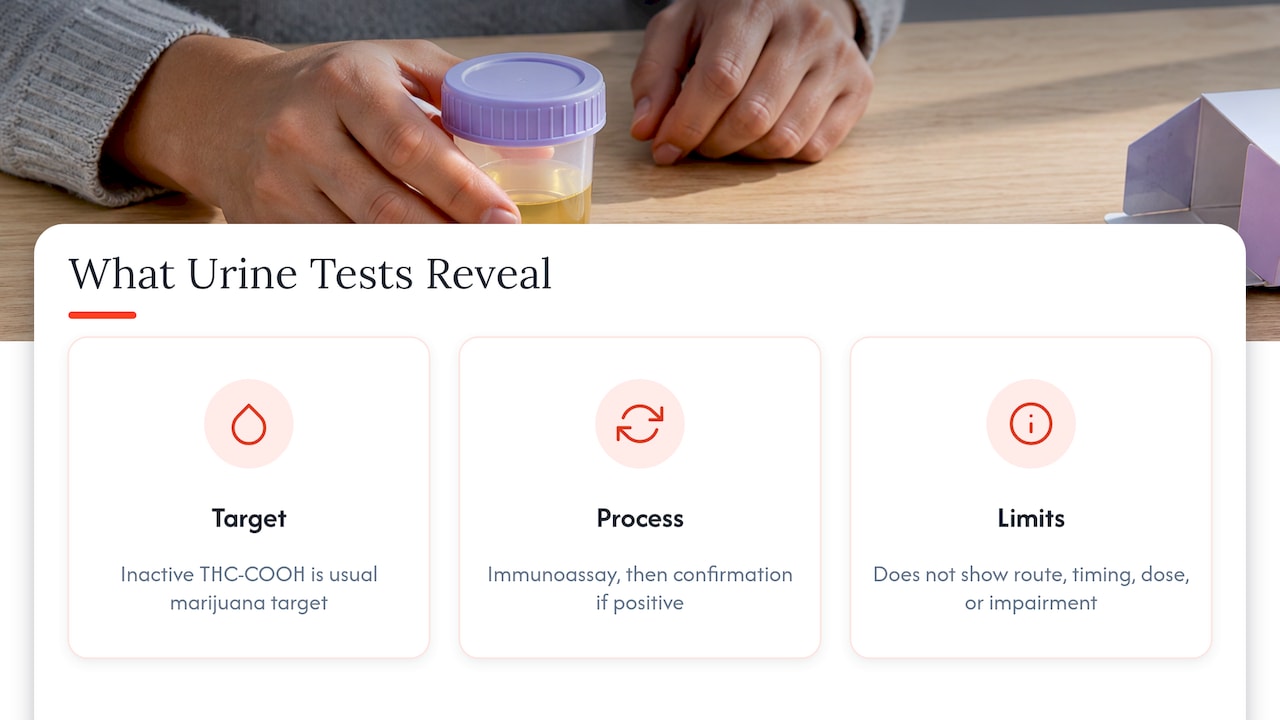
Urine tests do not look for the THC that causes a high. They look for a breakdown product. Workplace urine testing in the U.S. typically uses a two-step process: an immunoassay screen, then confirmation if the screen is positive. The inactive metabolite THC-COOH is the usual target for marijuana.
The ACMT position statement also notes that a THC metabolite result does not show the route of exposure, the timing, the dose or impairment. In other words, the test shows that THC was in your system at some point. It does not show when or how much. For a deeper look at the chemistry, see our explainer on why urine tests target an inactive metabolite.
How long THC can show up in urine
This is the question behind most searches for “ecup drug test pass.” The honest answer is that it varies a lot from person to person.
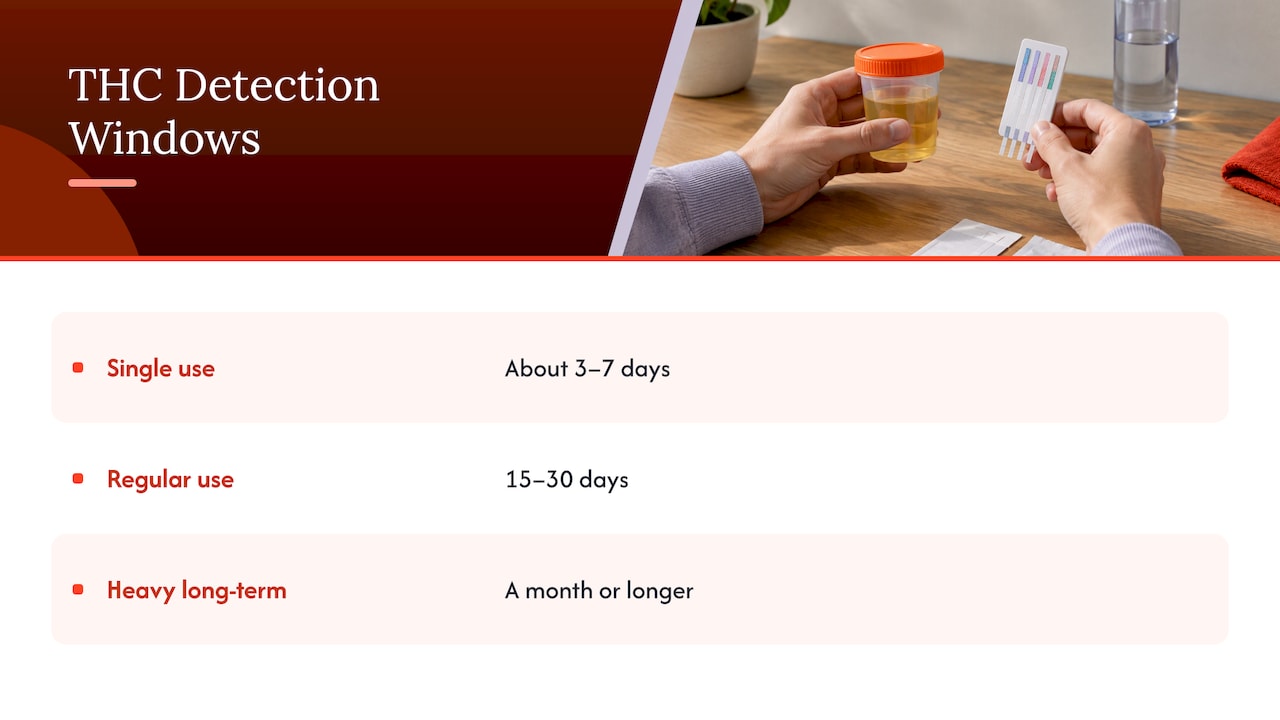
The ACMT statement says THC-COOH stays detectable much longer than the few hours THC acts. In chronic heavy users it may show for a month or longer, and the time depends on use history and individual traits such as body fat.
General ranges reported by a health publisher put single-use detection at about 3 to 7 days, and regular users at 15 to 30 days. Heavy long-term users can go beyond that. Treat these as ballpark figures, not promises.
Cutoff levels change the picture
The cutoff is the concentration the test must see before it reports a result. A lower cutoff means a longer window. The same publisher reports, for a single use, roughly 1 to 4 days at the standard 50 ng/mL cutoff and up to 5 to 7 days at 20 ng/mL. HHS sets 15 ng/mL of THC-COOH by chromatography/spectroscopy as the confirmatory threshold for a positive cannabis result.
If you want to see how the numbers fit together, read our guides on THC cutoff levels and the THC detection times by test type. Our THC detox timeline helps you estimate your own risk.
| Factor | Why it changes your window |
|---|---|
| How often you use | Frequent use builds up more metabolite in the body |
| Amount used | Higher doses leave more metabolite to clear |
| Body composition | THC is fat-soluble, so it leaves fat tissue slowly |
| Test cutoff | A lower cutoff catches smaller traces for longer |
| Hydration and urine concentration | Very dilute urine can lower readings but may be flagged |
How to prepare for an eCup test the right way
There is no 100% guaranteed method, and you should be wary of anyone who says otherwise. What you can do is remove avoidable problems and make sure your result reflects reality.
1. Know your test and your timeline
Find out whether the test is a 5-panel urine screen, when it will happen and whether it is regulated. Then count backward honestly. A person who used once last weekend and a person who uses every day are not in the same position. Our guide to passing a drug test walks through the options by test type.
2. Stop using as early as you can
Time is the one factor that works in every case. The earlier you stop, the more metabolite your body clears before collection day.
3. Keep hydration normal
Drink fluids as you usually would, and do not flood your system right before the test. Excess water can leave a sample too dilute, and the analyte may fall below the screening threshold. Labs routinely check for this, and a dilute specimen can come from drinking too many liquids, especially ones with diuretics. A dilute result often means you are asked to come back and test again, which is a hassle you can avoid.
4. Disclose your medications
Tell the collector about every prescription or over-the-counter medicine you take. If a screen is not negative, the MRO can interview you and check whether a prescription explains it. Bring pill bottles or your prescriber’s contact information if you can.
5. Watch what you eat and use
Poppy seeds can cause a false positive for opiates. If your panel includes opiates, skip them in the days before. Also remember that urine THC tests are not designed to identify CBD or synthetic cannabinoids, but some CBD and hemp products contain trace THC. Check labels if you use them.
6. Arrive ready
Bring valid ID and your registration code. Follow every instruction the collector gives you. Arriving calm and on time makes the process smoother.
Are eCup results accurate? False positives and what to do
A rapid screen is built for speed, and that comes with trade-offs. NIDA explains that initial urine screens use antibodies, and these can bind to chemicals shaped like the target drug, including some prescription medications. Tests that look for the whole amphetamine class are especially known for false positives. That is why a more specific confirmatory test is normally ordered when a screen is positive.
The employer-side guidance agrees. A non-negative screen does not automatically prove illegal drug use, and the employer should wait for the authorized final report.
If your result is not negative
- Stay calm and do not assume the outcome is final.
- Expect the sample to go to a lab for confirmation and then to an MRO.
- The MRO must be a currently licensed physician with training in the pharmacology and toxicology of illicit drugs. They may interview you to verify a prescription that explains the result.
- Have your prescription details ready and answer the MRO’s call promptly.
- Read more about causes in our page on false positive urine tests.
If you believe a result is wrong, talk to the MRO first. For employment rights questions, an employment attorney or your state labor agency is the right professional to ask.
eCup versus other test types
Not every screening is a urine cup. Depending on the employer or the legal situation, you may face a saliva swab or a hair follicle test, and each has a different detection window.
| Test type | Typical use | What it reflects |
|---|---|---|
| Urine (eCup) | Pre-employment, random, post-incident | Recent use, with windows that vary by use pattern |
| Saliva | On-site, recent-use checks | A short, recent window |
| Hair | Longer-lookback screening | A much longer history of use |
If you are unsure which test applies to you, ask before you prepare. Preparing for the wrong test wastes time. We cover the other formats in our guides on saliva testing and the hair follicle drug test.
Our perspective
Most people who search this question are not trying to be clever. They have a job, a court date or a family obligation riding on one result, and they have a few days to get ready.
We built Pass My Drug Test around that reality. Our view is that the people who feel least stressed are the ones who understand the test. They know it is a 5-panel urine screen, they know the THC-COOH cutoffs, and they have a realistic timeline instead of a rumor from a forum.
That is why we pair detailed guides with a curated selection of products, fast shipping within the United States and live phone support during published business hours. You should be able to match your preparation to your specific test, whether that is urine, saliva or hair, and talk to a person when you have a question.
Our advice is simple. Read first, plan around your own timeline, keep your routine normal on test day, and tell the collector about your medications. Then choose the tools that fit your situation.
MIchael
Find the right urine testing resources
If you have a urine test coming up, start with the right information and the right products for your scenario. You can browse our urine drug testing collection, which includes at-home test kits you can use to check where you stand before collection day. Our clean urine drug test page explains how to match a product to your circumstances. If you also face a hair or saliva test, the full Pass My Drug Test store lets you compare everything in one place, with fast U.S. shipping and phone support if you want help choosing.
FAQ
How do you pass an eCup test?
Start with time: the longer you go without using, the better. Keep your fluids normal, arrive with ID and your registration code, and tell the collector about every medication. Avoid anything that could cause a false positive, such as poppy seeds if opiates are on the panel.
How accurate are eCup drug tests?
The eCup+ is an instrument-read screen, and the maker says that removes human interpretation of the strips. Like any rapid screen, it can flag substances with a similar chemical shape, so a non-negative result is confirmed by a lab and reviewed by an MRO before it counts. Ask your employer or the MRO about your situation.
What type of drug test is an eCup?
It is a rapid urine drug screen. The collection cup has test strips in the lid, and the eCup+ is a 5-panel device covering cannabinoids, cocaine, methamphetamines, opiates and phencyclidine. It is mainly used for non-DOT workplace and pre-employment testing.
How long does THC stay in urine for an eCup test?
It depends on how often you use and on the cutoff. Published ranges run from a few days after a single use to a month or longer for chronic heavy users. Our THC detection times guide breaks the factors down.
Is there a 100% way to pass a drug test?
No honest source can promise that, because results depend on your use history, your body and the test. What you can control is your timeline, your hydration, your disclosures and your knowledge of the test. Planning around those gives you the best footing.
Sources
- eScreen: eCup Rapid Drug Screen
- eScreen: Automated drug test eCup
- Justifacts: The eCup, a rapid approach to 5-panel drug testing
- GummyGurl: Will hemp gummies show up on a drug test?
- PMC: Interpretation of Workplace Tests for Cannabinoids
- PMC: ACMT Position Statement on urine cannabinoid interpretation
- SHC Health: How long does weed stay in your urine?
- SAMHSA: Medical Review Officer Guidance Manual
- American Screening: The Challenge of Dilute Specimens
- NIDA: What do drug tests really tell us?
- Interstate Consortium: What is the eCup drug test?