
Detox Tablets Side Effects: What to Expect and How to Use Them Safely
Most people who take detox tablets notice little more than mild stomach upset, a flushed feeling or more trips to the bathroom. The reactions you see depend on what is in the tablet, how much water you drink with it and whether you have a health condition that changes the picture. If you are a THC user getting ready for a screening in the United States, knowing the usual reactions, and the few that call for a doctor, lets you plan your days before the test with confidence.
TL;DR
- The most common reactions to detox tablets are digestive: nausea, bloating, gas, loose stools or constipation, plus headache and fatigue.
- Tablets that contain niacin (vitamin B3) can cause flushing, itching and stomach upset. The adult upper limit for niacin from supplements is 35 mg a day, per the NIH Office of Dietary Supplements.
- Take tablets exactly as the label says, with the water it asks for, and never combine several detox products without reading each label.
- Pregnant or nursing people, anyone with liver or kidney disease, and anyone on prescription medication should talk to a doctor or pharmacist first.
- Severe symptoms such as chest pain, fainting, yellow skin or eyes, or a racing heartbeat mean you stop and get medical care.
Table of Contents
- What detox tablets are and why they cause side effects
- The common side effects, in plain terms
- Less common reactions worth knowing
- Are detox pills safe?
- How to use detox tablets with the fewest side effects
- What about timing and your test?
- Choosing a tablet with side effects in mind
- Our perspective
- Match the product to your test
- FAQ
- Sources
What detox tablets are and why they cause side effects
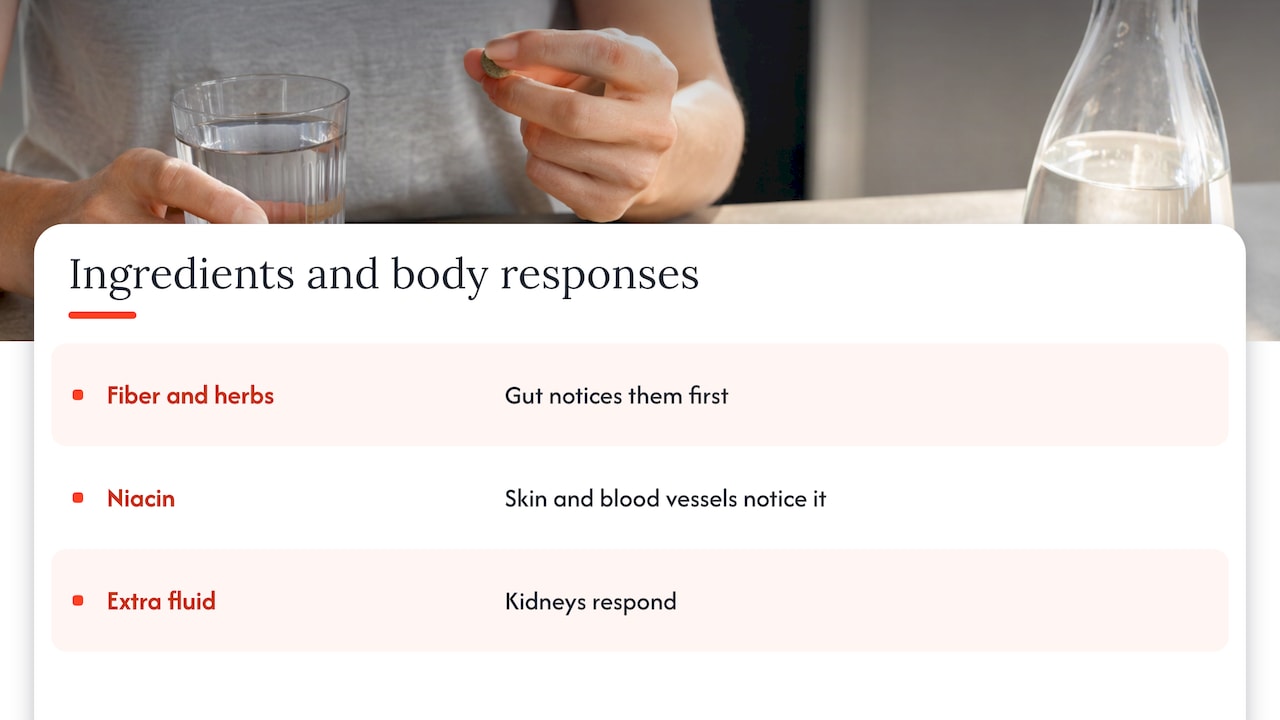
A detox tablet, capsule or chewable is a dietary supplement that you take in the hours or days before a urine or similar screening. Most combine a few types of ingredients: vitamins (often B vitamins), fiber or herbal extracts, and sometimes amino acids or minerals. Your body reacts to each of these the way it reacts to any supplement or food change: the gut notices fiber and herbs first, the skin and blood vessels notice niacin, and the kidneys respond to extra fluid.
That is why the “side effects” listed on pages about detox diets, such as headaches, dizziness and low energy, look so much like the ones people report after changing what they eat and drink in a hurry. Baptist Health’s overview of detox diet dangers lists headaches, dizziness and low energy among the reactions people can feel. Those pages are mostly about multi-day diets and fasts. A tablet you take with water is a smaller change, but the same logic applies: the more you change at once, the more likely you are to feel it.
One point of language matters here. Many of the top search results for this topic are about drug withdrawal, which is a medical process for people stopping alcohol, opioids or other substances. That is a different subject. A THC user taking a tablet before a screening is not going through that kind of withdrawal, and this article covers only the supplement itself.
The common side effects, in plain terms
These are the reactions you are most likely to hear about. Most are mild and short-lived.
Digestive upset
Nausea, bloating, gas, cramping, loose stools and constipation lead the list. Fiber, herbal laxative-type ingredients and magnesium-containing blends are the usual reasons. Taking a tablet on an empty stomach makes nausea more likely for many people. If the label allows it, taking it with a light meal often helps. If the label says to take it on an empty stomach, follow that and keep the rest of your day simple: avoid heavy, greasy food and alcohol.
Headache and fatigue
Headache is the other classic complaint. It often traces back to too little fluid, too little food or too much caffeine, not to the tablet alone. If you cut your calories and coffee on the same day you start tablets, you are stacking three changes. Eat normally, keep your usual caffeine level, and drink water through the day.
Flushing and itching from niacin
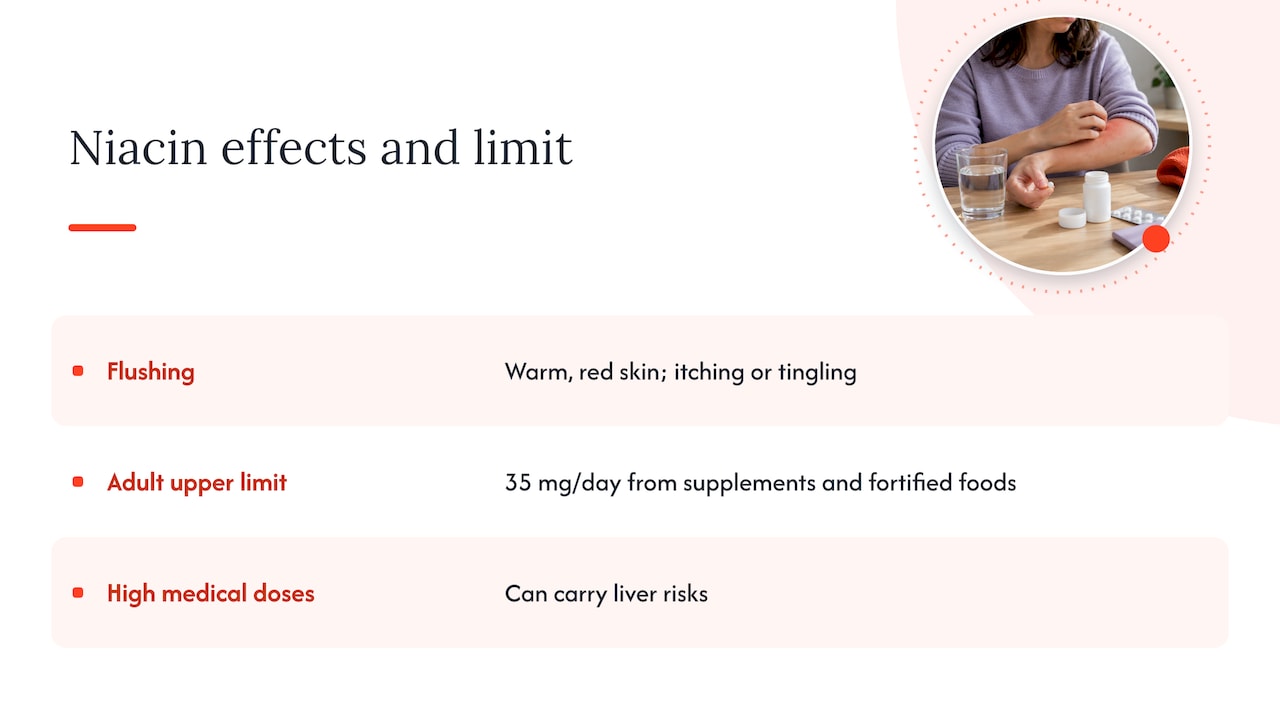
Niacin is a B vitamin that shows up in some detox formulas. In larger amounts it can cause flushing: warm, red skin on the face, neck and chest, sometimes with itching or tingling. The NIH’s niacin fact sheet describes flushing as a recognized effect of supplemental niacin and sets the tolerable upper intake level for adults at 35 mg a day from supplements and fortified foods. The same fact sheet notes that much higher doses used in medical settings can carry risks, including to the liver, which is why the label dose matters. Read the supplement facts panel, find the niacin line and make sure you are not adding a second niacin source, such as a multivitamin or energy drink, on top of it.
More frequent urination
Most detox routines ask you to drink extra water, and some tablets include ingredients that nudge urine output up. The result is more bathroom trips. That is expected and is not a side effect to worry about by itself. Plan your day around it, particularly if you have a long commute or a shift where breaks are limited.
Changes in urine color
B vitamins, especially riboflavin (B2), can turn urine bright yellow or neon. That is a harmless color change, not a sign that something is wrong. It matters in one practical way: if you are taking any product alongside the tablet and your urine looks unusually pale or unusually bright, you should understand which is the water and which is the vitamin before you read anything into it.
Less common reactions worth knowing
Some reactions are rare but should not be brushed off.
- Skin rash or hives. A rash after starting a new supplement can be an allergic reaction to an ingredient, usually a herbal extract. Stop the product. If you have swelling of the lips, face or throat, or trouble breathing, call 911.
- Dizziness or lightheadedness. This can come from low fluid, low blood sugar or an ingredient that lowers blood pressure. Sit down, drink water, eat something, and do not drive until it passes.
- Racing or irregular heartbeat. Stimulant ingredients such as caffeine or similar compounds can do this, especially with coffee or energy drinks. Stop and seek care if it persists or comes with chest pain.
- Signs of liver strain. Yellowing of the skin or eyes, dark urine that is not explained by dehydration, pale stools, or pain in the upper right abdomen need prompt medical attention.
- Muscle cramps or weakness. Heavy fluid intake with little food can upset your electrolyte balance. Salty food or an electrolyte drink usually helps, but cramps with confusion or severe headache call for a doctor.
Are detox pills safe?
For a healthy adult who follows the label, most detox tablets are taken without serious problems, and the typical reactions are the mild ones above. Safety depends on four things you control: the dose, the combination, your health and your hydration.
The National Center for Complementary and Integrative Health (NCCIH), part of the NIH, publishes a consumer page on detoxes and cleanses. It advises that people with health conditions, and people who are pregnant or nursing, check with a health care provider before using a cleanse. Treat that as your starting rule.
Who should talk to a doctor first
- You are pregnant, trying to become pregnant or breastfeeding.
- You have liver disease, kidney disease, diabetes, heart rhythm problems or high blood pressure.
- You take prescription medication, especially blood thinners, blood pressure drugs, diabetes drugs or anything with a narrow dosing range. Ask a pharmacist whether a supplement ingredient interacts with it.
- You have a known allergy to a herb, plant or additive listed on the label.
- You are under 18.
A pharmacist can read a supplement facts panel in a couple of minutes and is free to talk to at any drugstore counter. That conversation is a good use of a few minutes the day before you start.
How to use detox tablets with the fewest side effects
The steps below are about reducing discomfort, not about gaming a test. Each one lowers a specific risk.
- Read the whole label before the first dose. Note the serving size, timing, any instruction about food, and the supplement facts. Dose instructions differ from product to product, so a routine that suits one tablet does not carry over to another.
- Start your routine on a day you can be near a bathroom. Digestive effects and extra urination are the norm, and a calm day is better than a travel day.
- Drink water the way the label directs. Too little fluid causes headaches and dizziness. Far too much, in a short time, can dilute your blood sodium and is dangerous, so do not force liters past what the product instructions say.
- Eat normally. A light, balanced meal helps most tablets sit better and protects you from the lightheadedness that comes with fasting.
- Do not stack products. A tablet plus a detox drink plus a separate niacin pill is how people exceed sensible amounts. If you want to use more than one product, check each label for overlapping ingredients first. Our comparison of detox pills versus drinks walks through how the two formats differ.
- Skip alcohol and extra caffeine. Both add to dehydration, jitters and stomach irritation.
- Keep the packaging. If a reaction occurs, the supplement facts panel is the first thing a doctor, pharmacist or poison control will want to see. The national Poison Help line is 1-800-222-1222.
- Stop if something feels wrong. A mild stomach grumble can be waited out. Chest pain, fainting, a spreading rash or yellowing skin cannot.
What about timing and your test?
Timing is where most of the stress comes from. THC metabolites can show up in urine for different lengths of time depending on how often you use, your body composition and the type of test, so a tablet is one part of a plan and not a plan by itself. That is why the test type matters as much as the product. A urine screen, a saliva swab and a hair test each work differently, and each calls for a different approach. If you are not sure which one is coming, find out from the employer or the agency before you buy anything.
If your screening is on a short clock, our guide to same-day detox for a urine test lays out what to expect from each type of product. If you have a hair follicle test ahead, a tablet is not the product for that sample, and our hair detox shampoo range is where to look.
One more point protects you from needless worry. Some prescription drugs and foods can trigger a positive on certain screens even when you have taken nothing illicit. Our page on false positive drug testing covers the common causes, and it is worth reading before you assume a result is about THC.
Choosing a tablet with side effects in mind
When you compare products, the label tells you most of what you need to predict how your body will react.
| What to look for | Why it matters for side effects |
|---|---|
| Serving size and servings per day | A higher daily total means more chance of stomach upset and flushing. |
| Niacin amount per serving | Flushing and itching are linked to higher niacin amounts. |
| Caffeine or stimulant ingredients | These can cause jitters, a fast heartbeat and poor sleep. |
| Fiber or herbal laxative-type ingredients | These are the usual reason for loose stools and cramping. |
| Allergens and plant extracts | Check against your own allergies. |
| Timing instructions | Whether it is taken with food, and how far ahead of the test. |
You will find tablets, drinks, shampoos and kits side by side on our detox products page, organized by the kind of test you are facing, so you can pick the format that fits your situation and read each label before you decide.
Our perspective
Most of the side-effect worry we hear about comes from people who take a product without knowing what test they are facing. The product choice should follow the test: urine, saliva or hair each need something different. When you start from the test, you avoid taking more than you need.
That is why we pair a curated selection of detox products with educational guides and live phone support during our published business hours. Reading the label, matching the product to your scenario and following the directions closely are the habits that keep side effects mild. Our goal is for you to walk into your screening having made one informed choice, not five rushed ones.
If you take one thing from this article, let it be this: look at the supplement facts, take only what the label says, drink water as directed and speak to a doctor or pharmacist if you have a health condition or take medication.
MIchael
Match the product to your test
If you are getting ready for a screening, we carry urine drug testing products, saliva testing options, hair detox shampoo and at-home test kits on Pass My Drug Test. Orders ship fast within the United States, and our team answers by phone during published business hours if you want help choosing a product for your specific test.
If you are still weighing formats, our guide to the best detox drinks for urine tests sits alongside the tablet information here.
FAQ
What are the most common detox tablet side effects?
The most common are digestive: nausea, bloating, gas, cramping and changes in bowel habits. Headache, tiredness, more frequent urination and bright yellow urine from B vitamins are also common. Niacin-containing tablets can add flushing and itching. These are usually mild and fade within hours to a day or two.
Are detox pills safe?
Healthy adults who follow the label dose generally tolerate them, with mild reactions at most. Safety depends on staying within the labeled amount, not stacking multiple products and drinking water as directed. If you are pregnant or nursing, have liver, kidney or heart conditions, or take prescription medication, talk to a doctor or pharmacist first, as the NCCIH advises.
Can detox tablets cause a rash?
Occasionally. A rash can be an allergic reaction to an herbal extract or other ingredient, or it can come from niacin flushing, which is warmth and redness that tends to pass. Stop the product if a rash appears. Swelling of the face or throat, or trouble breathing, is an emergency, so call 911.
How long do side effects last?
For most people, mild digestive effects and headache pass within a day after the last dose. Flushing from niacin usually passes within a few hours. If symptoms last longer than a couple of days, get worse, or include yellow skin or eyes, chest pain or fainting, see a doctor.
When should I take detox tablets?
Follow the timing printed on your product’s label, since it differs from one product to the next. Most labels tie timing to your test time and to meals. Pick a calm day near a bathroom, eat a light meal if the label allows it and keep your fluid intake in line with the directions.
Sources
- NIH Office of Dietary Supplements: Niacin fact sheet for health professionals
- NCCIH: Detoxes and Cleanses, What You Need To Know